Hand-eye Coordination Addition Worksheets for Ages 6-7
10 filtered results
-
From - To
Boost your child's math skills and hand-eye coordination with engaging addition worksheets designed for ages 6-7. Featuring vibrant visuals and interactive exercises, these worksheets make learning fun! Children will practice basic addition while improving their hand-eye coordination as they trace, match, and connect numbers. Tailored to young learners, each activity offers clear instructions to foster independent learning. Whether at home or in the classroom, these well-crafted worksheets ensure a blend of educational value and enjoyment. Help your child master addition and enhance their fine motor skills simultaneously with our specialized, age-appropriate resources.
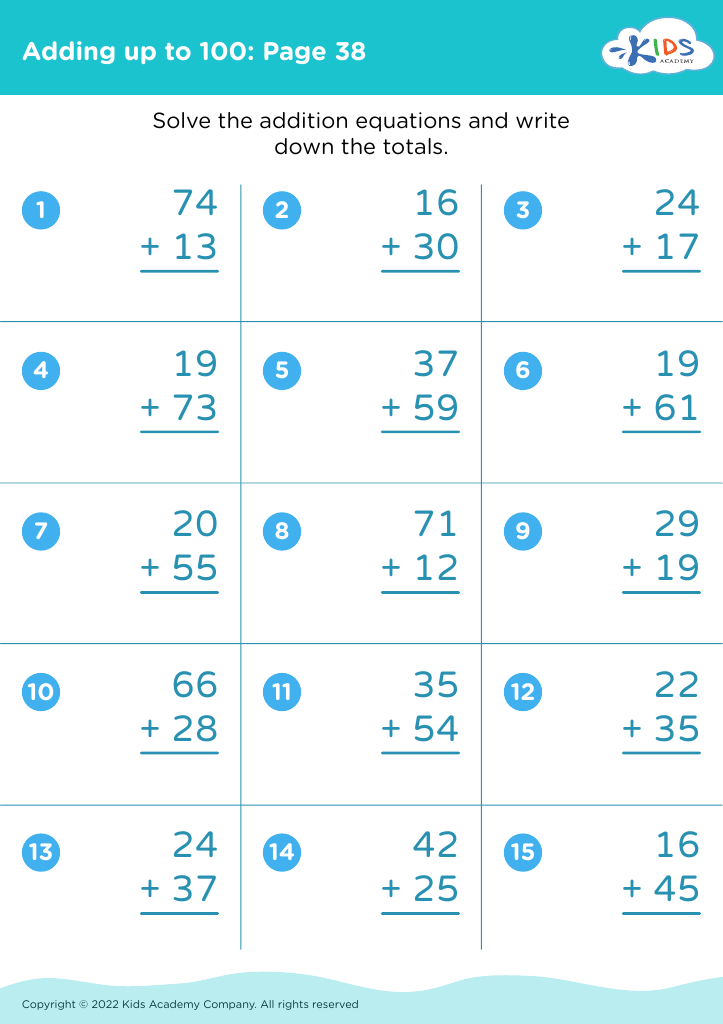
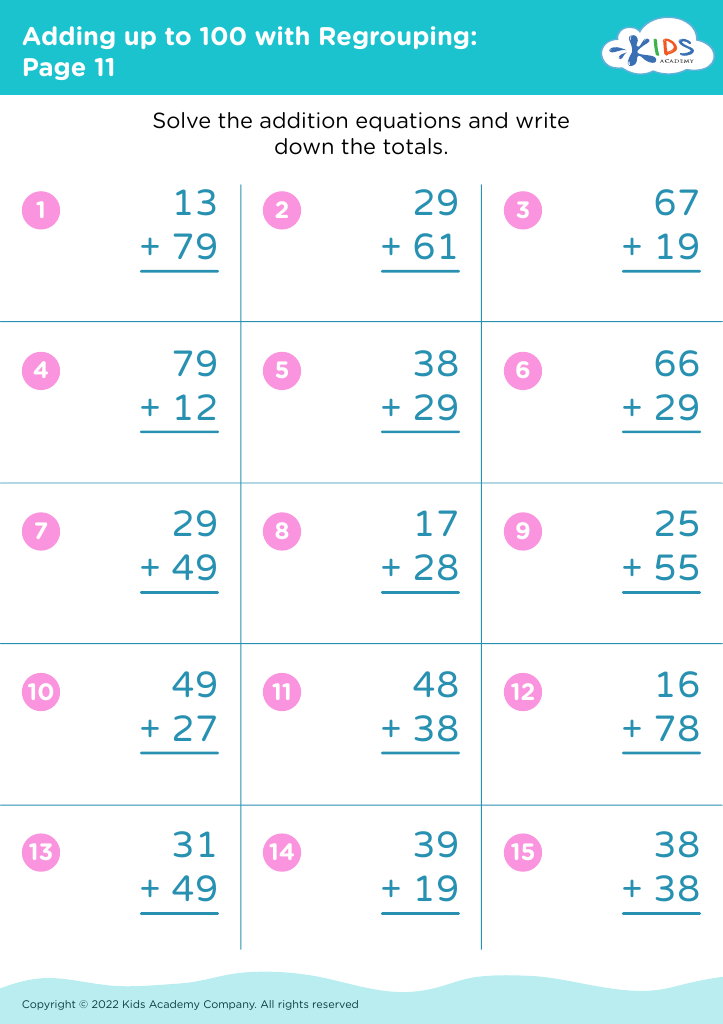
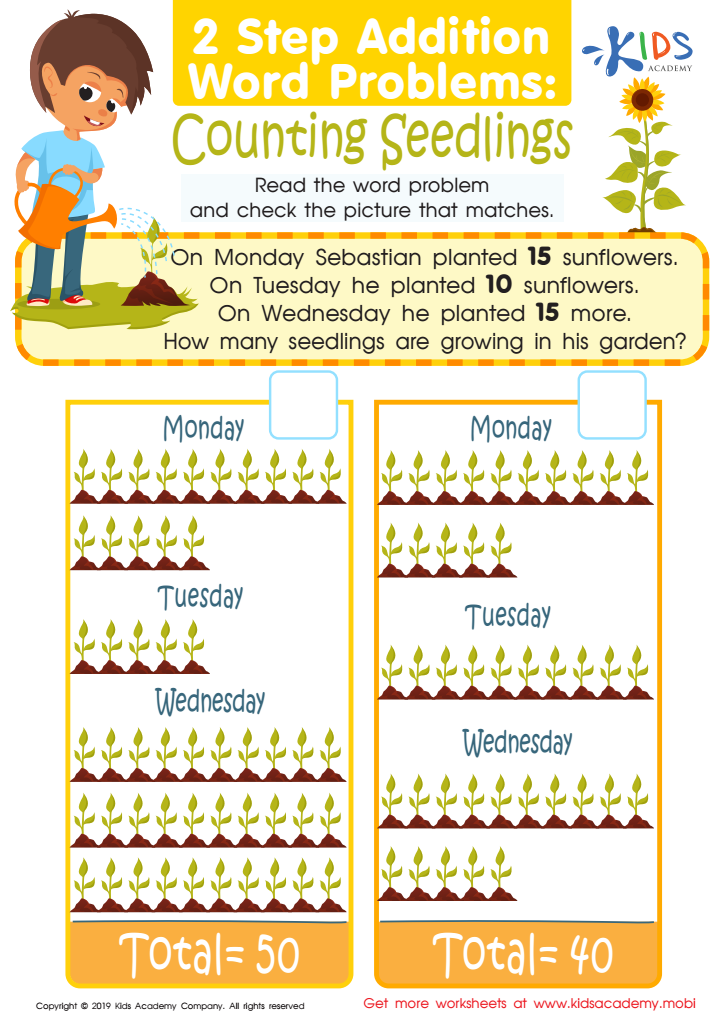
Counting Seedlings Worksheet
 Assign to My Students
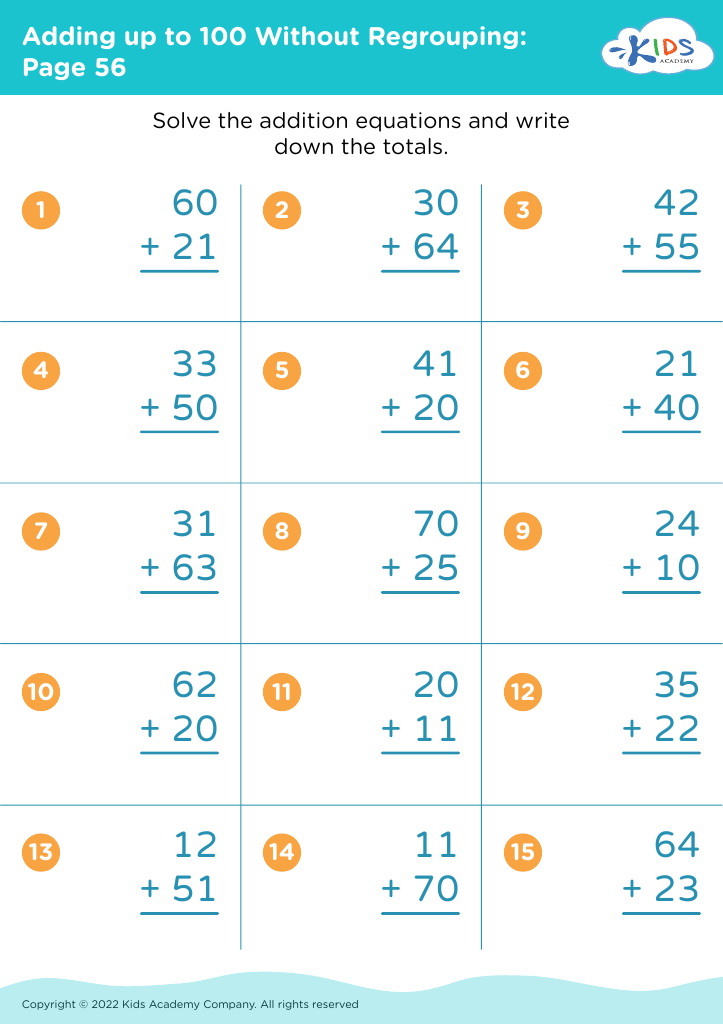
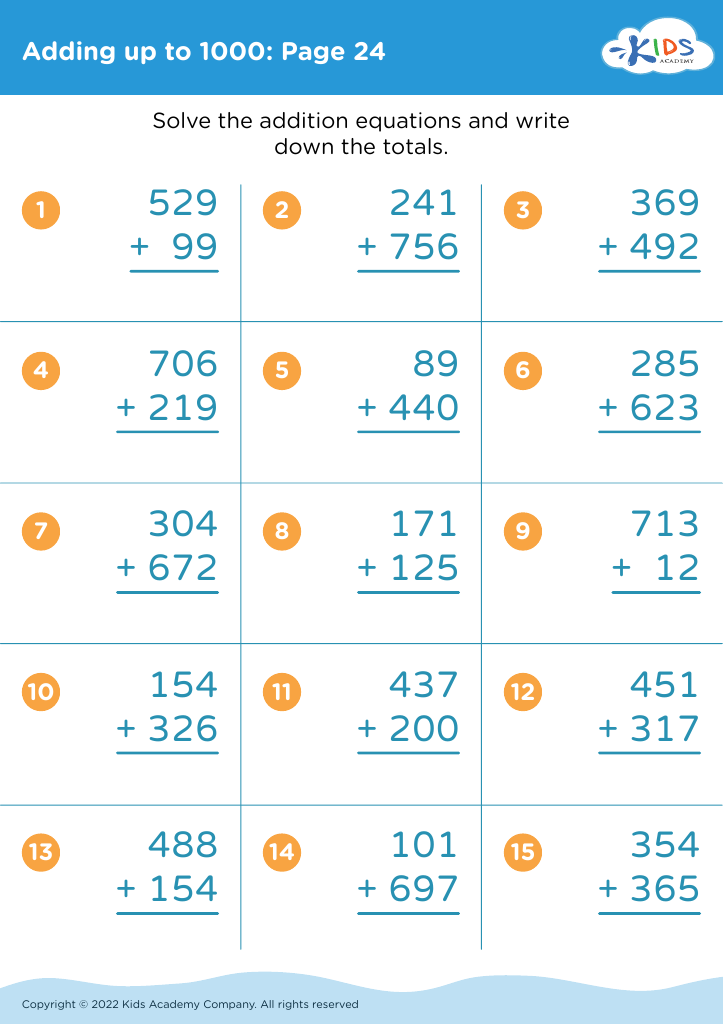
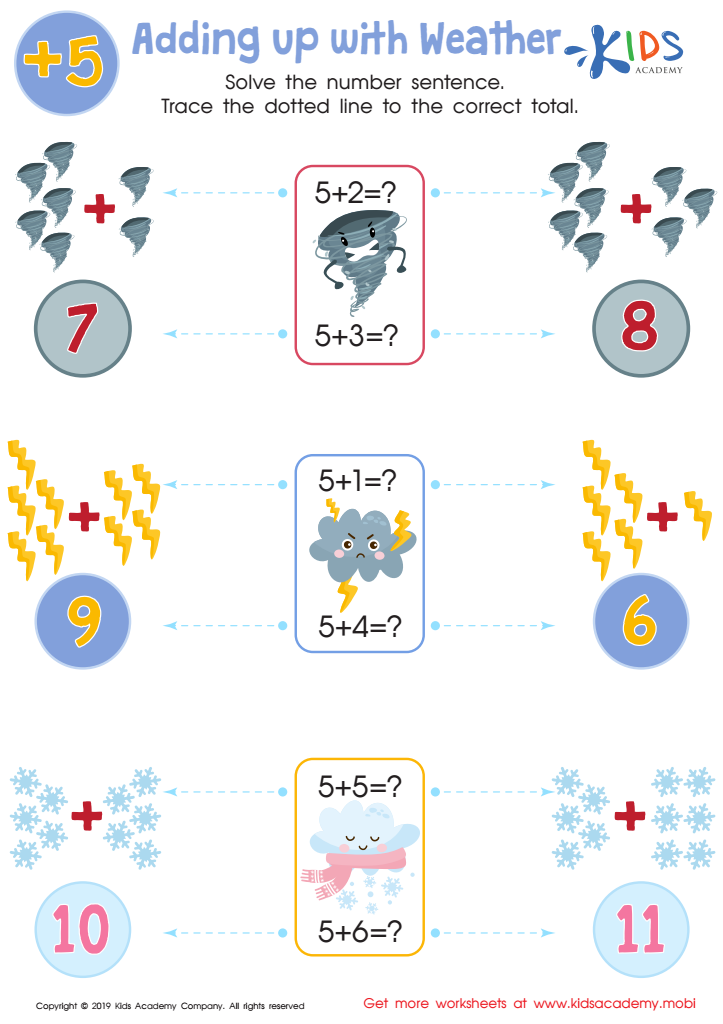
Adding up With Water Worksheet
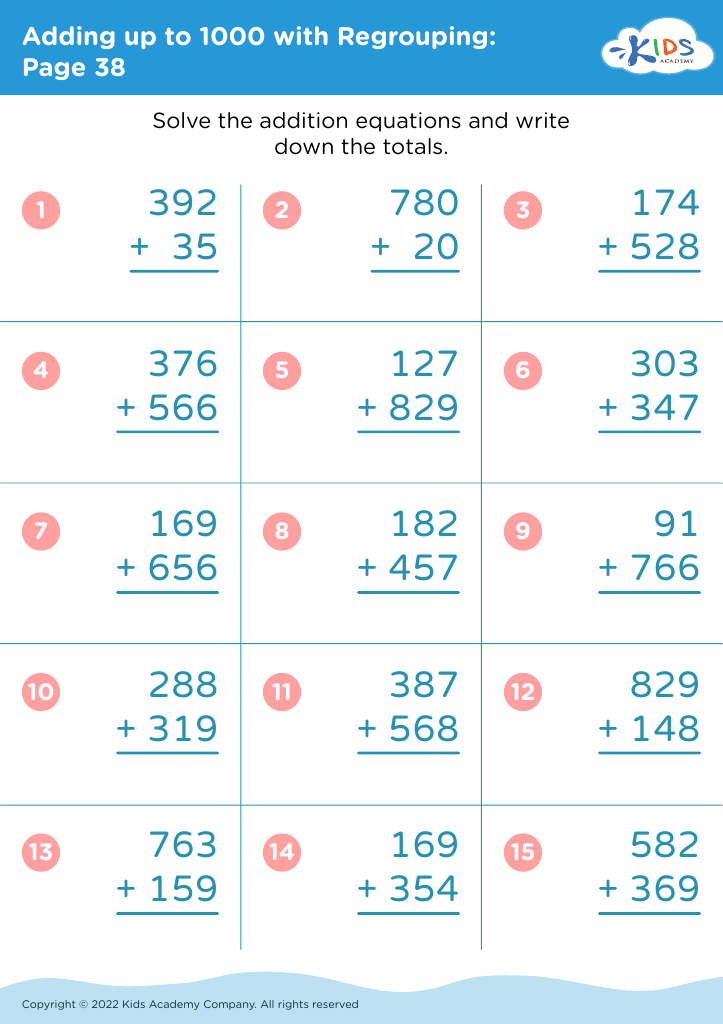
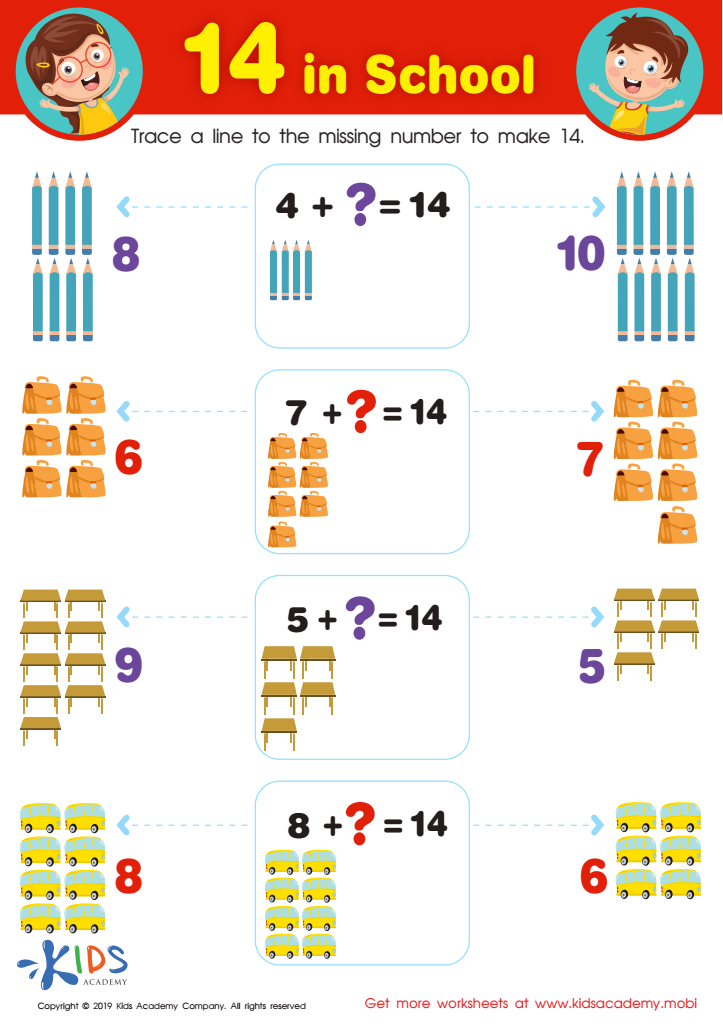
14 in School Worksheet
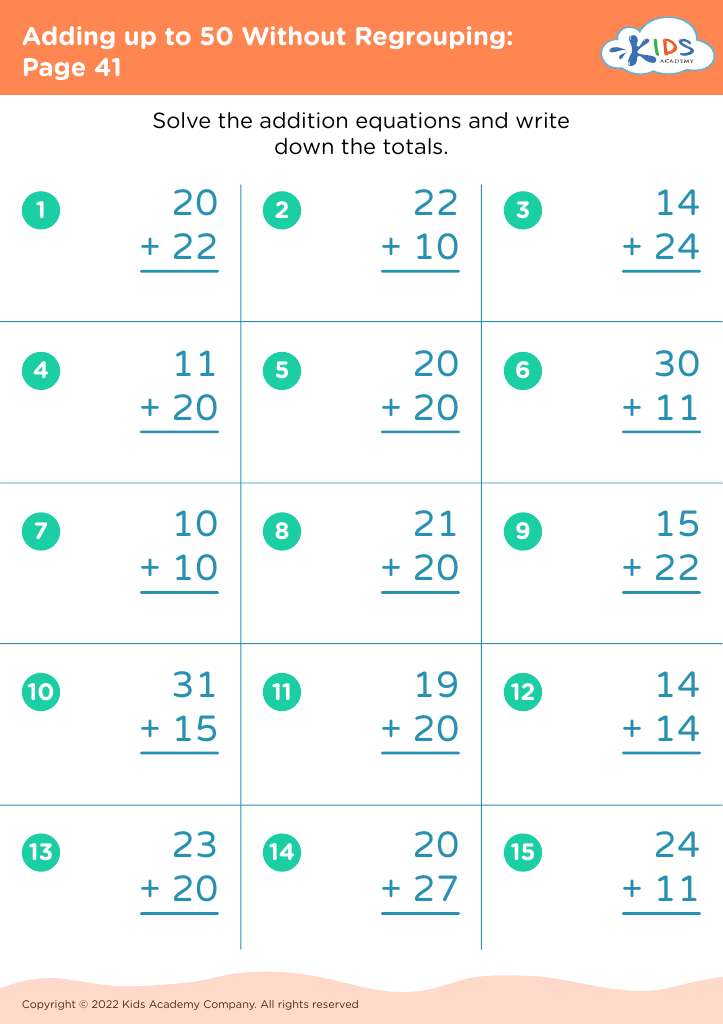








Hand-eye coordination is crucial for children aged 6-7 as it significantly impacts their ability to perform daily tasks and academic activities effectively. This skill, necessary for synchronizing hand movements with visual input, underpins various critical aspects of a child's development.
Firstly, hand-eye coordination facilitates the growth of fine motor skills, essential for writing, using scissors, and completing art projects. As children in this age group hone these abilities, they become more adept at academic tasks, thereby boosting their confidence and learning enthusiasm.
Secondly, strong hand-eye coordination supports cognitive development. Engaging in activities like addition exercises where children manipulate objects or use tools like abacus can enhance both arithmetic skills and spatial awareness, laying a foundation for advanced mathematical concepts.
Additionally, hand-eye coordination activities promote physical health and social interaction. Participating in sports like catching or hitting a ball, or playing interactive games with peers, not only improves their physical fitness but also builds teamwork and communication skills essential for holistic development.
Therefore, parents and teachers should prioritize activities that bolster hand-eye coordination. By doing so, they are equipping children with the necessary skills to succeed academically and socially, fostering a well-rounded growth during these pivotal early years.








