Basic geometry understanding Math Worksheets for Ages 6-7
10 filtered results
-
From - To
Discover our engaging "Basic Geometry Understanding Math Worksheets" designed for children ages 6-7. These resources focus on foundational geometry concepts, helping young learners identify shapes, understand spatial relationships, and explore measurement basics. Each worksheet is filled with fun illustrations and activities that promote active learning while reinforcing key skills, making it easy for kids to grasp geometry in a playful way. Ideal for classroom settings or at-home practice, our worksheets support early math education, ensuring children build confidence and proficiency in geometry. Download now and watch your child's understanding of shapes and space blossom through fun and interactive learning experiences!
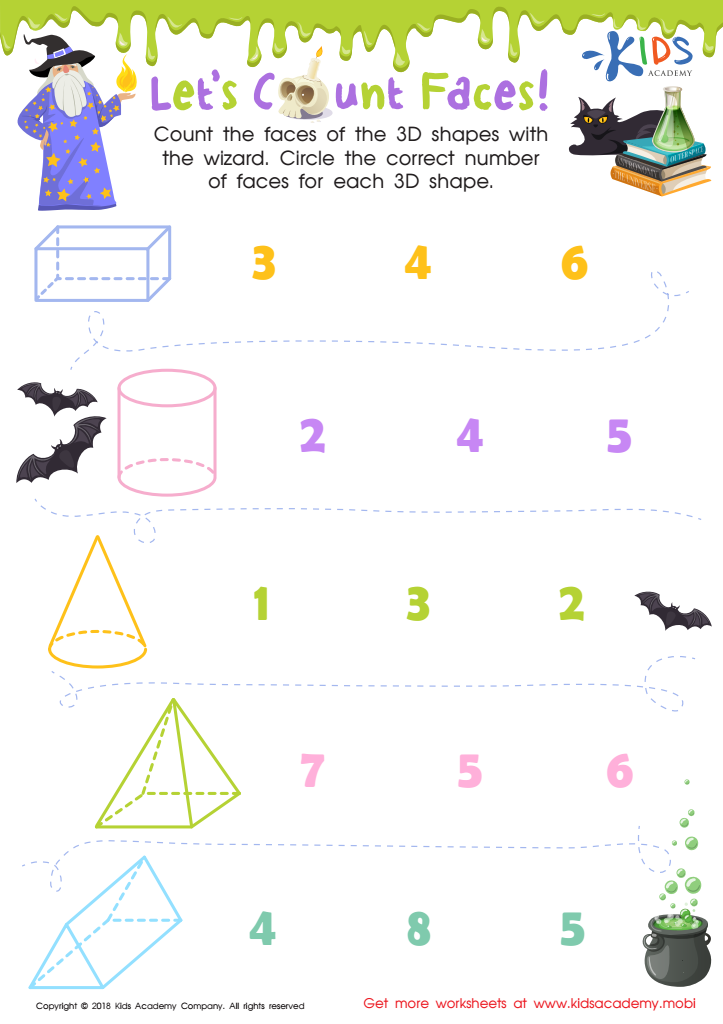
Let's Count Faces! Worksheet
 Assign to My Students
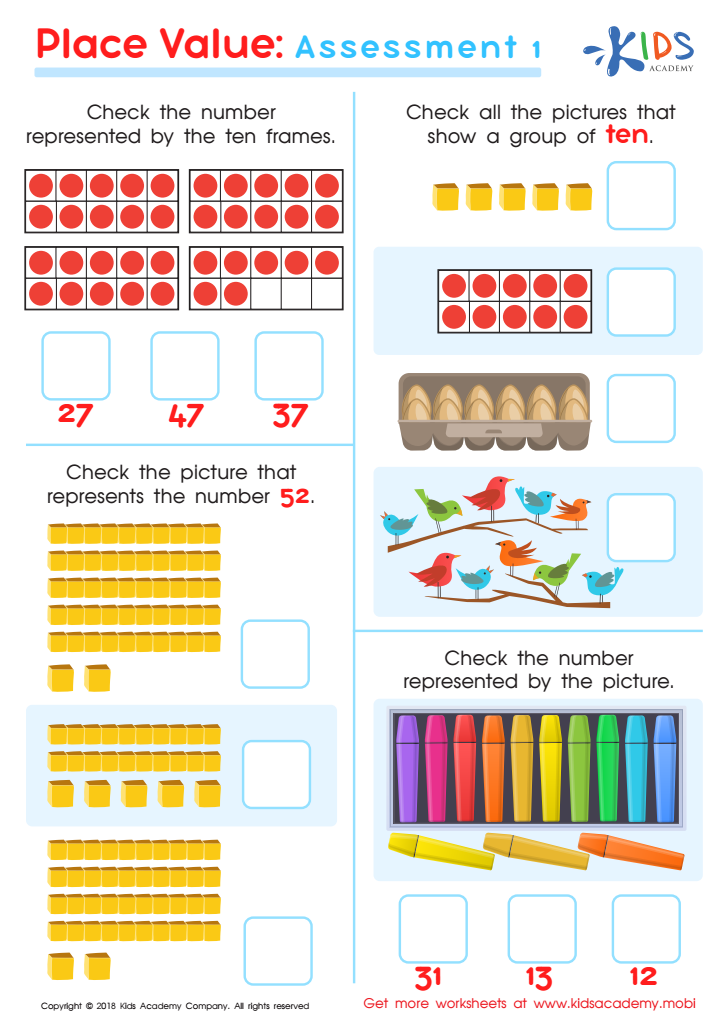
Place Value: Assessment 1 Worksheet
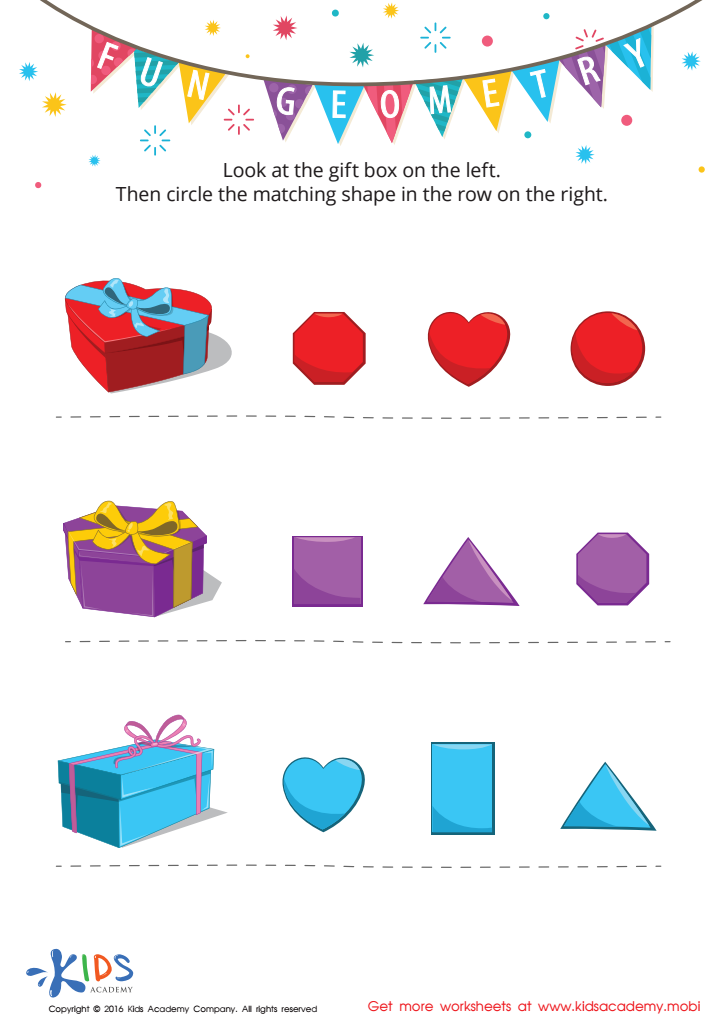
Fun Geometry Worksheet
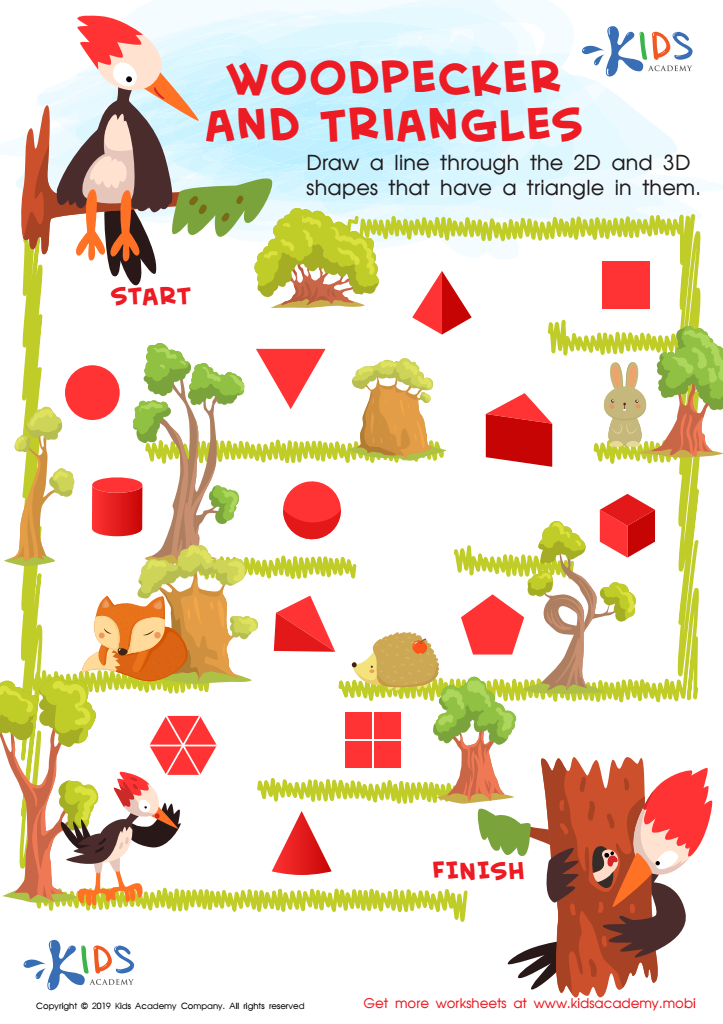
Woodpecker and Triangles Worksheet
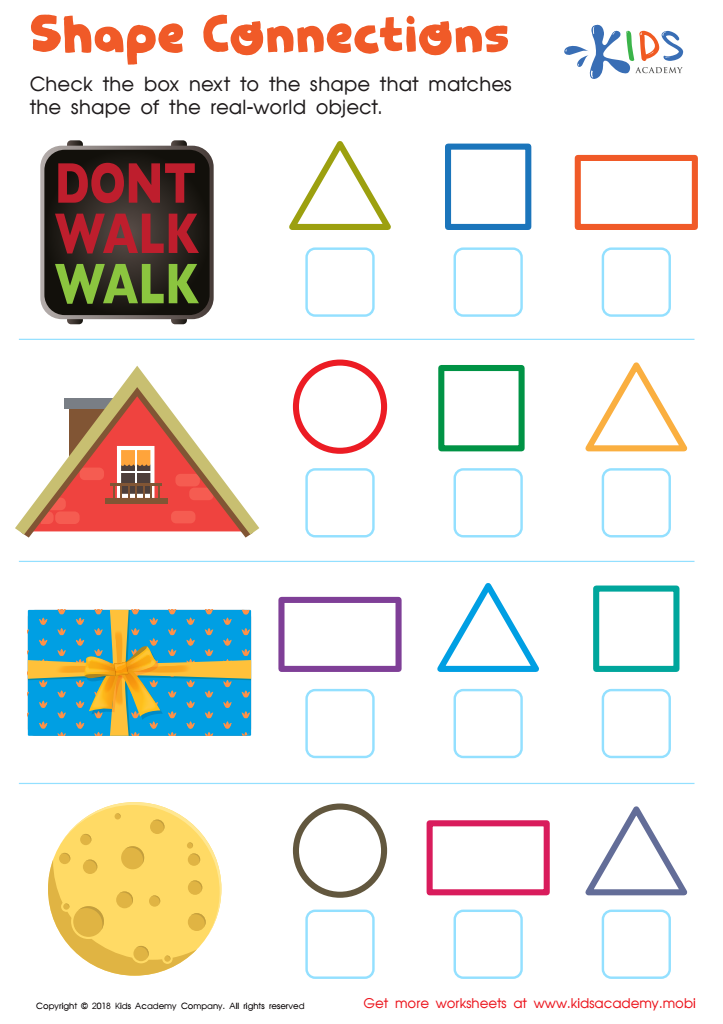
Shape Connections Worksheet
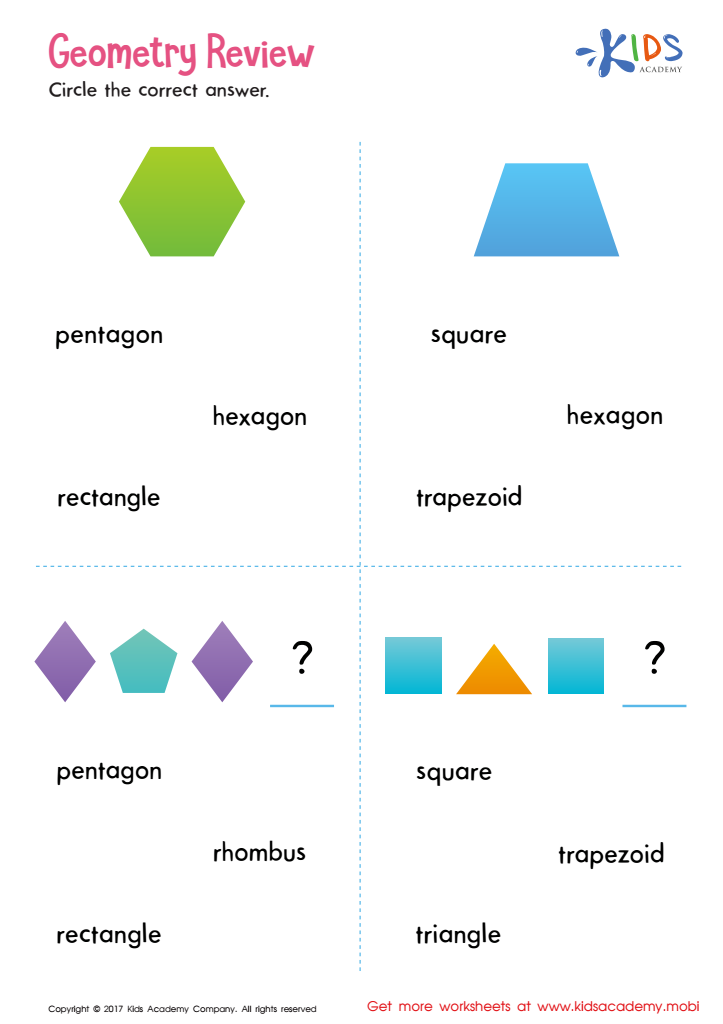
Geometry Review Printable
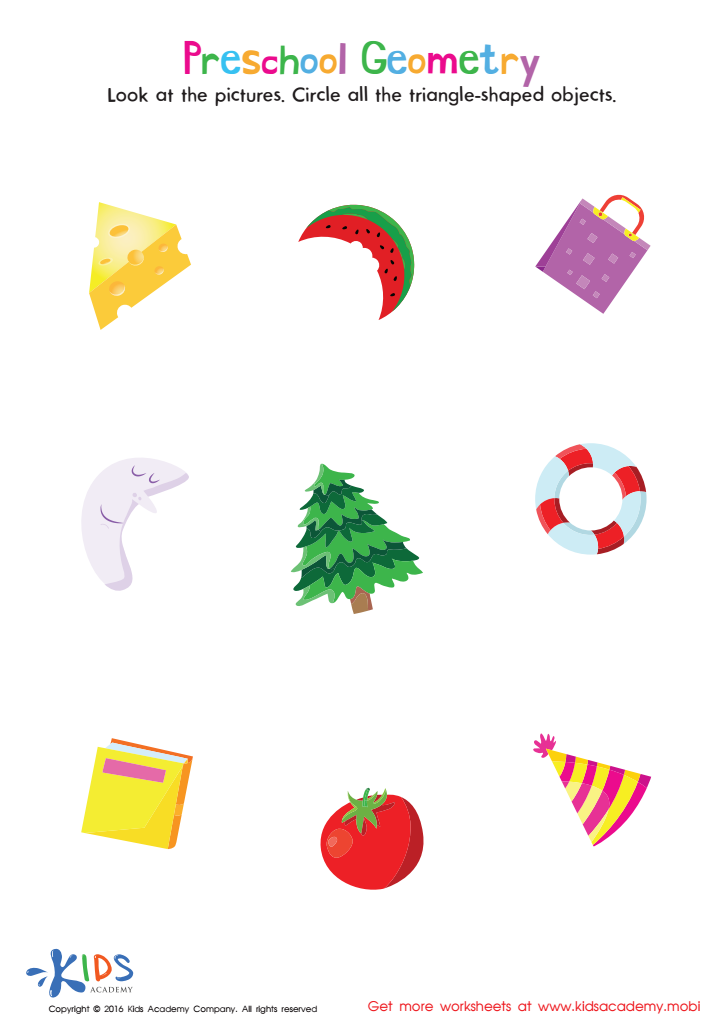
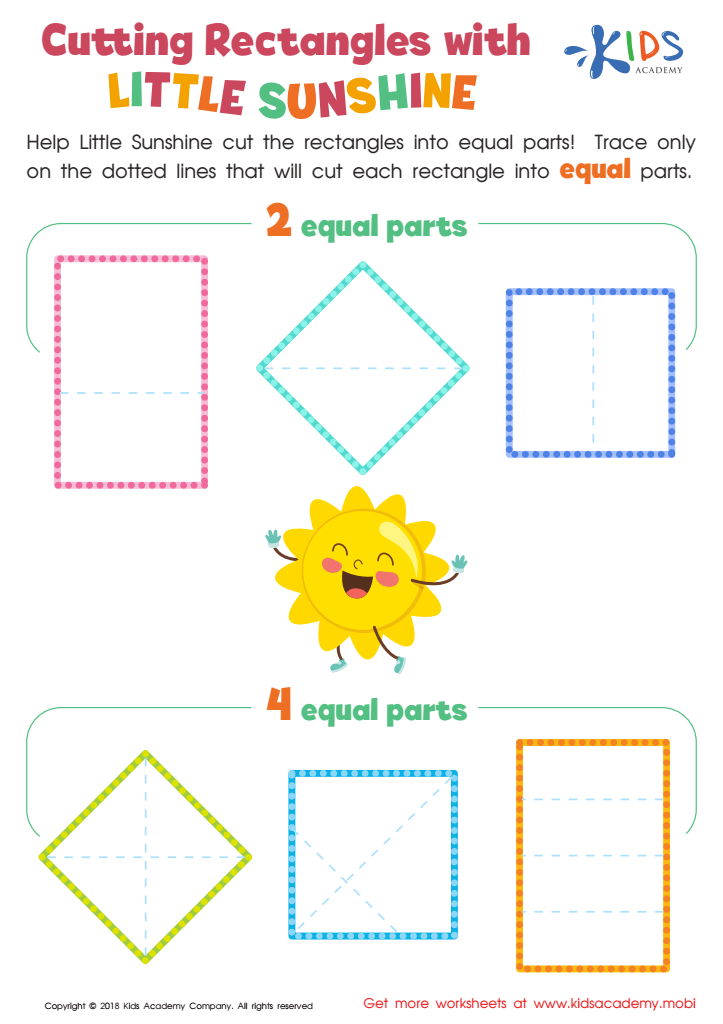
Cutting Rectangles with Little Sunshine Worksheet
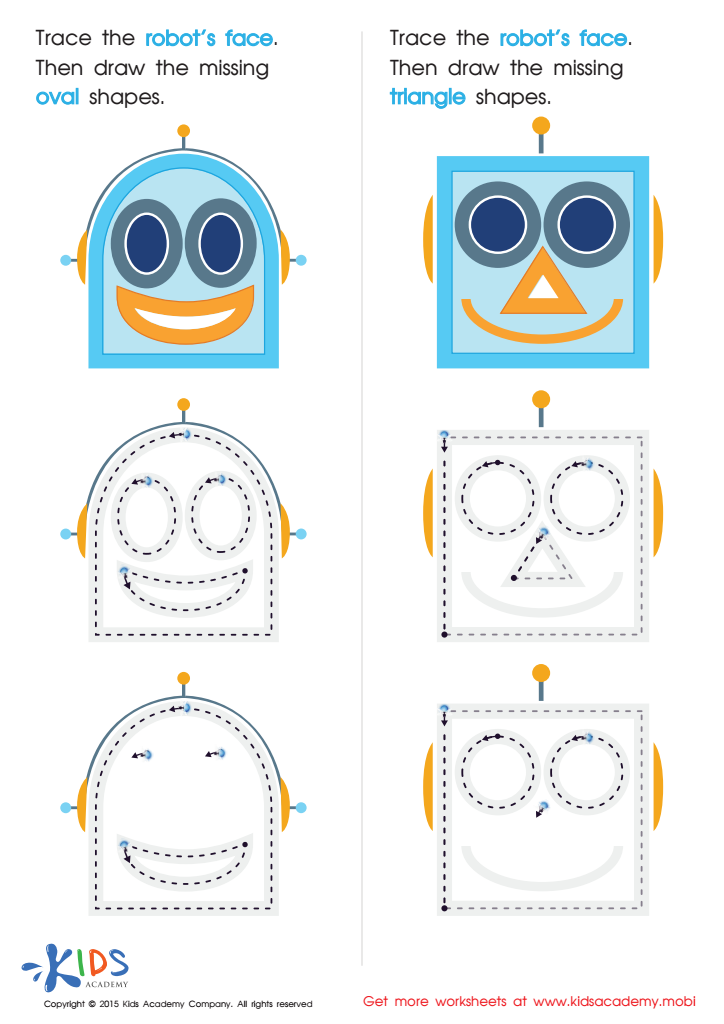
Drawing Ovals And Triangles with Fun Printable
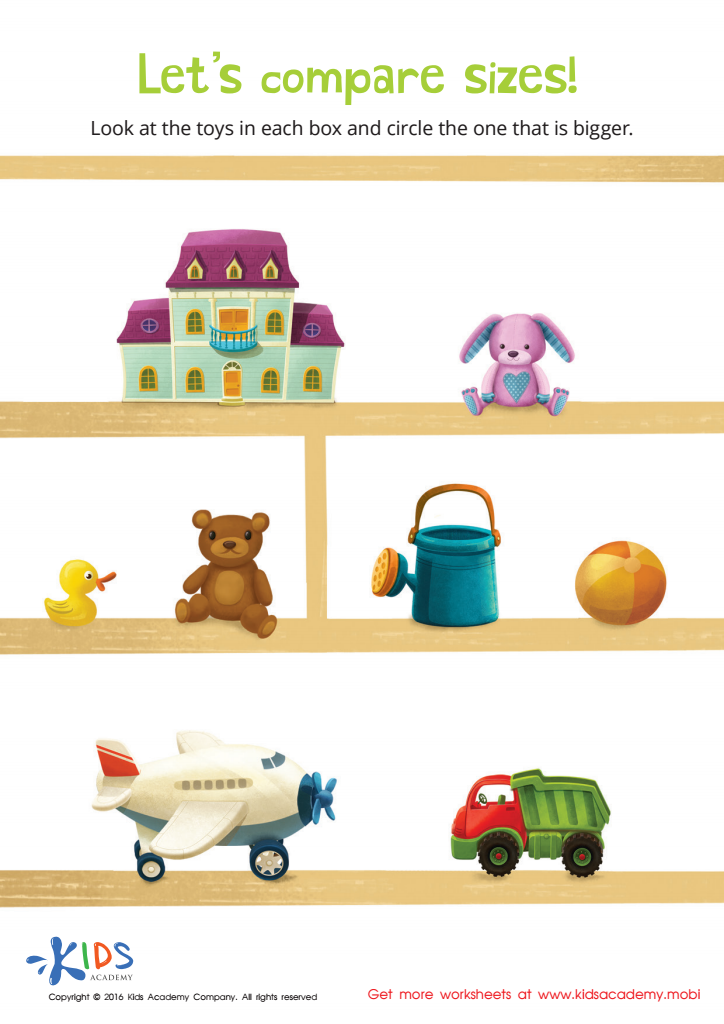
Classifying by Size Sorting Worksheet







Understanding basic geometry is crucial for children ages 6-7, as it sets a solid foundation for their overall mathematical skills. At this age, students are naturally curious about the shapes and spaces they encounter in their world. Learning about geometric concepts—like shapes, spatial relationships, and measurements—can enhance their observation skills and promote critical thinking.
Geometry also stimulates cognitive development, helping children learn to visualize and manipulate objects mentally. This is particularly important as these skills are not just essential for math but are also valuable in everyday life, such as when organizing spaces or comparing objects. Moreover, geometry introduces children to fundamental mathematical vocabulary and encourages them to articulate their thoughts, promoting better communication skills.
For parents and teachers, emphasizing geometry can make learning more engaging and relevant. Incorporating real-world examples, such as identifying shapes in nature or using building blocks, can foster a love for math and improve problem-solving abilities. By nurturing early geometry understanding, adults can empower children to develop strong analytical skills, paving the way for success in future math courses and everyday situations. Ultimately, promoting geometric understanding helps children build confidence and a positive attitude towards learning.








