Recognizing equal parts Math Worksheets for Ages 6-7
3 filtered results
-
From - To
Discover our engaging "Recognizing Equal Parts" math worksheets designed specifically for children aged 6-7. These interactive activities help young learners grasp the essential concept of fractions by fostering their ability to identify and create equal parts of shapes. From colorful visuals to easy-to-follow instructions, our worksheets make learning fun and effective. Ideal for in-class activities or at-home practice, these resources enhance mathematical understanding while instilling a love for learning. Support your child's progress in math with our well-structured exercises that cater to their developmental needs, ensuring a strong foundation in recognizing equal parts and fractions. Download and start learning today!
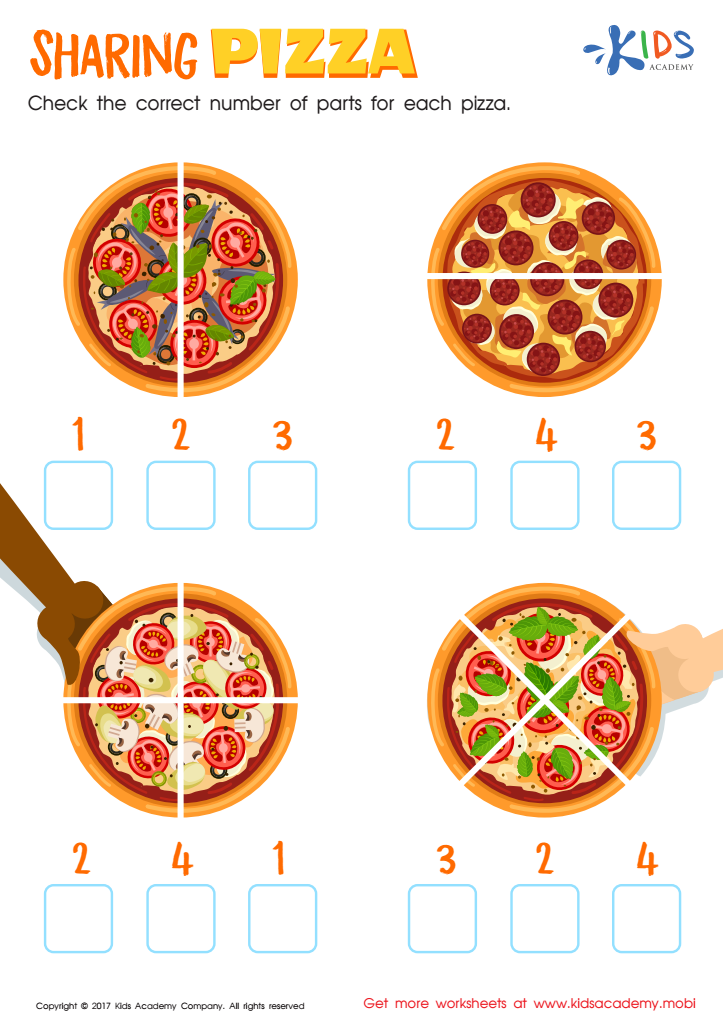
Sharing Pizza Worksheet
 Assign to My Students
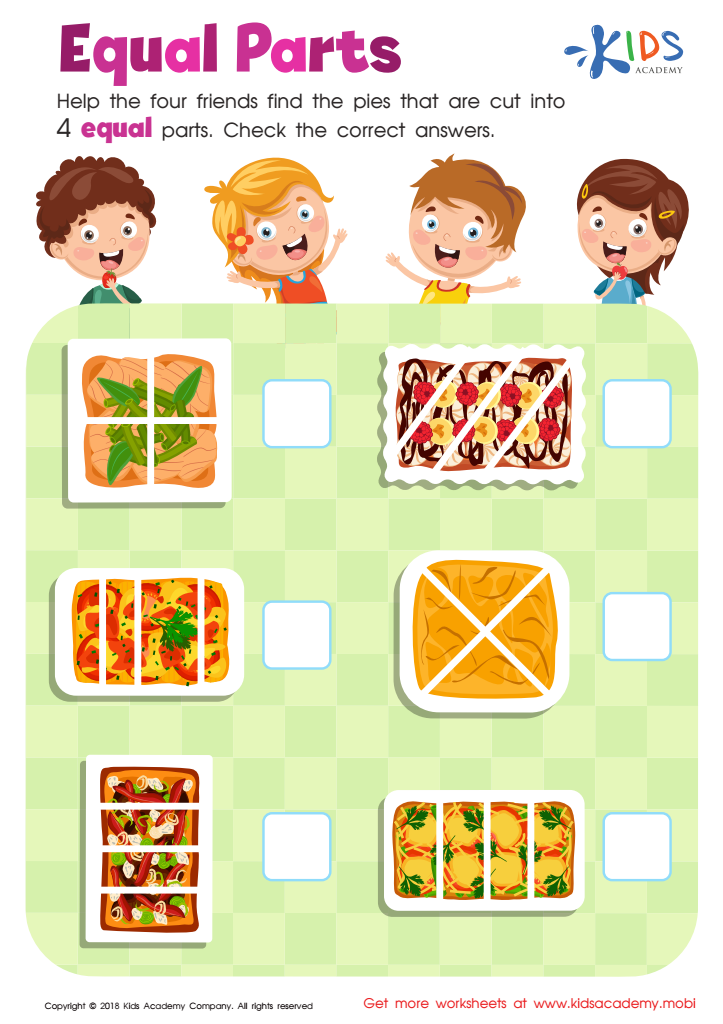
Equal Parts: Food Worksheet






Recognizing equal parts is a fundamental concept in early mathematics, especially for children aged 6 to 7, as it lays the groundwork for more complex mathematical ideas. Parents and teachers should prioritize this concept because it enhances children's understanding of fractions, a critical aspect of math that speaks to division and proportional reasoning.
By grasping equal parts, children develop a strong sense of fairness and equality, which can translate into their daily lives—whether splitting a pizza or sharing toys. This early exposure fosters collaborative skills and encourages them to resolve conflicts independently. Additionally, recognizing equal parts supports early geometry skills, as children begin identifying shapes and understanding symmetry.
Moreover, this concept aligns with broader educational standards, helping children build a strong mathematical foundation that is essential in later grades. Engaging in activities related to equal parts—such as using visual aids, interactive games, and hands-on experiments—can ignite a child's interest in math and improve their confidence in the subject. Ultimately, caring about recognizing equal parts enables children to make connections across different areas of math and fosters a lifelong enthusiasm for learning.








