Time recognition Math Worksheets for Ages 6-7
6 filtered results
-
From - To
Time Recognition Math Worksheets for Ages 6-7 at Kids Academy provide engaging activities designed to teach young learners how to tell time. These worksheets feature colorful clocks, practical exercises, and fun scenarios to help children easily grasp the concept of hours, half-hours, and quarter-hours. Tailored specifically for first and second graders, our resources support the development of time-telling skills, boosting confidence in reading both analog and digital clocks. Ideal for classroom use or at-home practice, these worksheets lay the foundation for essential math skills, making learning both enjoyable and effective for your child.
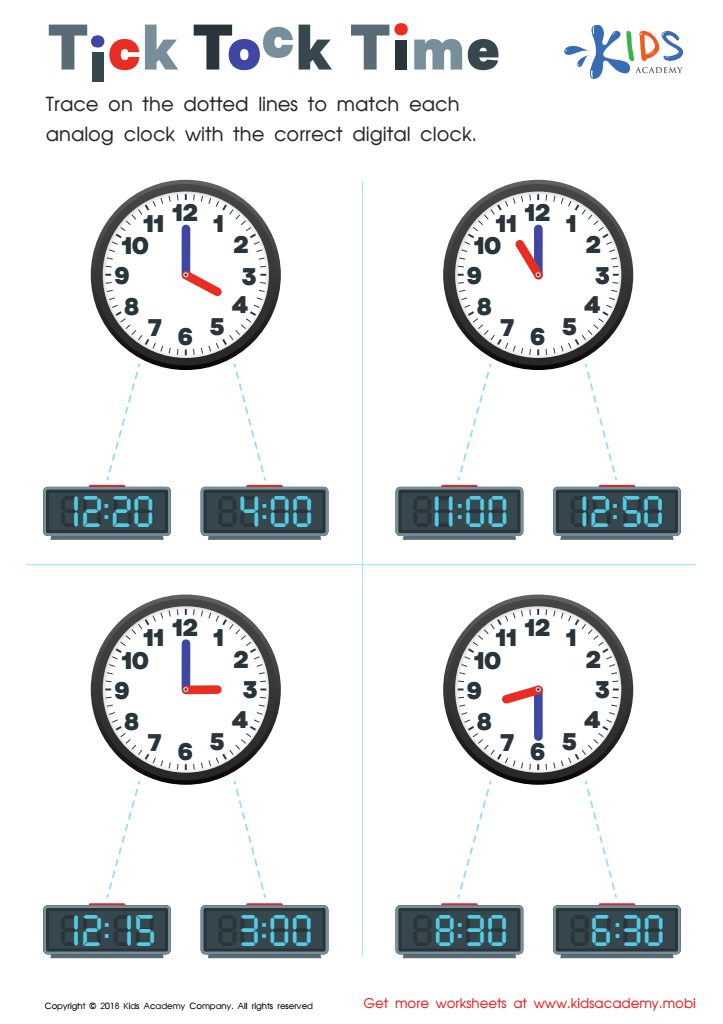
Tick Tock Time Worksheet
 Assign to My Students
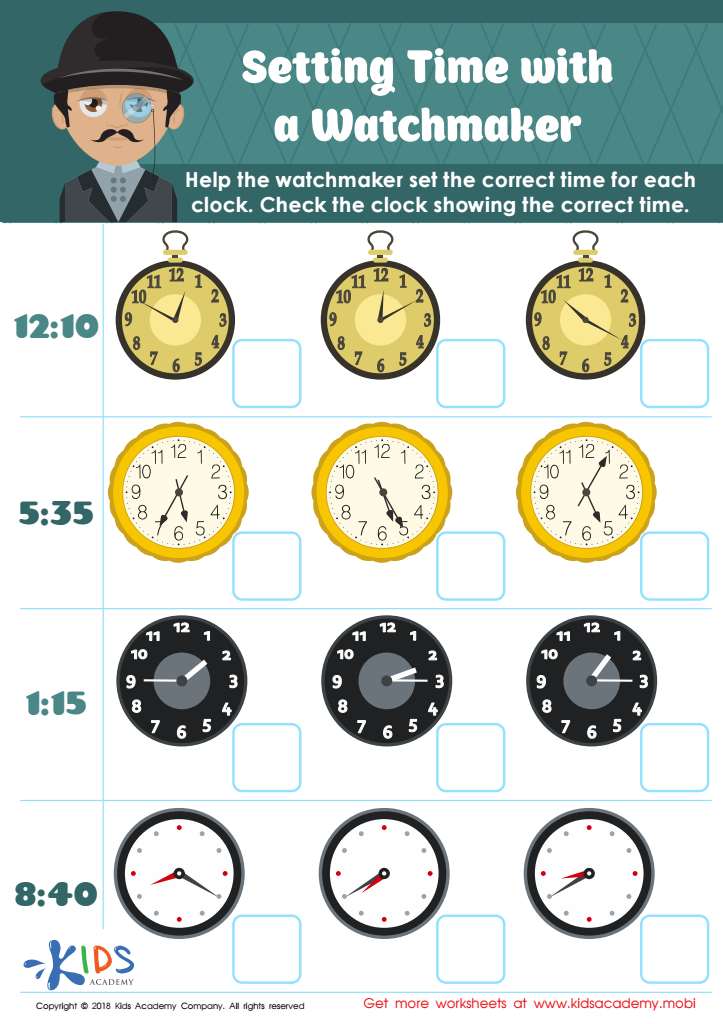
Setting Time with Watchmaker Worksheet
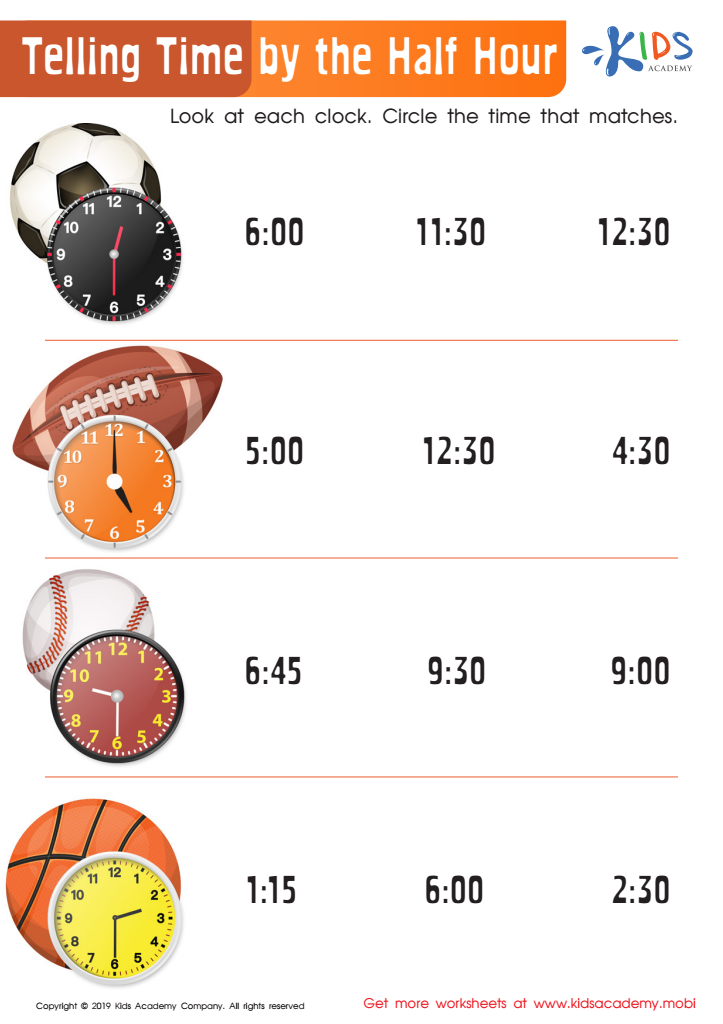
Telling Time by the Half Hour Worksheet
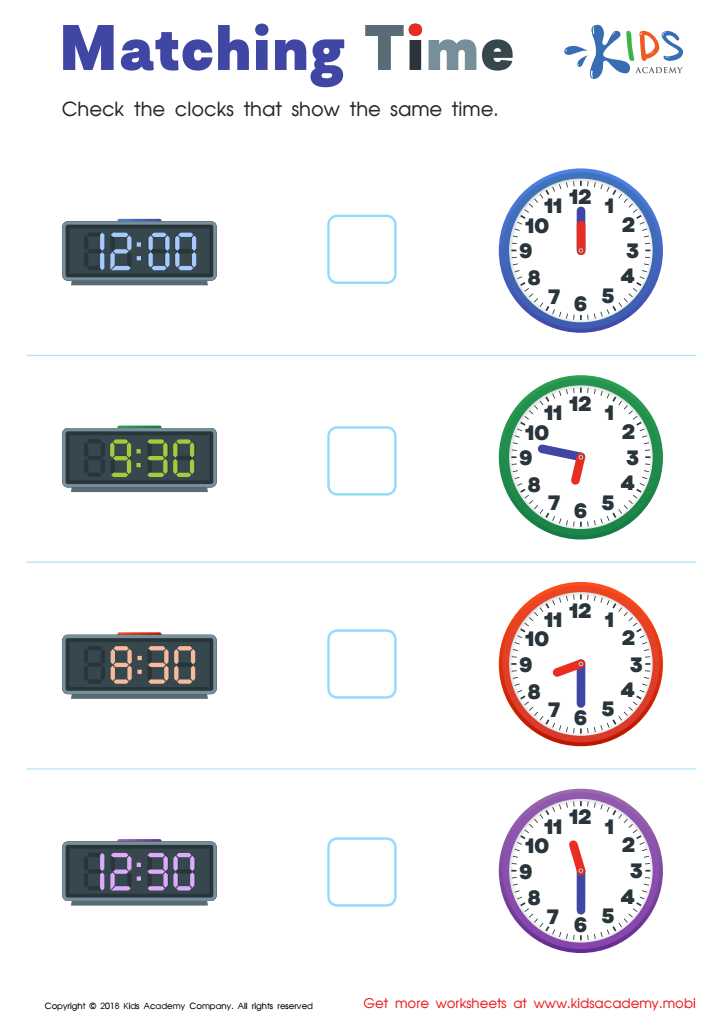
Matching Time Worksheet
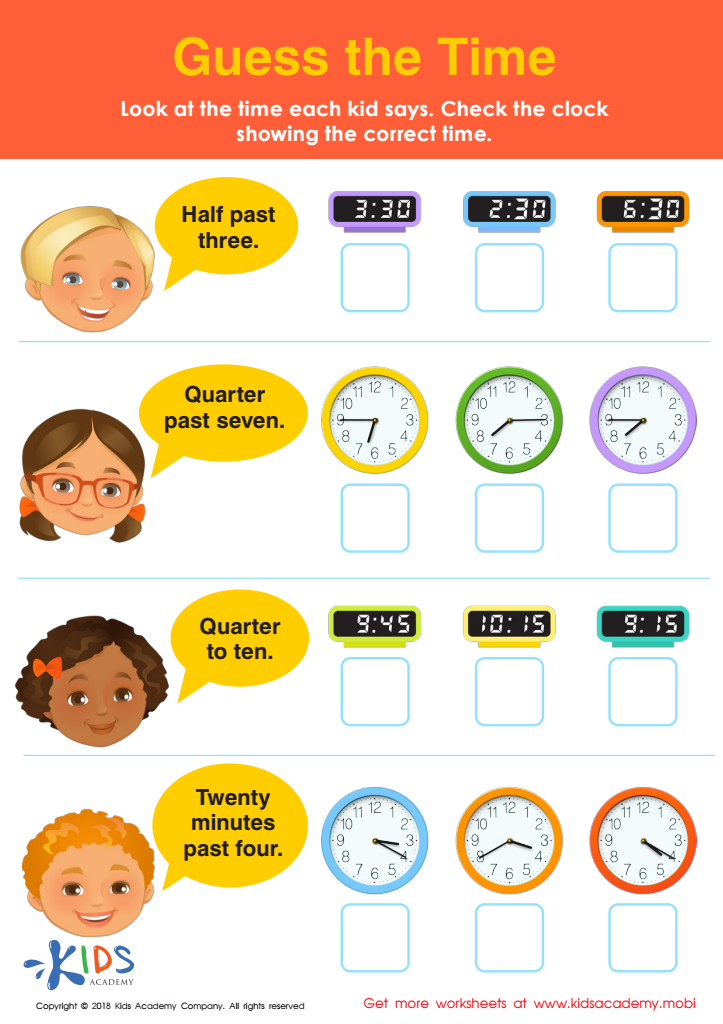
Guess the Time Worksheet
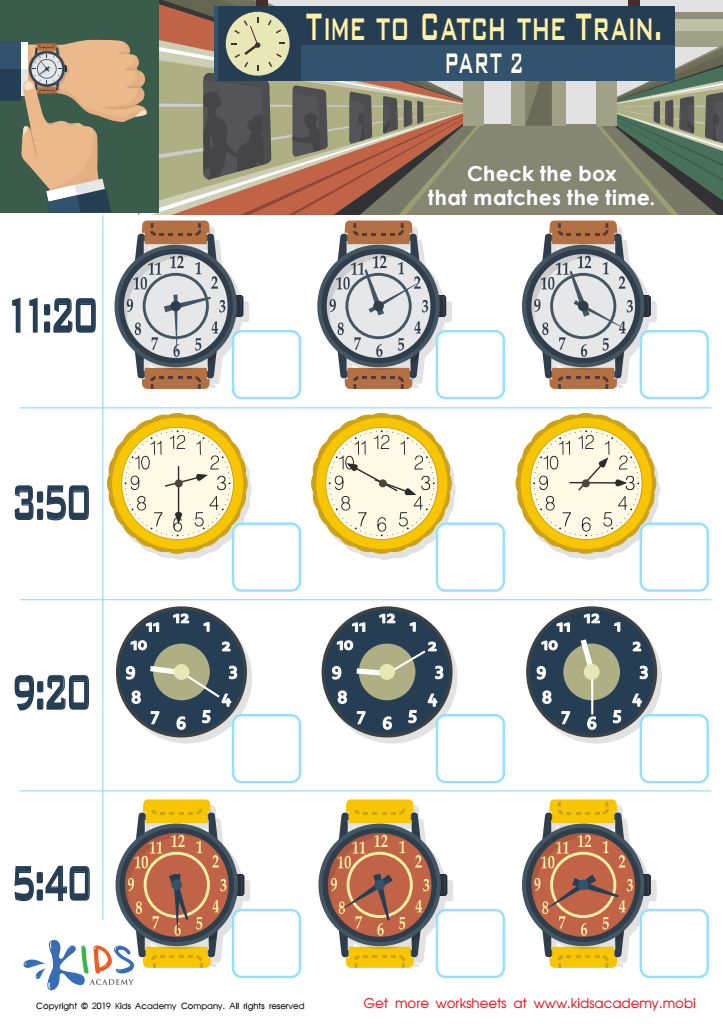
Time to Catch the Train Part 2 Worksheet







Time recognition is a critical skill for young children aged 6-7 as it lays the groundwork for both academic and life success. Developing an understanding of time helps children grasp the concept of sequencing and duration, essential for subjects like math and science, as well as practical daily activities. Knowing how to tell time aids in building routines, enhancing a child’s ability to follow schedules, manage tasks, and develop a sense of responsibility. For parents and teachers, fostering this skill early ensures that children can navigate their day with greater independence, reducing overlap and conflict in their daily activities.
Moreover, telling time requires an understanding of numbers and basic arithmetic, bolstering early numeracy skills. This foundational knowledge is indispensable for more advanced math concepts, making time recognition a bedrock for future academic achievements. Through playful and engaging time-telling exercises, children enhance their cognitive skills, including memory and attention to detail.
Finally, mastering time helps children feel more confident and competent, giving them a sense of achievement and personal control. It makes transitions smoother, reduces instances of anxiety related to "what's next," and aligns their understanding of abstract concepts like days, hours, and minutes with concrete, real-world examples. Therefore, parents and teachers should prioritize time recognition math to support holistic child development.








