Practical math application Measurement Worksheets for Ages 6-7
7 filtered results
-
From - To
Introduce your child to the exciting world of measurements with our engaging Practical Math Application Measurement Worksheets for ages 6-7. Perfectly designed to suit young learners, these worksheets enhance skills in understanding and applying basic measurement concepts. Through fun activities, kids will learn to measure length, weight, and volume using everyday items, supporting their cognitive and problem-solving abilities. These interactive exercises are ideal for helping children connect math to real-life scenarios. Boost math confidence and provide a solid foundation with our professionally crafted worksheets, making learning both fun and effective. Start measuring success today!
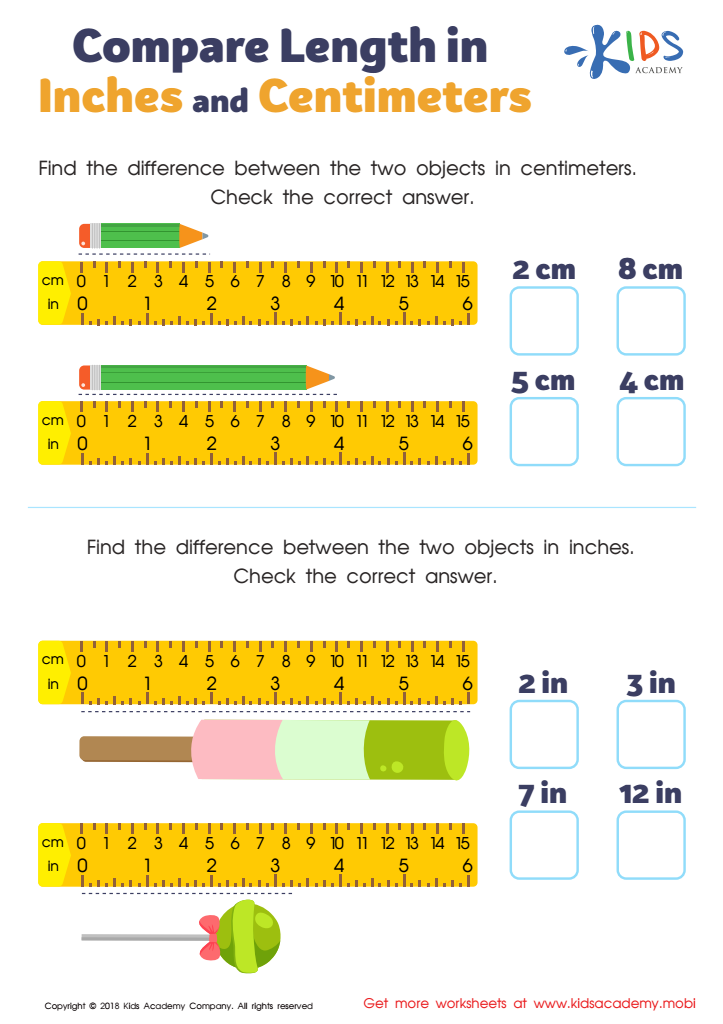
Compare Length in Inches and Centimeters Worksheet
 Assign to My Students
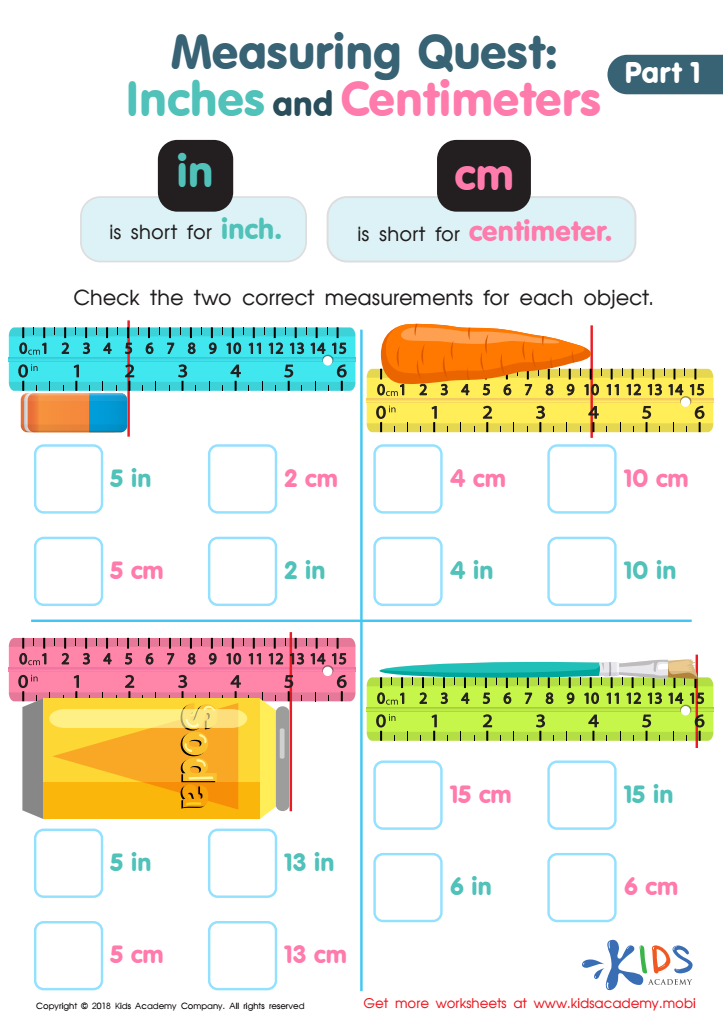
Measuring Quest: Inches and Centimeters Worksheet
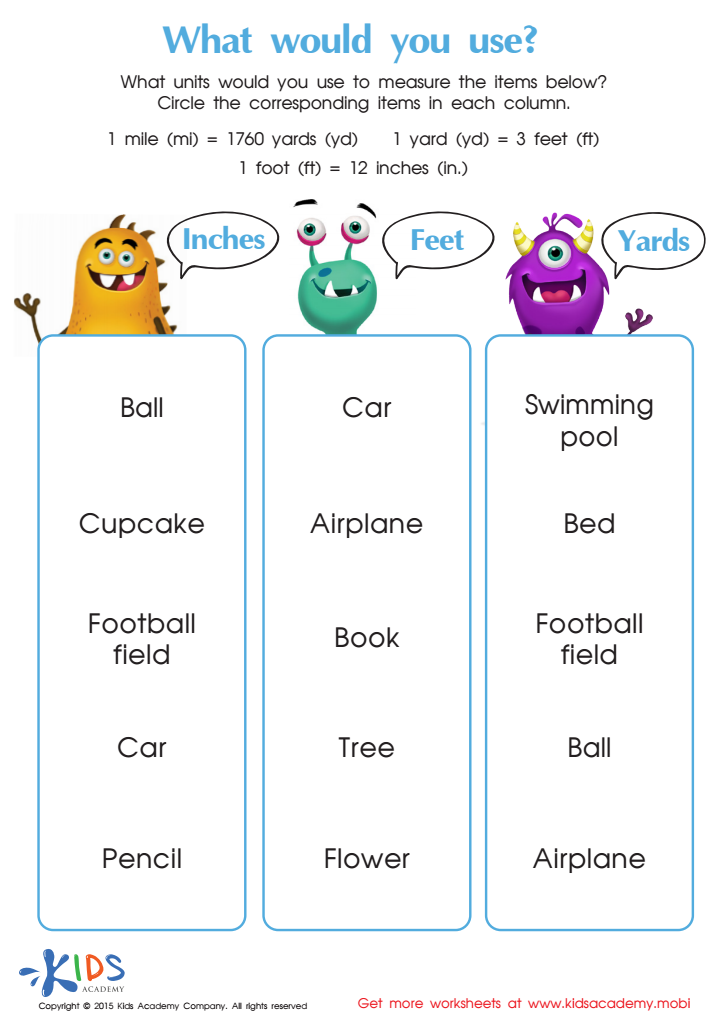
Learning about measuring objects in inches, feet and yards Worksheet
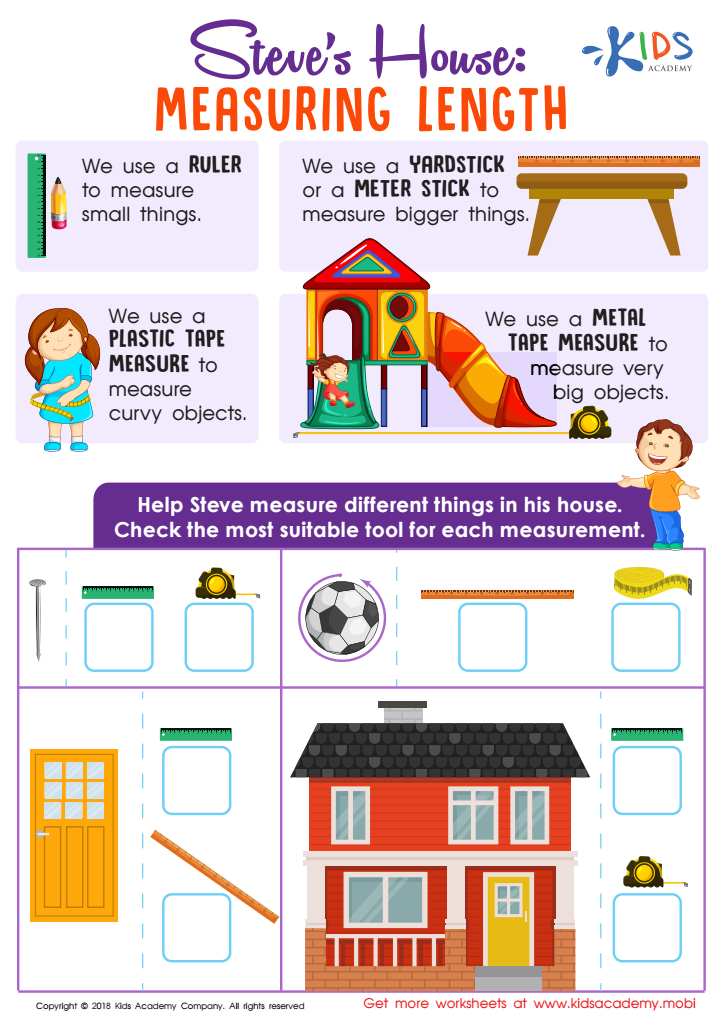
Steve's House: Measuring Length Worksheet
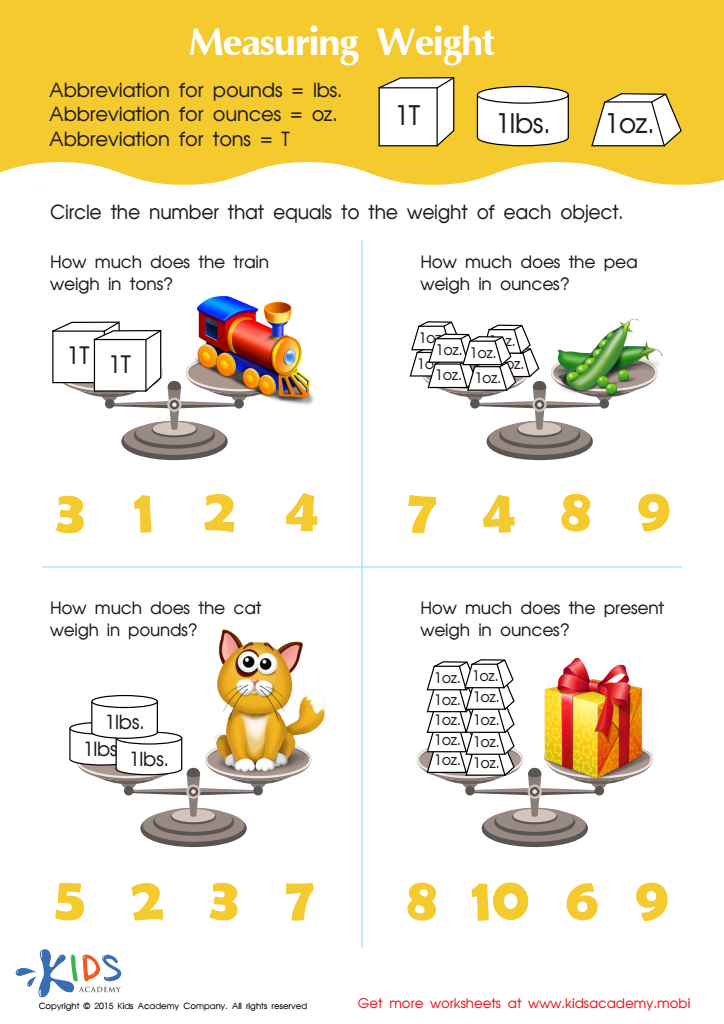
Measuring Weight in Ounces, Pounds and Tons Worksheet
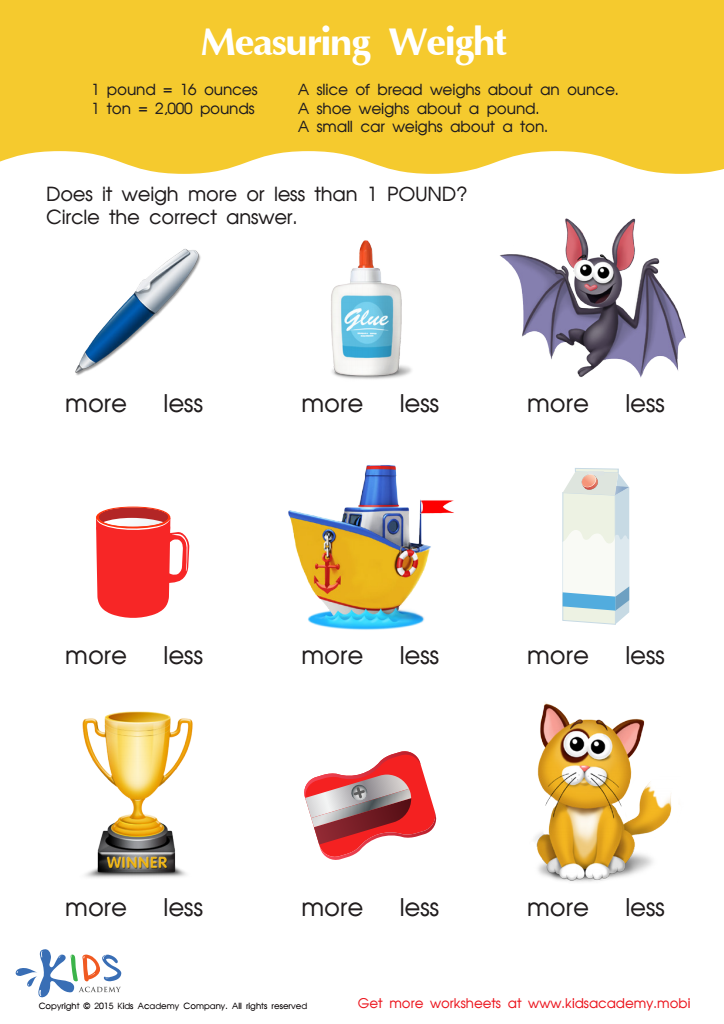
Measuring weight in pounds Worksheet
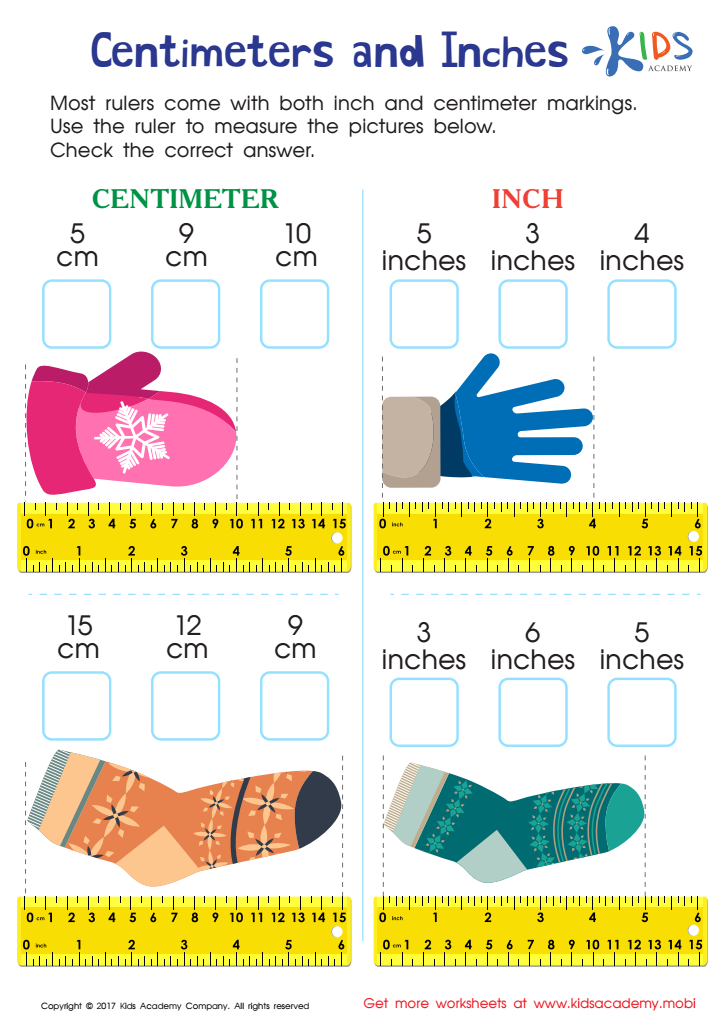
Centimeters and Inches Worksheet







Parents and teachers should care about practical math applications, especially measurement, for ages 6-7 because early exposure to these concepts lays a solid foundation for future learning and everyday life skills. At this age, children are naturally curious and eager to explore the world around them. By integrating measurement activities into their learning, we tap into this curiosity while introducing basic math skills in a fun, engaging manner.
Measurement activities—like using a ruler to measure the length of a pencil, comparing the weight of different fruits, or pouring water into different-sized containers—not only make abstract concepts tangible but also strengthen children's cognitive and motor skills. Such hands-on experiences help youngsters understand the ideas of length, weight, volume, and time, which are foundational to more complex math and science concepts they will encounter later.
Moreover, practical math applications foster real-world problem-solving abilities, critical thinking, and analytical skills. These are crucial for academic success and everyday tasks, such as cooking, budgeting, or even participating in sports. Demonstrating the real-life relevance of math also helps spark and sustain children's interest in the subject, making them more likely to succeed and less likely to develop math anxiety. Therefore, focusing on measurement for ages 6-7 is vital for well-rounded educational development.








