Moral understanding Reading Worksheets for Ages 6-7
5 filtered results
-
From - To
Unlock the power of moral understanding with our engaging reading worksheets designed for children ages 6-7! These thoughtfully crafted resources encourage young readers to explore important values and ethical concepts through captivating stories and relatable scenarios. Each worksheet is filled with fun activities that challenge students to identify right from wrong, develop empathy, and comprehend the consequences of actions. Ideal for classroom use or at-home learning, our moral understanding worksheets nurture critical thinking while enhancing reading skills. Foster a sense of responsibility and kindness in your child—help them grow into a thoughtful, considerate individual through the gift of literature!
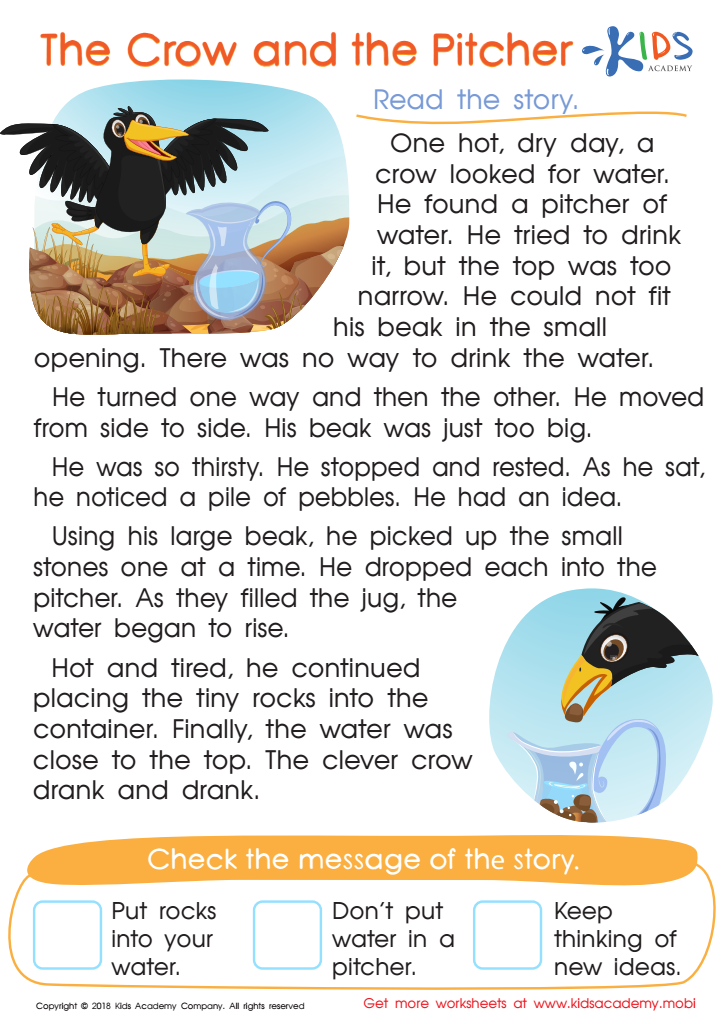
The Crow and the Pitcher Worksheet
 Assign to My Students
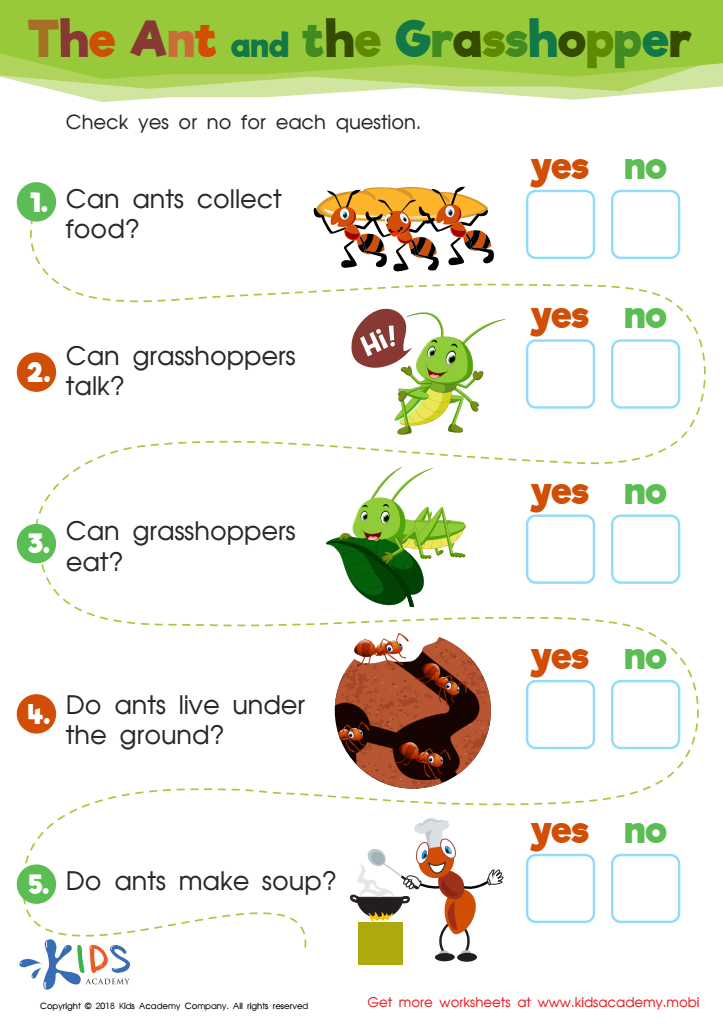
The Ant and The Grasshopper Worksheet
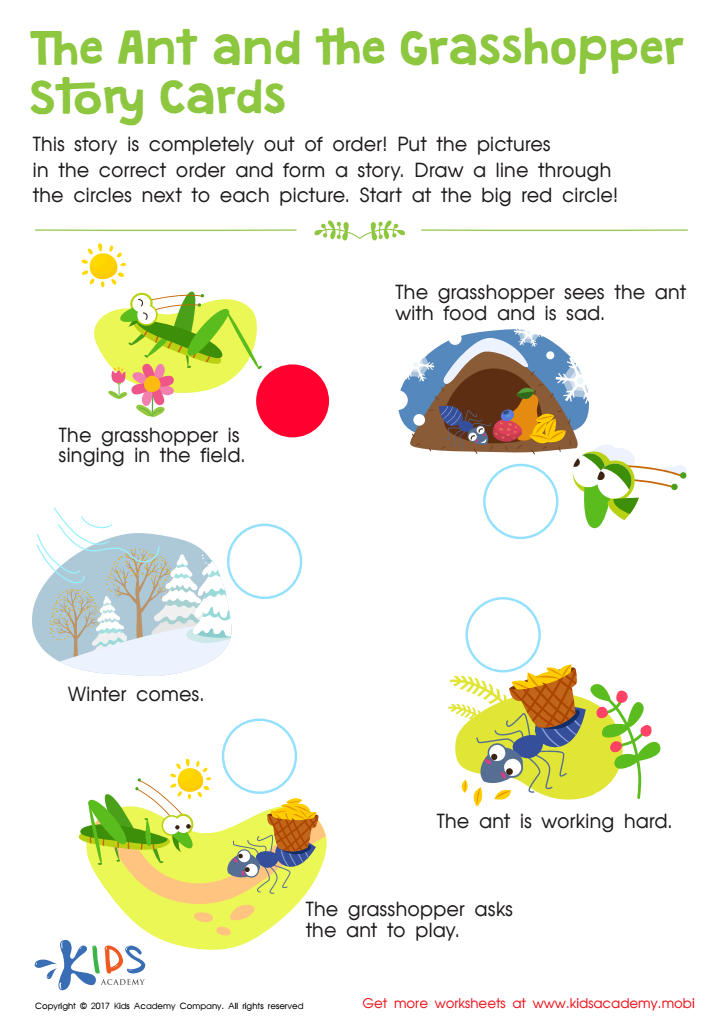
The Ant and The Grasshopper Worksheet
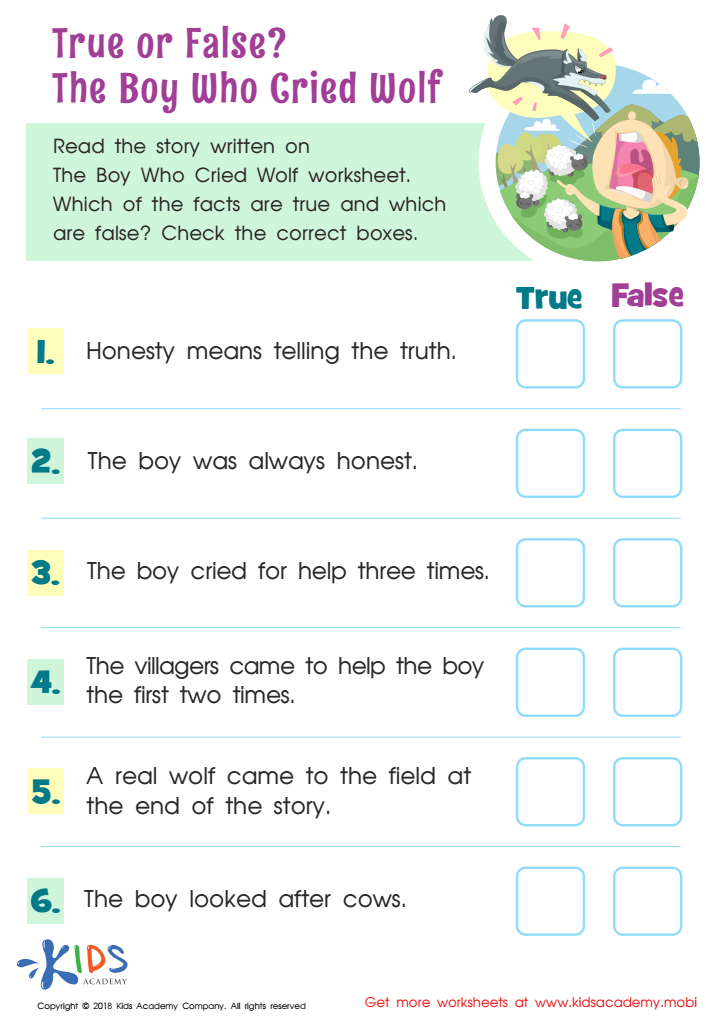
True or False? The Boy Who Cried Wolf Worksheet
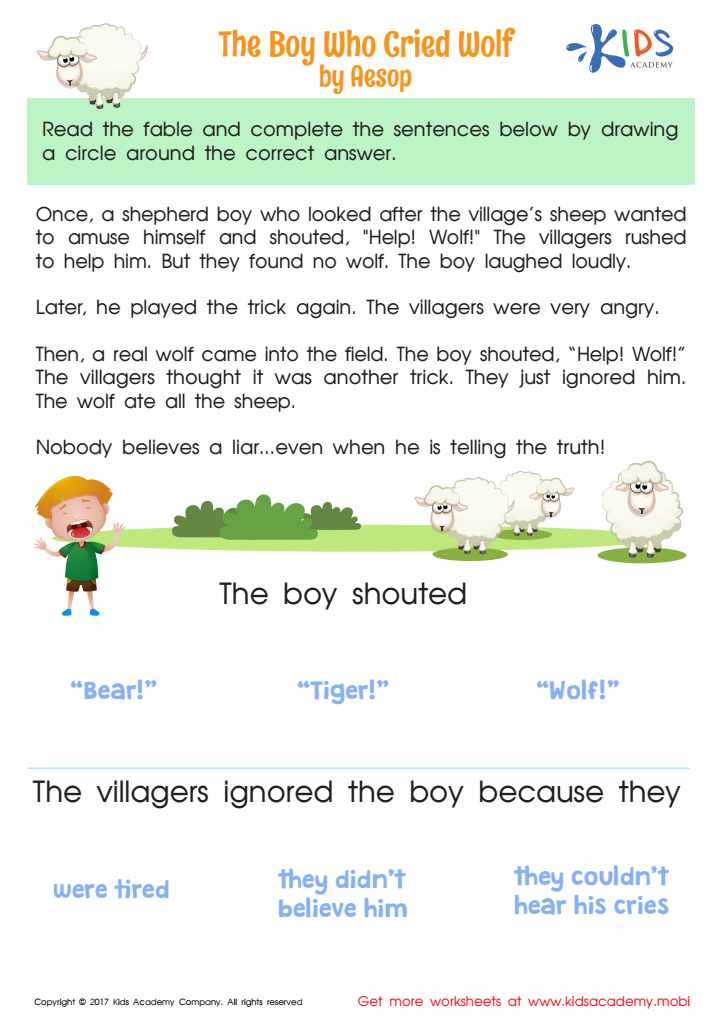
The Boy Who Cried Wolf Worksheet






Moral understanding through reading is crucial for children ages 6-7 as it lays the foundation for social behavior and ethical reasoning. At this young age, children are highly impressionable and begin to formulate their understanding of right and wrong. Exposing them to moral themes in literature helps reinforce societal values such as empathy, kindness, honesty, and respect. When parents and teachers prioritize moral understanding in reading, they assist children in developing critical social skills, such as taking the perspective of others, understanding consequences, and making thoughtful choices.
Moreover, reading stories that highlight moral dilemmas enhances a child’s ability to navigate complex social situations. Engaging discussions about the characters' choices and the outcomes not only enrich vocabulary and comprehension but also lead to thoughtful conversations about ethics and morals. This constructive dialogue promotes critical thinking, enabling children to internalize values that shape their character and future interactions within their communities.
Ultimately, nurturing moral understanding through reading fosters emotionally intelligent and socially responsible individuals, making the effort from parents and teachers invaluable in guiding young learners toward becoming compassionate and aware members of society. This engagement positively influences their academic achievement and personal development, setting a trajectory for lifelong moral understanding.








