Understanding sequencing Reading Worksheets for Ages 6-7
3 filtered results
-
From - To
Introduce your budding reader to the essential skill of sequencing with our engaging worksheets for ages 6-7. Our carefully crafted resources help children recognize and organize events in a logical order, a key component in reading comprehension. By practicing sequencing, young learners enhance their ability to understand stories, retell events, and improve their problem-solving skills. Each worksheet is designed to be both fun and educational, featuring age-appropriate texts, colorful illustrations, and interactive tasks that keep children motivated. Boost your child's reading capabilities by exploring our diverse selection of sequencing worksheets today, fostering a solid foundation for lifelong literacy.
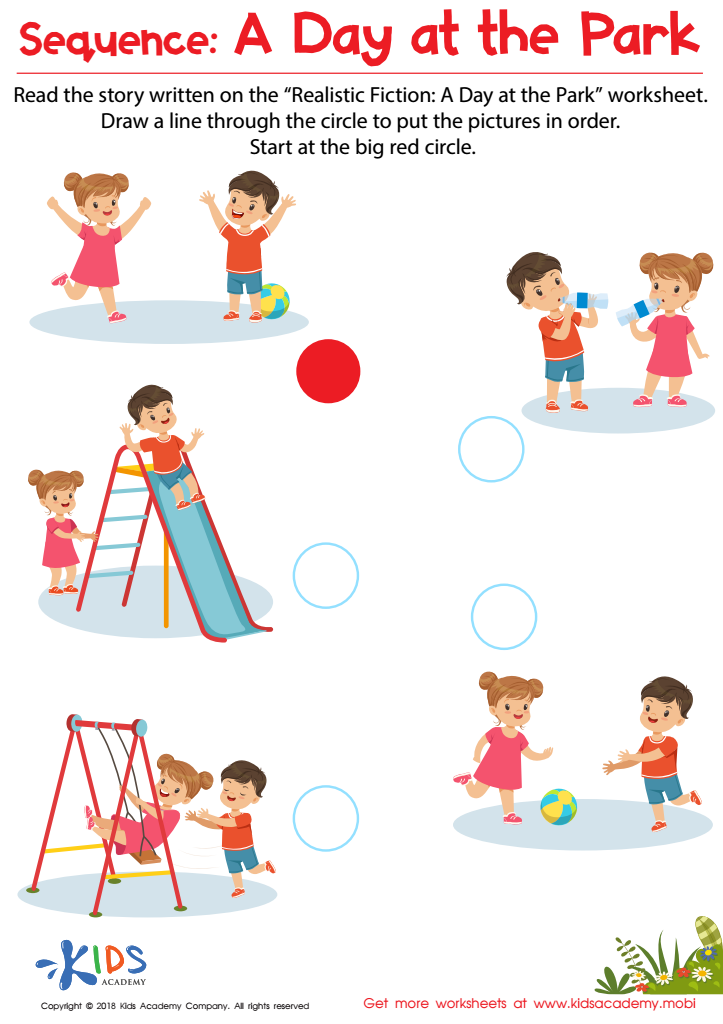
Sequence: A Day at the Park Worksheet
 Assign to My Students
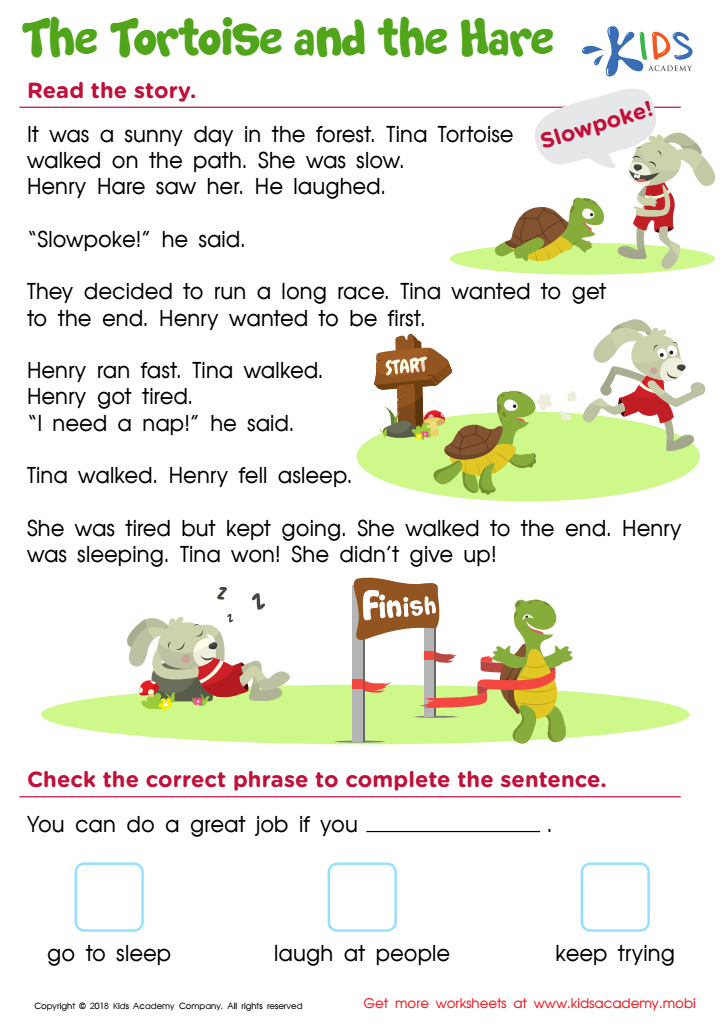
The Tortoise and the Hare Worksheet







Understanding sequencing in reading is crucial for children aged 6-7 because it forms the foundation of comprehension and critical thinking skills. Sequencing helps young readers grasp the order in which events occur in a story, which is essential for making sense of the narrative. At this developmental stage, children are transitioning from learning to read to reading to learn, and being able to identify the beginning, middle, and end of a story is key to this progression.
When parents and teachers focus on sequencing, they help children improve their memory and organizational skills. These abilities are not only important for reading comprehension but also for everyday tasks and problem-solving. For instance, following steps in a recipe or instructions for a game all require an understanding of sequence.
Moreover, mastering sequencing enriches children's storytelling and writing capabilities. They learn to structure their thoughts coherently, making it easier for their audience to understand their message. Engaging in activities like retelling stories in sequence can also foster creativity and communication skills.
Thus, by prioritizing sequencing in reading, parents and teachers equip children with essential cognitive tools that support academic success and life-long learning.








