Map reading skills Science Worksheets for Ages 6-7
1 filtered results
-
From - To
Enhance your child's map reading skills with our engaging science worksheets, specially designed for ages 6-7. These interactive activities introduce young learners to essential map concepts, including symbols, directions, and landmarks. Through fun exercises and colorful visuals, children will develop critical thinking and problem-solving skills as they interpret maps and navigate through various terrains. Ideal for both classroom and home learning, these worksheets foster a love for exploration and geography. Help your little ones become confident map readers while building a strong foundation in science-related skills. Download our worksheets today and turn learning into an exciting adventure!
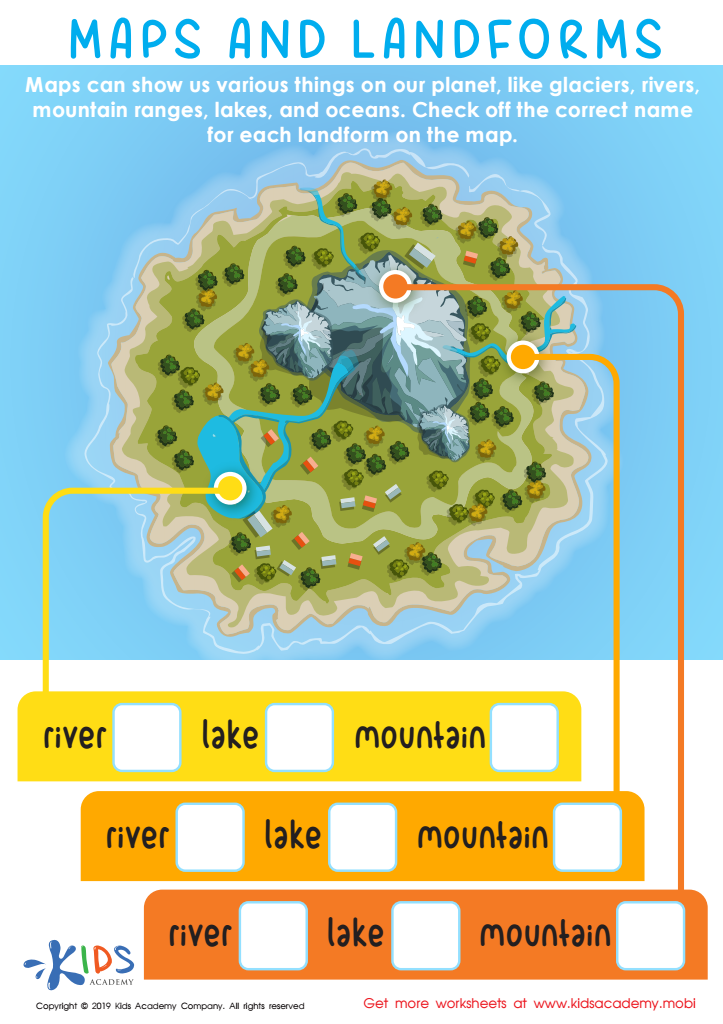
Maps and Landforms Worksheet
 Assign to My Students





Map reading skills are essential for children ages 6-7 as they lay the foundation for critical thinking, spatial awareness, and problem-solving abilities. At this stage, children are naturally curious about the world around them and learning to read maps elevates this curiosity into practical skills. Understanding maps fosters an appreciation for geography, encourages exploration, and piques interest in various landscapes and cultures.
For parents and teachers, emphasizing map reading skills promotes cognitive development and enhances literacy skills. It engages children in hands-on learning experiences that combine visual stimuli with practical application. By interpreting symbols, understanding scales, and using directional language, children enhance their vocabulary and communication skills.
These skills also reinforce responsibility and independence. As children learn to navigate their communities or even simple terrain maps, they gain confidence in their ability to analyze information and make decisions. At a young age, setting a foundation in map reading nurtures a sense of competence and builds a lifelong love for learning.
Ultimately, fostering map reading abilities cultivates informed, independent thinkers who can navigate their surroundings effectively. Incorporating map reading into daily lessons nurtures essential skills necessary for future academic and social success.







