Understanding pollination Plants and Animals Worksheets for Ages 6-7
3 filtered results
-
From - To
Unlock the wonders of nature with our "Understanding Pollination: Plants and Animals Worksheets" designed specifically for ages 6-7. These engaging and interactive worksheets introduce young learners to the fascinating process of pollination, highlighting the vital roles that plants and animals play in this essential ecological function. Through fun activities, children will explore how bees, butterflies, and other pollinators interact with flowers, fostering an appreciation for the environment. Ideal for classroom use or at-home learning, our worksheets encourage critical thinking and creativity while reinforcing foundational science concepts. Enhance your child's understanding of pollination today and inspire a lifelong love of nature!
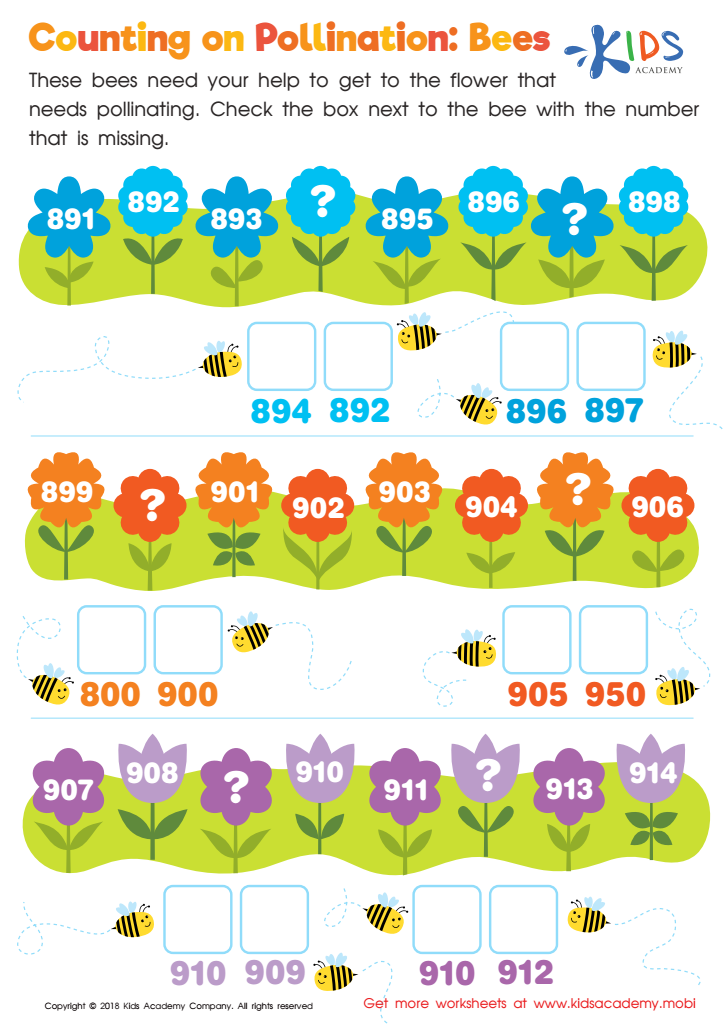
Counting on Pollination: Bees Worksheet
 Assign to My Students











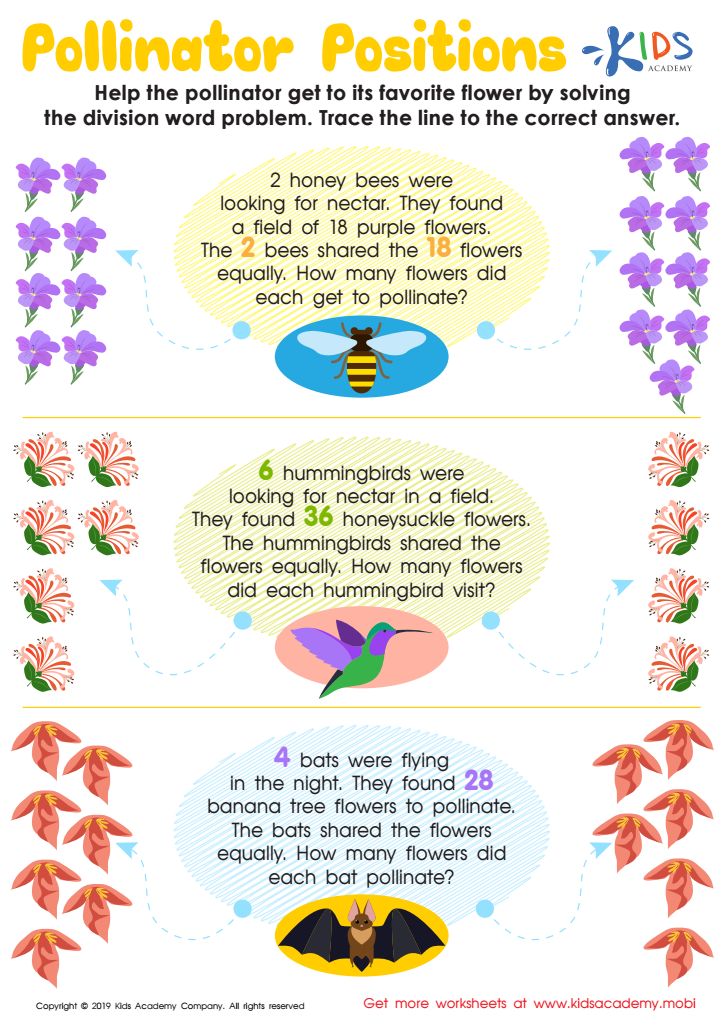
Pollinator Positions Worksheet
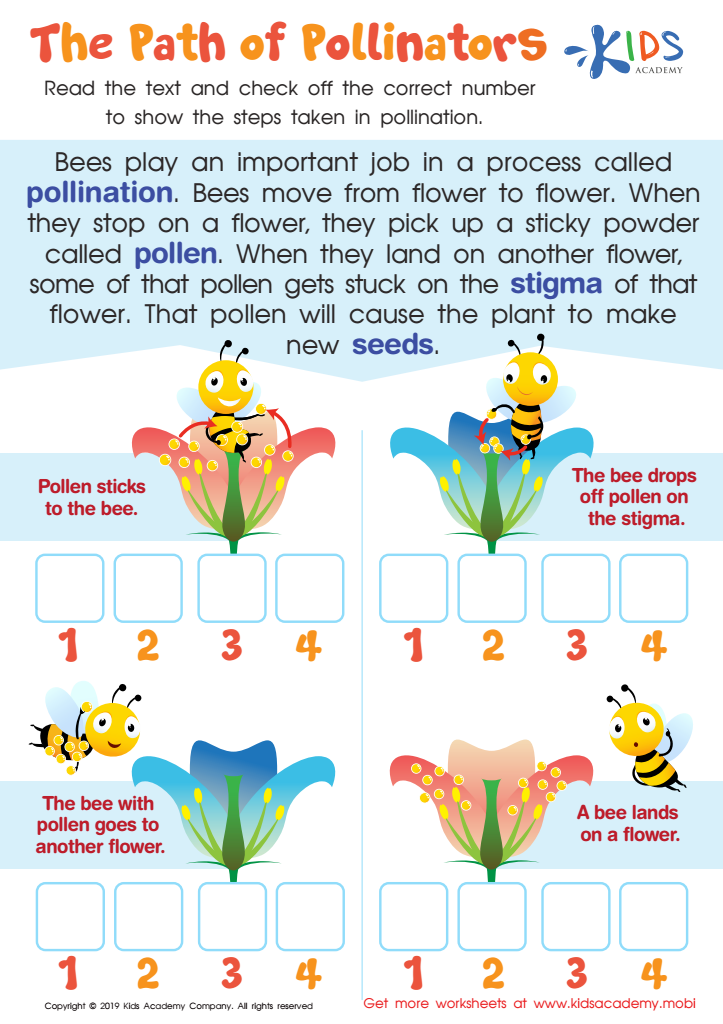
The Path of Pollinators Worksheet







Understanding pollination is crucial for young children aged 6-7 as it serves as a foundational concept in their exploration of nature and the interconnectedness of living organisms. Pollination plays a vital role in ecosystems, enabling plants to reproduce and providing food sources for various animals, including humans. When parents and teachers emphasize this process, they are helping children appreciate the importance of maintaining biodiversity and the environment.
Educational activities related to pollination can spark curiosity and foster a love for science. By learning how bees, butterflies, and other animals assist in the transfer of pollen, children develop an appreciation for wildlife and the roles different organisms play within ecosystems. This understanding encourages responsible behavior toward nature, such as planting pollinator-friendly gardens and recognizing the importance of conserving habitats.
Additionally, discussions about pollination can lead to broader lessons on food production, where children learn how many of the foods they enjoy depend on this process. Overall, teaching young learners about pollination enriches their education, instills environmental stewardship, and builds a foundation for more complex science concepts in the future, making it a valuable endeavor for parents and teachers alike.








