Begin your child's data literacy journey with our "Interpreting Data Worksheets for Ages 6-8." These engaging and educational printables help young learners grasp essential data concepts such as reading charts, graphs, and tables in a fun and interactive way. By practicing with pictographs, bar graphs, and tally charts, students will enhance their analytical skills and boost confidence in interpreting and comparing information. Perfect for both classroom and homeschool settings, these worksheets align with early curriculum standards and are designed to make data analysis approachable and interesting for kids. Explore and download today to enrich your child's learning experience!

Check out this FREE "Interpreting data" Trial Lesson for age 6-8!

Rounding up and down to the nearest 10 or 100

Favorites
With answer key
Interactive
  • 6-8
  • Interpreting data
Temperature Patterns Worksheet

Temperature Patterns Worksheet

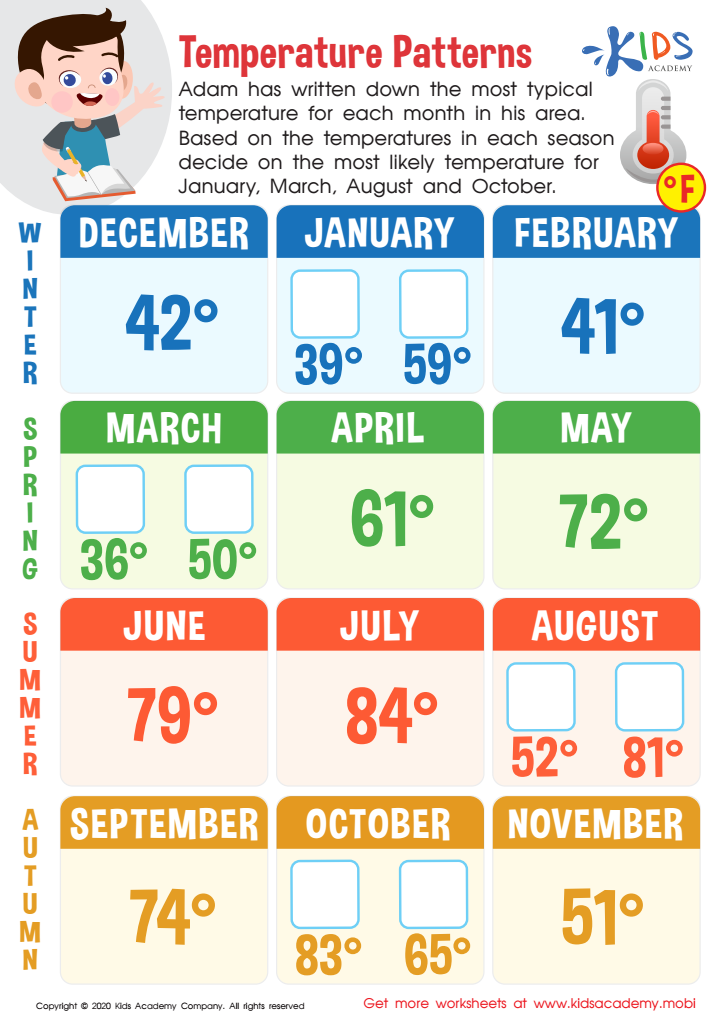
Adam has recorded temperatures in his area. Help your child use the data to predict temperatures for one month in each season. Check the box next to the correct temperature for each row in this worksheet. In America, temperatures vary by climate and season - colder in winter, hotter in summer.
Temperature Patterns Worksheet
Worksheet
Rounding Influences Food Choices Worksheet

Rounding Influences Food Choices Worksheet

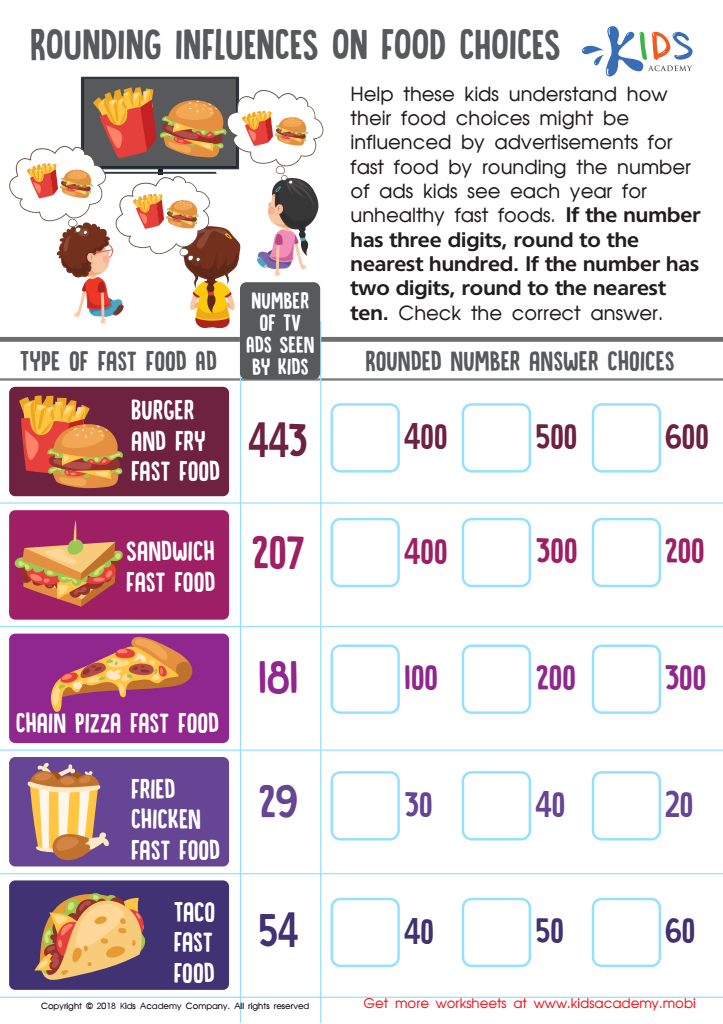
Kids find math more enjoyable when it reflects real-life scenarios. This free worksheet combines math and health! Kids view data on the number of ads they're exposed to in a year and must round the numbers to the nearest ten or hundred. Solve and check the correct answers to finish.
Rounding Influences Food Choices Worksheet
Worksheet
Interpret the line plot worksheet

Interpret Line Plot Worksheet
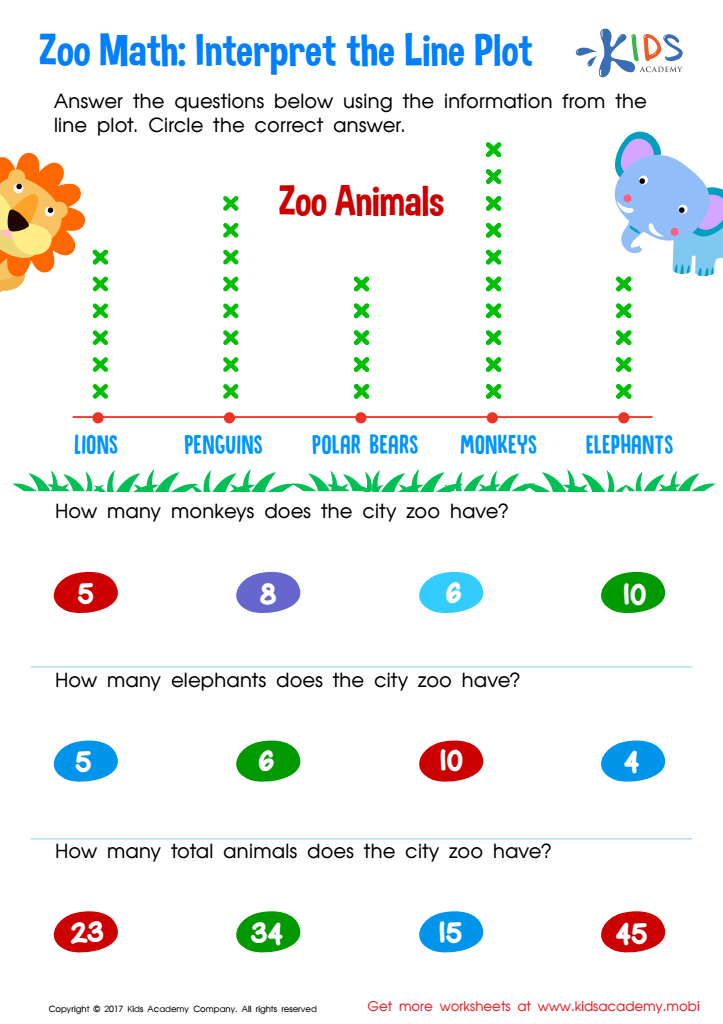
Kids can learn to read graphs and analyze data easily with line plots. A fun zoo animal worksheet motivates kids to answer questions by reading the line plot and finding out how many animals a local zoo has.
Interpret Line Plot Worksheet
Worksheet
Leaf Bar Graph Worksheet

Leaf Bar Graph Worksheet

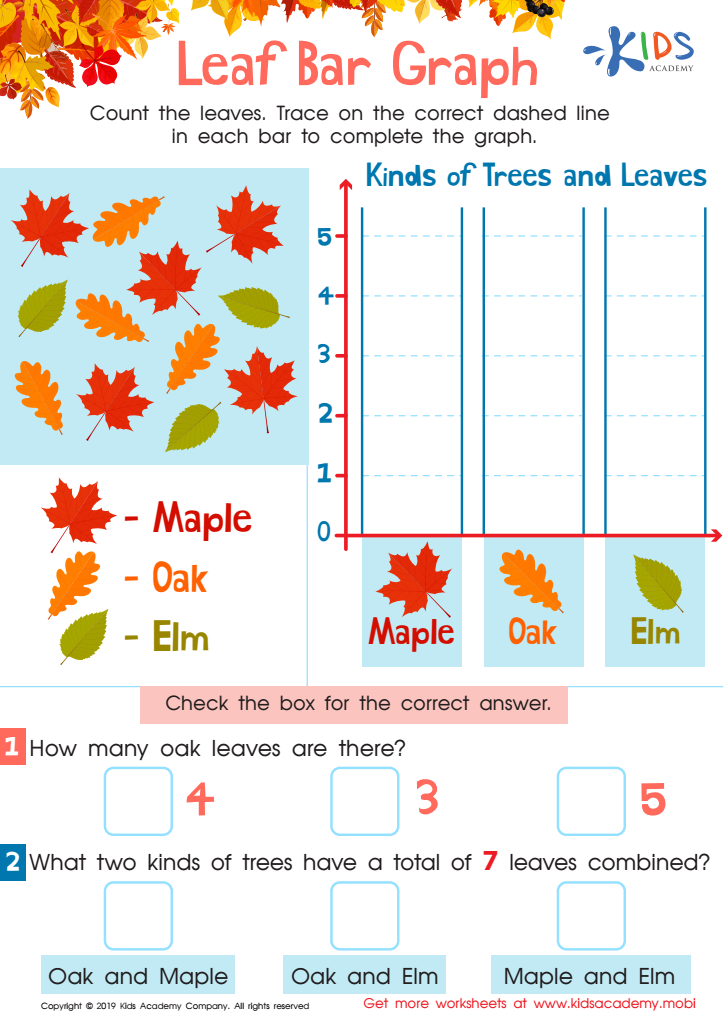
You can help your kids make learning easier and more enjoyable. While their teachers provide lessons and homework, you can take their education further. This worksheet can assist them in mastering bar charts. Count the leaves, then trace the correct line for each bar to complete the graph.
Leaf Bar Graph Worksheet
Worksheet
Comparing Biodiversity: Rainforest Plants Worksheet

Comparing Biodiversity: Rainforest Plants Worksheet

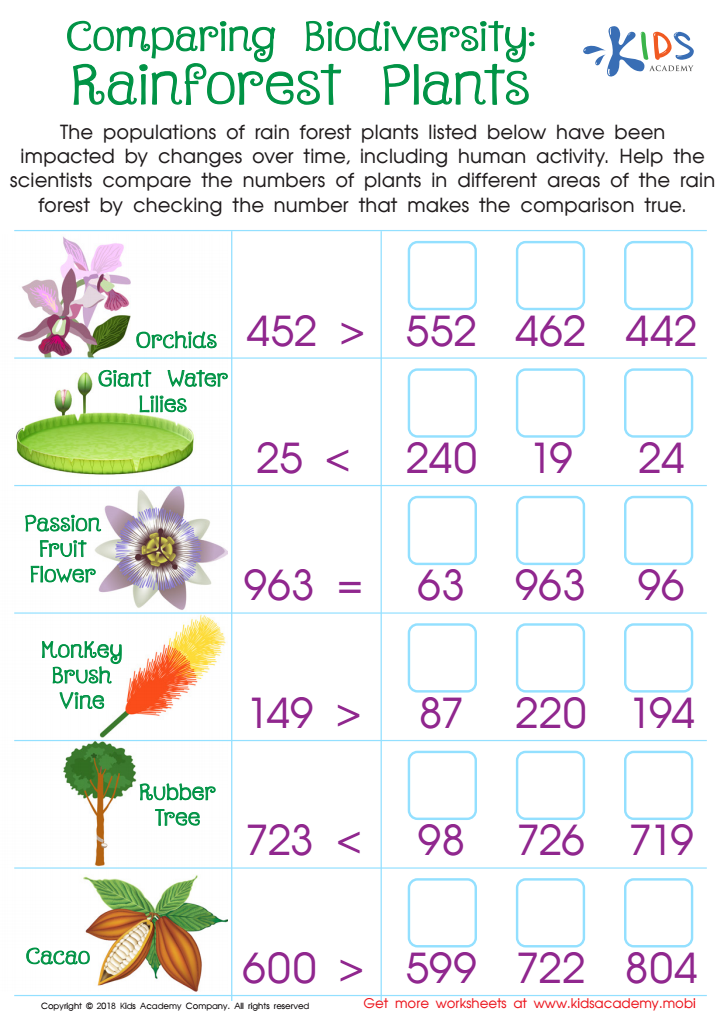
Have your students learn about biodiversity in the rainforest and practice number sense and reasoning with this colorful PDF worksheet. Comparing the numbers of plants found in different areas of the rainforest, they'll combine eco-friendly science and math to make the number comparisons true.
Comparing Biodiversity: Rainforest Plants Worksheet
Worksheet
Match Tally Marks to Bar Graphs Worksheet

Match Tally Marks to Bar Graphs Worksheet

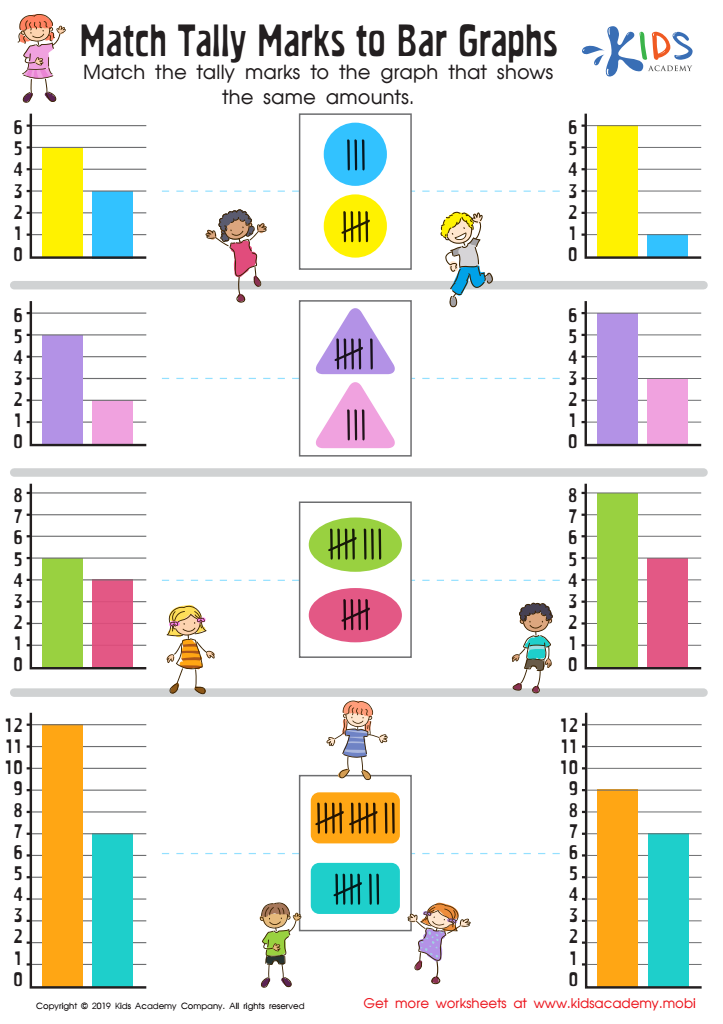
Learning math can be tough for kids. Rules and formulas can be confusing. Don't worry, this worksheet can help them understand graphs better. Show them how to match the tally marks with the graph that shows the same amount. It will help them grasp the basics and prepare them for more complex equations.
Match Tally Marks to Bar Graphs Worksheet
Worksheet
Compare Length in Centimeters Worksheet

Compare Length in Centimeters Worksheet

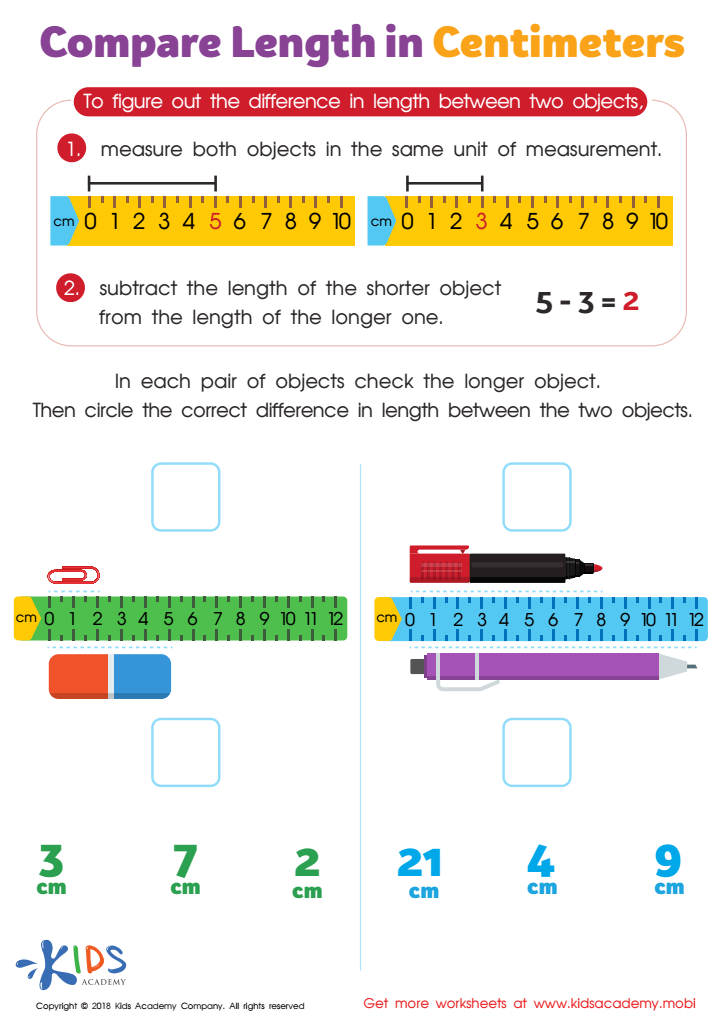
To do this worksheet, your child needs to be able to measure accurately, add and subtract. They must measure both items and subtract the shorter from the longer to work out the difference in length.
Compare Length in Centimeters Worksheet
Worksheet
Pencil Case Line Plot Worksheet

Pencil Case Line Plot Worksheet

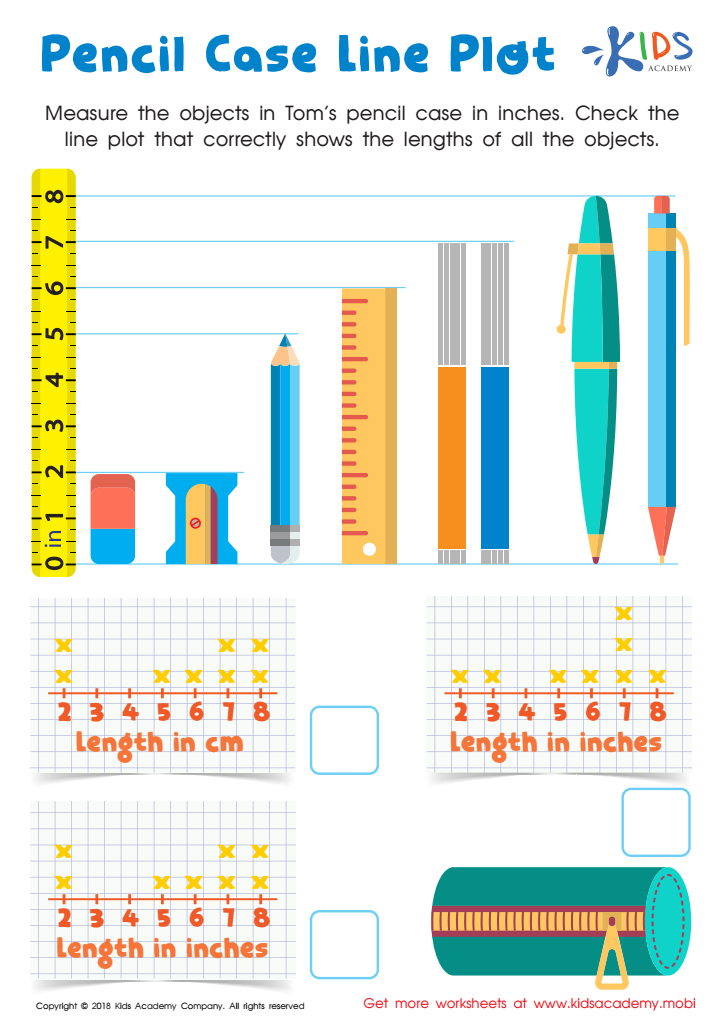
Explain to your child that a line plot is a way to organize information. For example, if they need to arrange objects, they should draw a line plot. Now, have them help Tom measure the objects in his pencil case in inches. Then, have them check the line plot that accurately shows the length.
Pencil Case Line Plot Worksheet
Worksheet
Zoo Height Contest Worksheet

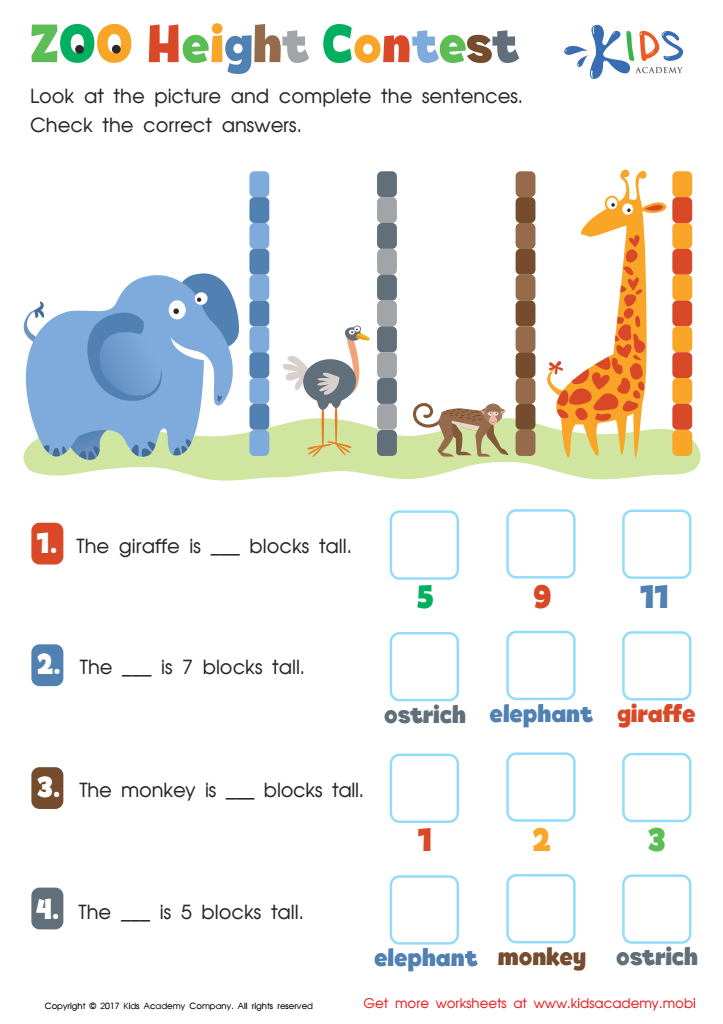
Zoo Height Contest Worksheet

Let's head to the zoo and use colorful blocks to measure your child's favorite animals! With this Kids Academy worksheet, help them practice and prepare for learning measurement. Guide them in looking at the zoo animals and counting blocks to find the height. Then, read the questions and check the box next to the correct answer.
Zoo Height Contest Worksheet
Worksheet
Family Line Plot Worksheet


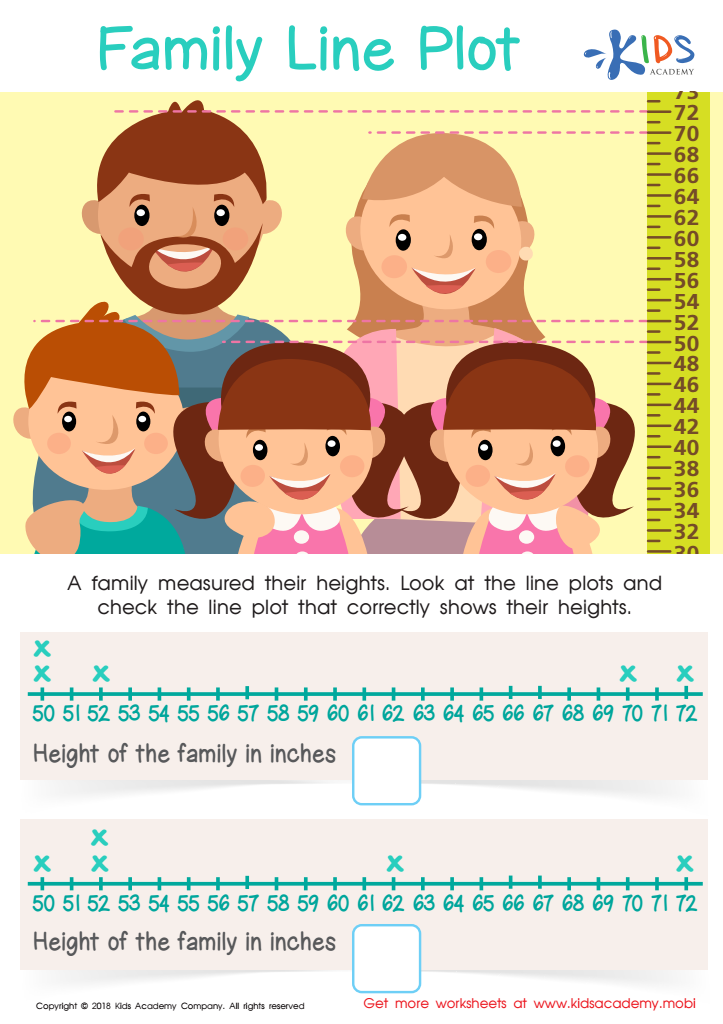
Family Line Plot Worksheet

Have you and your kids ever done a family height measurement? How did it go? If they're familiar with it, this worksheet may be simpler. The picture shows a family with their heights recorded. Get your kid to look at the line plots and choose the one that shows the family's heights accurately.
Family Line Plot Worksheet
Worksheet


Parents and teachers should care about interpreting data for children ages 6-8 because it lays the foundation for critical thinking and decision-making skills essential for their future. At this formative stage, children are naturally curious and ready to learn new concepts. Introducing data interpretation can advance their abilities to observe, measure, collect information, and see patterns—all fundamental to mathematical and scientific thinking.

Understanding data helps children make sense of the world. For instance, simple activities like counting objects or creating graphs from weather observations allow them to visualize information and draw conclusions. These activities nurture logical reasoning and problem-solving skills, which are not only crucial for subjects like math and science but are also applicable in everyday life.

Moreover, engaging with data interpretation encourages children to ask questions, an essential step in the learning process. It promotes perseverance, as they may need to analyze data multiple times to understand it fully. Teachers and parents can use data interpretation activities to build a child's confidence in their analytical abilities.

Introducing these concepts early on sets their path for more complex learning later in school. As children grow, their enhanced capacity for interpreting data will be invaluable in an increasingly data-driven world, aiding them not just academically, but socially and economically as well.