Text analysis Worksheets for Ages 6-8
4 filtered results
-
From - To
Enhance your child's reading comprehension and analytical skills with our engaging Text Analysis Worksheets for ages 6-8. Specifically designed for early learners, these worksheets provide a fun and interactive way for children to explore key concepts, contexts, and characters within various texts. Each worksheet encourages critical thinking through activities such as summarizing, drawing conclusions, and answering thought-provoking questions. Ideal for home schooling or classroom use, our worksheets not only improve literacy skills but also spark a love for reading. Discover tools that inspire curious minds and lay a strong foundation for future learning adventures. Download now and watch your child thrive!
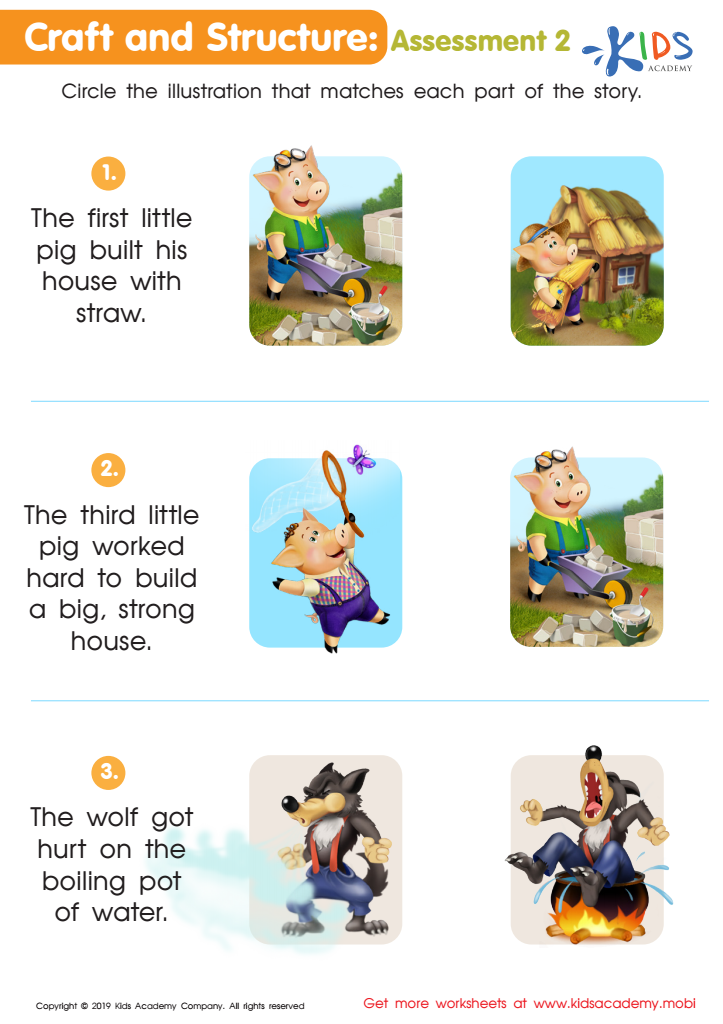
Craft and Structure: Assessment 2 Worksheet 2
 Assign to My Students
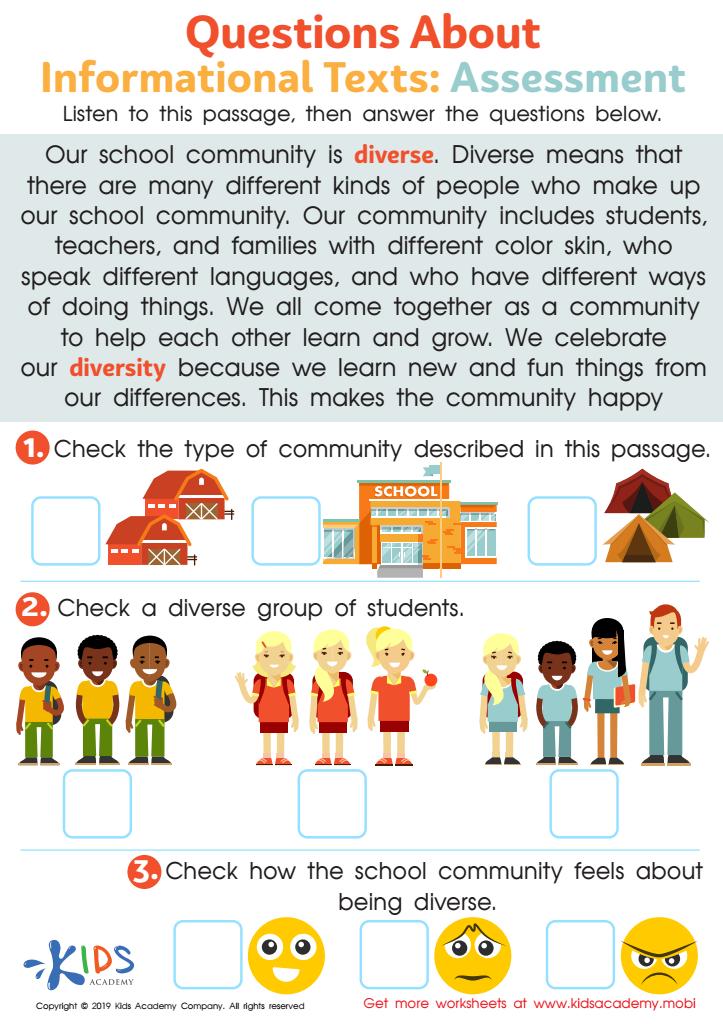
Questions About Informational Texts: Assessment 1 Worksheet
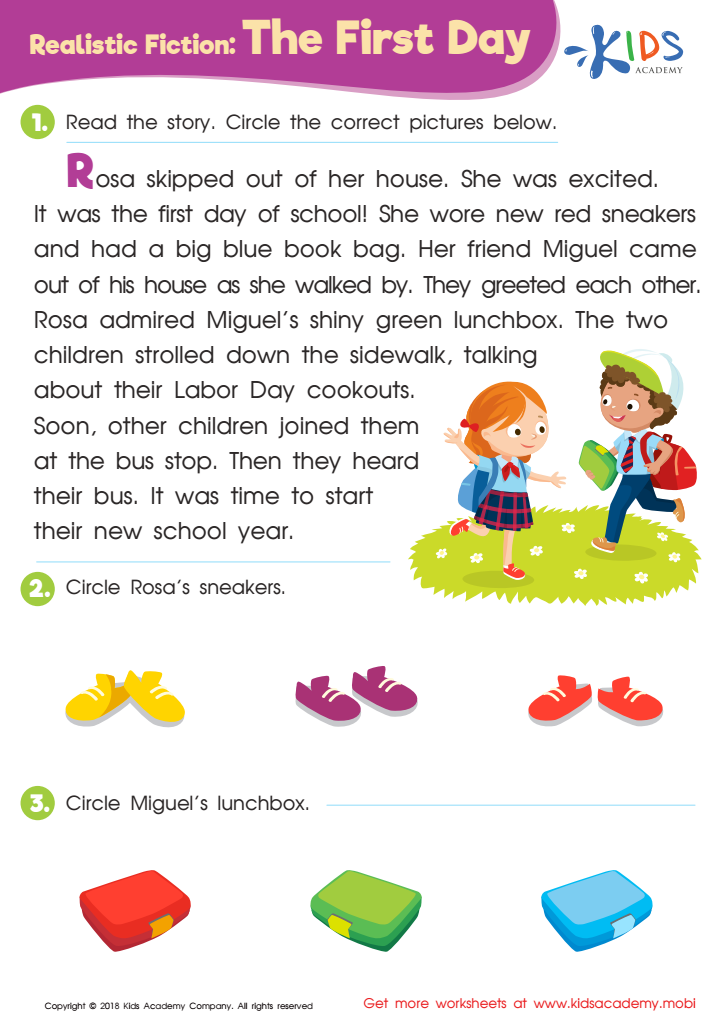
Realistic Fiction: The First Day Worksheet
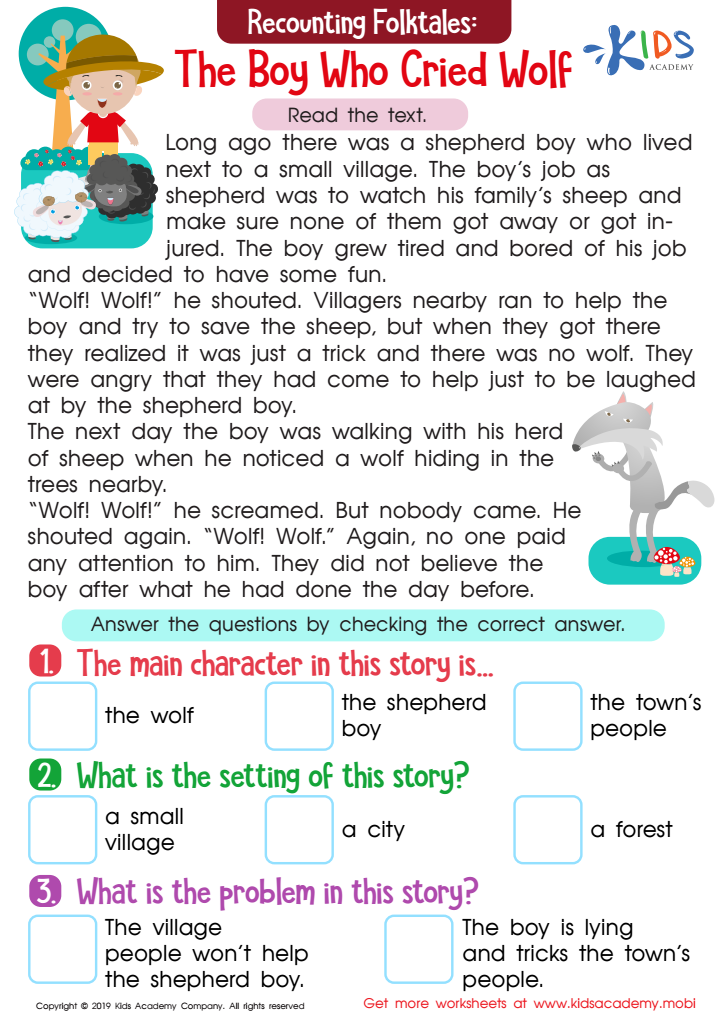
The Boy Who Cried Wolf Part 1 Worksheet



.jpg)



Text analysis for children aged 6-8 is crucial for several reasons. Firstly, this developmental stage is foundational for literacy skills. By engaging in text analysis, young learners can develop critical reading skills that go beyond basic comprehension, enabling them to identify main ideas, understand character motivations, and make inferences. These skills are essential for academic success as they progress through school.
Secondly, text analysis fosters critical thinking and creativity. When parents or teachers encourage children to analyze text, they help them question what they read, connect it to their experiences, and express their interpretations. This promotes a love for reading and enhances their analytical abilities.
Moreover, text analysis supports social and emotional learning. Through discussions about characters and scenarios in stories, children can develop empathy and understand diverse perspectives, an essential aspect of societal interaction.
Lastly, incorporating text analysis into the curriculum can enhance teacher-parent communication. When parents are informed about their child’s learning process, they can better support educational goals at home, fostering a collaborative partnership in their child’s development. In summary, understanding and promoting text analysis at this young age sets the stage for lifelong learning.








