
Understanding multiplication Worksheets for Ages 6-8
35 filtered results
Difficulty Level
Grade
Age
-
From - To
Subject
Activity
Standards
Discover the importance of multiplication for ages 6-8 through our engaging worksheets designed to foster a strong foundation in math. Our carefully crafted resources introduce kids to multiplication concepts using visual aids and relatable examples. Each worksheet is filled with fun exercises that encourage practice, reinforce learning, and build confidence in young learners. From understanding factors to solving simple multiplication problems, these activities promote critical thinking and enhance problem-solving skills. Perfect for both classroom and home learning, our multiplication worksheets are a valuable tool in helping children grasp essential math principles while enjoying the learning process!
Favorites
With answer key
Interactive
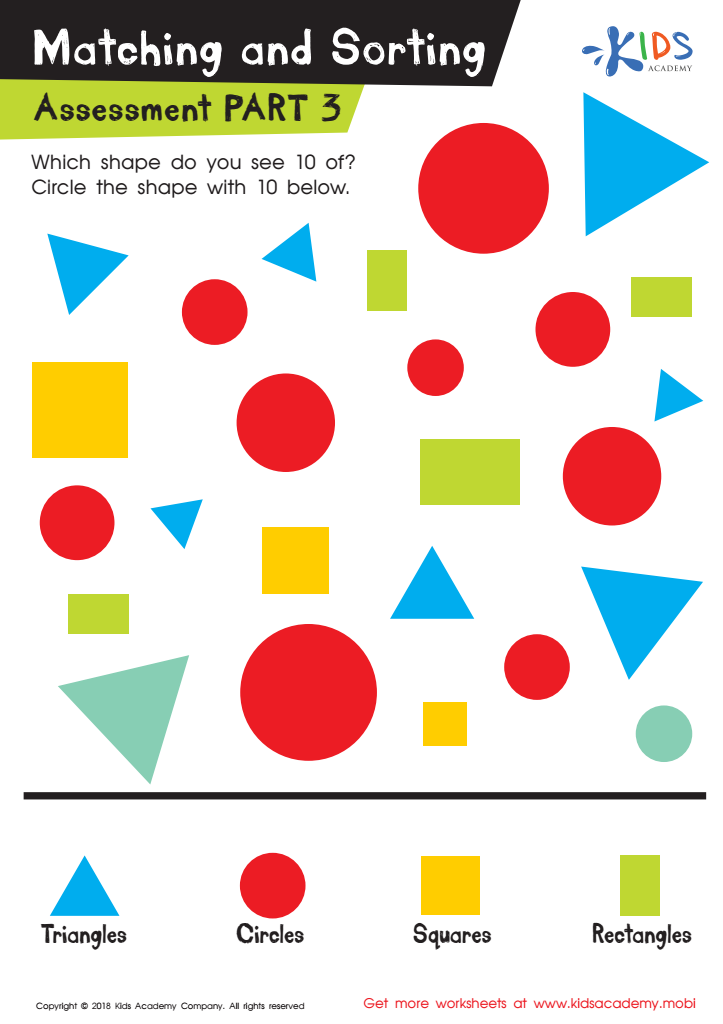
Matching and Sorting for Kindergarten: Assessment 3 Worksheet
Assess your child's basic geometry skills and properties with a colorful worksheet! Utilize visual discrimination and number sense to identify groups of ten and sort objects by bold colors. Challenge them to differentiate shapes and sizes.
 Assign to My Students
Matching and Sorting for Kindergarten: Assessment 3 Worksheet
Worksheet
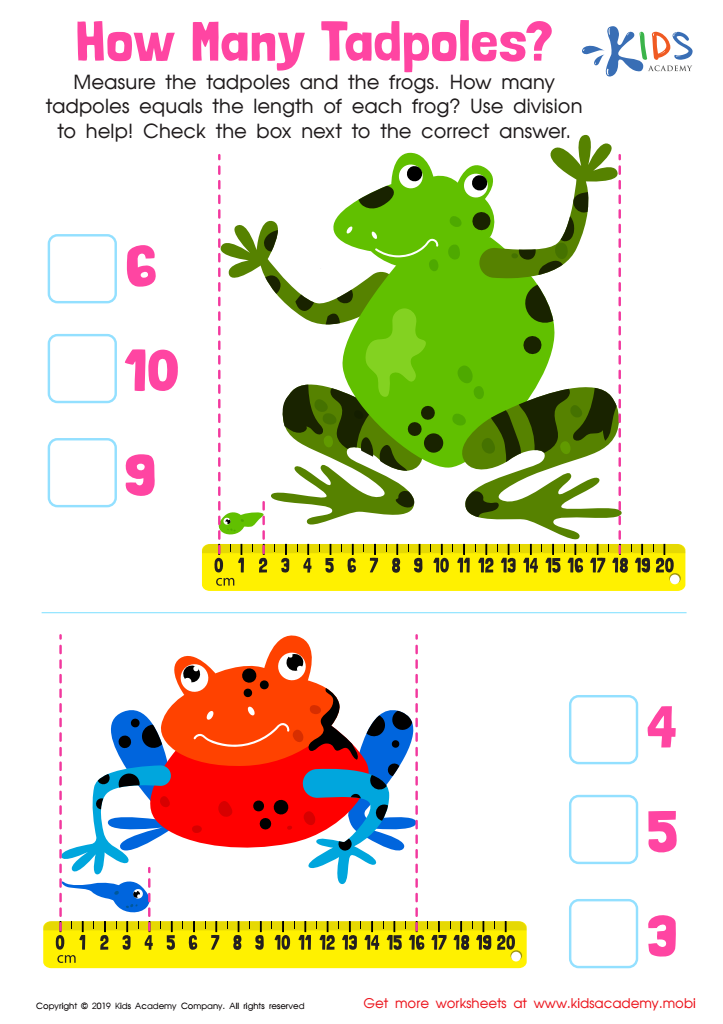
How Many Tadpoles Worksheet
Kids love tadpoles! They'll have fun using them to work out the measurements of their frog friends. By dividing the length of the frogs by the length of the tadpoles, children can deduce how many tadpoles it takes to equal a frog. With the use of 'how many' and 'each' they'll solve math problems without realizing it!
How Many Tadpoles Worksheet
Worksheet
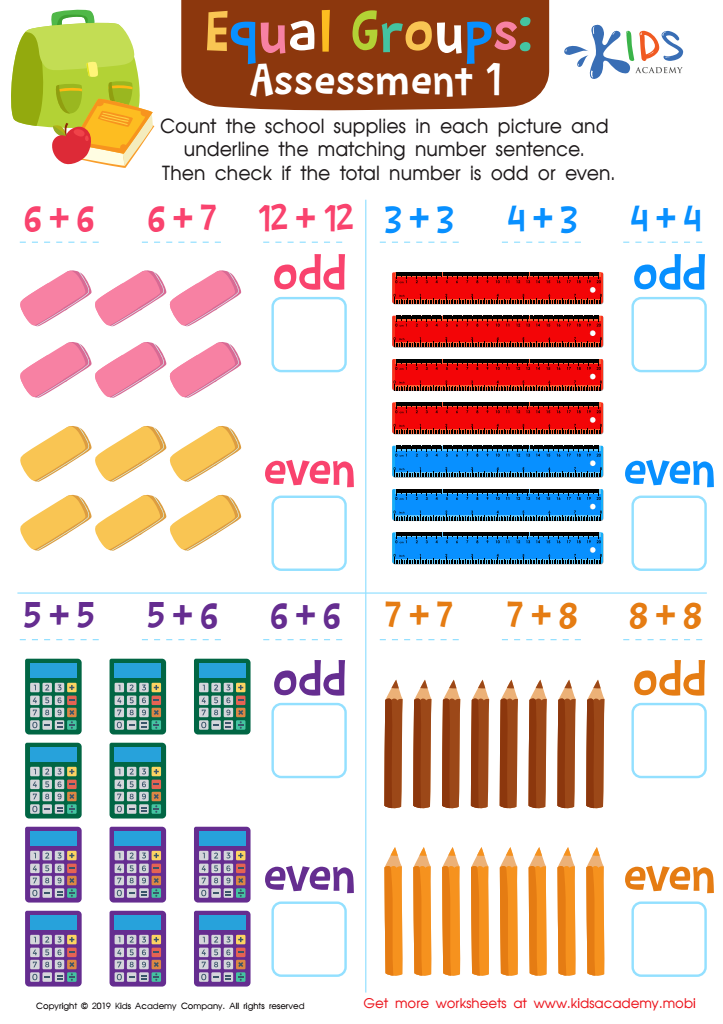
Equal Groups: Assessment 1 Worksheet
Have your students count the school supplies in each picture. Underline the number sentence that matches. Ask them if the total number is odd or even. Help your eager little preschoolers explore their classroom, which is full of pencils, chairs, desks, a blackboard and the teacher's desk.
Equal Groups: Assessment 1 Worksheet
Worksheet
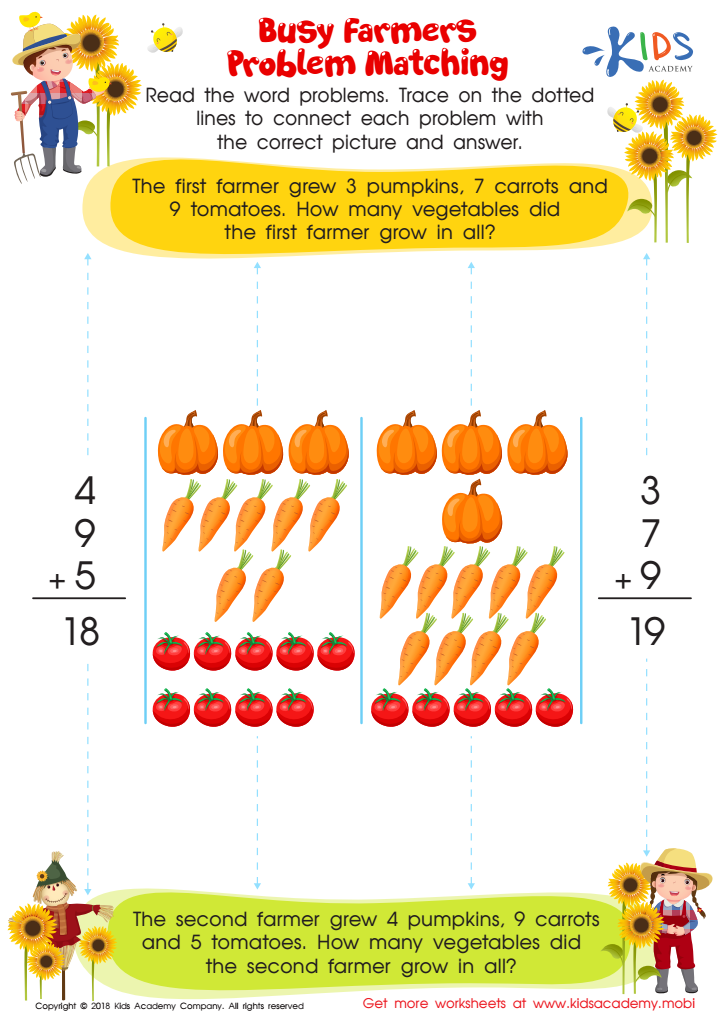
Busy Farmers: Problem Matching Worksheet
Farming is tough, so help your mathematician out with this fun and stimulating worksheet! They'll read word problems and connect each to its correct picture, using traceable lines. They'll practice addition with three addends, and use the harvest veg pictures to ensure accuracy.
Busy Farmers: Problem Matching Worksheet
Worksheet
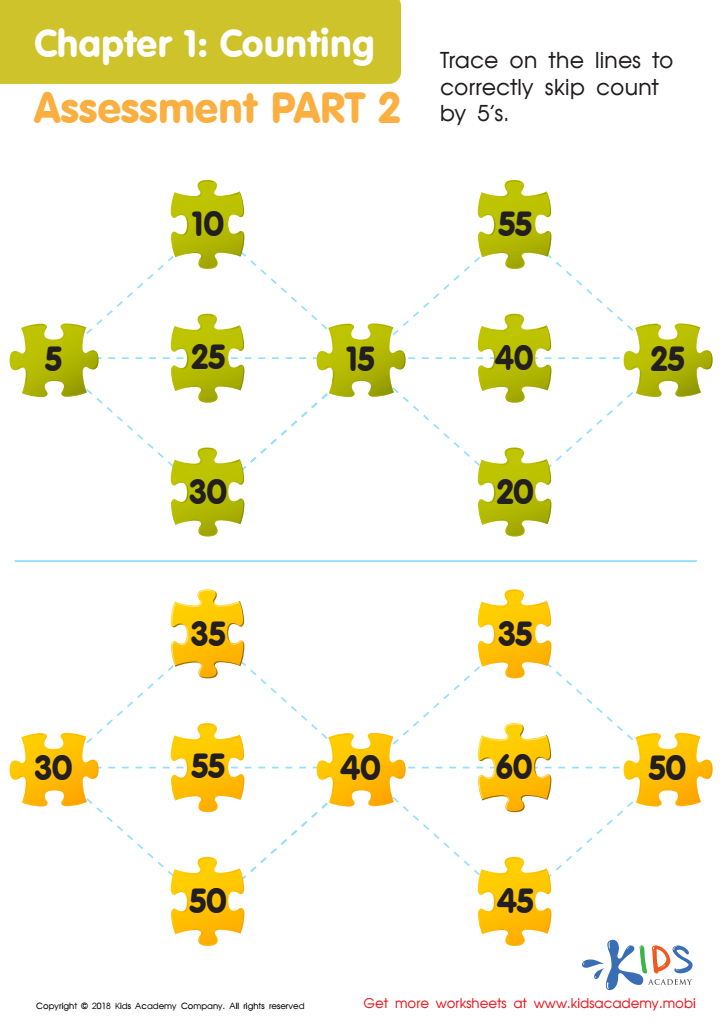
Counting: Assessment 2 Worksheet
By now, your child should be able to count up to the hundreds. If they're still learning the tens, that's okay - as long as they're going at their own pace. This worksheet will be easy if they can count to ten. Ask them to trace the lines and skip count by 5's.
Counting: Assessment 2 Worksheet
Worksheet
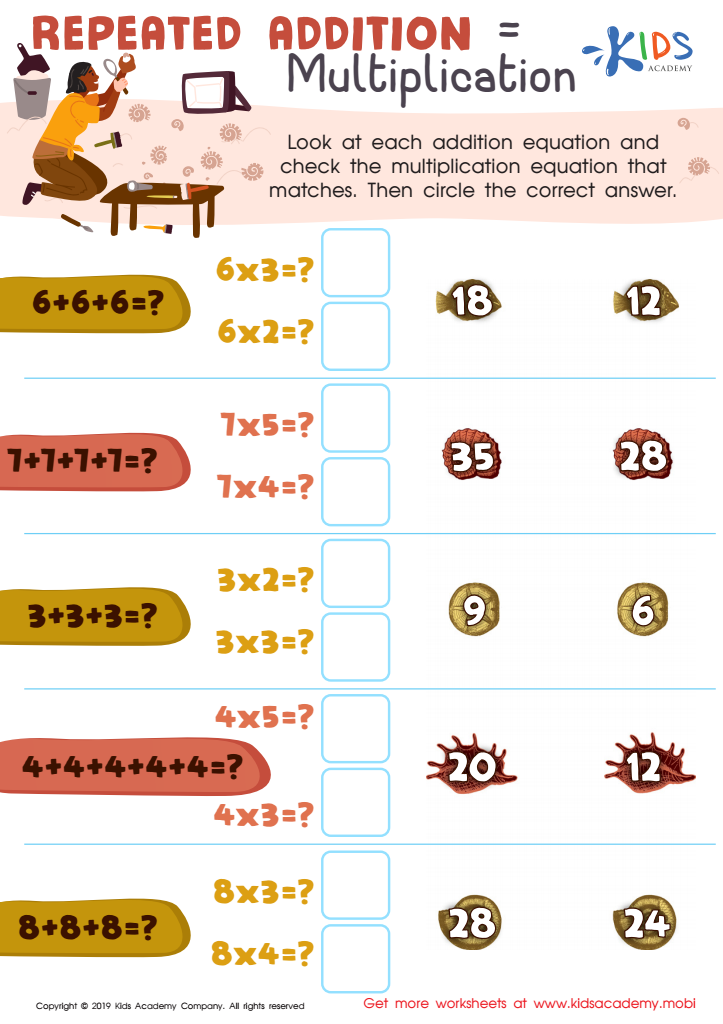
Repeated Addition = Multiplication Worksheet
If your child is having trouble with math, worksheets like this can help them get more practice. Addition, subtraction, and multiplication go together. Look over each addition equation and pick the matching multiplication equation, then circle the correct answer. This can give your child the necessary practice to understand mathematics better.
Repeated Addition = Multiplication Worksheet
Worksheet
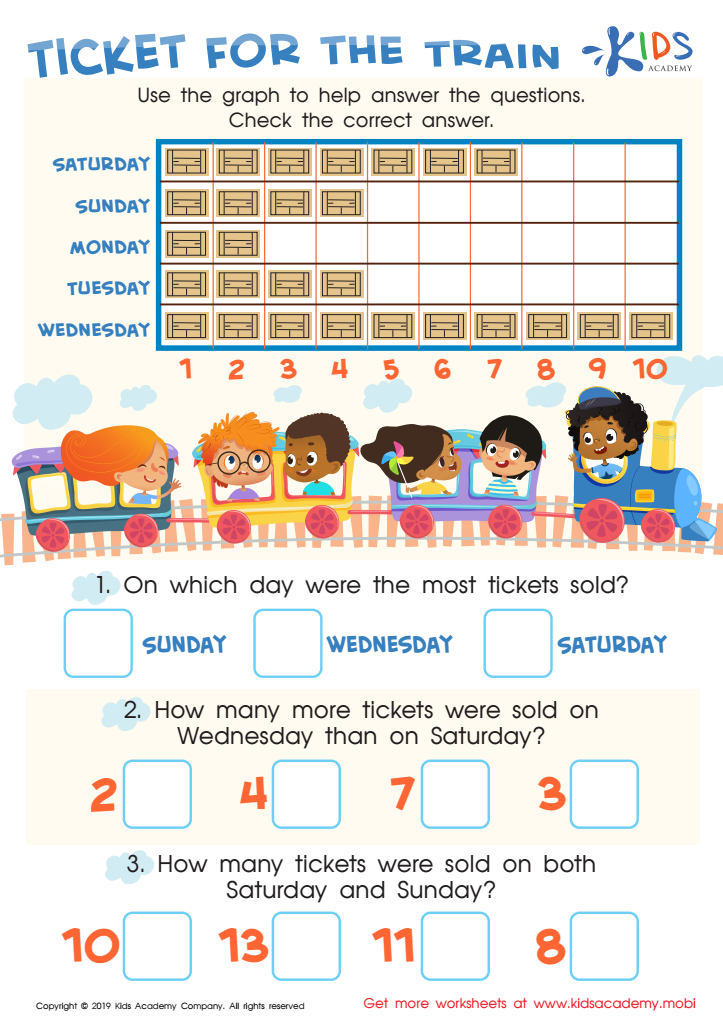
Ticket for the Train Worksheet
It's important to use fun scenarios with familiar objects when teaching kids. Try discussing train rides and the accompanying picture graph. Ask questions about it, then help kids check the correct answers. Let them enjoy the learning process!
Ticket for the Train Worksheet
Worksheet
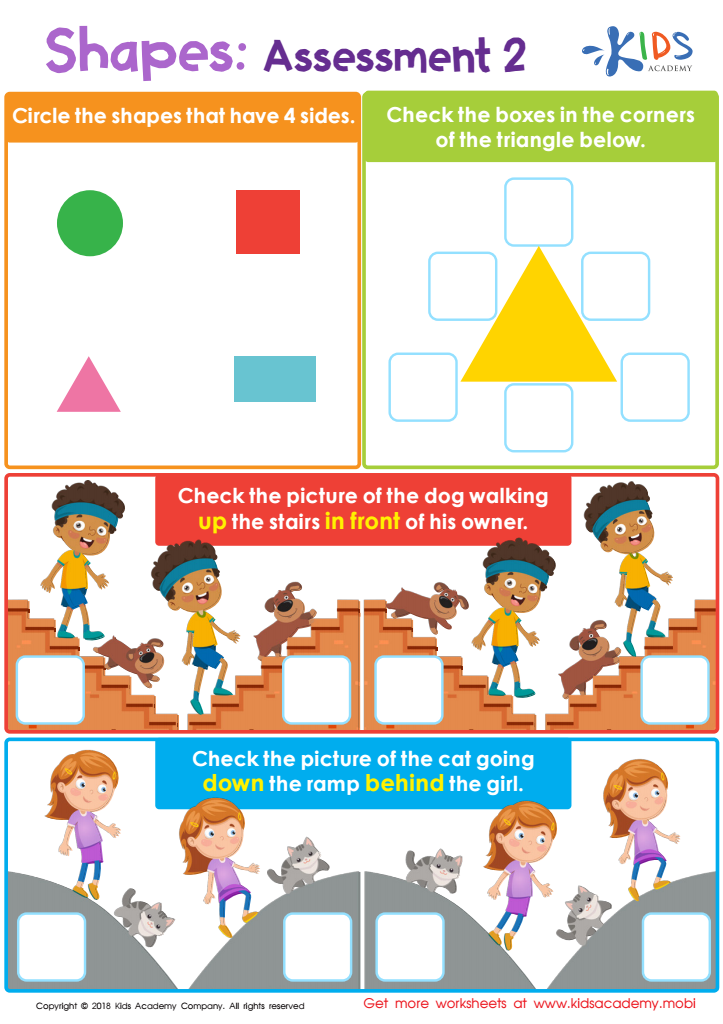
Shapes: Assessment 2 Worksheet
This geometry worksheet assesses a student's knowledge of shapes and positional words. They must identify shapes with 4 sides and corners on a triangle. The worksheet also tests understanding of words like "up", "front", "down" and "behind". Easily determine what your student knows about these concepts with this downloadable worksheet!
Shapes: Assessment 2 Worksheet
Worksheet
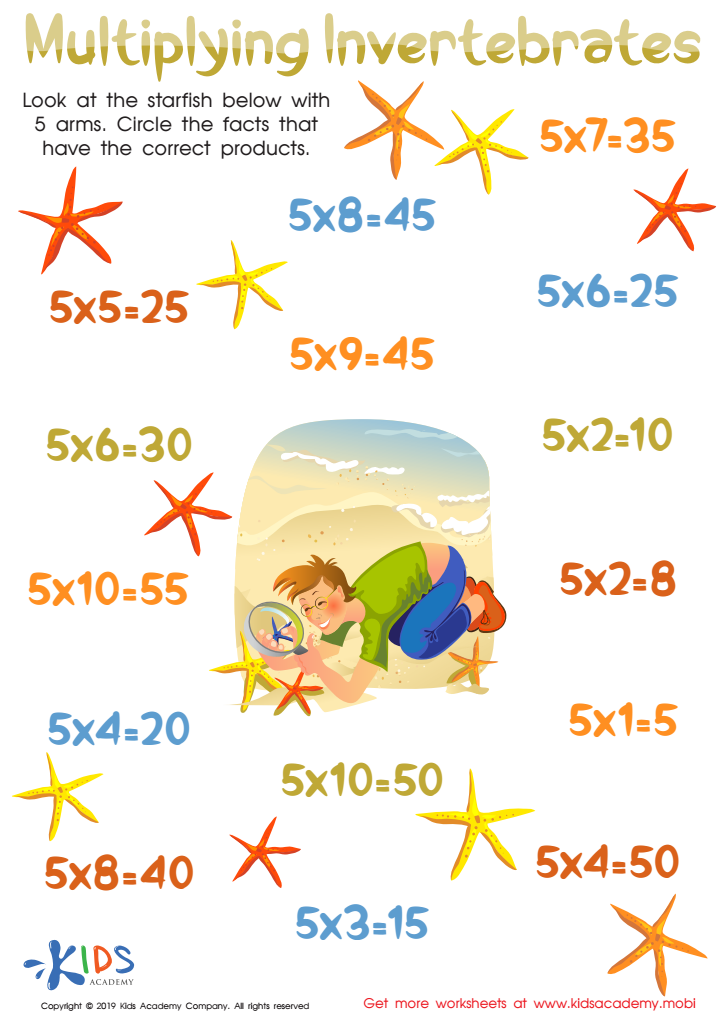
Multiplying Invertebrates Worksheet
Explain to your kids an invertebrate is an animal without a backbone. Examples: squid, jellyfish, octopus. Now, look at the starfish in the picture and help your kids circle the correct facts.
Multiplying Invertebrates Worksheet
Worksheet
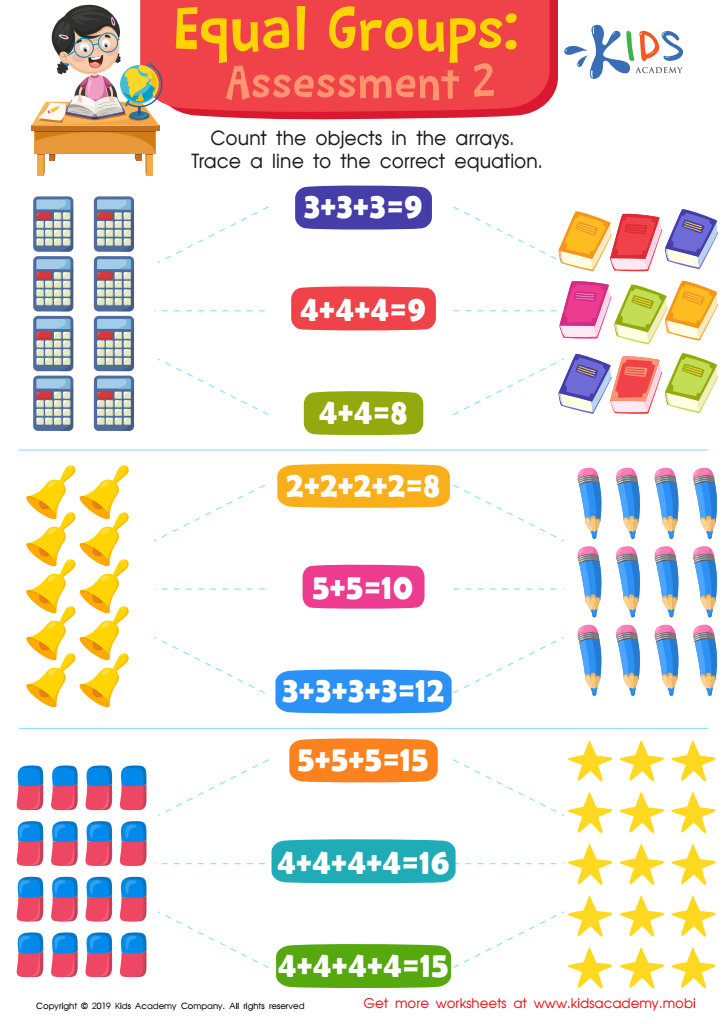
Equal Groups: Assessment 2 Worksheet
Get your kids to pay attention to learning with familiar objects, bright colors, and this worksheet. It has six arrays - ask kids to identify them and count the objects. Then, help them trace a line to the correct equation.
Equal Groups: Assessment 2 Worksheet
Worksheet
Join Kids Academy for Free
Who is primarily going to use this learning content?





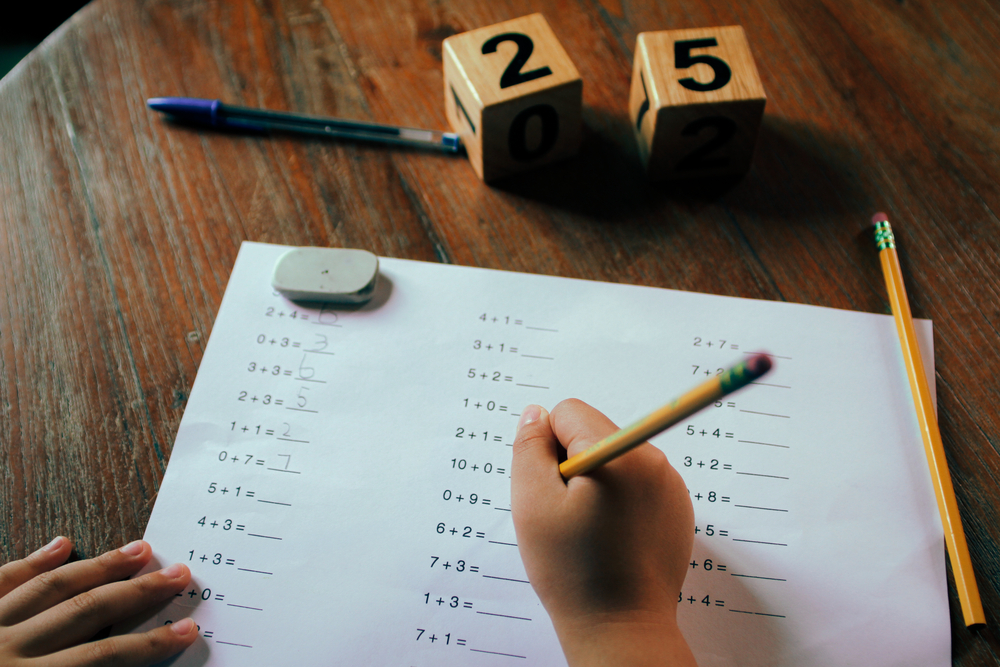

Understanding multiplication is crucial for children ages 6-8 as it lays the foundation for future mathematical learning. At this developmental stage, children are transitioning from simple addition and subtraction to more complex concepts, making multiplication a key focus in curricula. Grasping multiplication helps students build strong number sense and enhances their ability to solve problems efficiently.
When students understand multiplication, they can find quicker ways to solve problems, leading to better performance in math. It also facilitates comprehension of related concepts like division, fractions, and even decimals, which they will encounter later. Additionally, this understanding promotes logical thinking and encourages the development of critical reasoning skills.
For parents and teachers, supporting children in mastering multiplication can boost their confidence in math. Engaging in fun activities, games, and real-life applications of multiplication can create a positive learning environment, helping children see the value and relevance of math in everyday life.
Fostering a strong grasp of multiplication can reduce math anxiety, paving the way for a lifelong appreciation of mathematics. Encouraging students at this young age ultimately contributes to their academic success and equips them with essential skills for the future.








