Cognitive Development 2D Shapes Worksheets for Ages 6-8
9 filtered results
Difficulty Level
Grade
Age
-
From - To
Subject
Activity
Standards
Unlock your child's potential with our Cognitive Development 2D Shapes Worksheets, designed for ages 6-8. These engaging activities enhance kids' understanding of fundamental geometric concepts such as circles, squares, triangles, and more. Through fun, interactive tasks, our worksheets promote critical thinking, problem-solving, and spatial awareness. Perfect for both classroom use and at-home practice, they help young learners gain confidence in their math skills while making learning enjoyable. Aligning with educational standards, our worksheets ensure your child is right on track. Discover the joy of learning with Kids Academy and see measurable progress today!
Favorites
With answer key
Interactive
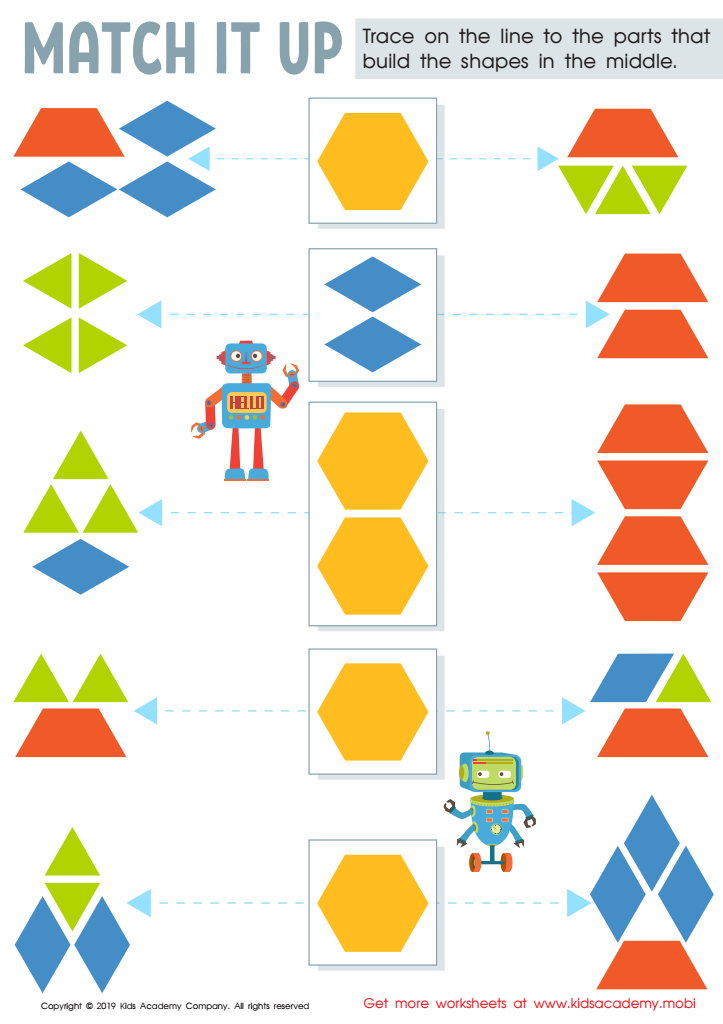
Match It up Worksheet
If your kids are into robots, they'll be thrilled to work on this worksheet. Ask them to name shapes they know, and help them draw and identify these shapes. Look at the shapes in the middle, and the sides. Finally, help your kids trace the lines to build the shapes in the middle.
 Assign to My Students
Match It up Worksheet
Worksheet











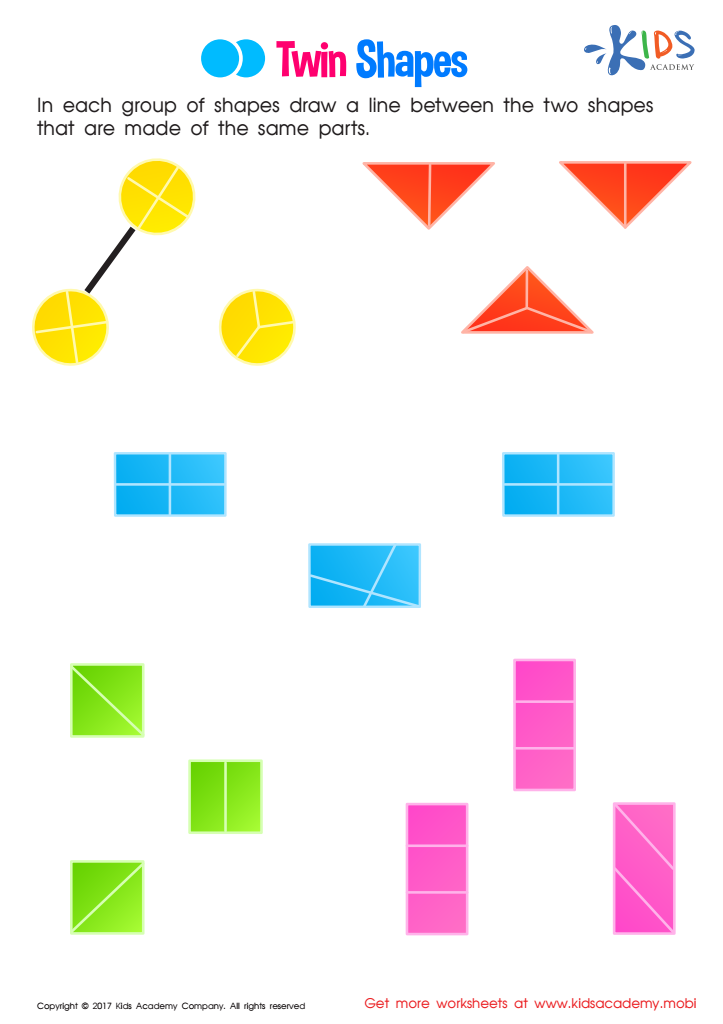
Twin Shapes Worksheet
Your students' goal in this worksheet is to find the twin shapes: drawing a line between two shapes made of the same parts. Likely, the first shapes encountered were circles, triangles, rectangles and squares - examples of which are seen frequently in everyday life. Encourage them to apply what they know and work out which is the twin shape!
Twin Shapes Worksheet
Worksheet
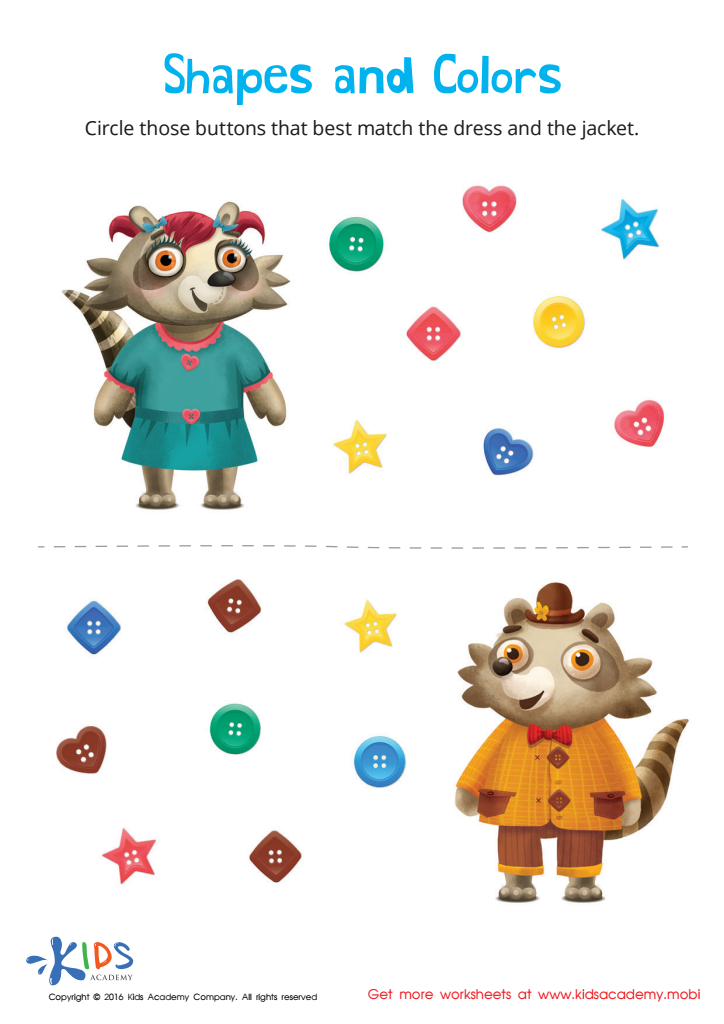
Matching: Shapes and Colors Worksheet
Help Mr. and Mrs. Raccoon find the right buttons to match their shirts! Kids will identify shapes and colors and learn to match them correctly.
Matching: Shapes and Colors Worksheet
Worksheet
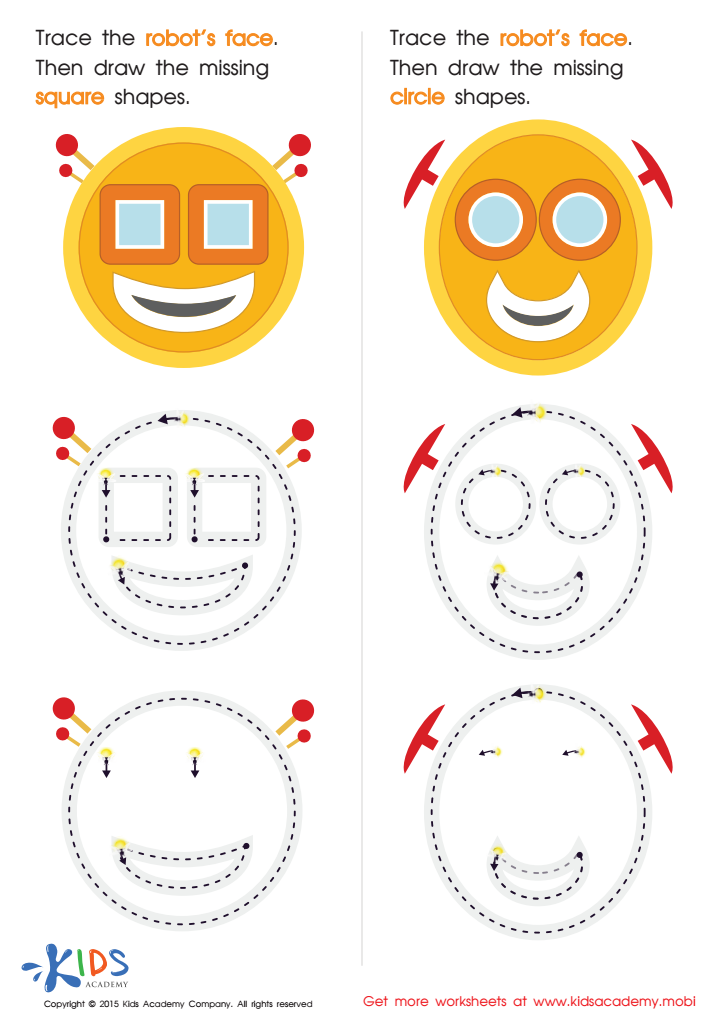
Practicing to Draw Circles And Squares Printable
Download our free printable geometry worksheets to learn shapes with your preschoolers. Trace Robot's face, draw the square parts and round shapes, remember the names for each one. Get more materials for kids at Kids Academy and make learning fun with our free printable geometry worksheets.
Practicing to Draw Circles And Squares Printable
Worksheet
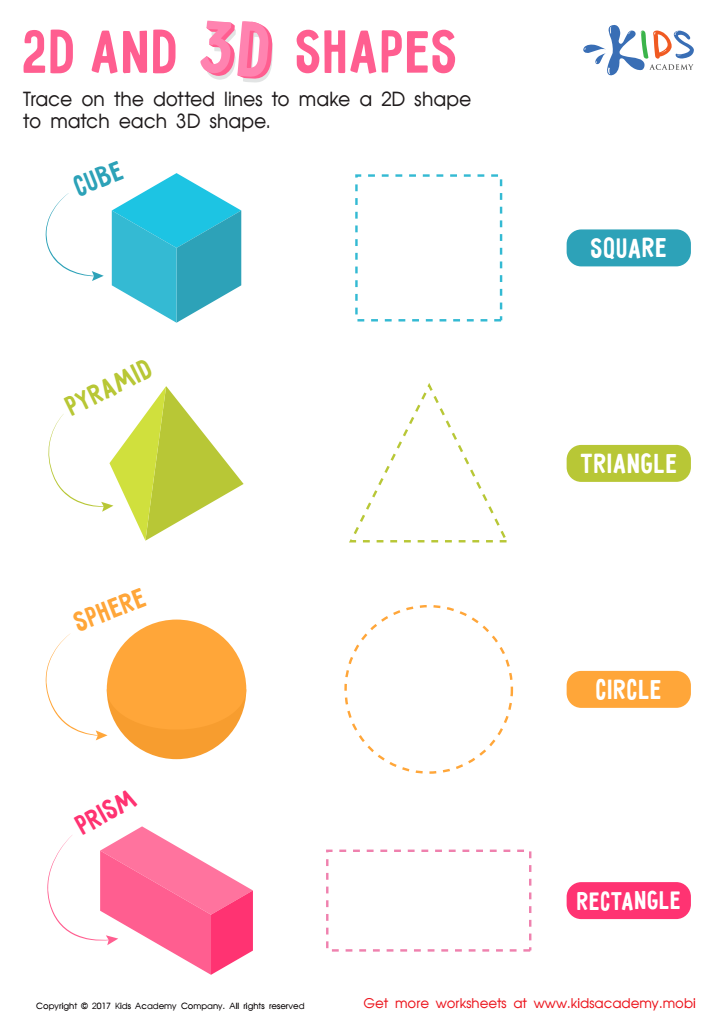
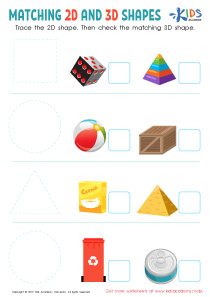
2D and 3D Shapes Worksheet
Introduce your child to 3D and 2D with this traceable worksheet. With dotted lines, help them trace and make a 2D shape for each 3D shape: square, triangle, rectangle, and circle. Show them there's more than one way to draw! You may have taken them to a 3D movie, or they've seen some fantastic 3D art. Now they can wonder no more.
2D and 3D Shapes Worksheet
Worksheet
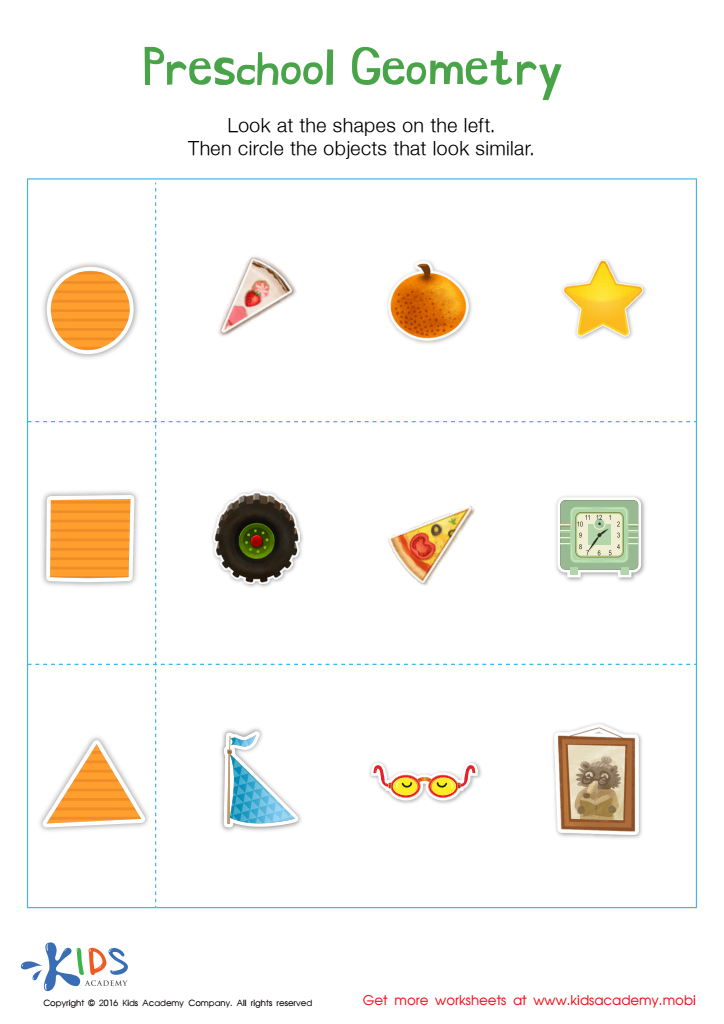
Preschool Geometry Match Up Worksheet
Teach your preschooler geometry using everyday objects. This printable worksheet helps them recognize, match, and follow directions like left and right. Start a conversation to extend their learning and they'll see how shapes appear in the world around them.
Preschool Geometry Match Up Worksheet
Worksheet

Learning to Draw Crescents And Triangles Worksheet
Help your kids draw a crescent and triangle with this free printable worksheet! Start by tracing a crescent in the form of the new moon, and then teach them that a triangle has three sides and looks like a hat. Find more geometry practice worksheets at Kids Academy!
Learning to Draw Crescents And Triangles Worksheet
Worksheet
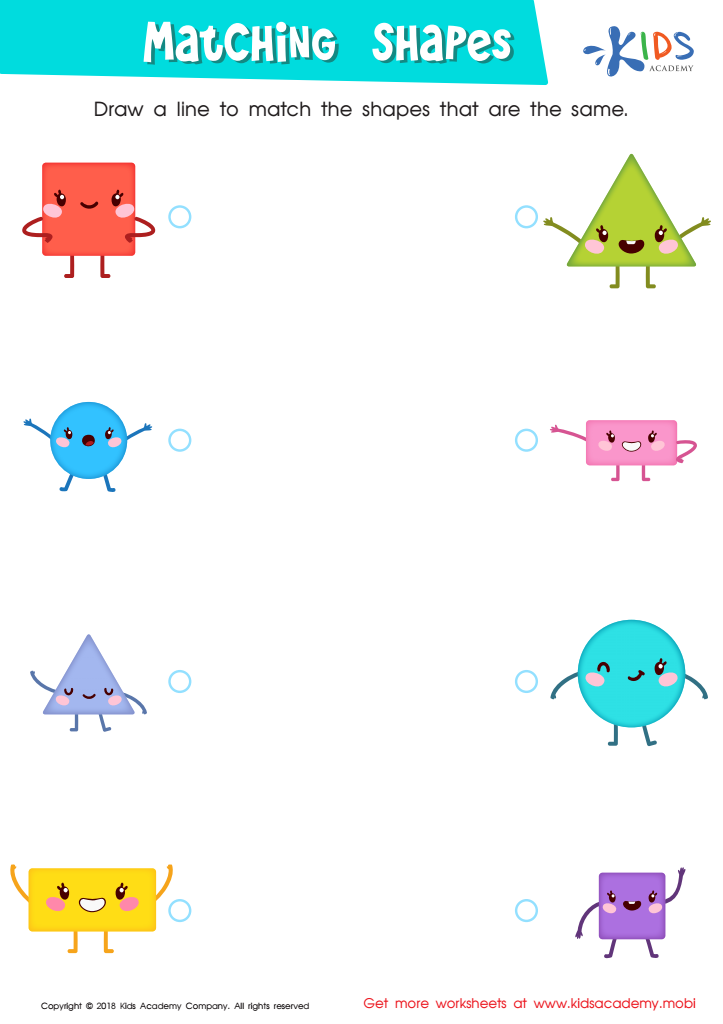
Matching Shapes Worksheet
Introduce your students to the 4 most common shapes: squares, triangles, rectangles and circles. When they progress, show them other shapes like rhombuses and parallelograms. Use this matching shapes worksheet to help them match two identical shapes. Print out the worksheet and instruct them to draw lines connecting them.
Matching Shapes Worksheet
Worksheet
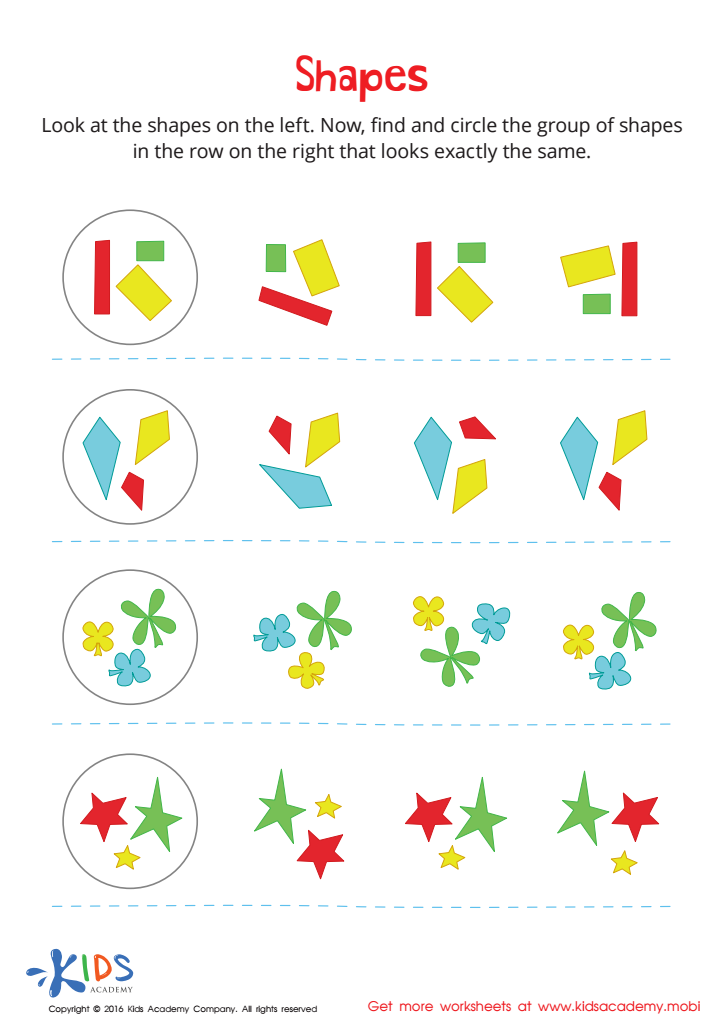
Shapes Worksheet
This fun worksheet will challenge your child to recognize tricky patterns, sort through similar ones, and create strategies to get the right answer. It'll also help them to strengthen problem-solving skills and build confidence. With more challenging tasks, your child will be ready to tackle higher level math and sequencing skills.
Shapes Worksheet
Worksheet
Join Kids Academy for Free
Who is primarily going to use this learning content?








Caring about cognitive development through the study of 2D shapes for children aged 6-8 is essential because it lays the foundation for many critical learning skills. At this stage, children's cognitive abilities are rapidly developing, and comprehending 2D shapes helps enhance their spatial reasoning, critical thinking, and problem-solving skills. Understanding shapes allows children to recognize patterns, categorize objects, and grasp geometry concepts, which are fundamental for both mathematical and everyday reasoning.
Furthermore, engaging with 2D shapes deepens a child's visual-spatial intelligence, which is crucial for success in STEM (Science, Technology, Engineering, and Mathematics) subjects. For instance, identifying and manipulating shapes enhances their ability to comprehend more complex scientific diagrams and architectural blueprints later in life.
For parents and teachers, emphasizing this area of development not only supports academic growth but also boosts a child’s confidence and curiosity. Through fun and interactive activities like puzzles, drawing, and hands-on construction, children develop better hand-eye coordination and fine motor skills.
Overall, focusing on the cognitive development of 2D shapes provides a well-rounded educational foundation, promotes higher-level thinking, and equips children with essential tools for lifelong learning and success. Therefore, the attentive development of shape recognition and manipulation is an investment in a child's intellectual and cognitive future.