Comparing Fractions Addition & Subtraction Worksheets for Ages 6-8 - Page 2
87 filtered results
-
From - To
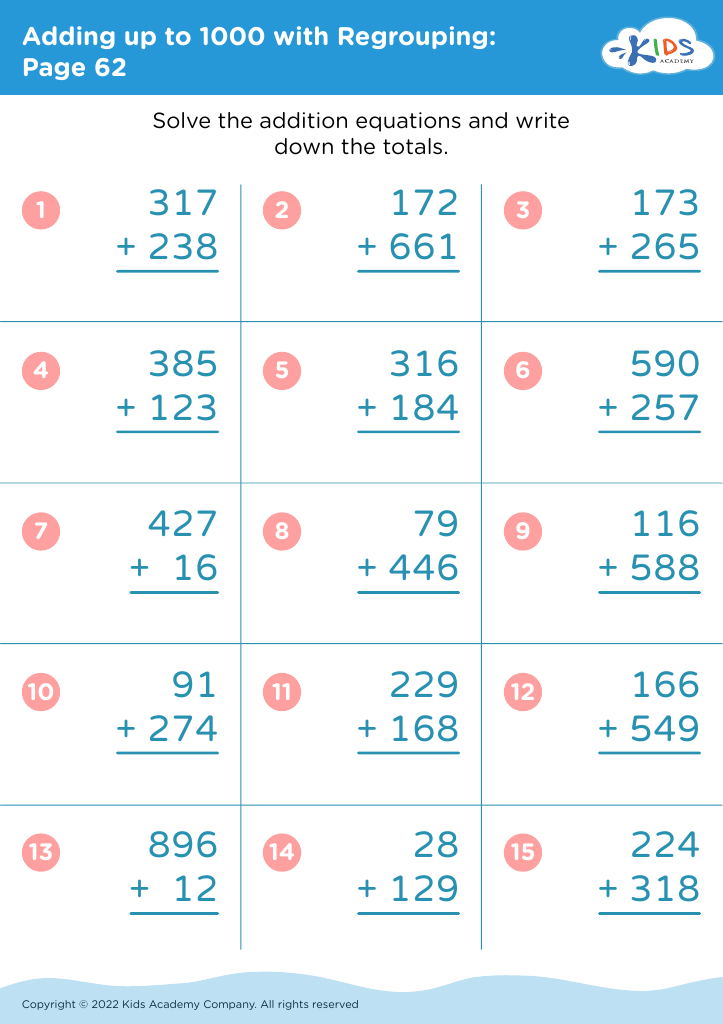
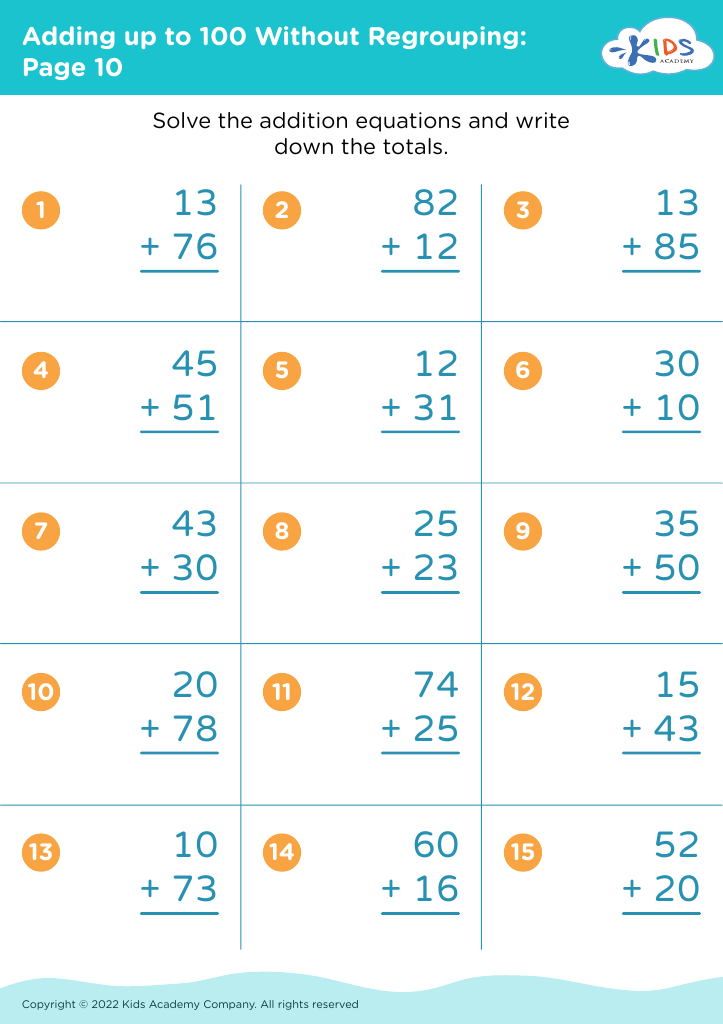
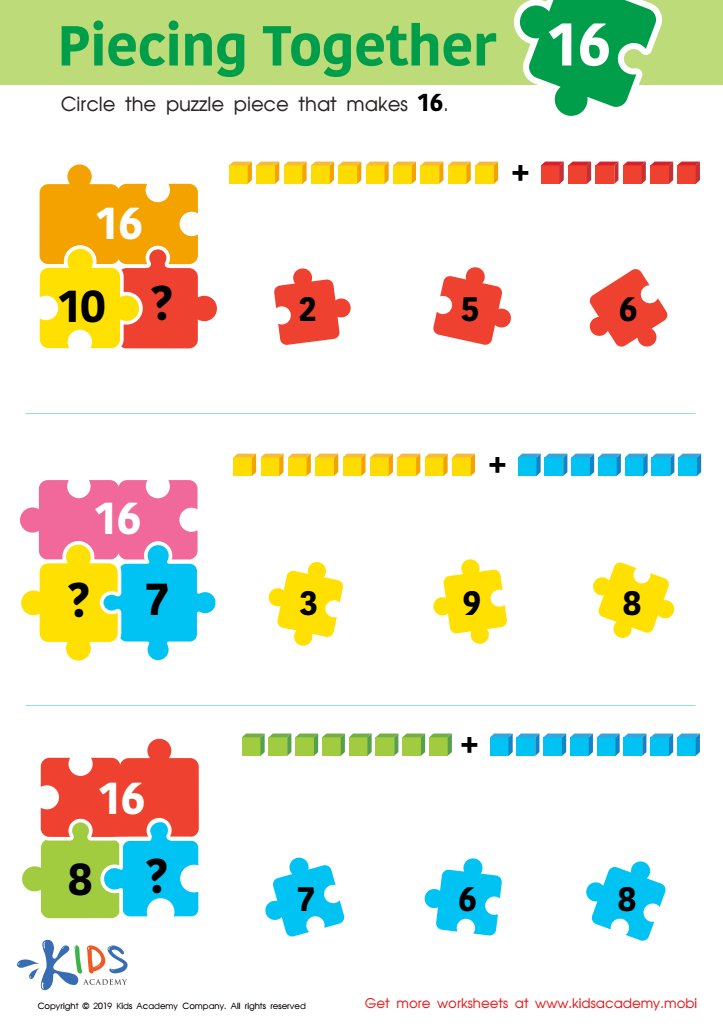
Piecing Together 16 Worksheet
 Assign to My Students
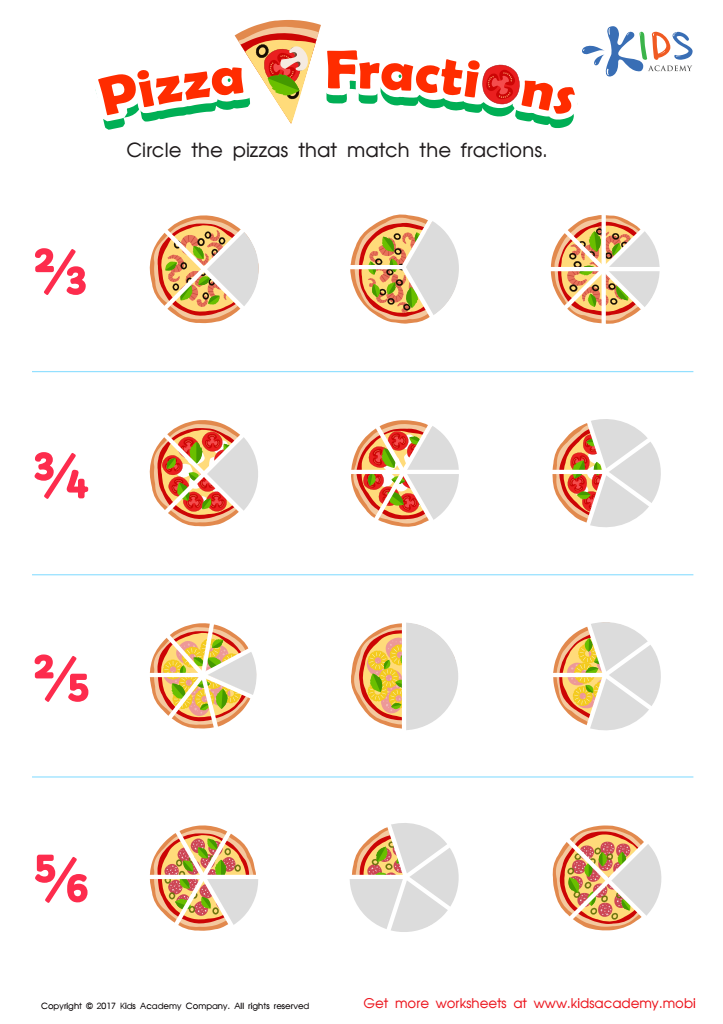
Fractions: Pizza Printable








Understanding how to compare fractions, as well as their addition and subtraction, is essential for children ages 6-8 as it lays the groundwork for their future mathematical skills. During these formative years, children begin to encounter fractions in meaningful contexts, such as in cooking, dividing objects, or understanding parts of a whole. When teachers and parents help children compare fractions, they are not just teaching them about numbers; they are fostering critical thinking and problem-solving abilities.
Learning to add and subtract fractions also reinforces important concepts of number sense and proportional reasoning. It helps children understand relationships between quantities, allowing them to make informed decisions in real-life situations, such as sharing tasks or resources. This knowledge connects directly to other mathematical concepts, encouraging a deeper comprehension as students progress, particularly in areas like measurement and data interpretation.
Moreover, engaging with fractions can enhance confidence in math, transforming apprehension into curiosity. As children apply their skills in collaborative settings, they develop social skills and a positive attitude towards teamwork. Therefore, teachers and parents should prioritize this foundational concept, nurturing a strong mathematical base that benefits children's academic future and everyday life.








