Comparing shapes Geometry Worksheets for Ages 6-8
4 filtered results
-
From - To
Welcome to our engaging "Comparing Shapes Geometry Worksheets" designed specifically for children aged 6-8! These interactive worksheets make learning geometry fun and easy, helping young learners recognize, compare, and analyze various shapes. With exciting activities that include matching, sorting, and identifying key characteristics of shapes, students will enhance their critical thinking and observational skills. Our worksheets cater to different learning styles, ensuring that each child builds a strong foundation in geometry. Whether at home or in the classroom, our resources help children develop confidence as they embark on their geometric journey. Explore our collection today and inspire a love for shapes!
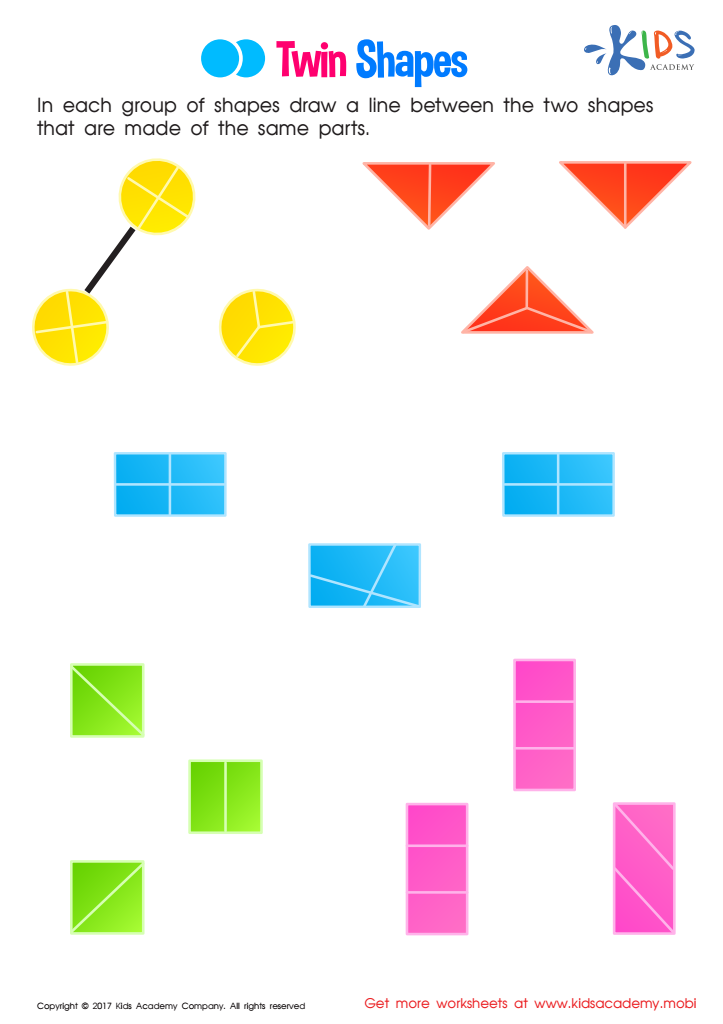
Twin Shapes Worksheet
 Assign to My Students











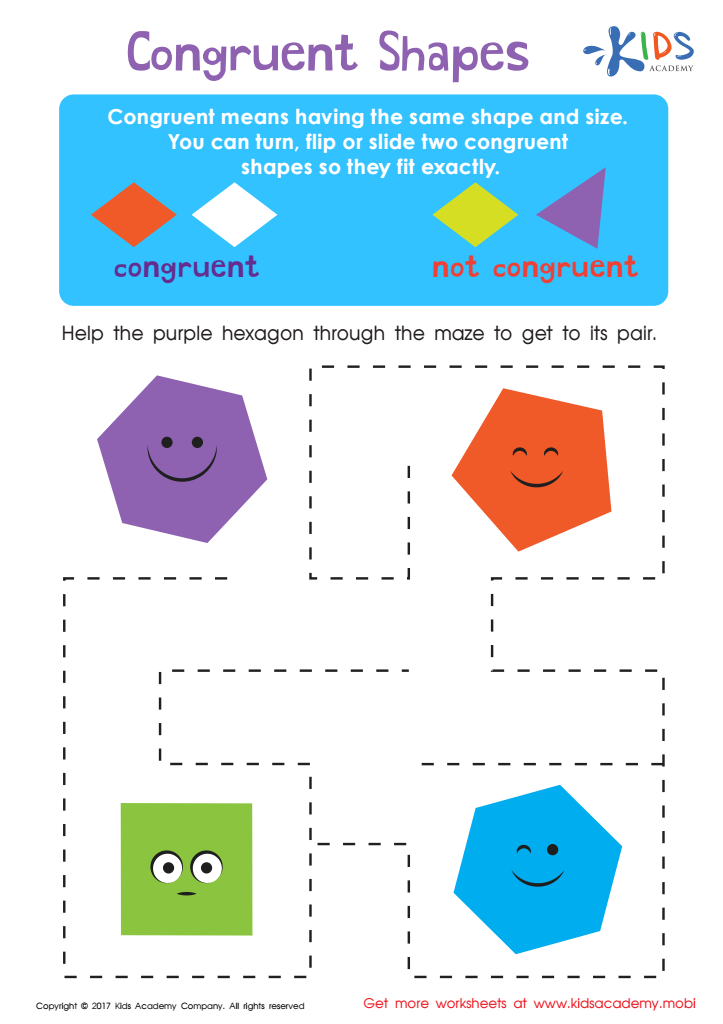
Congruent Shapes Worksheet
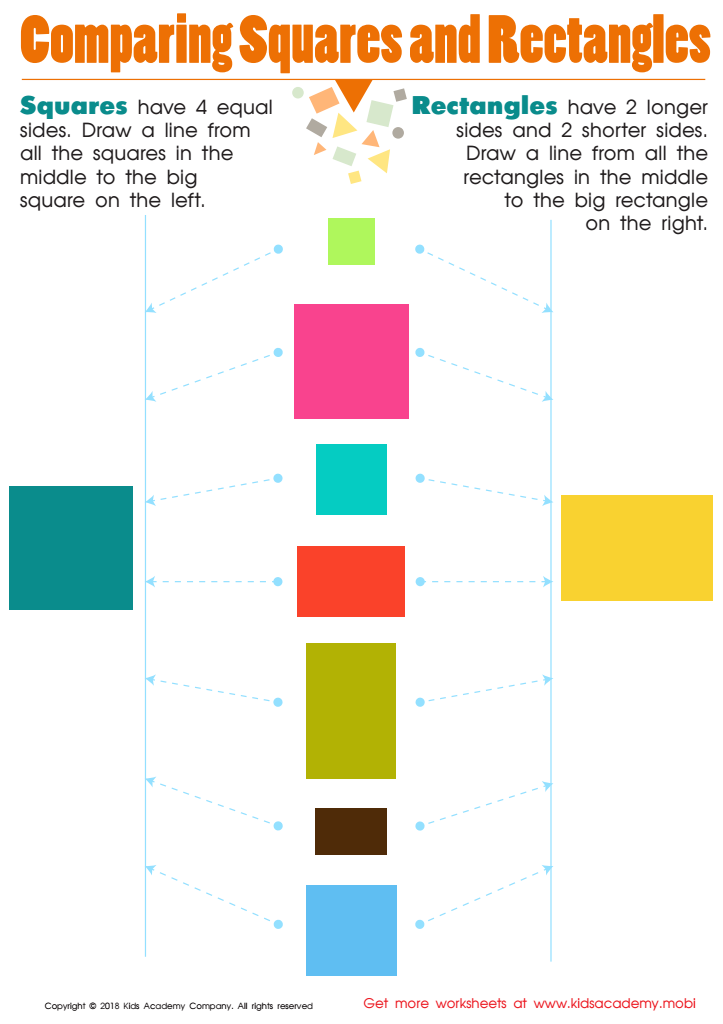
Comparing Squares Rectangles Worksheet
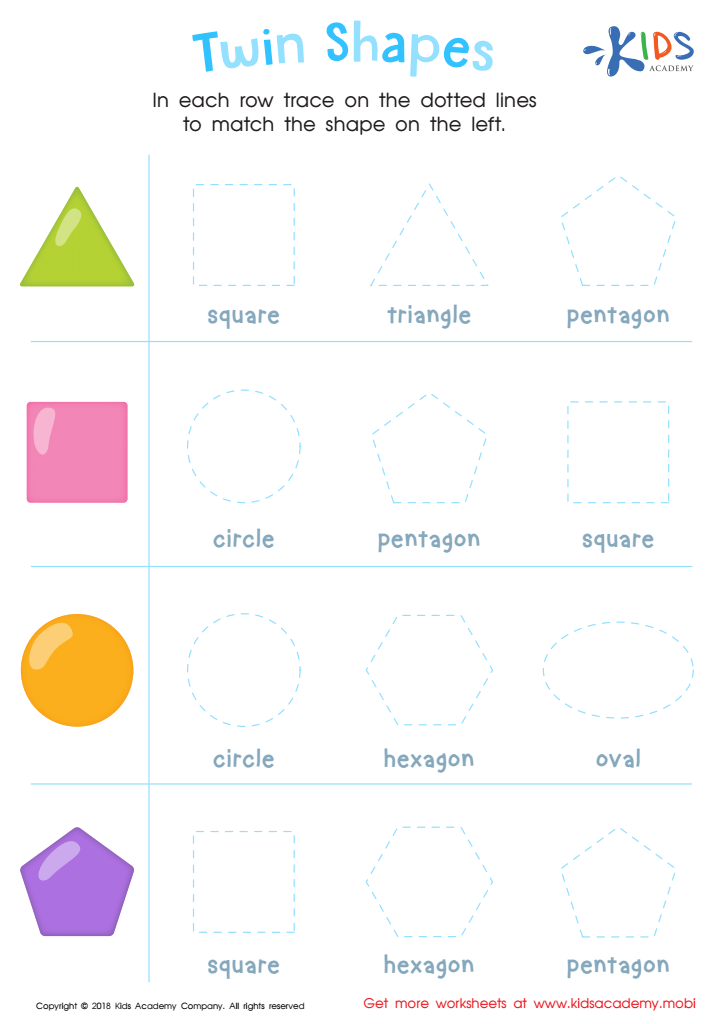
Twin Shapes Dot-to-Dot Worksheet








Comparing shapes is a fundamental aspect of geometry that plays a crucial role in the cognitive development of children aged 6 to 8. During this stage, children are naturally curious and motivated to explore their surroundings. Introducing them to shape comparison helps develop critical thinking, problem-solving skills, and spatial awareness. Parents and teachers should care about this as it lays the groundwork for mathematical understanding and confidence.
Understanding shapes fosters logical reasoning, as children learn to identify differences and similarities among various geometric forms. This skill translates to valuable life competencies, like categorizing objects and making decisions based on their properties. Engaging children in activities involving shape comparisons promotes sensory exploration, artistic expression, and creativity, enriching their overall educational experience.
Moreover, geometry acts as a bridge to future mathematical concepts, paving the way for more complex topics like measurement, symmetry, and area. By nurturing skills in shape comparison, parents and teachers are equipping children with tools that will be beneficial throughout their academic journey and beyond. Encouraging exploration and discussion about shapes can also stimulate a child’s enthusiasm for math, instilling a lifelong appreciation for learning. As such, prioritizing shape comparison in education shapes confident and capable thinkers.








