Critical Thinking Geometry Worksheets for Ages 6-8
3 filtered results
-
From - To
Discover our engaging Critical Thinking Geometry Worksheets designed for young learners aged 6-8. These interactive resources promote the development of essential geometric concepts while enhancing problem-solving skills. Through fun activities, children will explore shapes, angles, and spatial relationships, encouraging them to think critically as they analyze and reason through various geometry challenges. Ideal for both classroom and at-home learning, our worksheets incorporate visual aids and real-life scenarios to make geometry relatable and enjoyable. Foster a love for math and strengthen critical thinking abilities with our comprehensive collection of geometry worksheets tailored specifically for early grade students. Start exploring today!
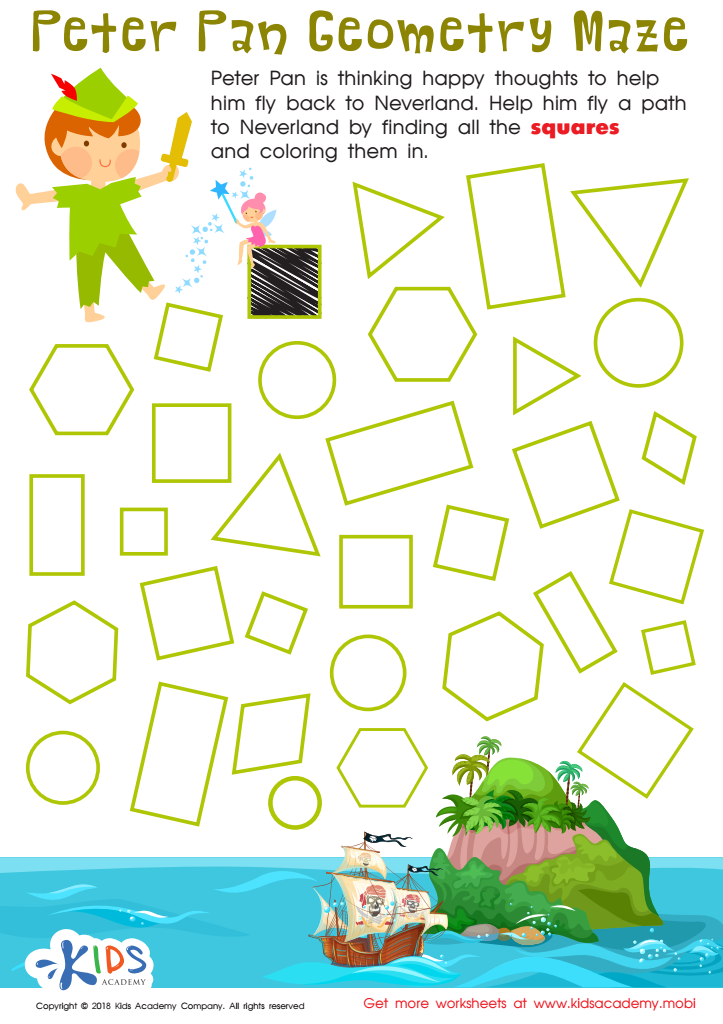
Peter Pan Worksheet
 Assign to My Students











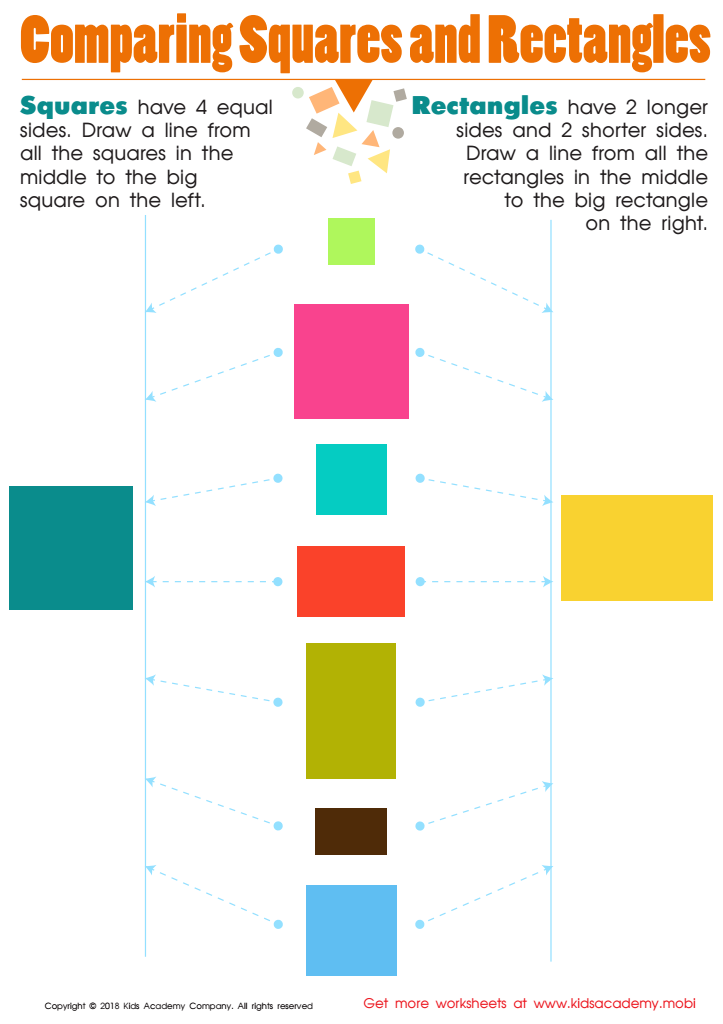
Comparing Squares Rectangles Worksheet
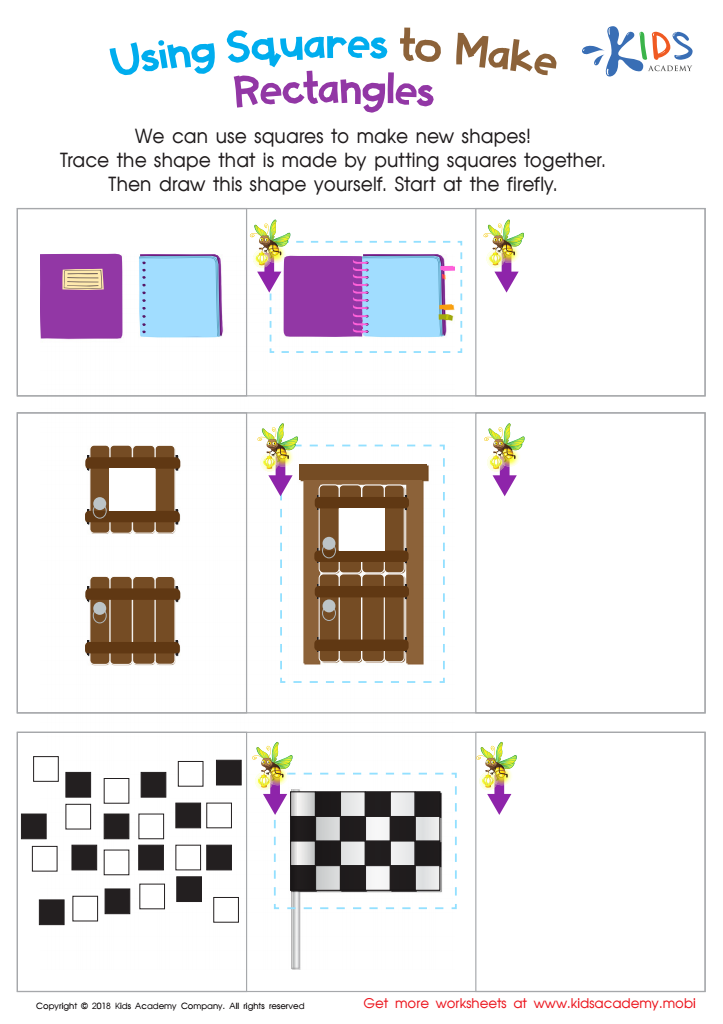
Using Squares to Make Rectangles Worksheet








Critical Thinking Geometry for ages 6-8 is vital for the cognitive development of young learners. At this age, children begin to explore spatial awareness and the relationships between shapes and sizes, which are foundational elements of geometry. Engaging in critical thinking activities related to geometry helps children sharpen their reasoning skills, enabling them to solve problems, make connections, and think logically.
Parents and teachers should care because these skills extend beyond math; they contribute to overall academic success and life skills. For instance, critical thinking empowers children to approach problems systematically, enhancing their ability to navigate challenges in various subjects. It also fosters creativity, as children learn to visualize and manipulate shapes, promoting innovation and artistic expression.
Moreover, instilling a deep understanding of geometry at an early age can set the stage for more complex mathematical concepts later on, leading to greater confidence in their abilities. Additionally, incorporating critical thinking into geometry encourages collaboration and communication skills during group activities, creating a positive classroom environment. Ultimately, fostering critical thinking in geometry lays the groundwork for successful, lifelong learners—and it makes math engaging and fun! This holistic approach benefits children academically, socially, and personally.








