Understanding area Geometry Worksheets for Ages 6-8
3 filtered results
-
From - To
Welcome to our "Understanding Area Geometry Worksheets" designed for children ages 6-8! These engaging resources aim to build foundational geometry skills through hands-on activities and interactive exercises. Our worksheets introduce the concept of area in a fun and relatable way, helping young learners visualize and calculate space in various shapes. With clear instructions and colorful illustrations, these worksheets promote critical thinking and problem-solving while ensuring that children grasp the basics of measuring area. Perfect for classroom or home use, our materials empower teachers and parents to create a positive learning experience in geometry. Start exploring the world of area today!
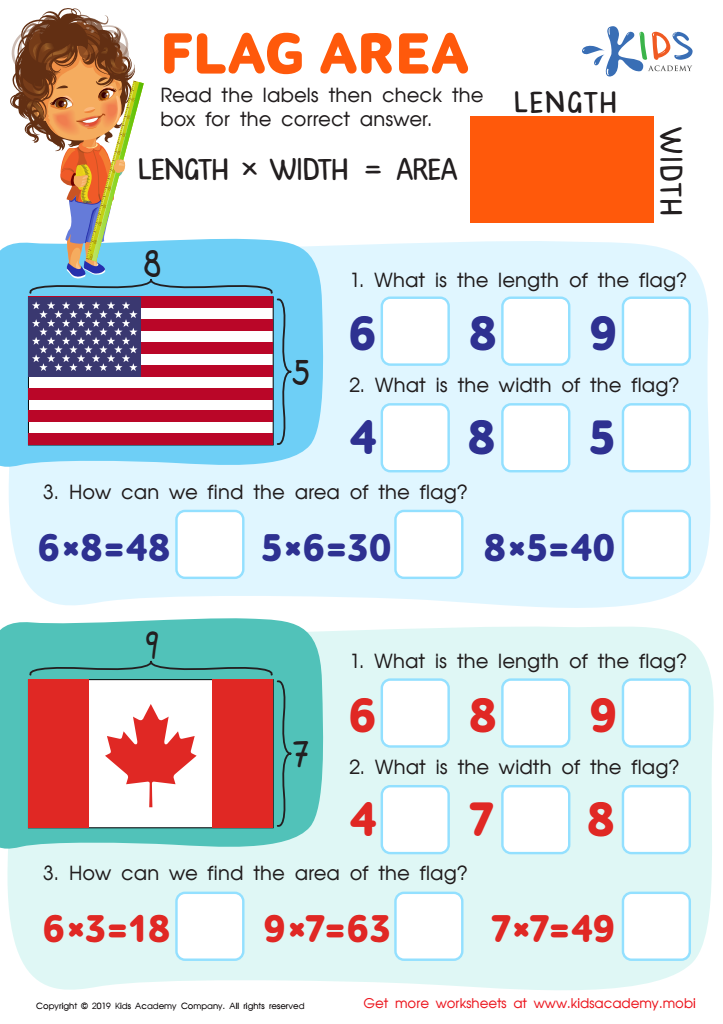
Flag Area Worksheet
 Assign to My Students











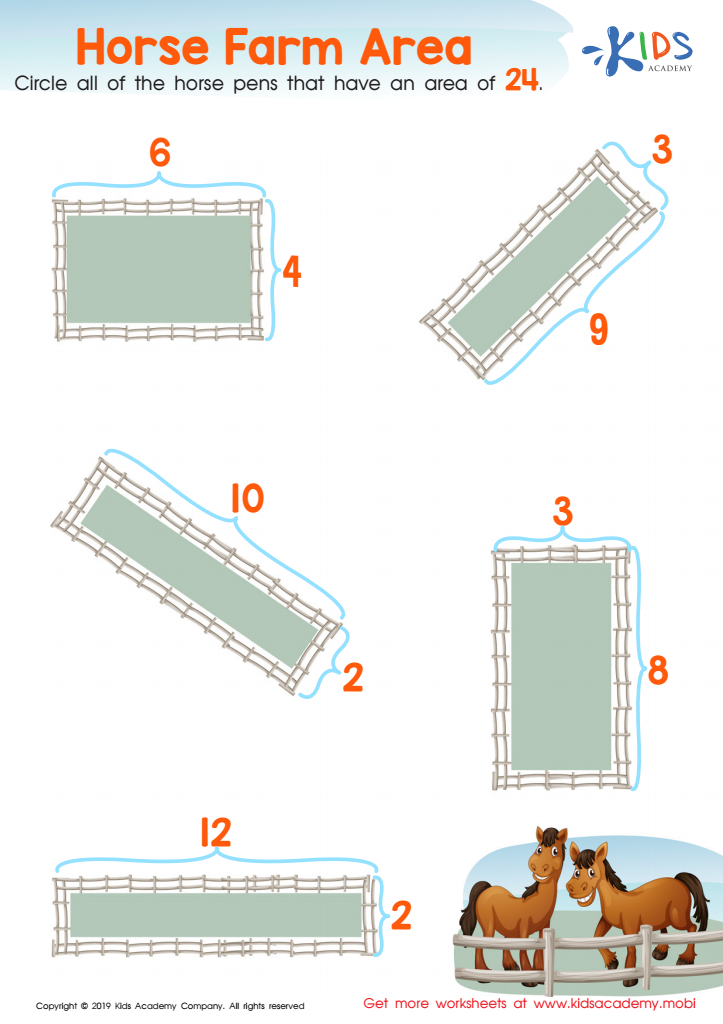
Horse Farm Area Worksheet
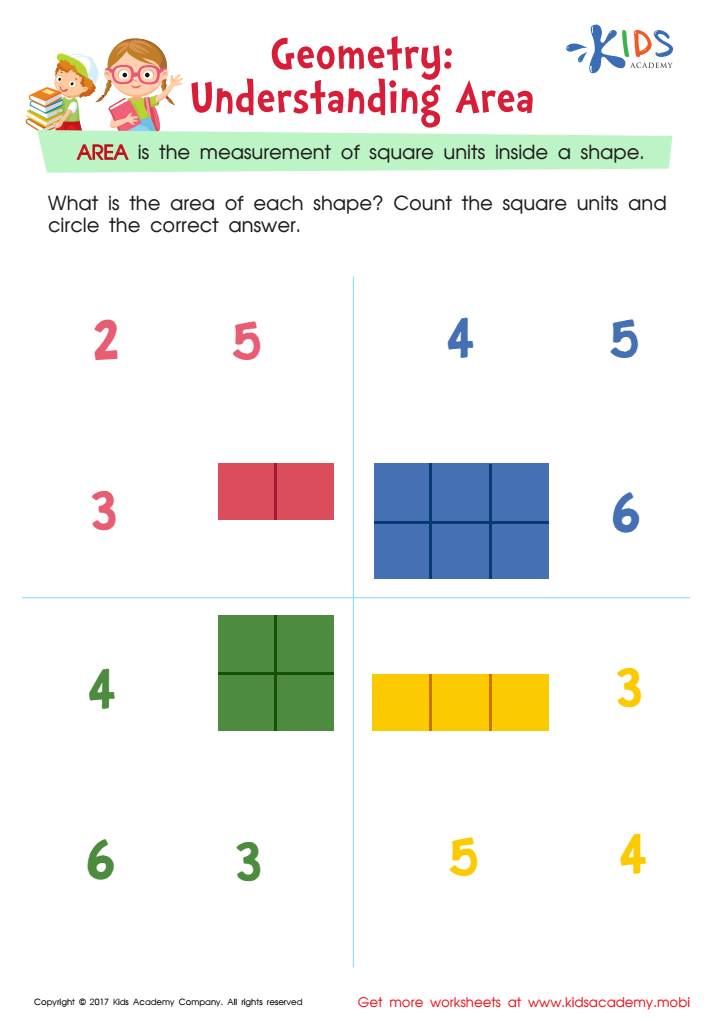
Understanding Area Worksheet








Understanding area and geometry is crucial for children aged 6-8, as it lays the foundation for their mathematical knowledge and spatial awareness. At this developmental stage, kids are naturally curious and eager to explore, making it an ideal time to introduce these concepts through engaging activities. By grasping the basics of area, children learn how to measure space, which is applicable in real-world scenarios, such as understanding the size of a room or the layout of a garden.
Geometry promotes critical thinking and problem-solving skills. When children engage in activities like measuring objects, creating patterns, or exploring shapes, they develop reasoning abilities that enhance their overall cognitive development. Additionally, geometry fosters creativity and imagination through construction and design tasks.
Teachers and parents should also recognize that a strong foundation in area and geometry can boost a child's confidence in mathematics. Early exposure to these concepts can combat math anxiety later on, ensuring a positive attitude towards learning. Furthermore, understanding geometry is linked to success in various subjects, from science to art, making it an essential part of a well-rounded education. Ultimately, prioritizing area and geometry for young learners equips them with vital skills for future academic and practical success.








