Visual discrimination Geometry Worksheets for Ages 6-8
7 filtered results
-
From - To
Unlock your child's potential with our Visual Discrimination Geometry Worksheets designed for ages 6-8. Tailored to develop crucial geometric skills, these engaging activities make learning fun and interactive. Children will explore shapes, patterns, and spatial awareness through carefully crafted exercises that enhance their ability to distinguish between different geometric forms. Utilizing vivid illustrations and a variety of difficulty levels, our worksheets ensure every child stays challenged and motivated. Perfect for classroom or home use, they empower young learners to build a solid foundation in geometry while bolstering their visual discrimination skills. Join us in making math both enjoyable and educational!
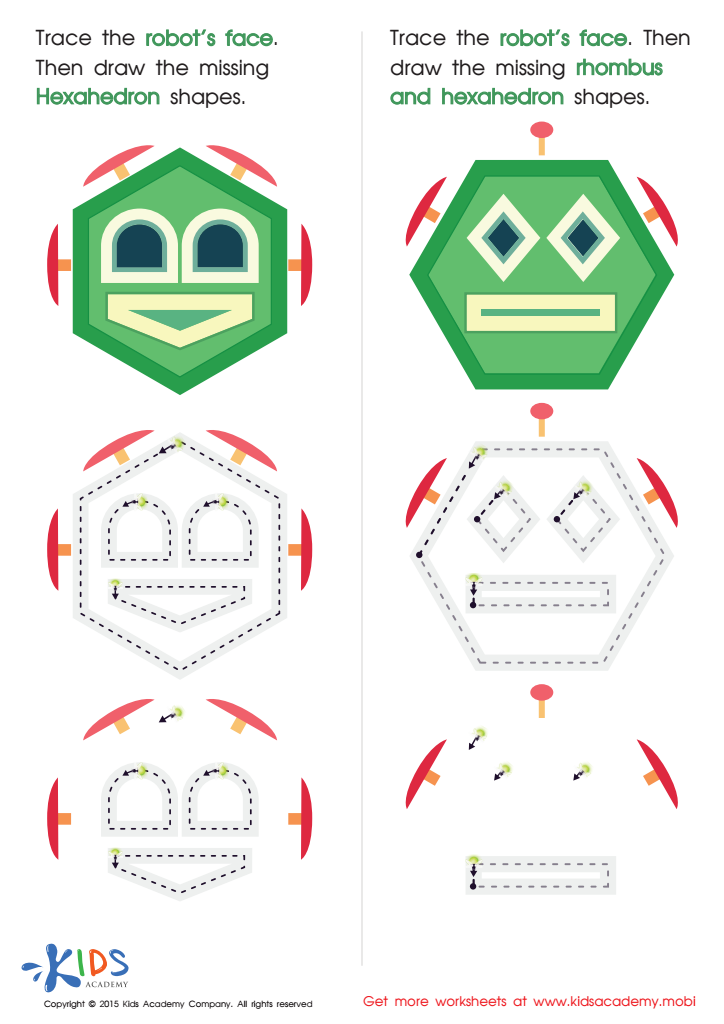
Practice Drawing Hexahedrons And a Rhombus Worksheet
 Assign to My Students











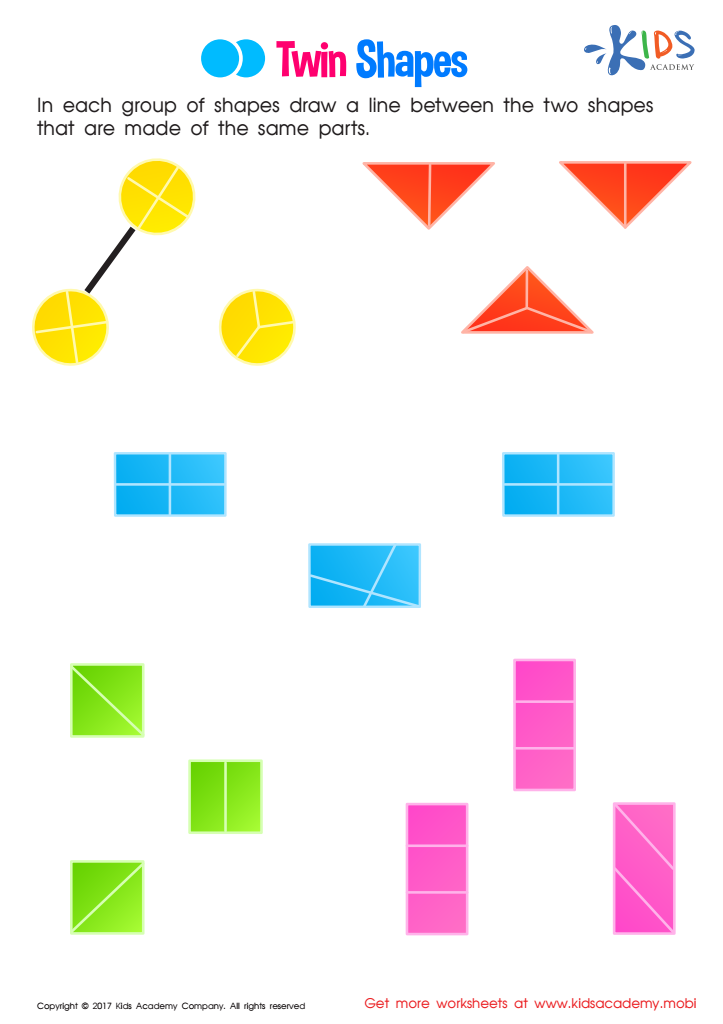
Twin Shapes Worksheet
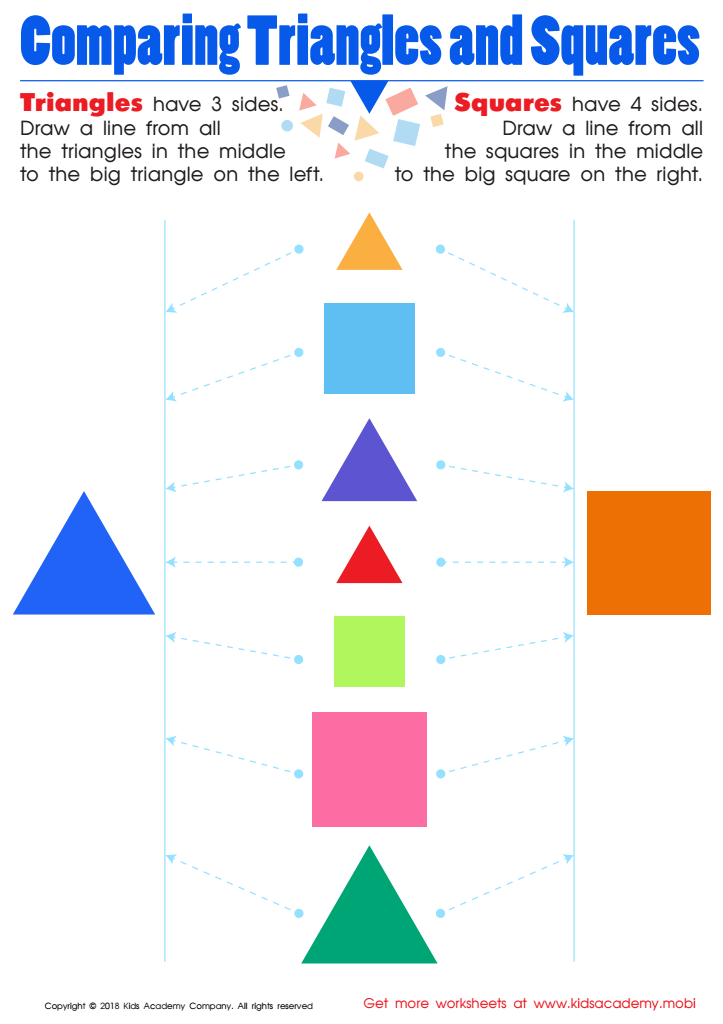
Comparing Triangles Squares Worksheet
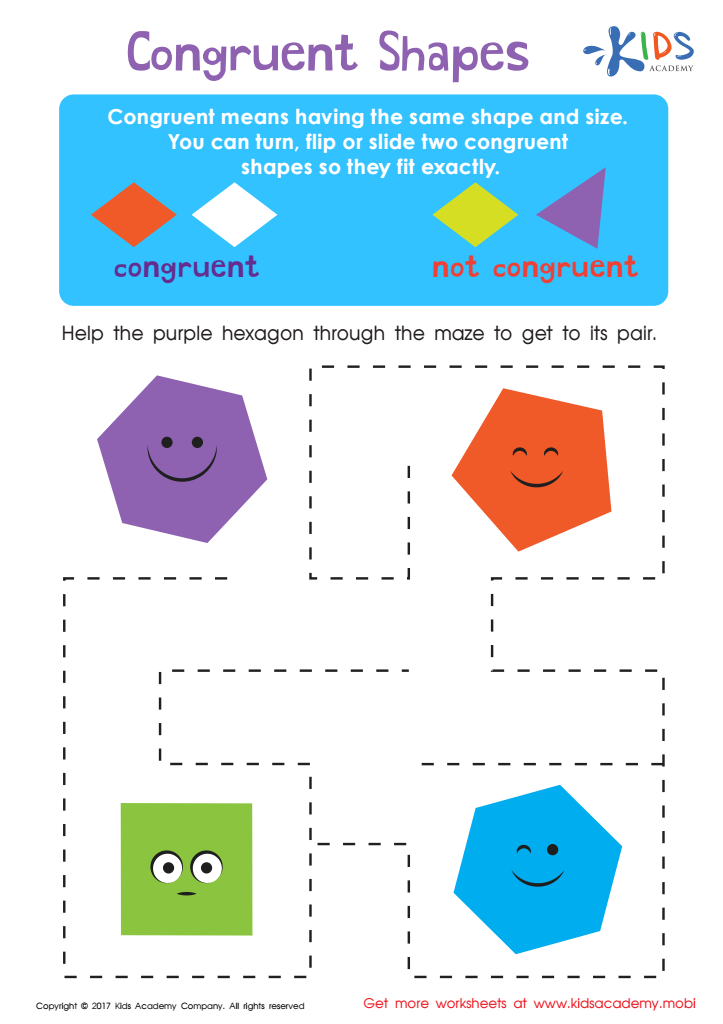
Congruent Shapes Worksheet
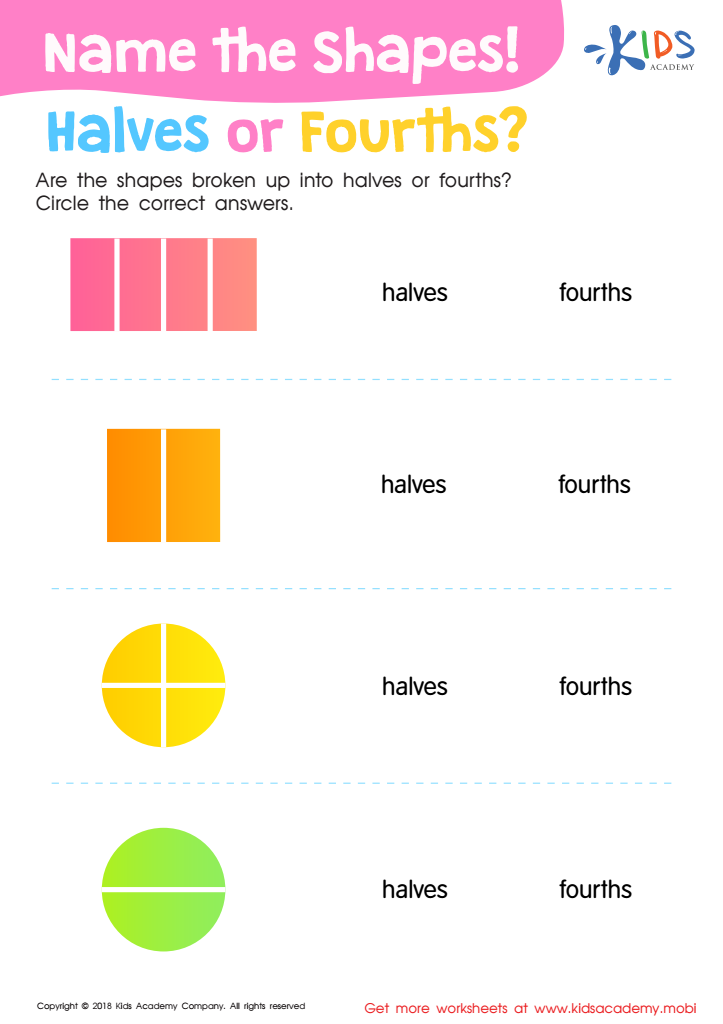
Name the Shapes Halves or Fourths? Worksheet
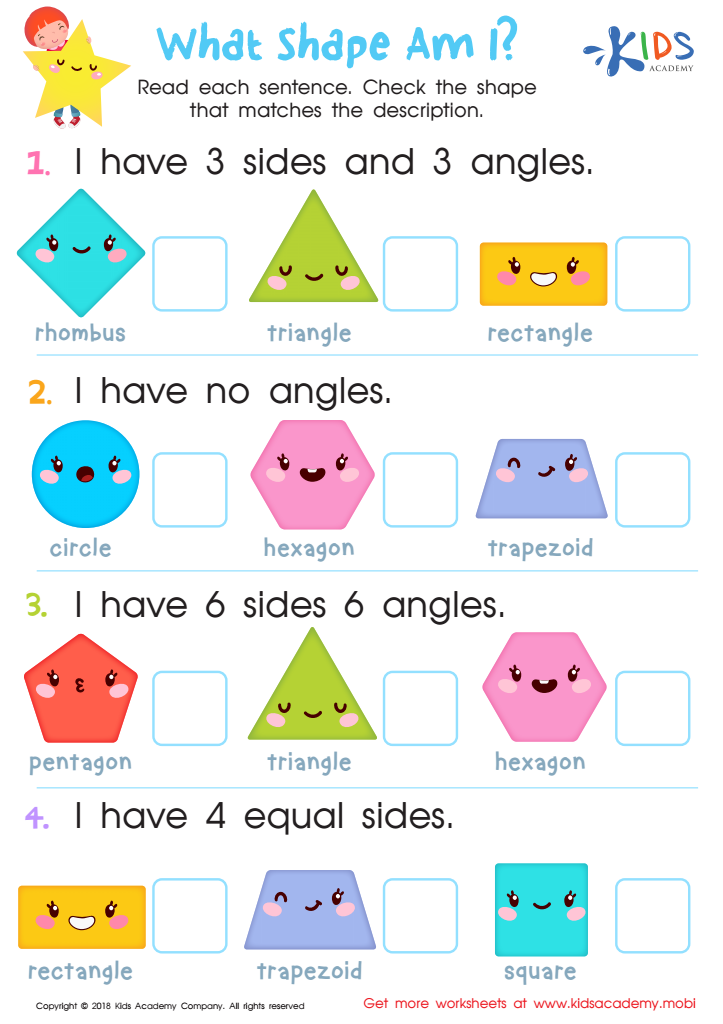
What Shape Am I? Worksheet
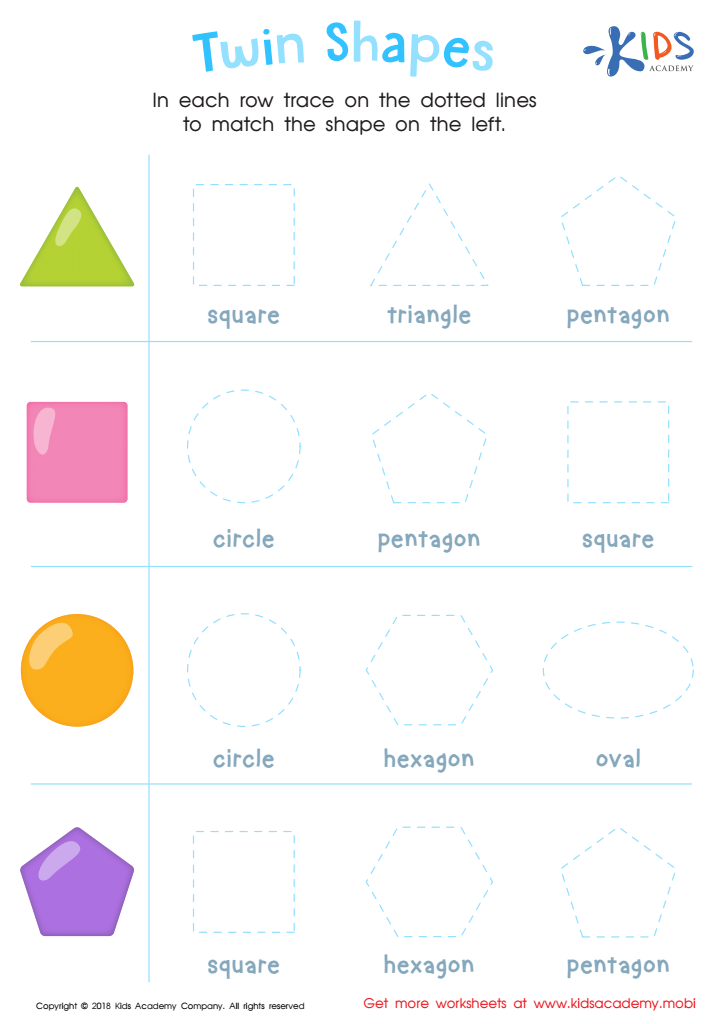
Twin Shapes Dot-to-Dot Worksheet








Visual discrimination is the ability to recognize differences and similarities in shapes, sizes, colors, and patterns. For children aged 6-8, the development of strong visual discrimination skills through the study of geometry is essential for several reasons.
Firstly, visual discrimination aids reading comprehension. Distinguishing between different letters and words relies heavily on recognizing subtle differences in shapes and patterns. This skill extends to numeracy as well, where children learn to distinguish between digits and symbols in mathematical problems.
Secondly, fundamental geometric concepts introduce children to spatial awareness. Understanding the properties of shapes, recognizing symmetry, and differentiating between various forms helps children navigate their environment more effectively and lays a foundation for more advanced mathematical reasoning.
Furthermore, early practice in visual discrimination and geometry promotes problem-solving and critical thinking abilities. Children learn to analyze patterns, break down complex shapes, and understand the relationships between different geometric figures. These skills are transferable to many academic subjects and real-life situations.
Lastly, engaging in geometric activities can boost a child's confidence and interest in math. Fun, hands-on learning experiences foster a positive attitude toward math from an early age, counteracting math anxiety and encouraging a lifelong appreciation for the subject.
In summary, focusing on visual discrimination geometry for children aged 6-8 helps develop crucial reading, numeracy, spatial awareness, and problem-solving skills, which are foundational for future academic success.








