Filters

7 filtered results

Clear all filters
Favorites
With answer key
Interactive

7 filtered results

Difficulty Level

Grade


Unlock your child's potential with our Shape Recognition Numbers Worksheets for Ages 6-8. These engaging educational resources are expertly designed to combine the fundamentals of shape recognition with number learning. Ideal for young learners, these worksheets help kids distinguish different shapes while reinforcing number skills. Perfect for both classroom and home use, our printable sheets are crafted to make learning fun and effective. With exercises that stimulate critical thinking and enhance visual-spatial skills, your child will not just learn but thrive. Prepare your little ones for advanced math concepts and a bright academic future today!

Check out this FREE Trial Lesson on Numbers for age 6-8!

Place Value Adding with Base 10 blocks (no regrouping)

Favorites
With answer key
Interactive
  • 6-8
  • Shape Recognition
  • Numbers
8 Petals Worksheet
8 Petals Worksheet

8 Petals Worksheet

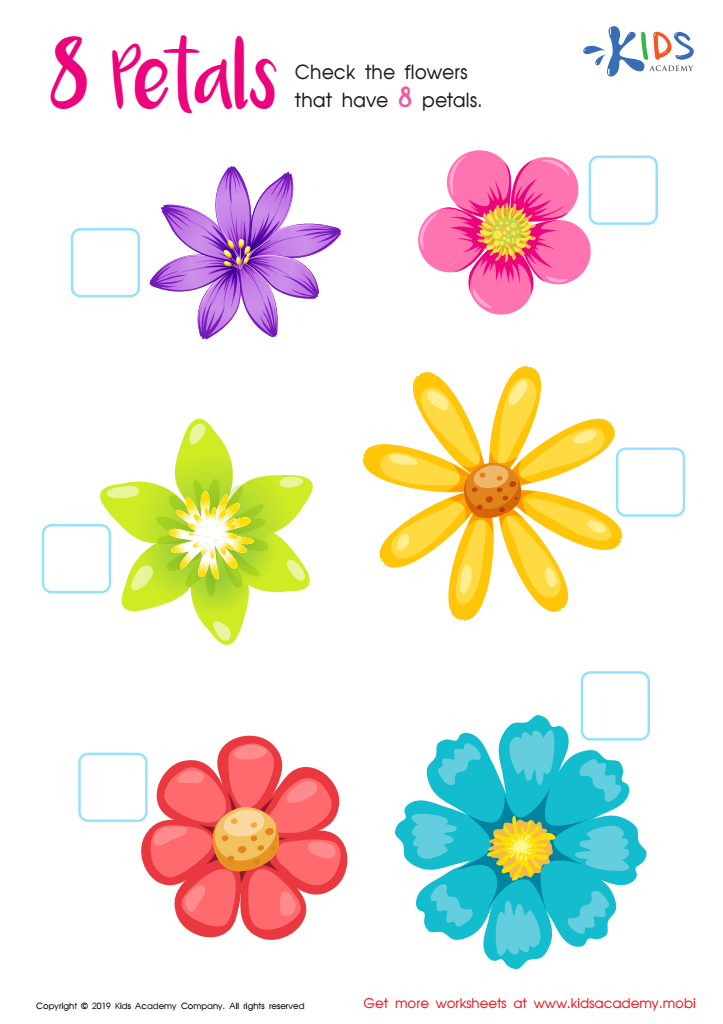
Help your children master counting with this fun worksheet. It's filled with colorful flowers and they must count the petals and check the flowers with 8 petals. It's a great way to practice their counting skills and have some fun too!
8 Petals Worksheet
Worksheet
Count in the School of Magic Worksheet

Count in the School of Magic Worksheet

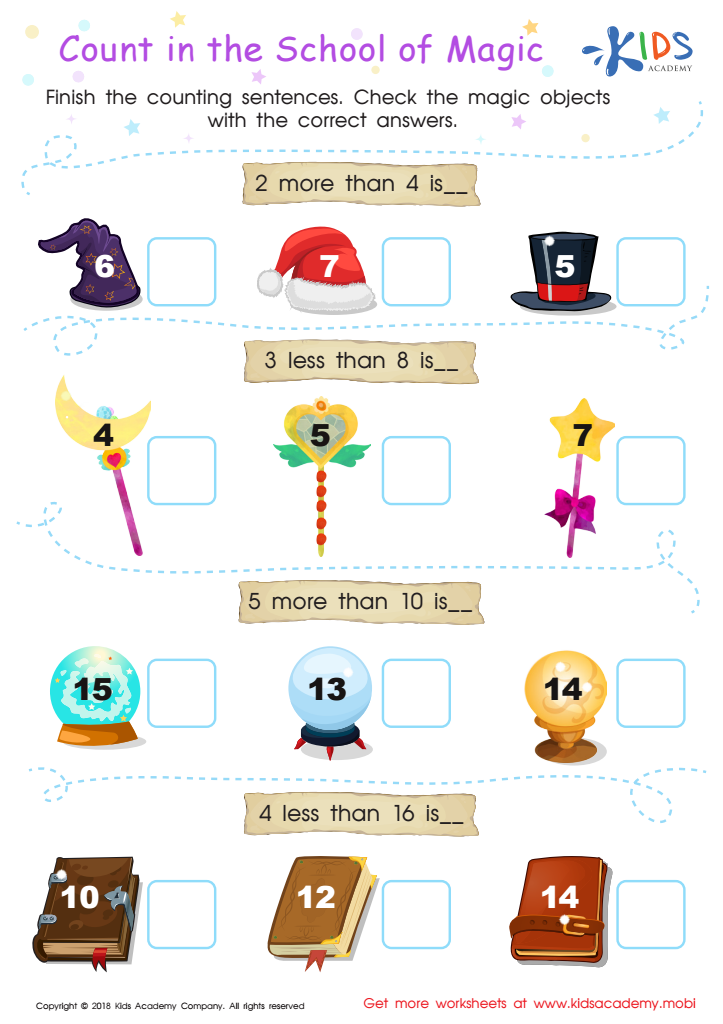
Your math learners can explore the School of Magic with this worksheet. They'll read equations with addition and subtraction numbers under 20, count back and forth to find the answer, then complete the counting sentences. Fun pictures and easy accuracy make it an enjoyable and successful learning experience.
Count in the School of Magic Worksheet
Worksheet
Adding With Longs and Cubes Worksheet

Adding With Longs and Cubes Worksheet

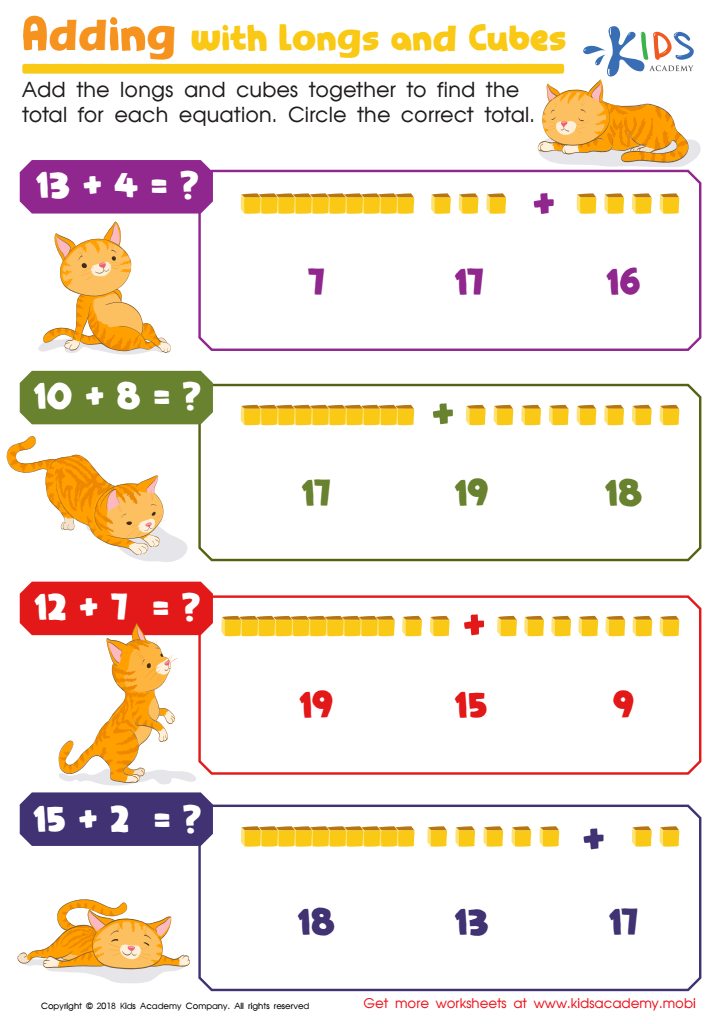
Math might not be your child's favorite, but they must master it to advance. If they're having difficulties or don't like it, use this worksheet to make it easier. Have them add longs and cubes together to find the total for each question, then circle the correct answer. This exercise can help make math experiences better.
Adding With Longs and Cubes Worksheet
Worksheet
Shape Connections Worksheet

Shape Connections Worksheet

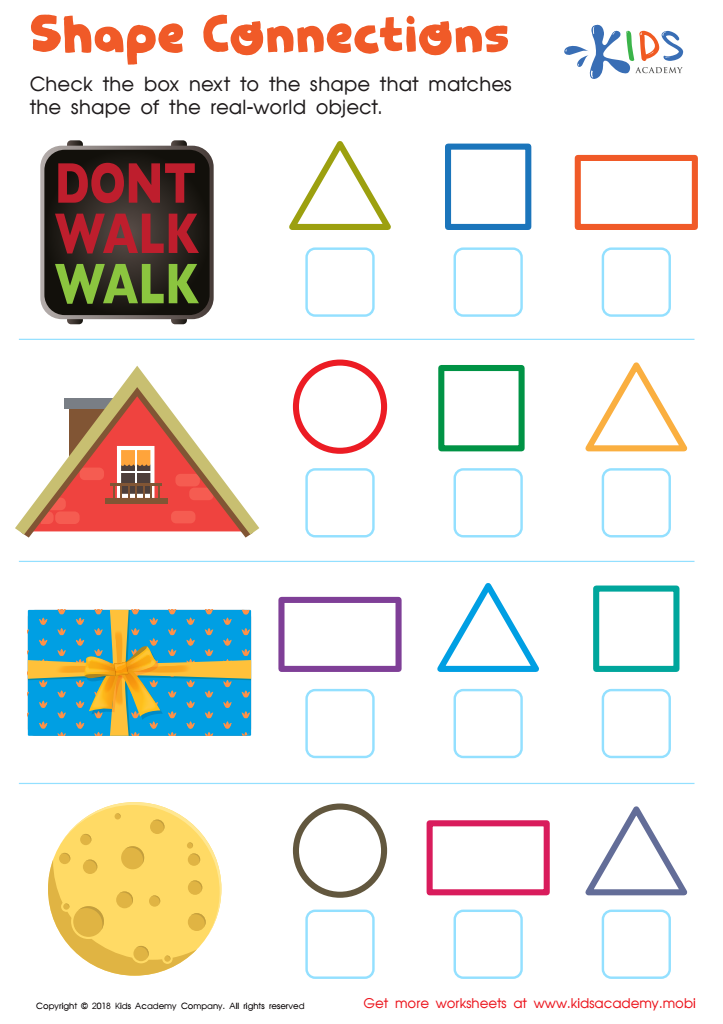
Geometric shapes are all around us and this fun worksheet brings it to life. Kids will match real-world pictures with the corresponding basic shapes, connecting how math is used in various aspects of daily life. A great way to reinforce these concepts!
Shape Connections Worksheet
Worksheet
Counting: Assessment 5 Worksheet

Counting: Assessment 5 Worksheet

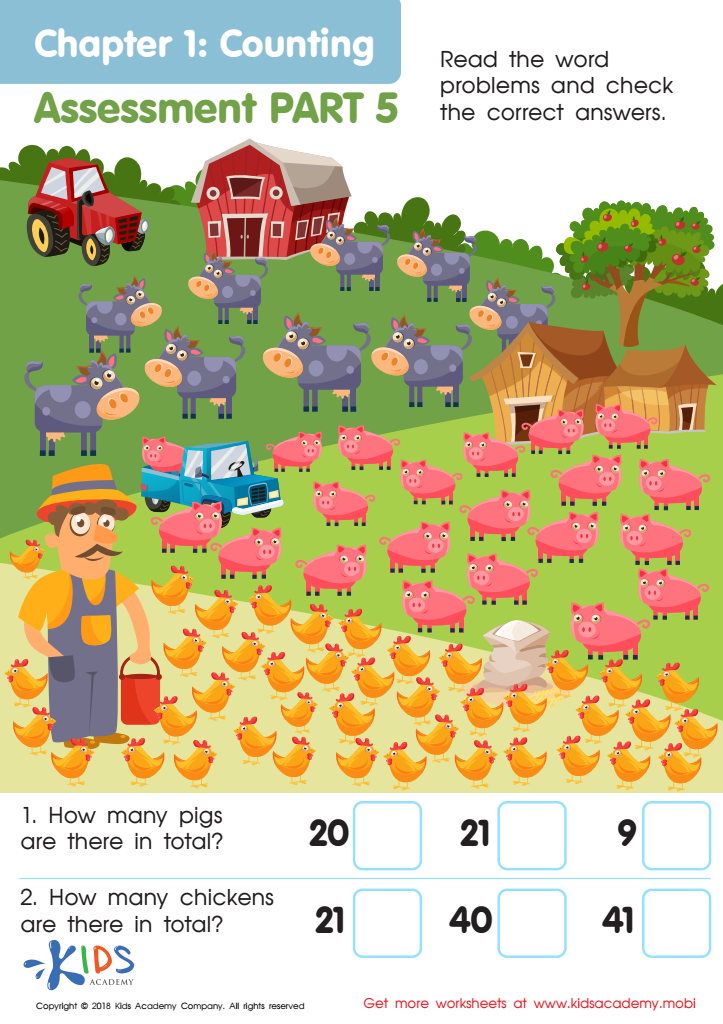
Let your kids have fun counting farm animals on this worksheet! Help the farmer count the animals and have your child check the answers to assess their counting skills. Read the word problem at the bottom of the page and count the animals together. It's an entertaining way to practice counting and have a great time!
Counting: Assessment 5 Worksheet
Worksheet
Counting Shapes Worksheet

Counting Shapes Worksheet

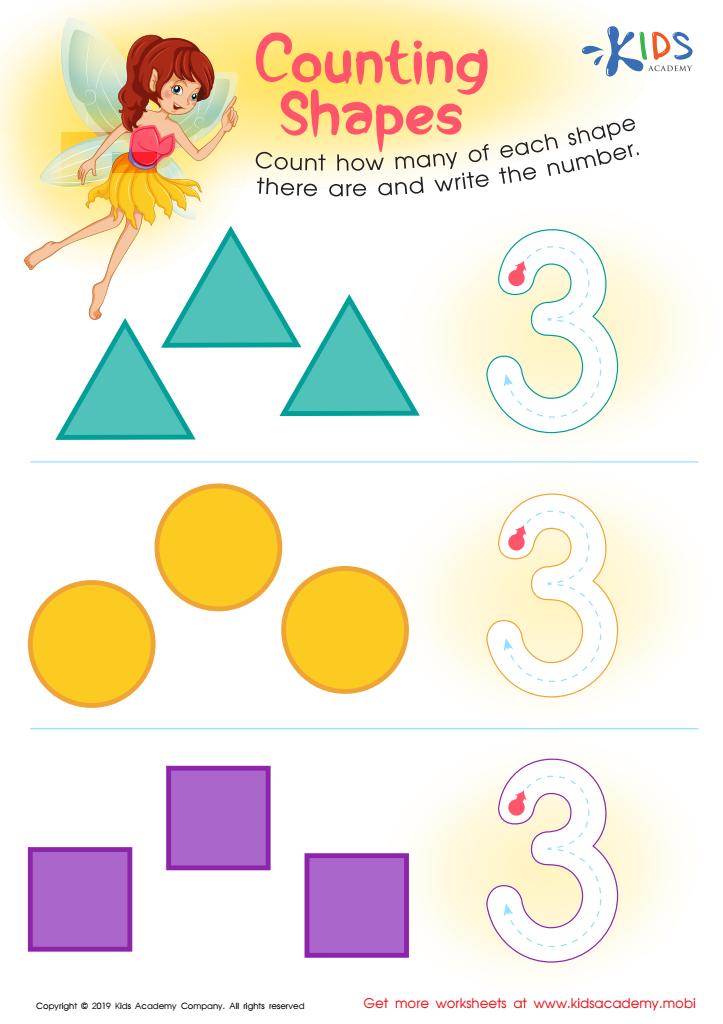
Counting and number sense are essential skills. Picture representation helps kids understand and remember concepts. This free worksheet is perfect for introducing numbers and counting in groups of three. It also helps kids to practice writing numbers with traceable lines and guiding dots. It's an easy and fun way to give little mathematicians a successful start.
Counting Shapes Worksheet
Worksheet
Dot to Dot Worksheets 11 to 20

Ordering 11–20: Dot–to–dot Seashell Printable

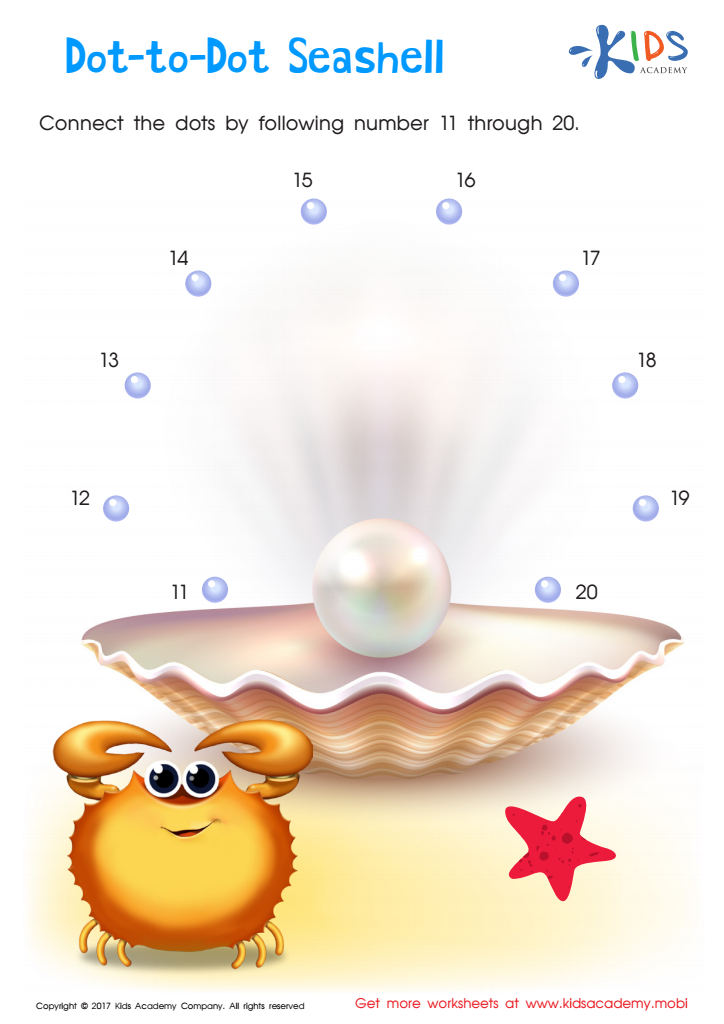
Connecting the dots 11 to 20 is rewarding for kids, helping them practice counting, identifying numbers and gain cognitive and logical skills. Our worksheet features a vibrant image of a seashell, crab and sea star, and your child will feel rewarded creating it while honing their counting skills!
Ordering 11–20: Dot–to–dot Seashell Printable

Worksheet


Shape recognition and understanding numbers are crucial intellectual building blocks for children aged 6-8. At this stage, children’s cognitive skills are expanding, and mastering these concepts forms a foundation for more complex learning areas, including mathematics and geometry.

Shape recognition enhances spatial thinking, which is essential for understanding the relationships between different objects. For instance, recognizing patterns and geometrical shapes aids in developing logical thinking and problem-solving skills. This capability transfers to various practical tasks, like reading maps, interpreting graphs, or even playing sports - all of which require an awareness of space and dimensions.

Understanding numbers goes beyond mere counting. It involves grasping concepts like quantity, order, and arithmetic operations. Proficiency in early numeracy lays the groundwork for future mathematical success, boosting confidence and competency in math-related tasks. It also underpins everyday activities, from telling time to handling money.

When children seamlessly understand shapes and numbers, they're better prepared for academic challenges across subjects, reinforcing a positive attitude towards learning. Consequently, prioritizing shape recognition and numeracy builds a comprehensive developmental platform, fostering critical thinking, creativity, and practicality that benefits children throughout their academic journey and everyday lives.