Understanding measurements Numbers Worksheets for Ages 6-8
3 filtered results
-
From - To
Unlock your child's potential with our "Understanding Measurements Numbers Worksheets for Ages 6-8" at Kids Academy! These expertly crafted worksheets are designed to make learning fun and engaging. Your child will explore foundational measurement concepts, learn to compare weights, volumes, and lengths, and understand time and money. Interactive activities and colorful visuals ensure that these complex concepts become easily graspable. Boost their math confidence and build essential skills that will support them throughout their educational journey. Perfect for classroom use or homeschooling, start your child's learning adventure today with Kids Academy!
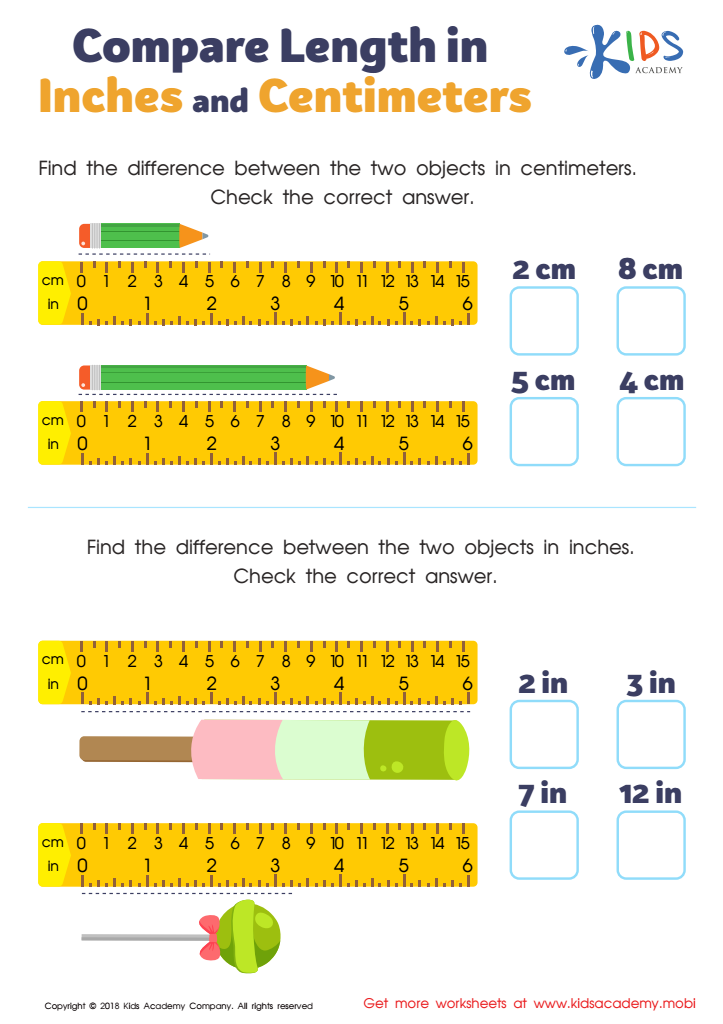
Compare Length in Inches and Centimeters Worksheet
 Assign to My Students
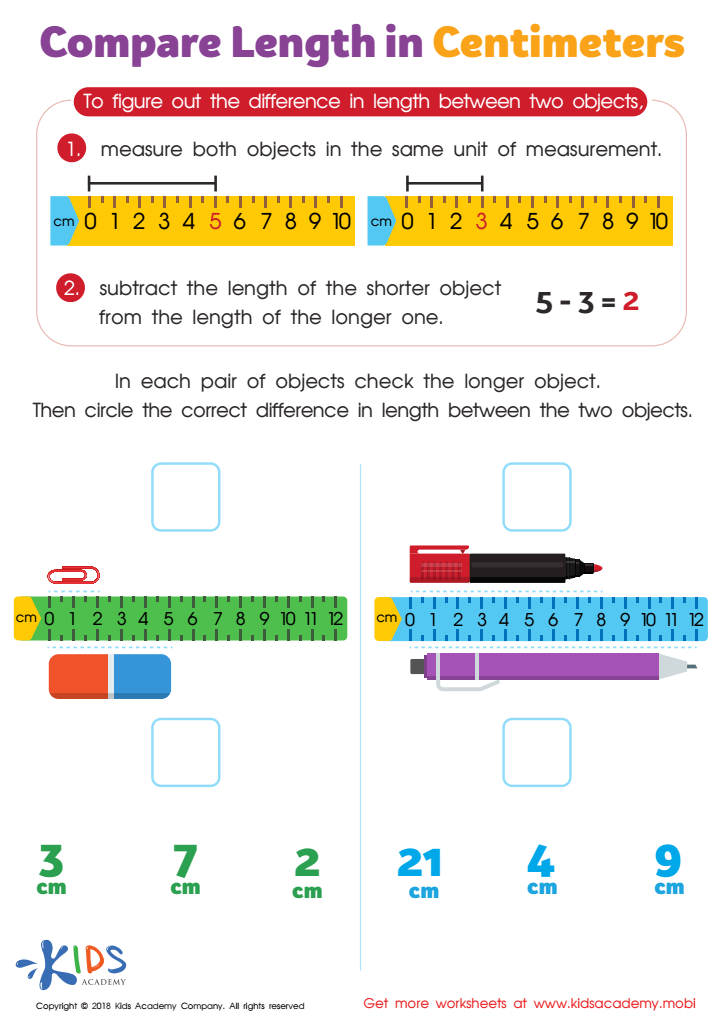
Compare Length in Centimeters Worksheet
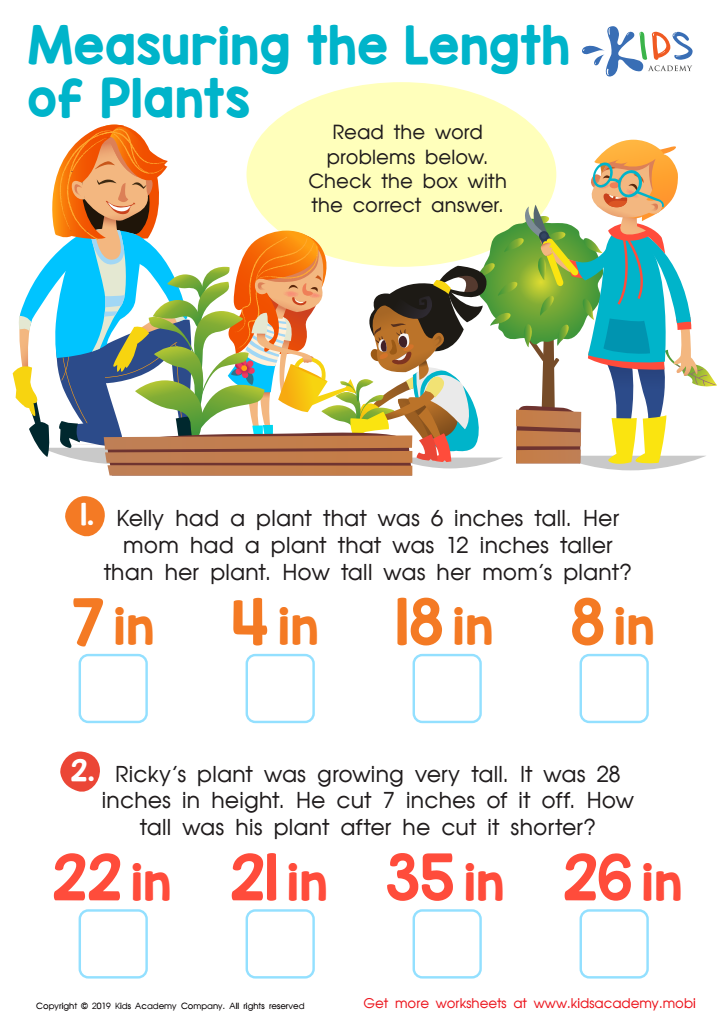
Measuring the Length of Plants Worksheet








Understanding measurements and numbers for ages 6-8 is crucial for children’s cognitive and practical development. At this stage, children are concrete thinkers and are beginning to grasp abstract concepts. Learning measurements and numbers helps develop their logical thinking and problem-solving skills.
Firstly, these foundational math skills are integral to everyday life. Children encounter measurements in contexts such as cooking, shopping, and using time. Recognizing quantities, understanding size relationships, and applying these concepts helps them navigate their world more effectively. For instance, understanding how to measure ingredients for a recipe involves recognizing the importance of accuracy and precision.
Secondly, early proficiency in measurements and numbers directly impacts academic achievement. Math is a cumulative subject, meaning that early gaps in knowledge can hinder progress in more complex arithmetic, geometry, and sciences later on. Developing these skills early sets a strong base for future learning, making higher-level math more accessible and less intimidating.
Moreover, engaging with measurements and numbers can stimulate curiosity and critical thinking. Simple measurement activities and sorting objects by size, length, or weight enable children to categorize and make sense of their environment. When parents and teachers pay attention to this aspect of learning, they help children build a sturdy scaffold for both educational advancement and everyday tasks, setting them on a path to success.








