
Comparing Fractions Math Worksheets for Ages 6-8
98 filtered results
Difficulty Level
Grade
Age
-
From - To
Subject
Activity
Standards
Discover the best tool for teaching kids aged 6-8 the fundamentals of comparing fractions with our engaging printable worksheets. Made to align with early learning standards, these worksheets help young learners understand concepts such as greater than, less than, and equal to in fun and interactive ways. With colorful graphics and clear instructions, students can easily grasp complex fraction comparisons. Ideal for classroom use or at-home practice, our worksheets build a solid math foundation, boost confidence, and make learning enjoyable. Start your child's math journey on the right foot with our expertly designed comparing fractions worksheets.
Favorites
With answer key
Interactive
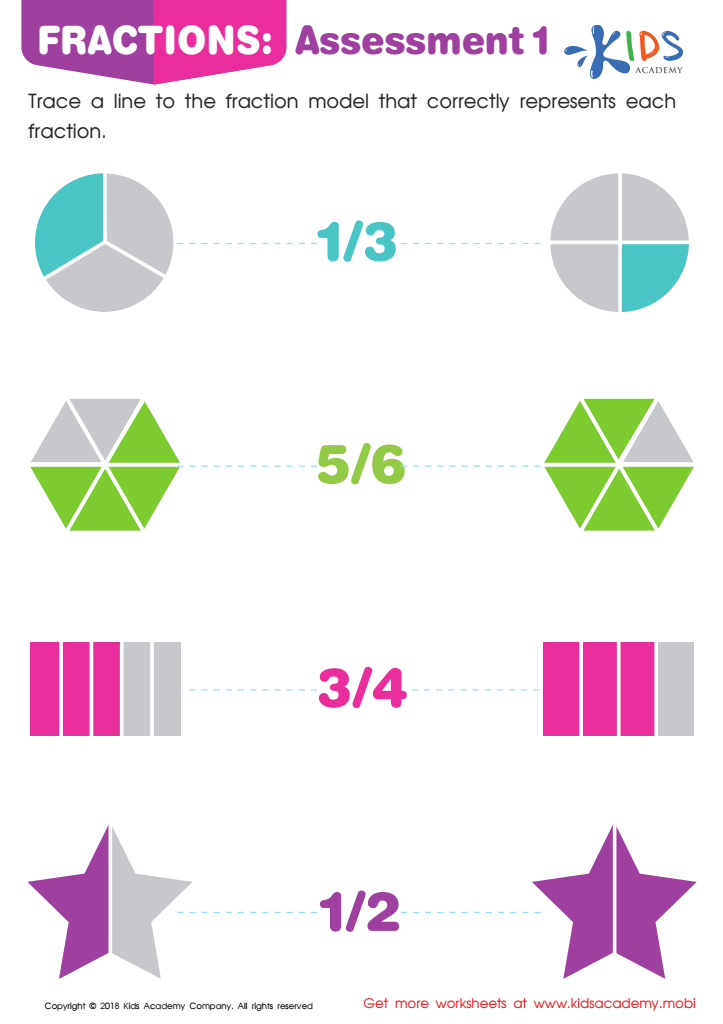
Fractions: Assessment 1 Worksheet
Master fractions easily with this worksheet! It has four sets of fraction models and fraction equations with two models each. Guide your kids to trace a line to the correct fraction model for each equation.
 Assign to My Students
Fractions: Assessment 1 Worksheet
Worksheet
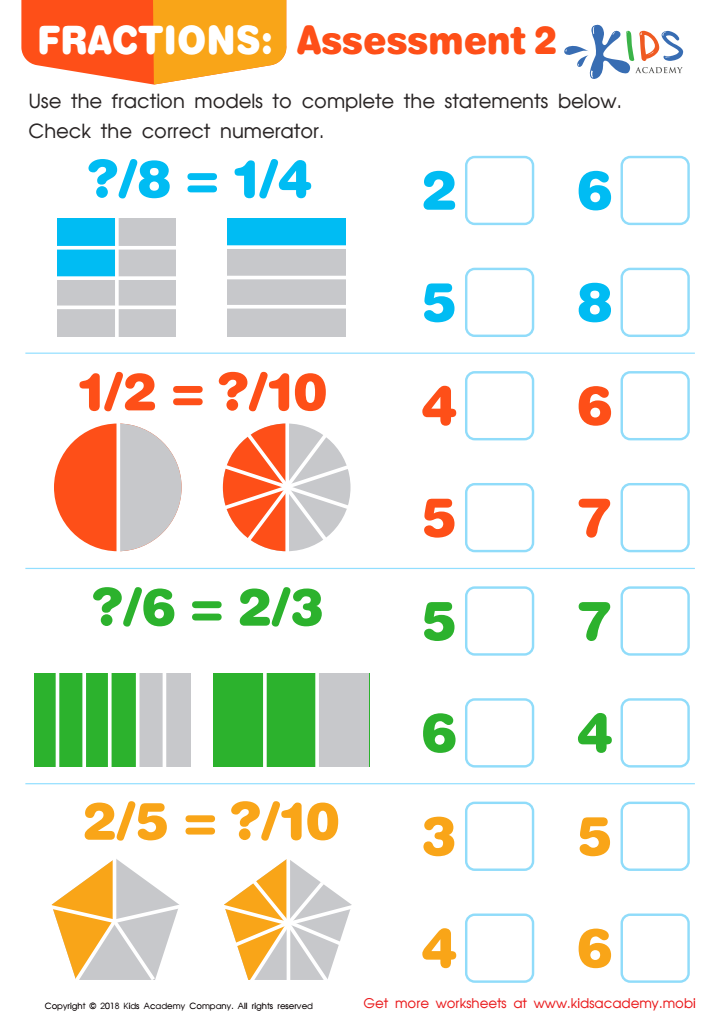
Fractions: Assessment 2 Worksheet
Help your kids understand fractions better with this worksheet. Ask them to complete the fraction statements using the fraction models on the left and then check the correct numerators. This can help clear up any confusion they may have with fractions and fraction models.
Fractions: Assessment 2 Worksheet
Worksheet
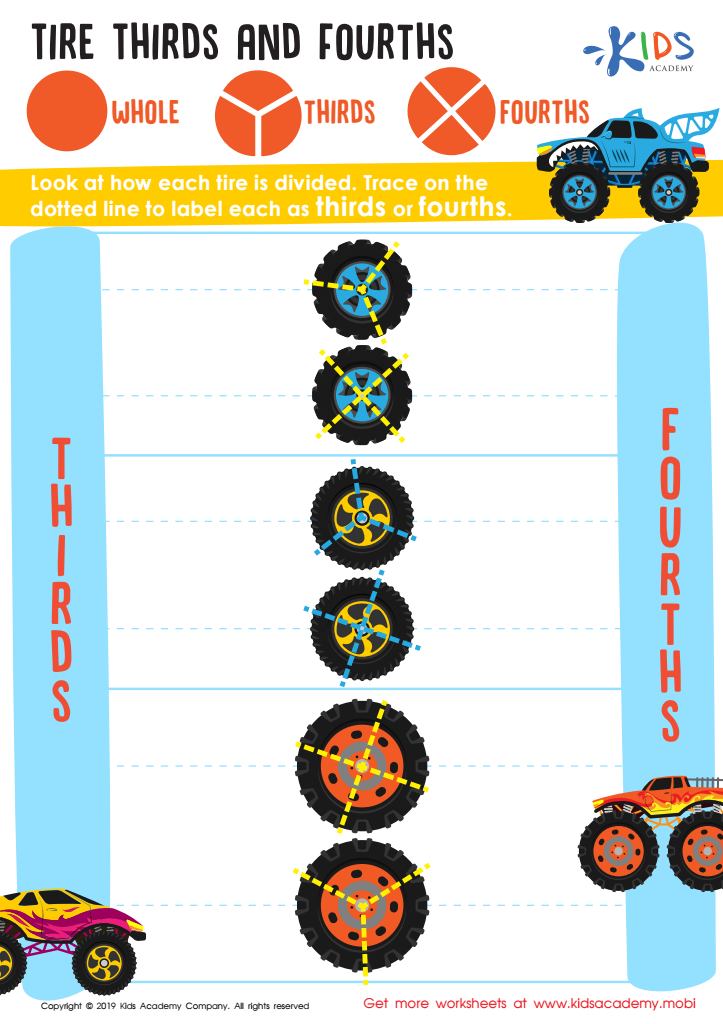
Tire Thirds and Fourths Worksheet
Learning geometry is key in your child's education. Have them identify and name shapes cut into 2, 3 and 4 parts. Test their knowledge with this worksheet - trace the dotted line to label each as third or fourth. Encourage them to keep learning!
Tire Thirds and Fourths Worksheet
Worksheet
Fractions: Shapes Worksheet
Get your printable now.
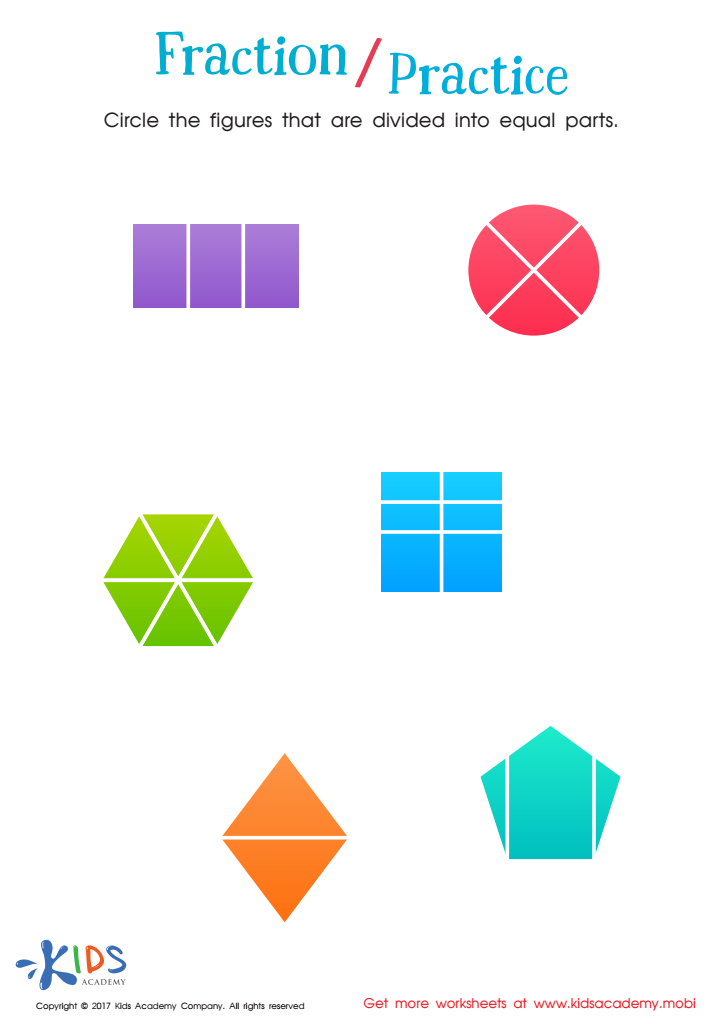
Kids learn math differently today than you did in school; understanding concepts rather than memorizing facts. Help your child understand fractions with this printable worksheet. It'll help your child recognize parts of a whole, identify equal parts and build a foundation for numeracy. A better understanding sets kids up for math success! Get your printable now.
Fractions: Shapes Worksheet
Worksheet
Fractions: Assessment 3 Worksheet
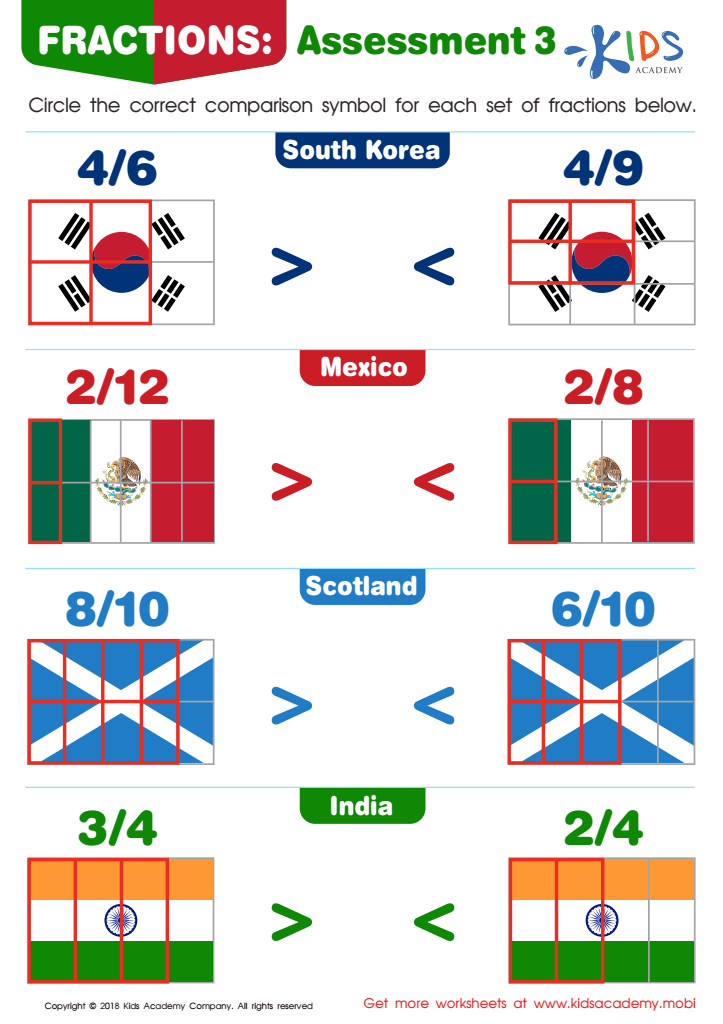
This worksheet helps teach kids about fractions and introduces them to countries and their flags. Have them read the country names and point to the flags. Then help them assess the fractions, and ask them to circle the symbol that shows their values.
Fractions: Assessment 3 Worksheet
Worksheet
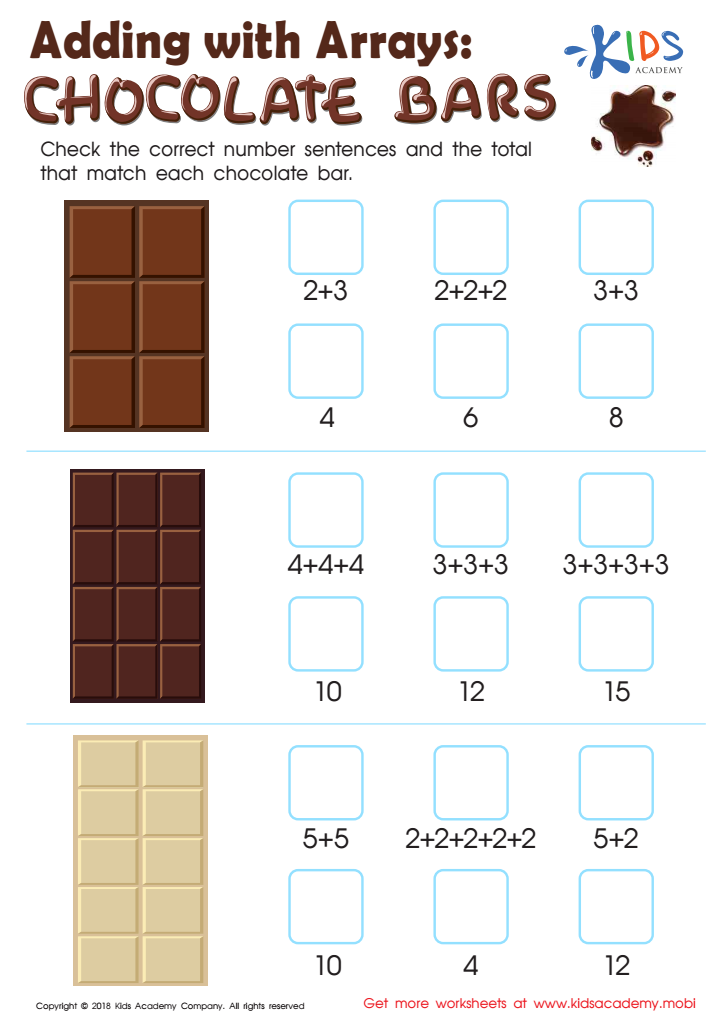
Adding with Arrays: Chocolate Bars Worksheet
Kids love chocolates! Gauge how enthused your kids get when you mention them. This worksheet is a fun exercise about chocolates - get your kids to check the correct number sentences and totals for each chocolate bar. Reward their hard work with some chocolates - extra incentive for a job well done!
Adding with Arrays: Chocolate Bars Worksheet
Worksheet
Join Kids Academy for Free
Who is primarily going to use this learning content?






Understanding and comparing fractions is a crucial math skill for children ages 6-8, serving as a foundational block for future mathematical concepts. At this formative age, children's cognitive abilities are rapidly developing, making it a prime time to introduce fundamental arithmetic ideas like fractions. Here's why parents and teachers should prioritize this topic:
First, fractions are ubiquitous in everyday life. Whether it’s dividing a pizza, sharing candy, or measuring ingredients for a recipe, real-world scenarios often involve fractions. Teaching kids to compare fractions at an early age helps them navigate these daily activities with ease.
Second, mastering fractions enhances problem-solving skills. When children learn to compare fractions, they use logical reasoning and critical thinking to determine which fraction is larger or smaller. This process boosts their analytical abilities and prepares them for more complex mathematical operations, such as algebra, in later years.
Third, strong fraction comprehension contributes to overall math competence. A secure grasp of basic math concepts like fractions underpins higher-level math topics, leading to better performance in school and a more positive attitude toward math.
Finally, early competence in fractions builds confidence. Children who understand foundational math concepts feel more capable and are often more enthusiastic about tackling new and challenging problems.
In sum, investing time in teaching and comparing fractions between ages 6-8 sets children up for academic success and practical proficiency in everyday tasks.








