
Simplifying Fractions Math Worksheets for Ages 6-8
22 filtered results
Difficulty Level
Grade
Age
-
From - To
Subject
Activity
Standards
Introduce your young learners to the world of fractions with our "Simplifying Fractions Math Worksheets" designed specifically for ages 6-8! These engaging and interactive worksheets help kids master the essential skill of simplifying fractions through colorful activities and clear instructions. By practicing with fun visuals and relatable examples, students will gain confidence and proficiency in their math abilities. Perfect for classroom assignments or at-home practice, our worksheets align with educational standards to support skill-building and promote a love for math. Simplify learning and watch your child shine in their understanding of fractions today!
Favorites
With answer key
Interactive
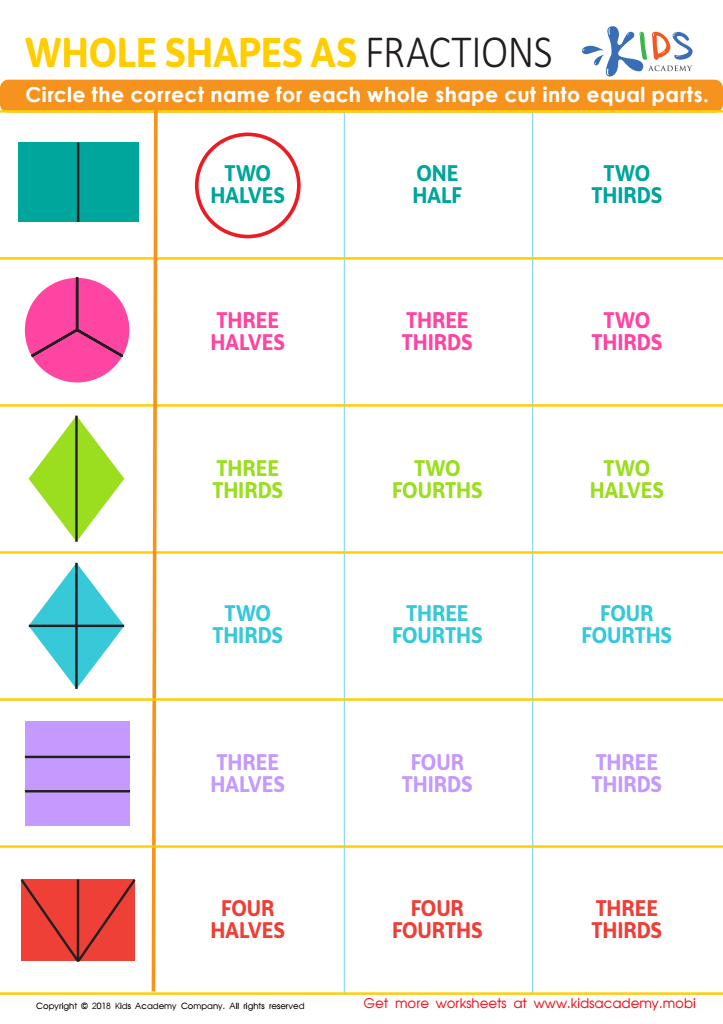
Whole Shapes as Fractions Worksheet
Introduce your child to fractions! After they can draw whole shapes, have them represent them as fractions using a simple worksheet. This will help improve their understanding of naming whole shapes cut into equal parts.
 Assign to My Students
Whole Shapes as Fractions Worksheet
Worksheet
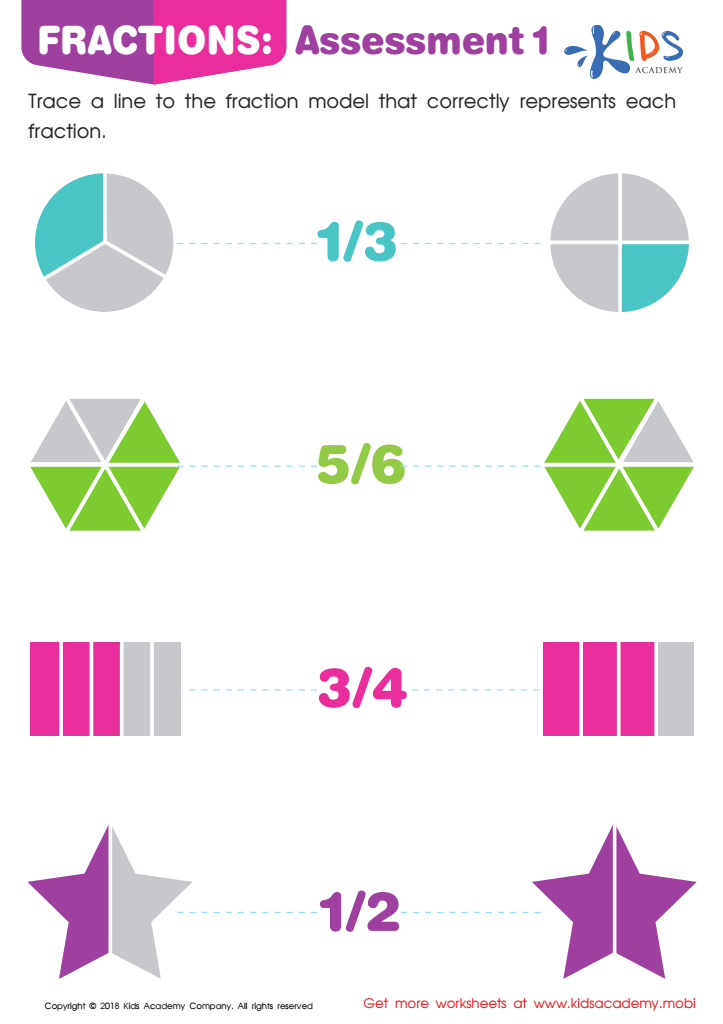
Fractions: Assessment 1 Worksheet
Master fractions easily with this worksheet! It has four sets of fraction models and fraction equations with two models each. Guide your kids to trace a line to the correct fraction model for each equation.
Fractions: Assessment 1 Worksheet
Worksheet
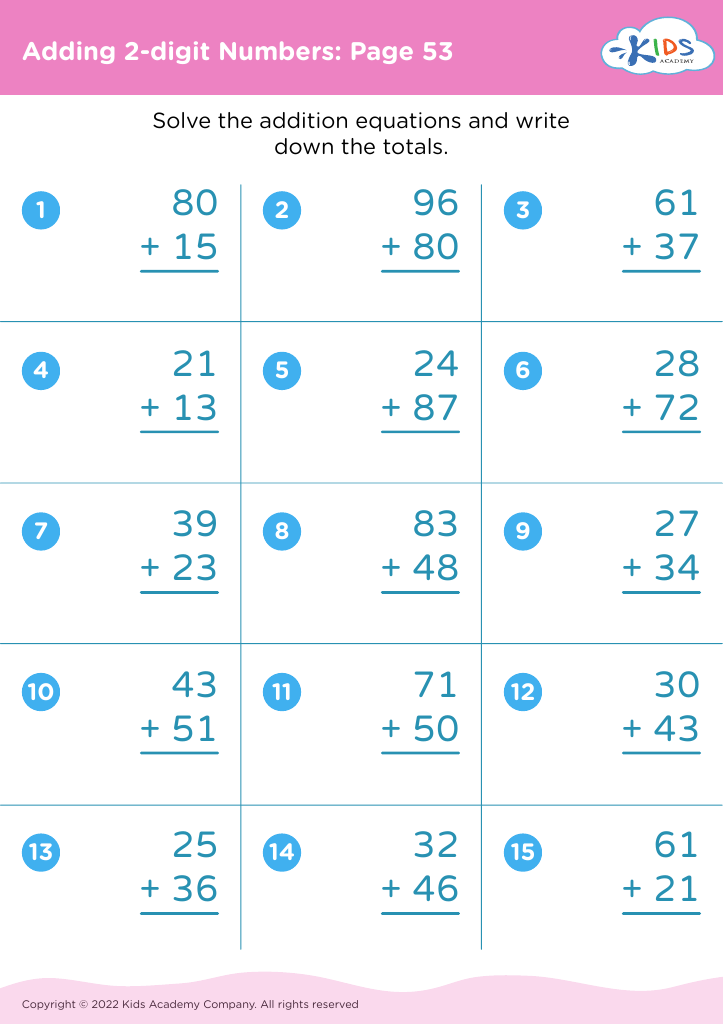
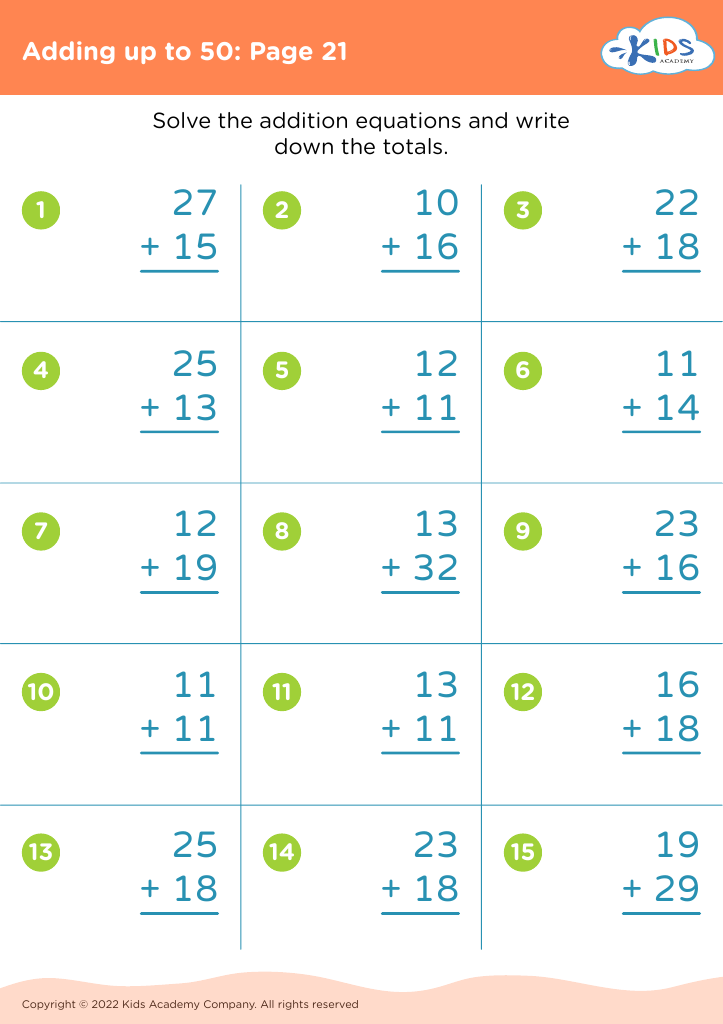
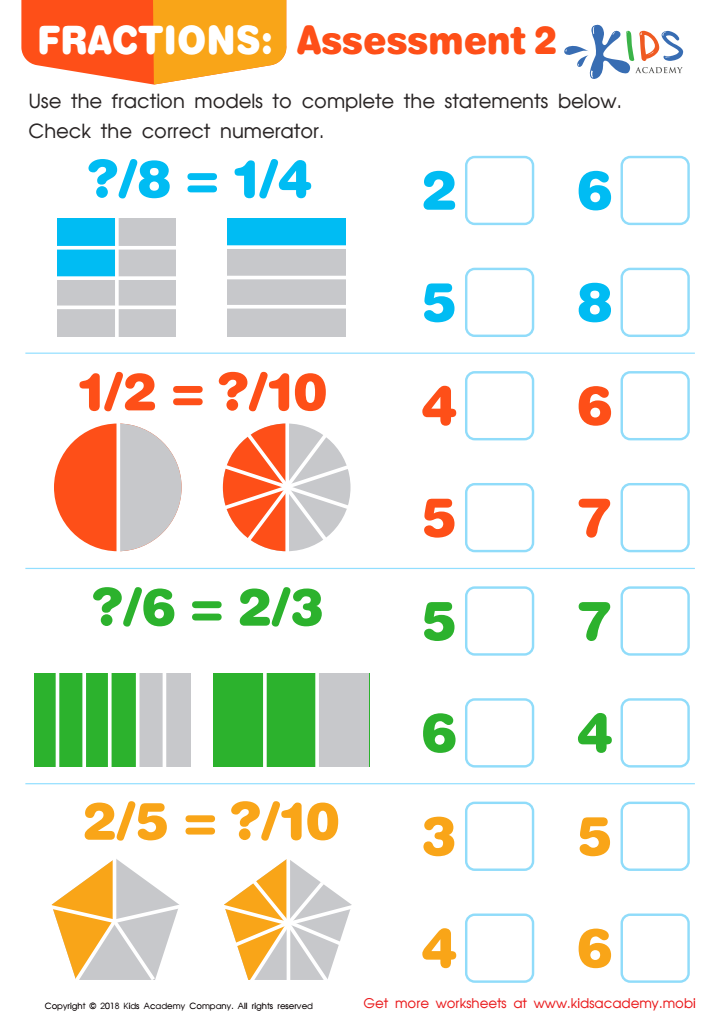
Fractions: Assessment 2 Worksheet
Help your kids understand fractions better with this worksheet. Ask them to complete the fraction statements using the fraction models on the left and then check the correct numerators. This can help clear up any confusion they may have with fractions and fraction models.
Fractions: Assessment 2 Worksheet
Worksheet
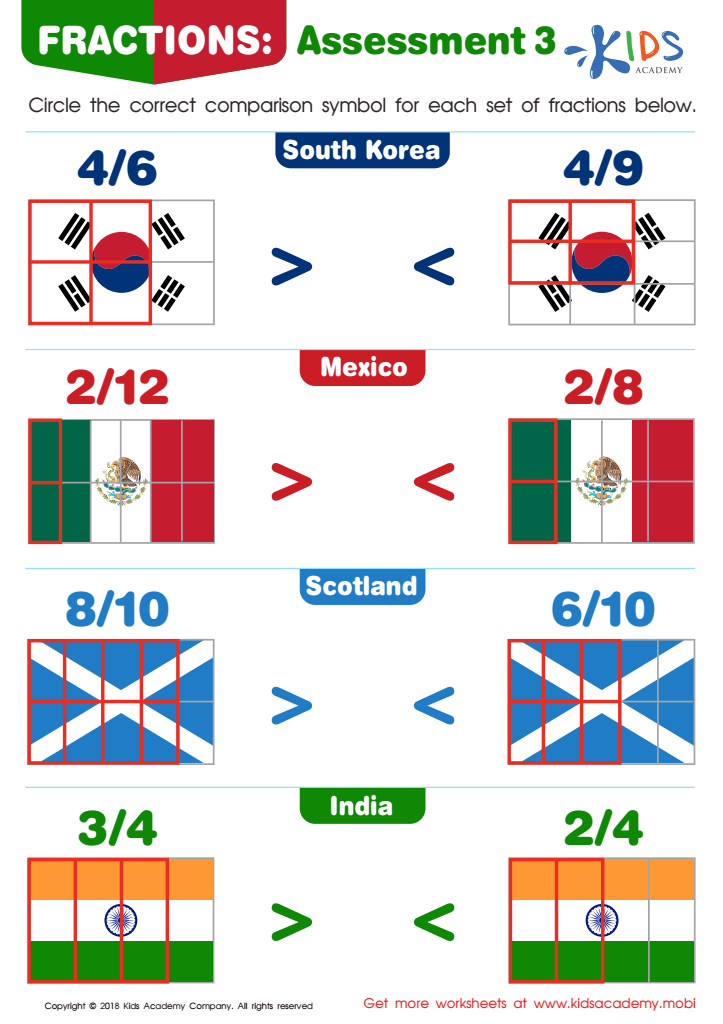
Fractions: Assessment 3 Worksheet
This worksheet helps teach kids about fractions and introduces them to countries and their flags. Have them read the country names and point to the flags. Then help them assess the fractions, and ask them to circle the symbol that shows their values.
Fractions: Assessment 3 Worksheet
Worksheet
Join Kids Academy for Free
Who is primarily going to use this learning content?








Understanding and simplifying fractions are foundational skills in mathematics, especially for children aged 6 to 8. At this stage, children are beginning to grasp basic concepts of numbers, and introducing them to fractions can provide valuable tools for future mathematical success.
Parents and teachers should care about simplifying fractions because this skill promotes number sense and mathematical reasoning. Simplifying fractions helps children comprehend the relationship between different numbers and helps them recognize equivalence—that two expressions can represent the same quantity. This foundational understanding lays the groundwork for more complex math concepts, such as addition, subtraction, and problem-solving with fractions.
Moreover, when children learn to simplify fractions, they develop critical thinking skills. They must analyze problems and make decisions about how to break down numbers, which fosters independent and analytical thinking. Such skills are essential not just in math, but across various subjects in school and in daily life.
Additionally, engaging young learners in fraction activities makes math fun and interactive, which can enhance their attitude towards learning. Distilling complex subjects into digestible pieces encourages their curiosity and builds confidence in their mathematical abilities. In summary, emphasizing the simplification of fractions at an early age sets the stage for a solid mathematical foundation.








