Practical math application Measurement Worksheets for Ages 6-8
7 filtered results
-
From - To
Explore our engaging Practical Math Application Measurement Worksheets designed for children ages 6-8. These worksheets provide a hands-on approach to mastering measurement concepts through fun and age-appropriate activities. Young learners will develop critical skills such as length, weight, and volume measurement, grounding their understanding in real-world contexts. Our carefully structured content encourages independent exploration while reinforcing classroom learning. With vibrant visuals and interactive exercises, each worksheet serves as a valuable tool to enhance math proficiency. Perfect for both homeschooling and classroom settings, these resources will captivate young minds and build essential math skills, paving the way for future academic success.
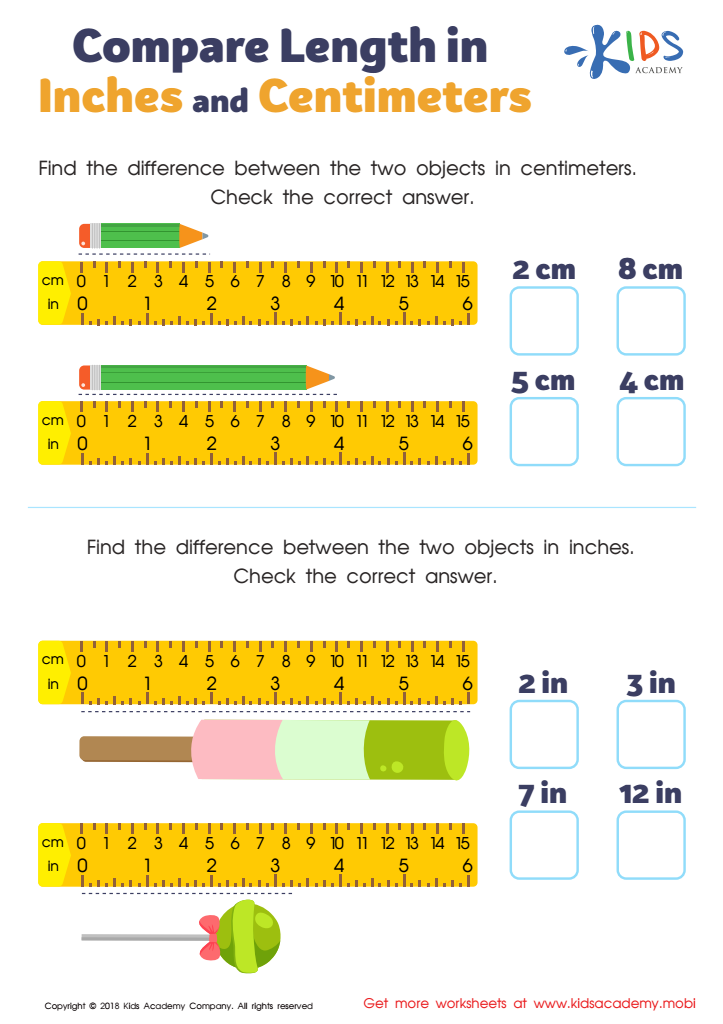
Compare Length in Inches and Centimeters Worksheet
 Assign to My Students
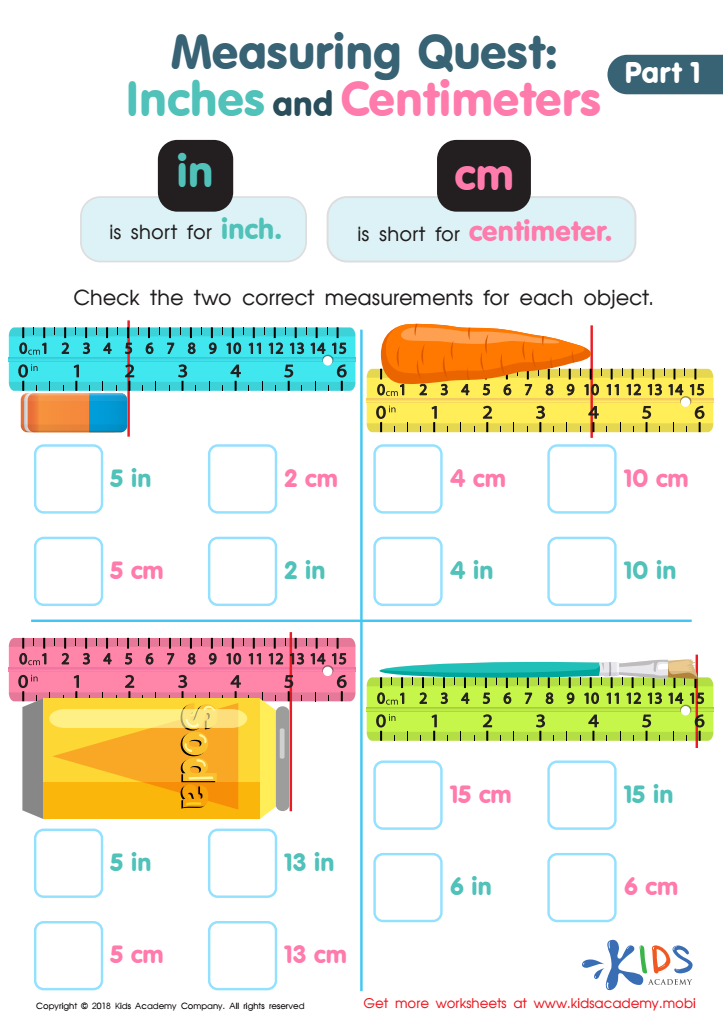
Measuring Quest: Inches and Centimeters Worksheet
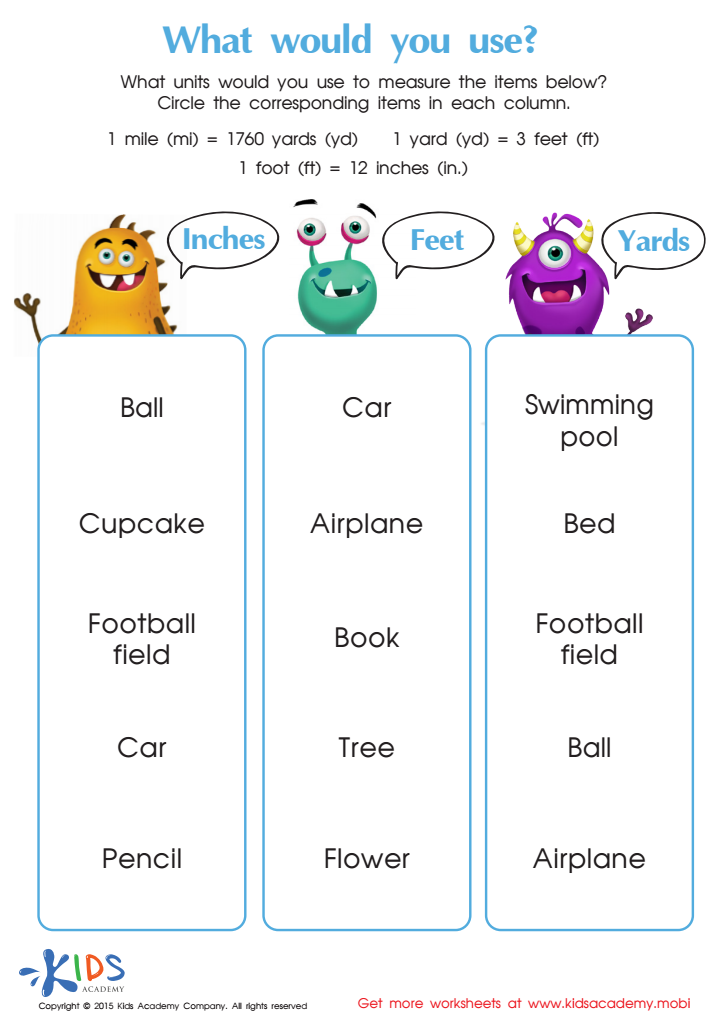
Learning about measuring objects in inches, feet and yards Worksheet
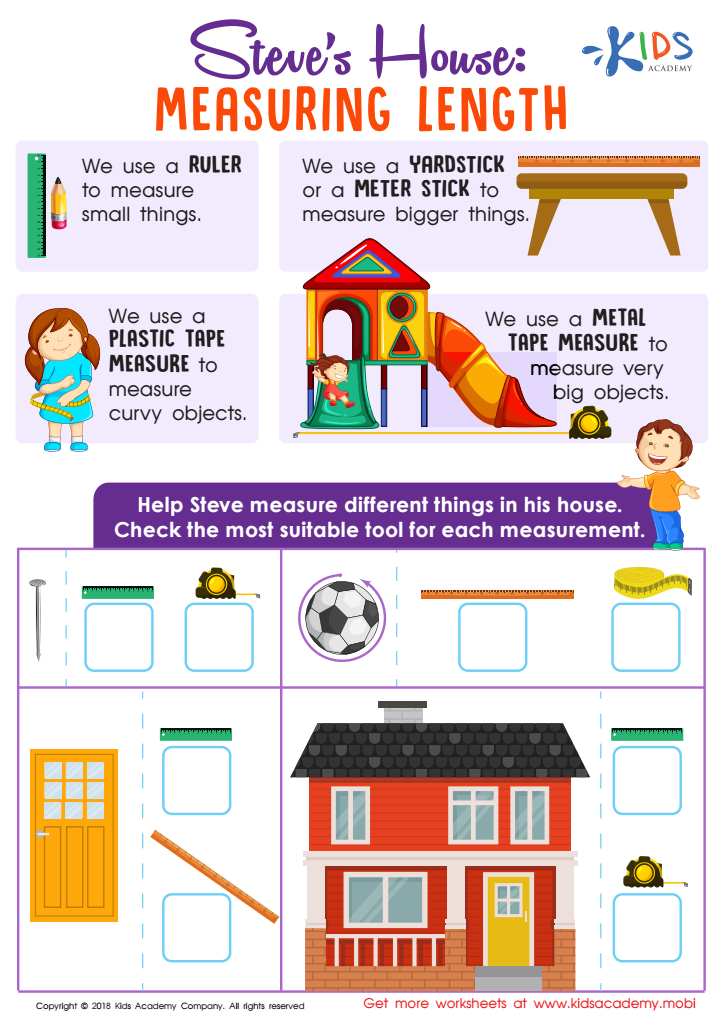
Steve's House: Measuring Length Worksheet
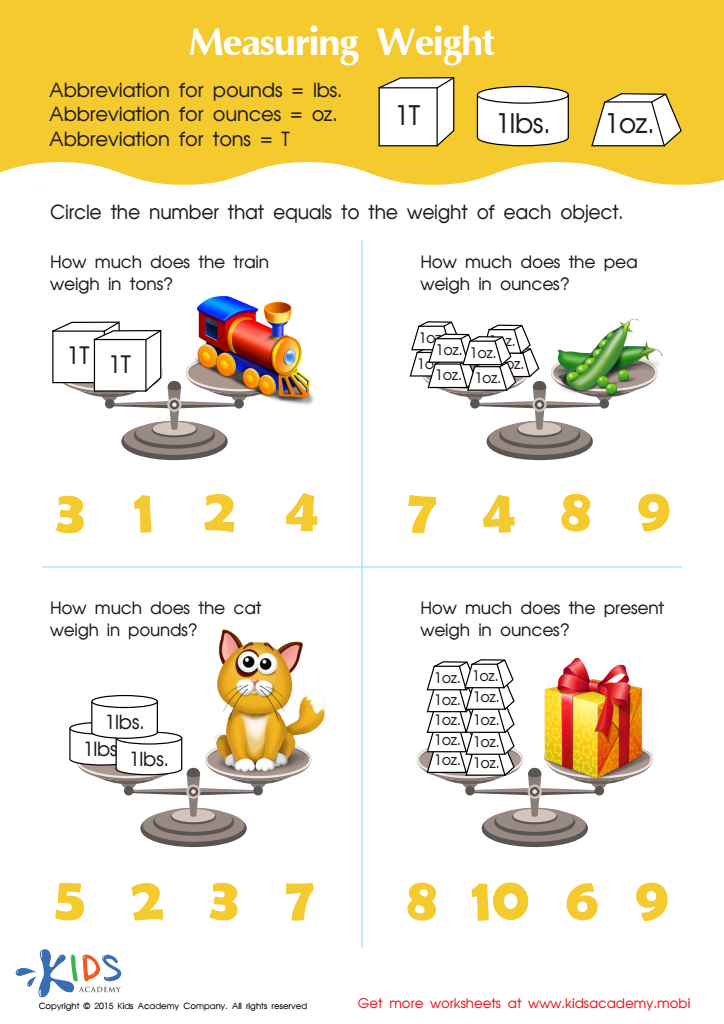
Measuring Weight in Ounces, Pounds and Tons Worksheet
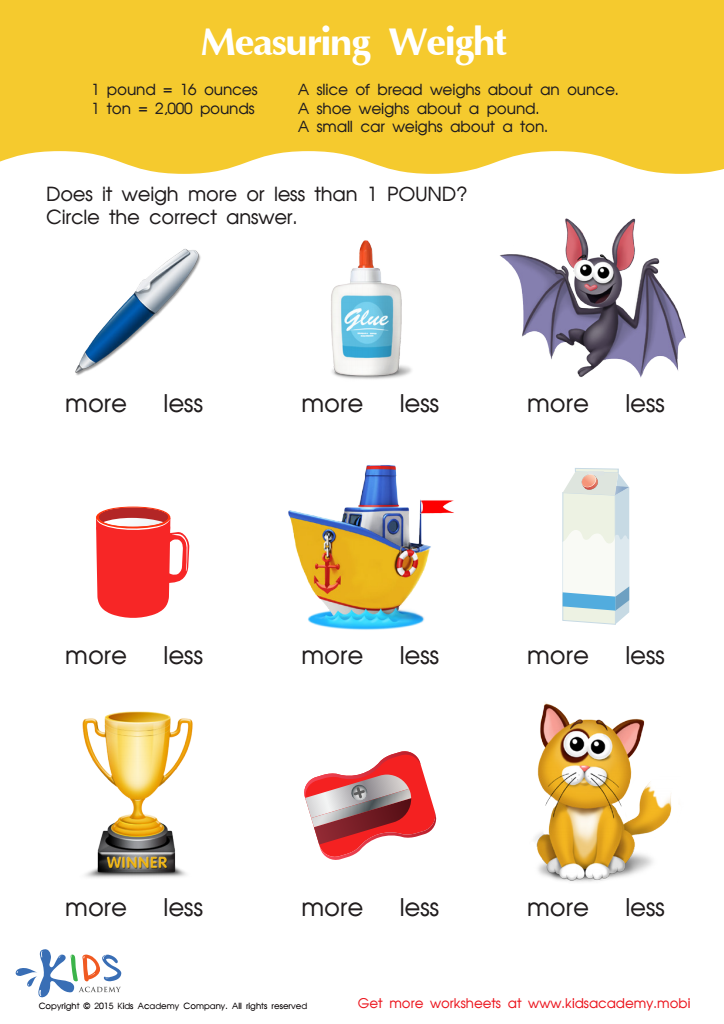
Measuring weight in pounds Worksheet
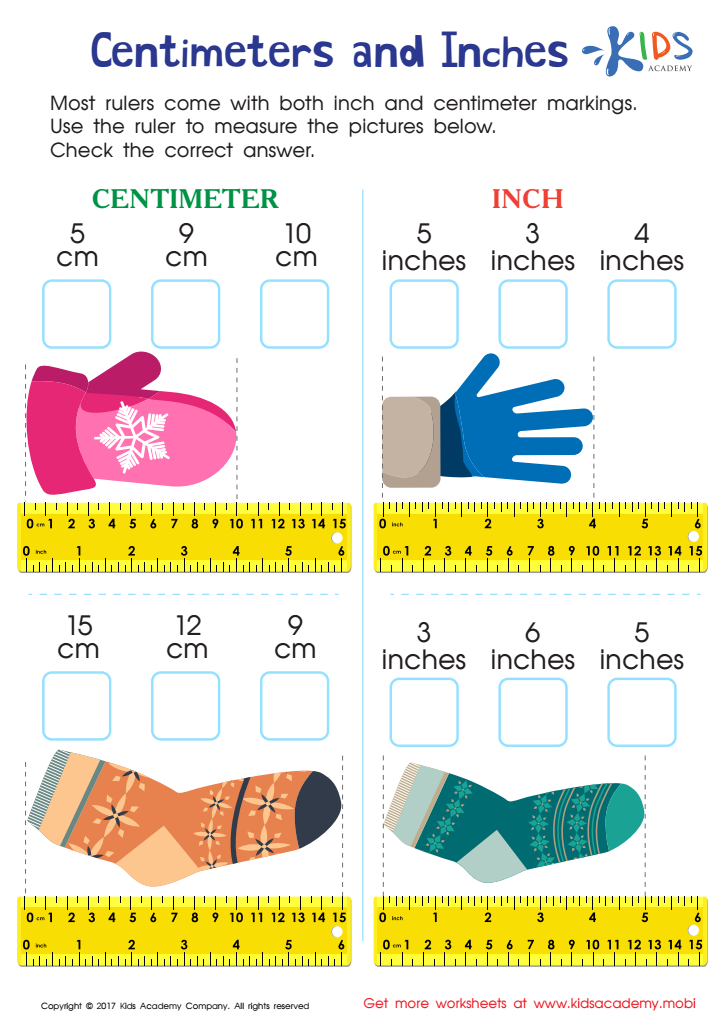
Centimeters and Inches Worksheet








Parents and teachers should prioritize practical math applications, particularly measurement, for children aged 6-8 because these foundational skills enhance cognitive development and everyday problem-solving. At this age, children are naturally curious and eager to explore their environment, making it an ideal time to introduce measurement concepts through engaging activities.
Practical applications, such as measuring ingredients for cooking or comparing heights of plants, offer hands-on experiences that solidify abstract ideas. These activities foster critical thinking and help reinforce the importance of math in daily life, showing children how measurement is integral to tasks they encounter.
Moreover, a solid grounding in measurement sets the stage for more complex mathematical concepts later on. Children learn to understand units, how to estimate appropriately, and the relationships between different measurements. These skills not only boost confidence but also promote a positive attitude towards math, reducing math-related anxiety that could hinder their future learning.
Finally, involving parents in these practical applications encourages bonding and creates a supportive learning environment. When children see their caregivers actively engaged in math, they’re more likely to value these skills themselves, leading to lifelong math literacy and an appreciation for its relevance in the real world.








