Cognitive Development Tracing Shapes Worksheets for Ages 6-8
4 filtered results
-
From - To
Enhance your child's cognitive development with our Tracing Shapes Worksheets tailored specifically for ages 6-8. These printable activities from Kids Academy are designed to strengthen critical thinking, spatial awareness, and fine motor skills. By tracing and identifying various shapes, children not only learn geometric concepts but also improve their problem-solving abilities and concentration. Each worksheet offers engaging and educational content that makes learning fun. Perfect for both home and classroom settings, these tools support foundational skills that are vital for academic success. Download now to give your child a head start in their cognitive development journey!
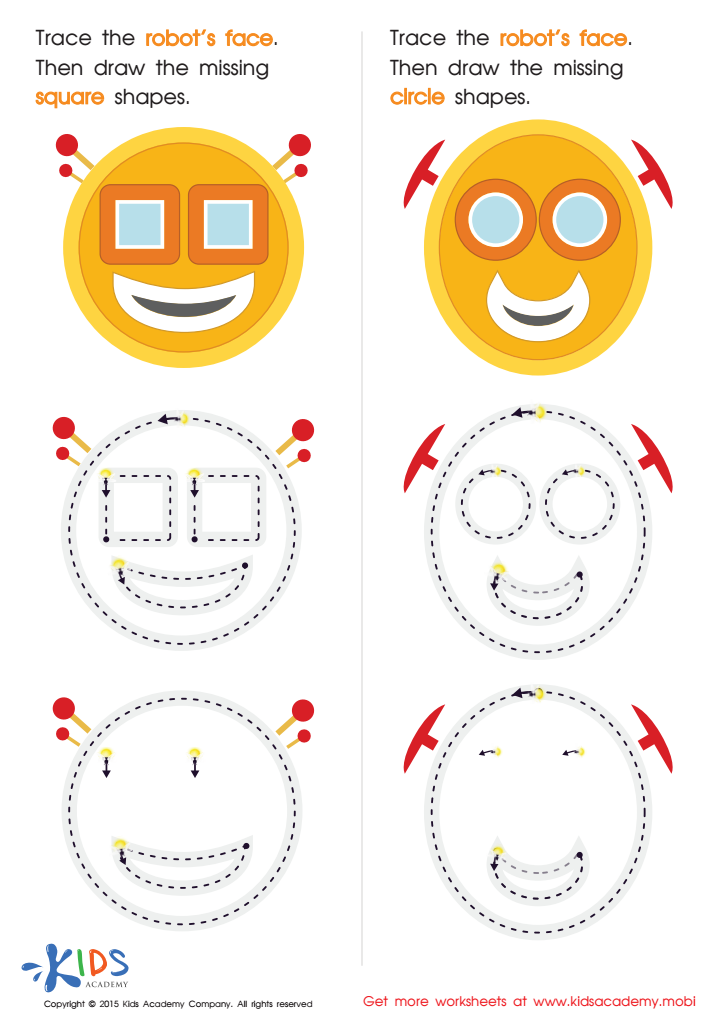
Practicing to Draw Circles And Squares Printable
 Assign to My Students
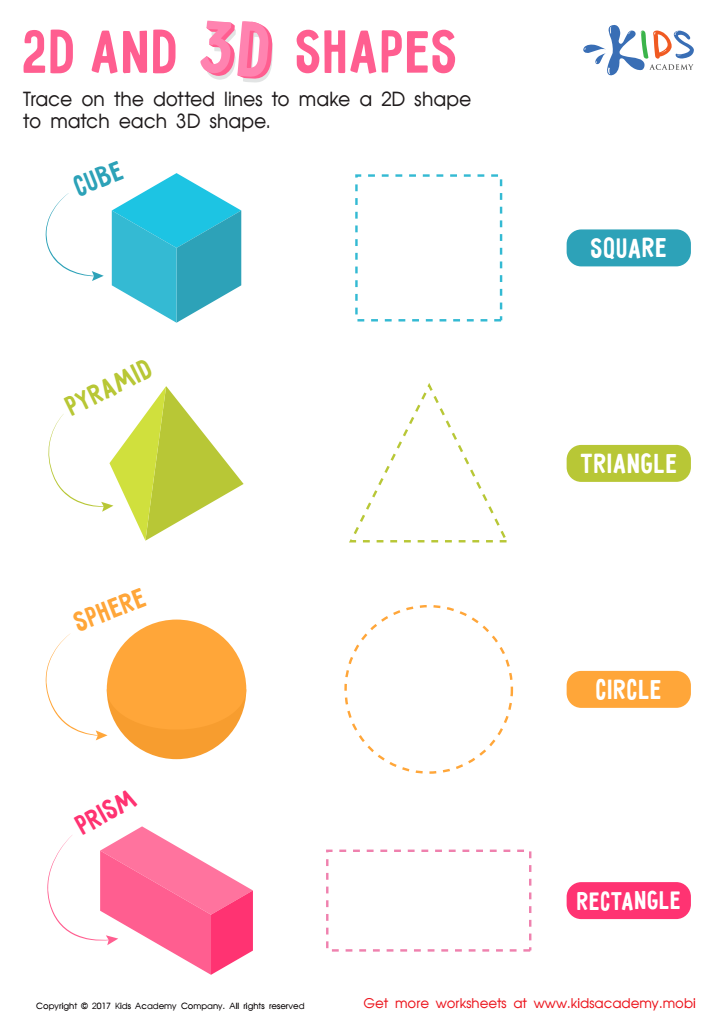
2D and 3D Shapes Worksheet
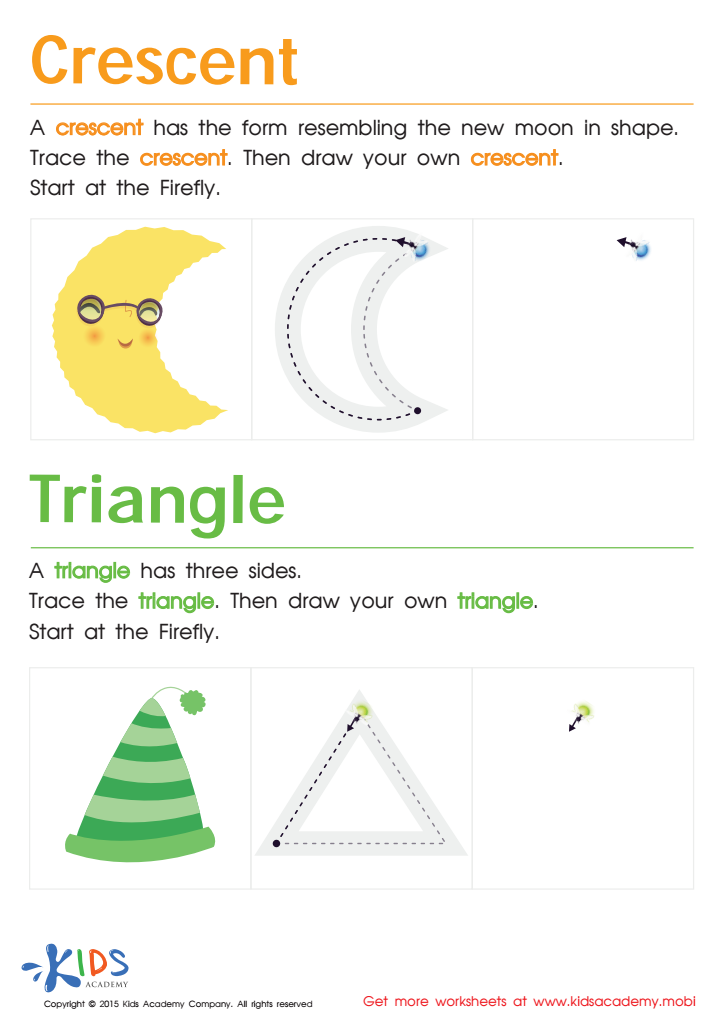
Learning to Draw Crescents And Triangles Worksheet
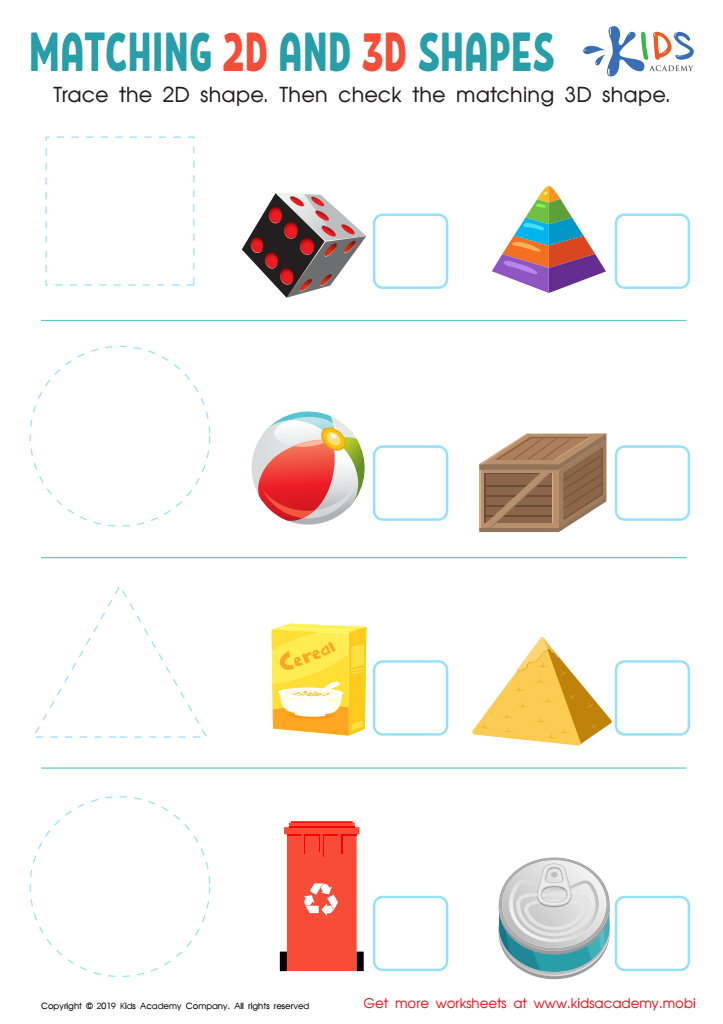
Matching 2D and 3D Shapes Worksheet








Cognitive development is a crucial aspect of a child's growth, and activities like tracing shapes significantly contribute to this developmental stage for ages 6-8. At this age, children's brains are rapidly developing, and experiences that stimulate cognitive skills are essential. Tracing shapes is not merely an art activity; it fosters important cognitive advancements. First, it enhances fine motor skills, improving hand-eye coordination and precision. Manipulating shapes on paper helps children grasp spatial relationships, fostering geometric understanding which form the foundation for more complex mathematical concepts.
Furthermore, tracing shapes sharpens children's attention to detail and concentration. As they focus on staying within the lines or replicating patterns, their ability to sustain attention for extended periods is tested and improved. Additionally, this activity encourages visual perception and memory. When children trace a shape, they have to recognize, remember, and reproduce its particular contours, enhancing both their short-term and long-term memory.
Teachers and parents should value and integrate tracing shapes into the curriculum and home activities as it not only hones these cognitive skills but also boosts confidence and creativity. The process is innately rewarding, allowing children to see tangible progress and achievements on paper, fostering a love for learning and self-improvement.