Subtraction practice Word Problems Worksheets for Ages 6-8
21 filtered results
-
From - To
Enhance your child's math skills with our engaging Subtraction Practice Word Problems Worksheets, specially designed for children aged 6-8. These worksheets offer a variety of scenarios that encourage young learners to think critically as they solve real-life subtraction problems. With colorful illustrations and age-appropriate language, each activity fosters a love for math while developing essential problem-solving abilities. Perfect for classroom use or at-home practice, these worksheets help reinforce subtraction concepts in a fun and interactive way. Download our printable worksheets today and make subtraction learning an enjoyable adventure for your little mathematicians!
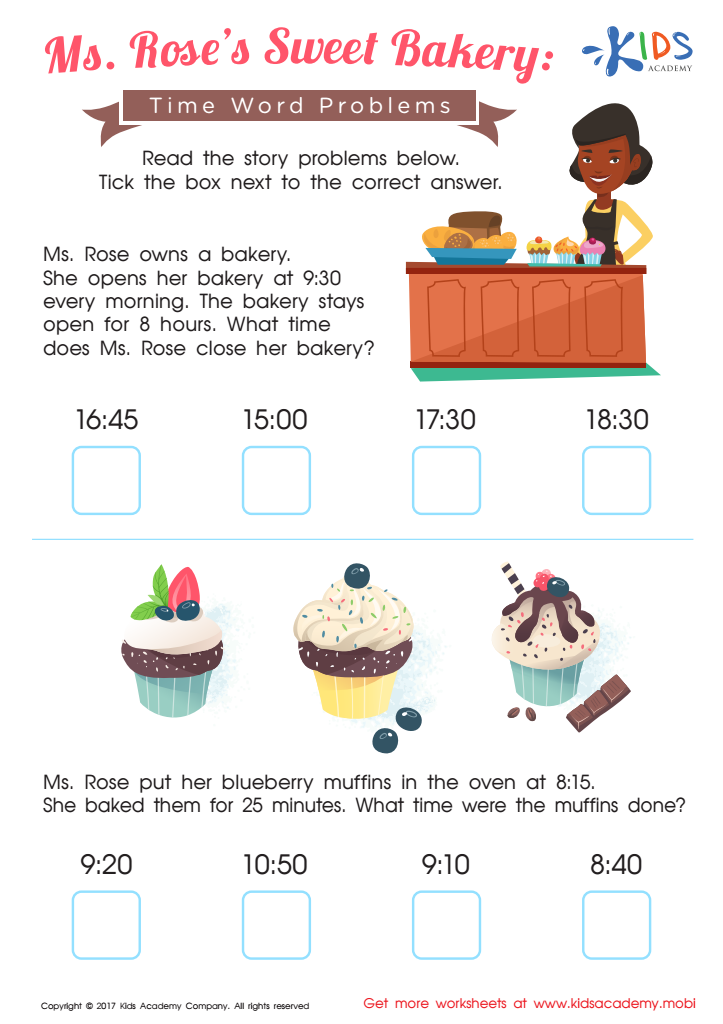
Ms. Roseв's Sweet Bakery Time Worksheet
 Assign to My Students
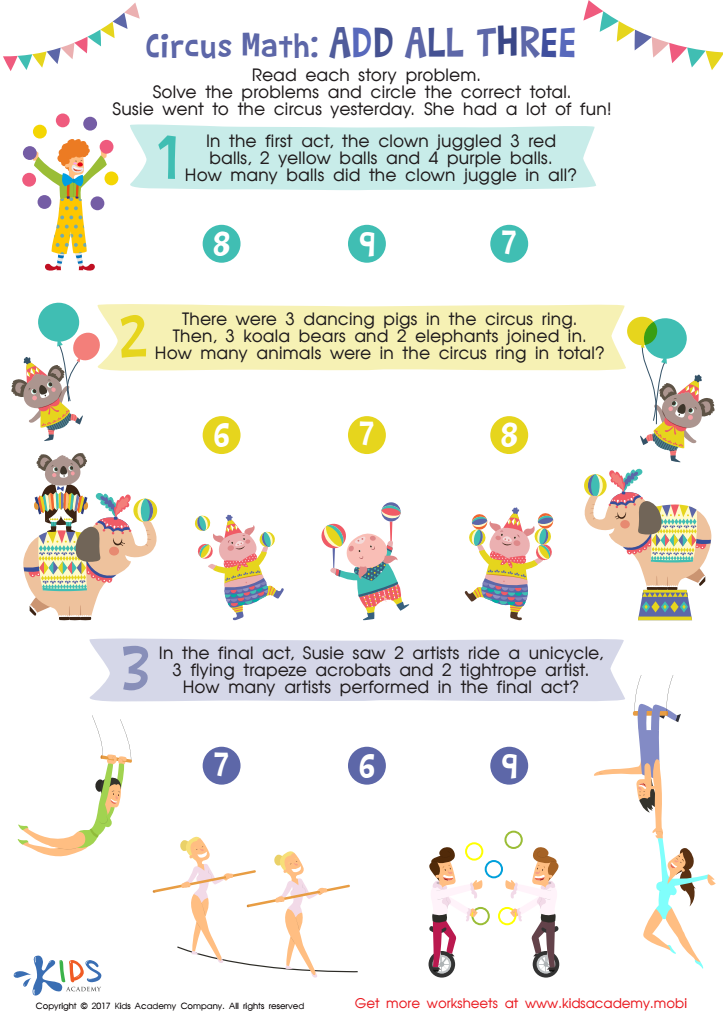
Circus Math Printable
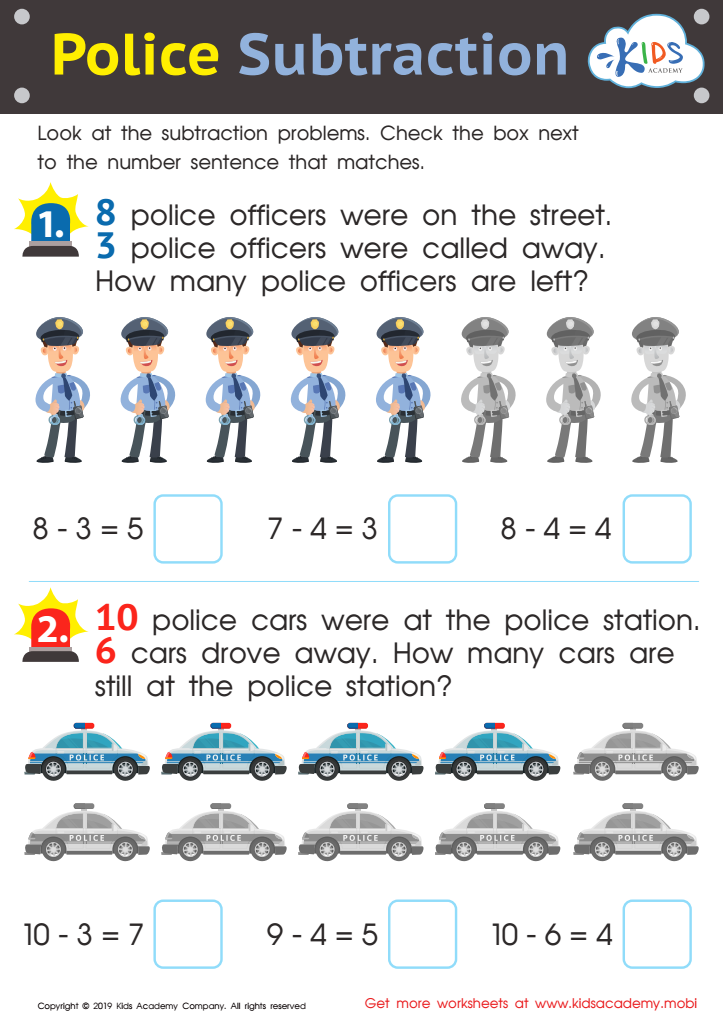
Police Subtraction Worksheet
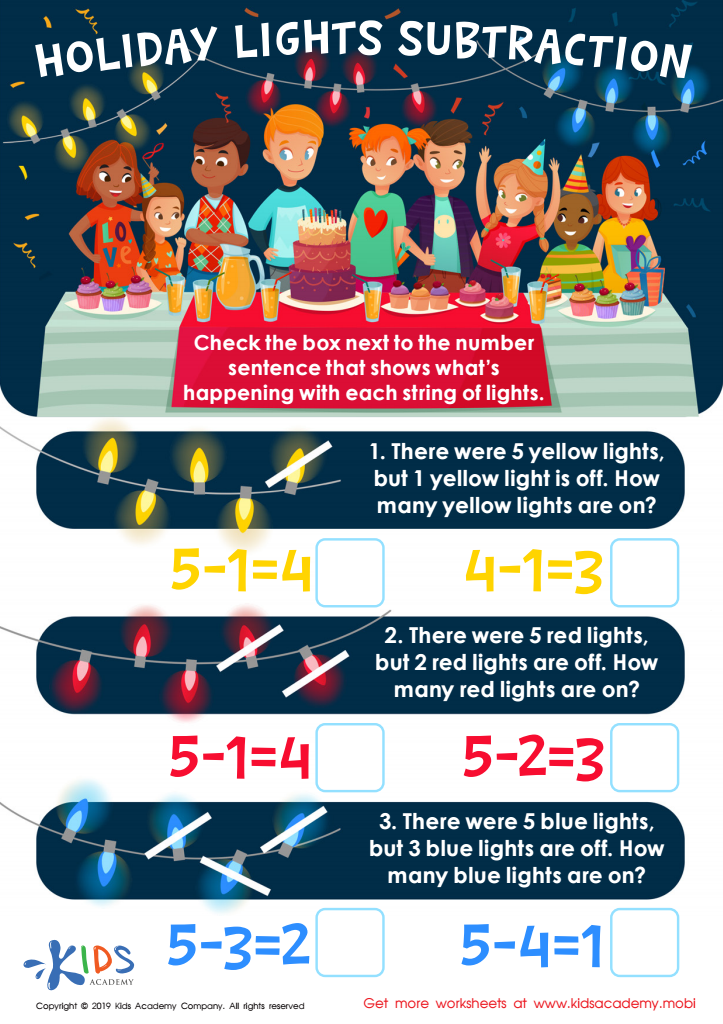
Holiday Lights Subtraction Worksheet
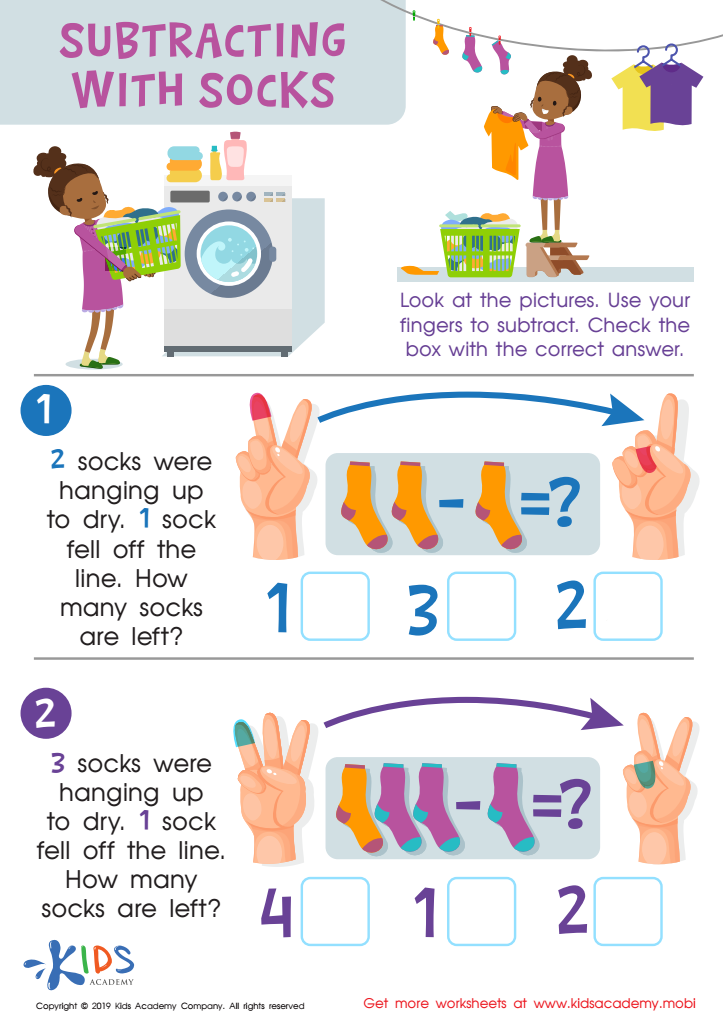
Subtracting Socks Worksheet
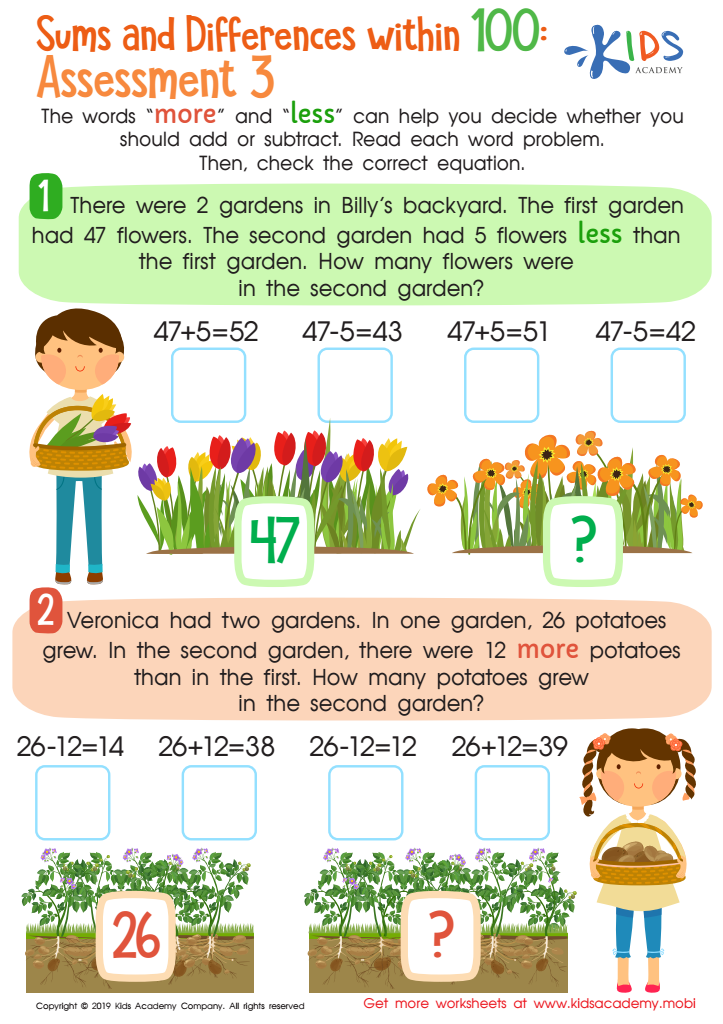
Sums and Differences Within 1 - Assessment 1 Worksheet
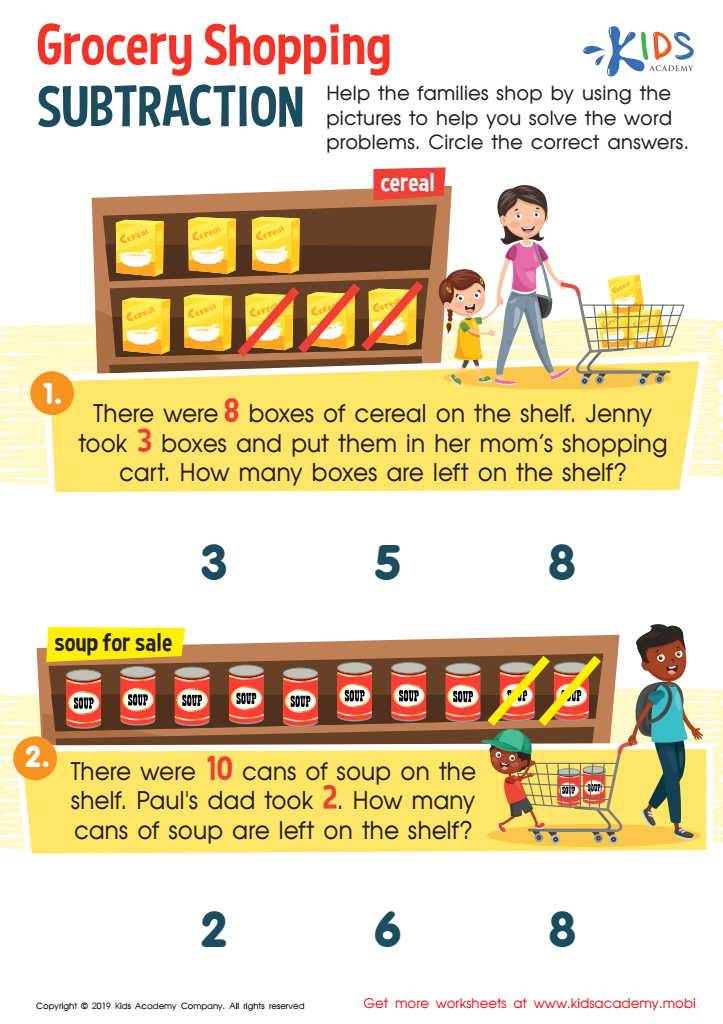
Grocery Shopping Subtraction Worksheet
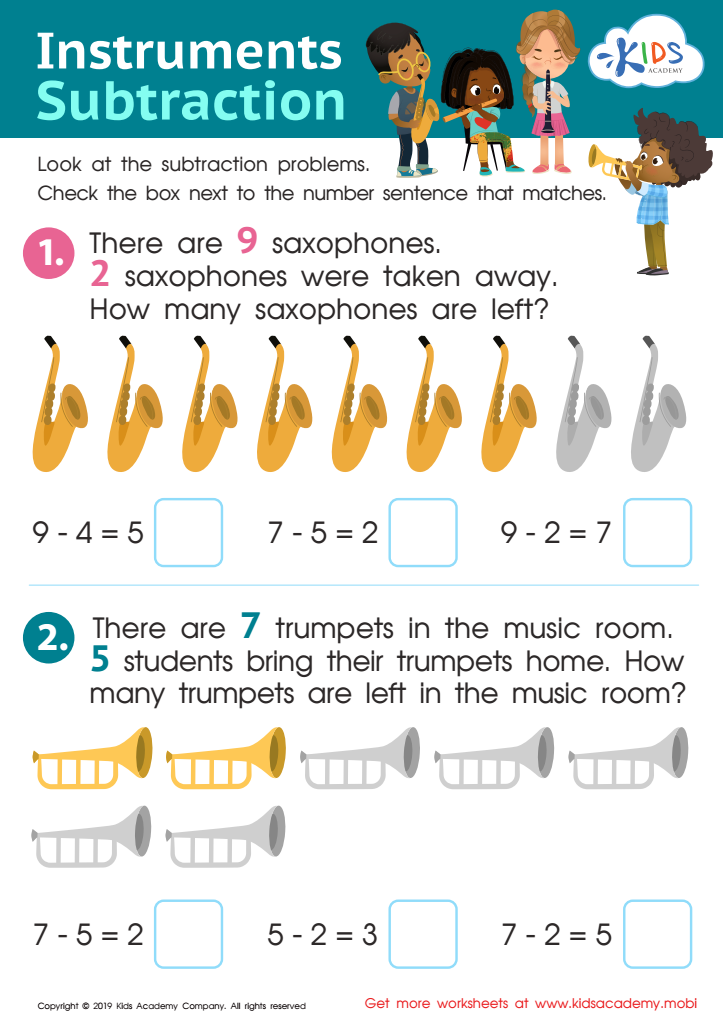
Instrument Subtraction Worksheet
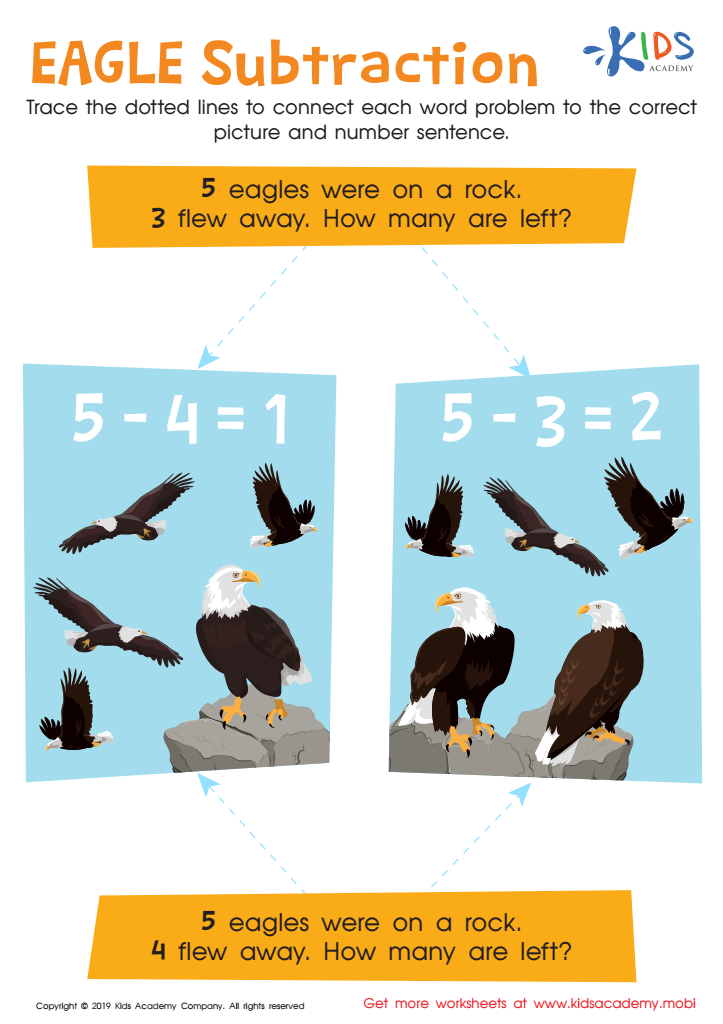
Eagle Subtraction Worksheet
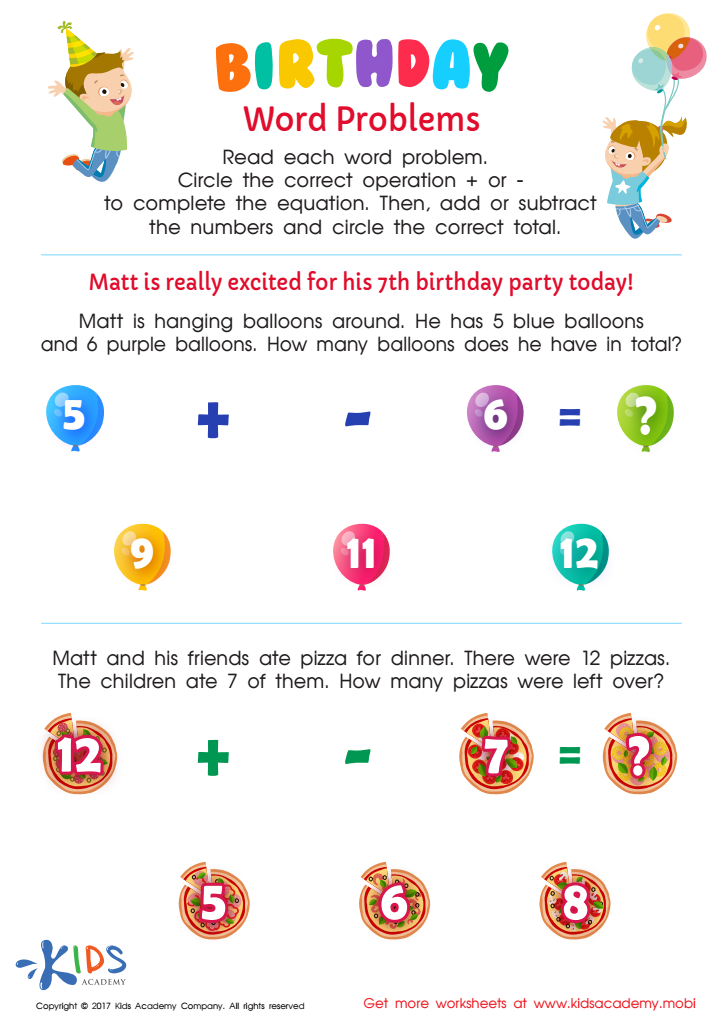
Birthday Word Problems Substraction Worksheet
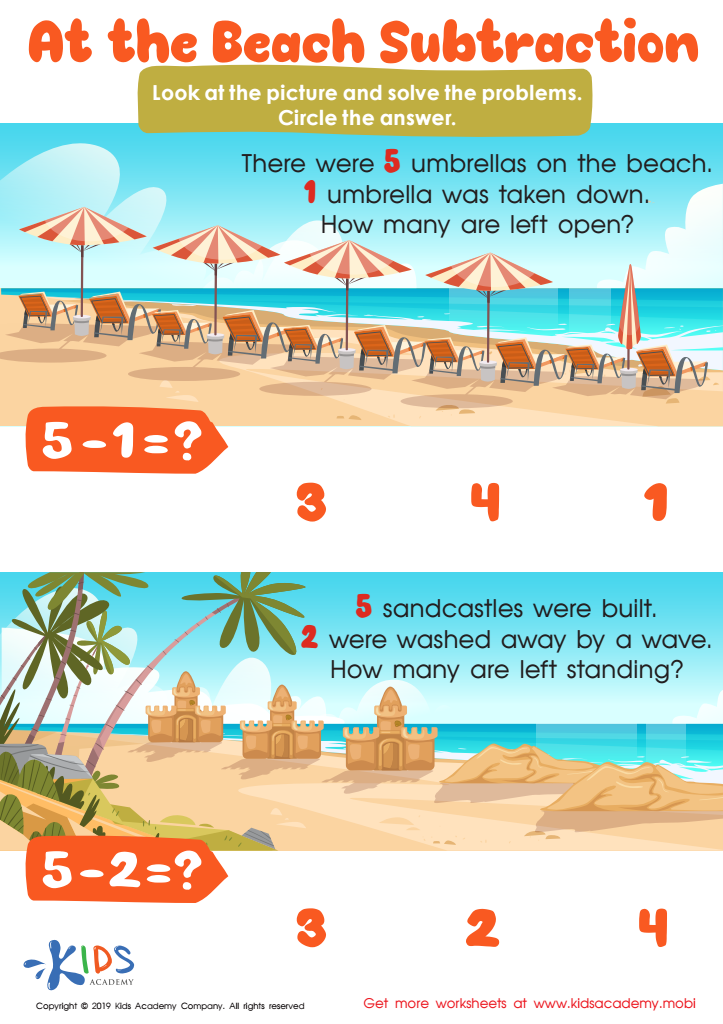
At the Beach Subtraction Worksheet
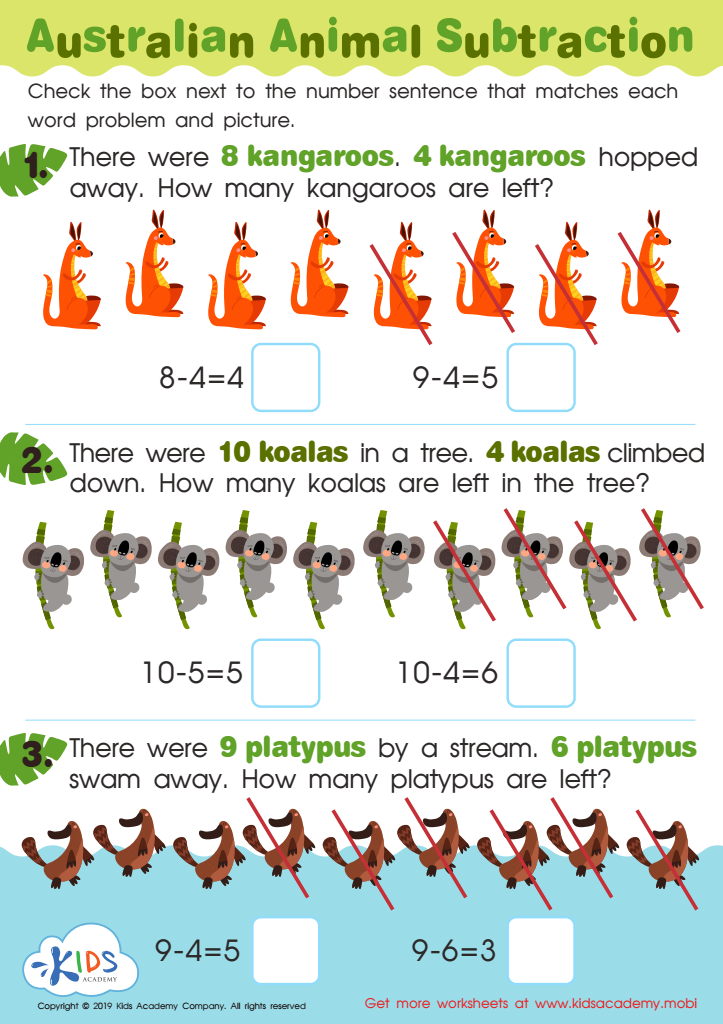
Australian Animal Subtraction Worksheet
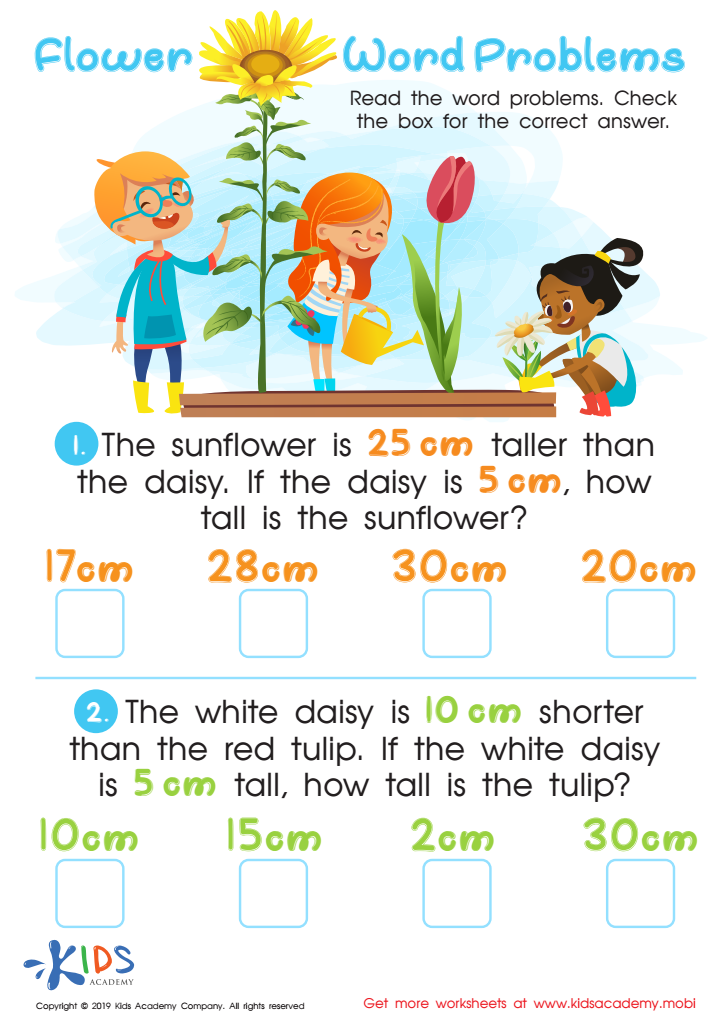
Flower Word Problems Worksheet
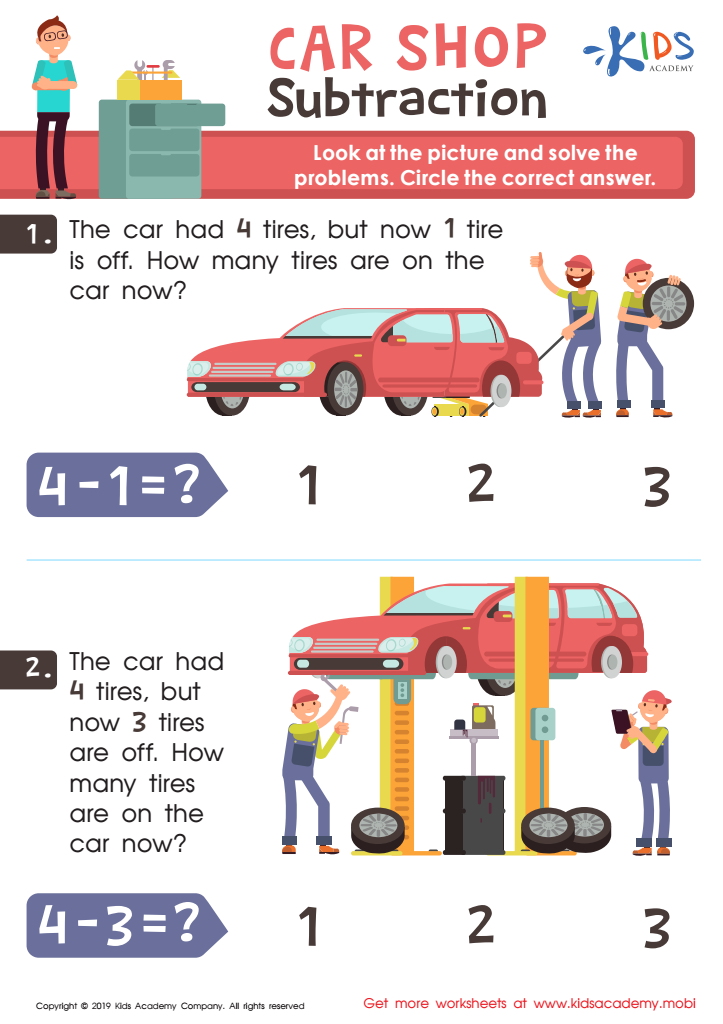
Car Shop Subtraction Worksheet
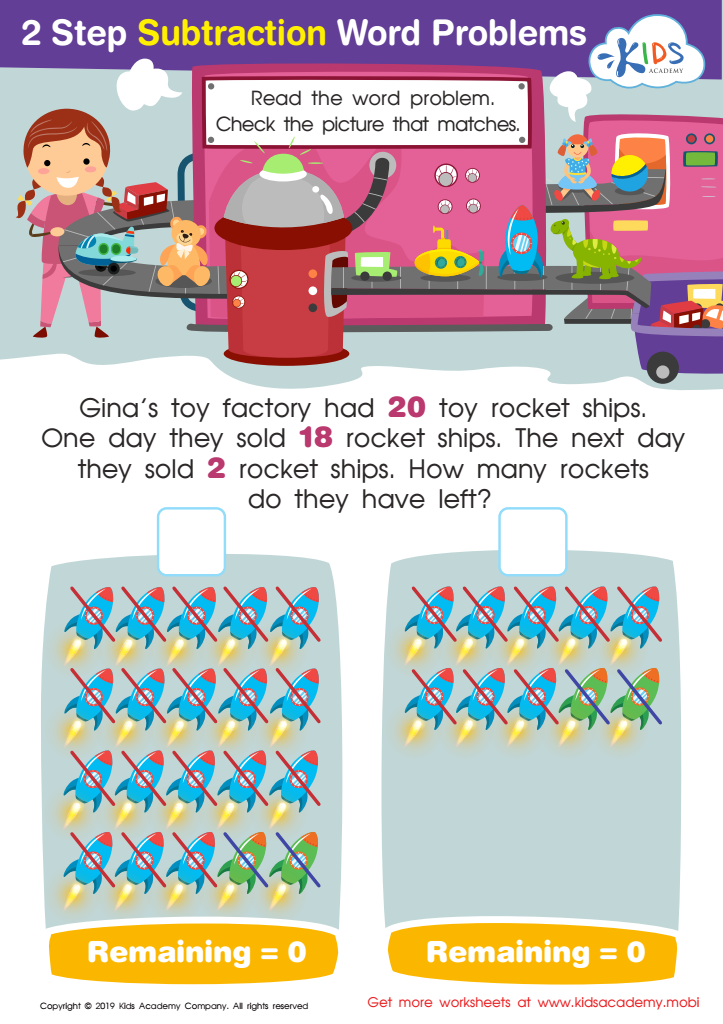
Step Subtraction Word Problems Worksheet
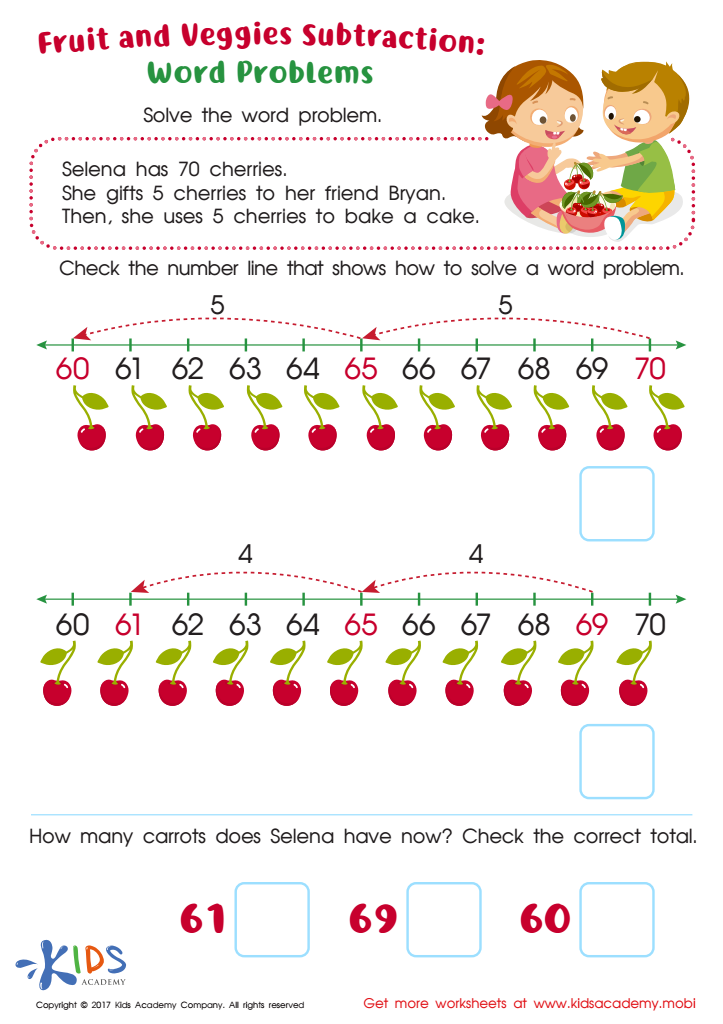
Subtraction Word Problems Free Printable
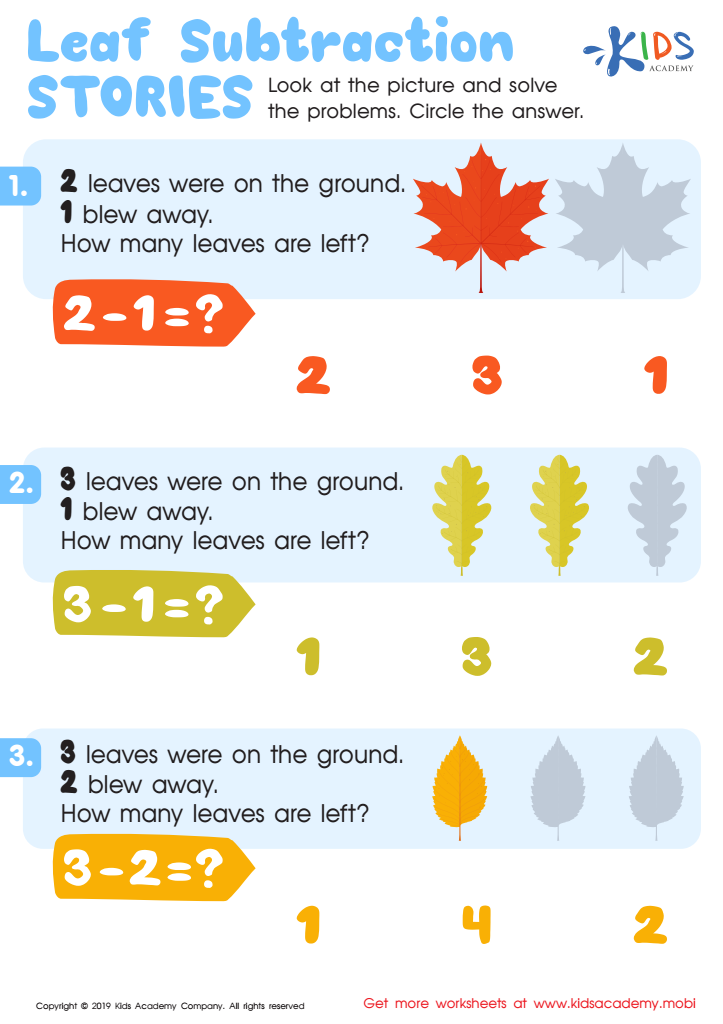
Leaf Subtraction Stories Worksheet
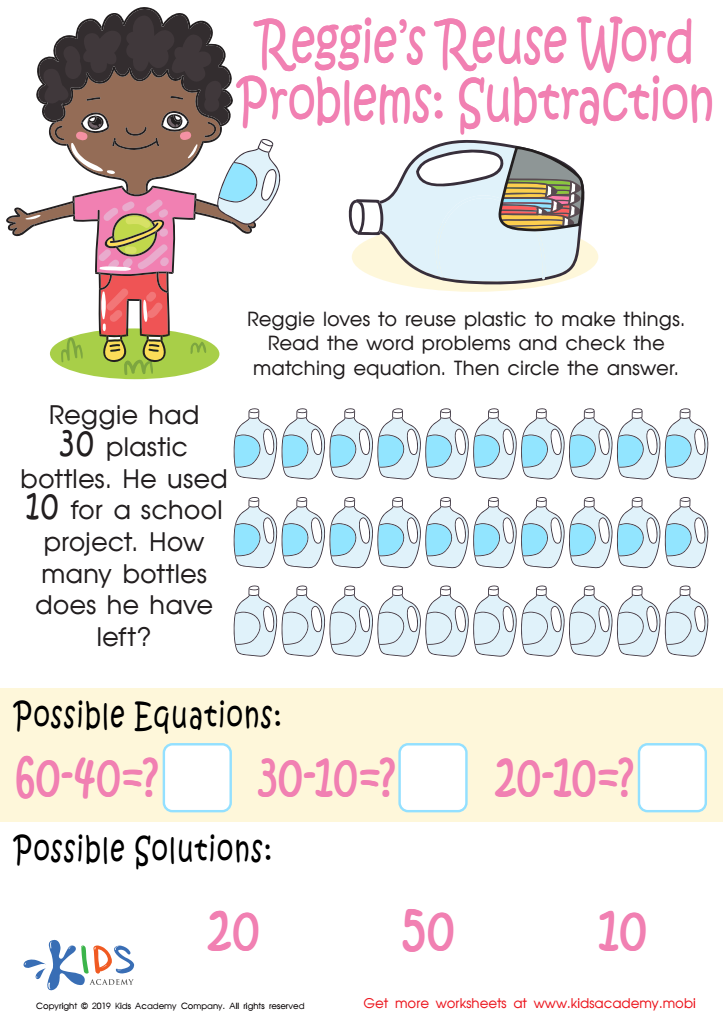
Reggie's Reuse Word Problems: Subtraction Worksheet
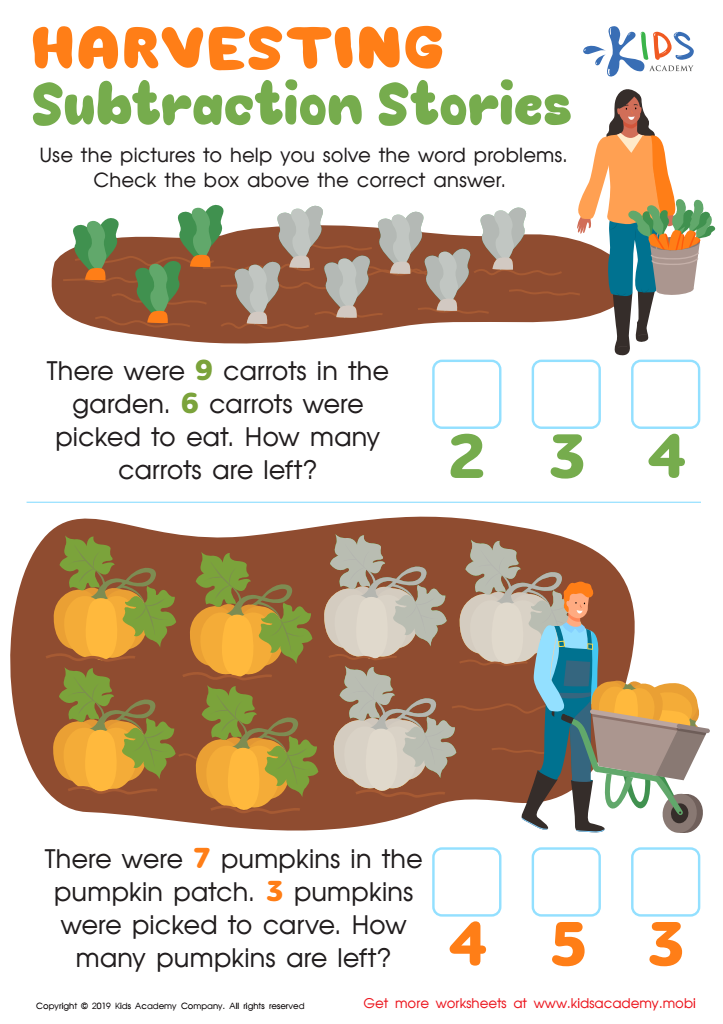
Harvesting Subtraction Stories Worksheet
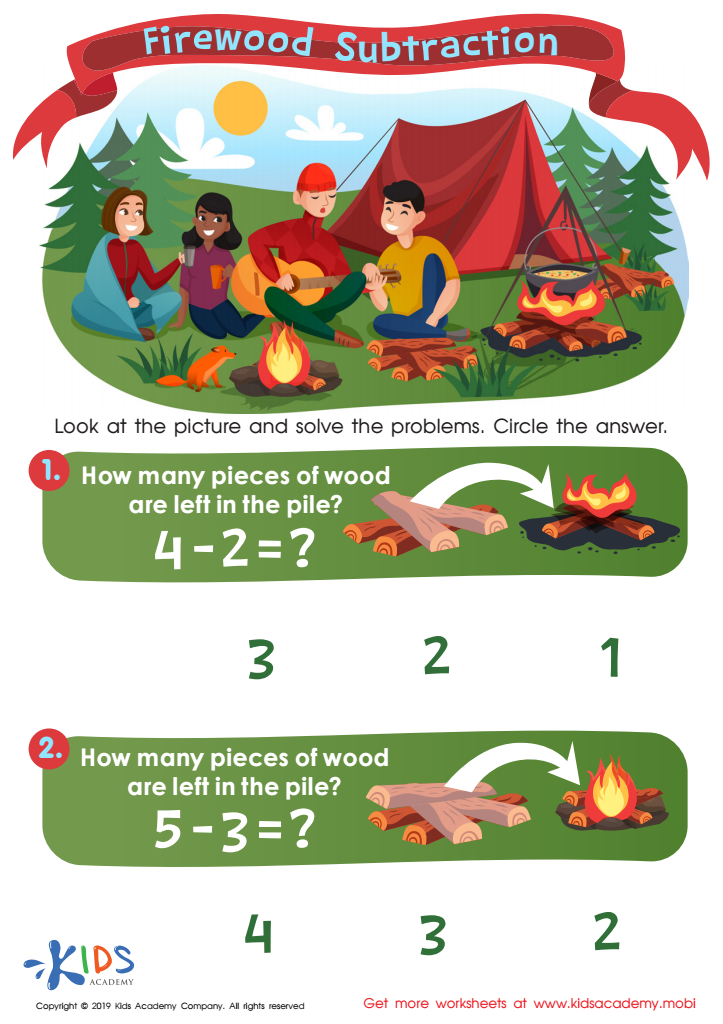
Firewood Subtraction Worksheet
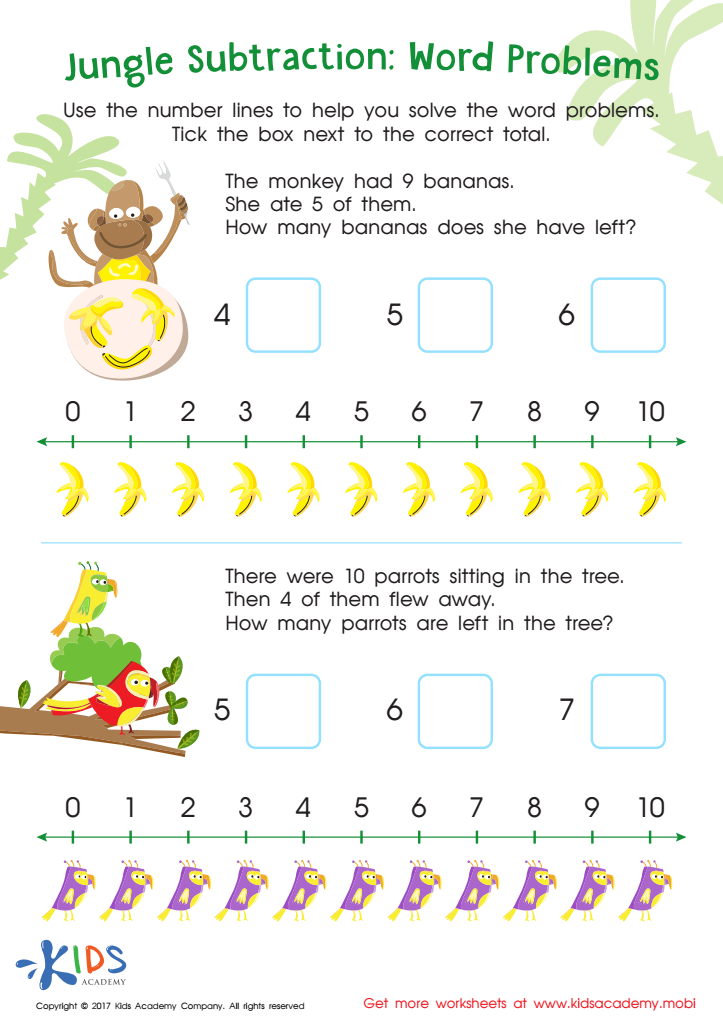
Jungle Subtraction Word Problems Substraction Worksheet







Parents and teachers should care about subtraction practice word problems for ages 6-8 because they are essential for developing critical thinking and problem-solving skills in young learners. At this stage, children are transitioning from basic arithmetic to applying their knowledge in real-world contexts. Word problems not only reinforce subtraction skills but also help children understand the concept of quantity, comparison, and relationship between numbers.
Engaging with word problems encourages children to think analytically as they decipher the context and determine what is being asked. This practice fosters not only mathematical comprehension but also enhances language skills, as children learn to interpret and articulate the problem. Moreover, proficiency in subtraction through word problems builds confidence and resilience in tackling more complex math challenges in the future.
By practicing word problems, children also learn the importance of persistence and strategy in solving issues, which are valuable skills beyond mathematics. Supporting children in this practice encourages a love for learning and helps them see math as a useful tool in daily life. Overall, subtraction word problems are foundational in nurturing well-rounded, capable, and confident learners, making it crucial for both parents and teachers to prioritize this area of math education.








