Character analysis Reading Comprehension Worksheets for Ages 6-8
4 filtered results
-
From - To
Enhance your child's reading skills with our engaging Character Analysis Reading Comprehension Worksheets, specifically designed for ages 6-8! These worksheets encourage young learners to explore and understand character traits, motivations, and relationships in stories. Through fun activities and thought-provoking questions, children will develop critical thinking abilities and improve their comprehension skills. Each worksheet aligns with educational standards and promotes a love for reading by making analysis accessible and enjoyable. Perfect for classroom use or at-home learning, our resources help children grasp the essence of characters and boost their understanding of narrative contexts. Start your young learner’s journey into character analysis today!
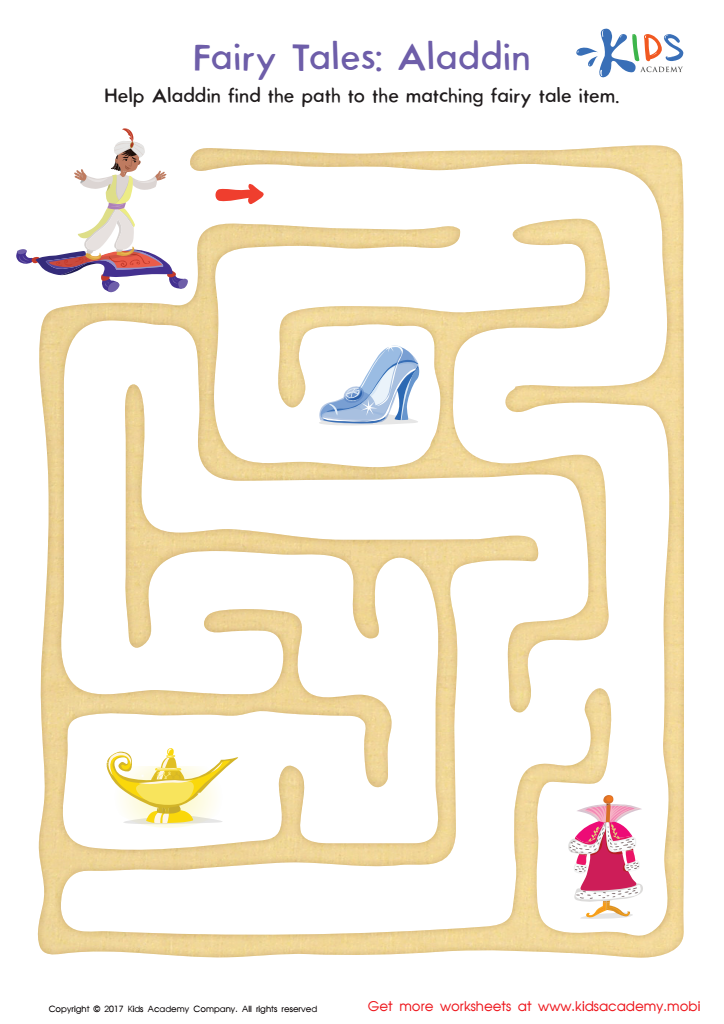
Fairy Tales Aladdin Printable
 Assign to My Students
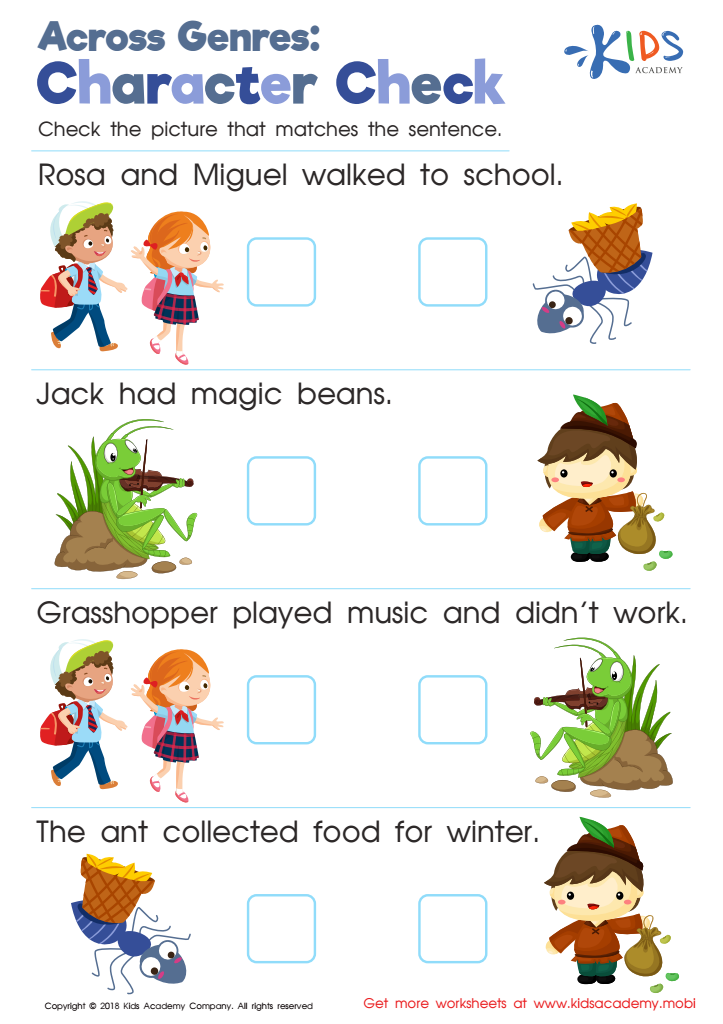
Across Genres: Character Check Worksheet
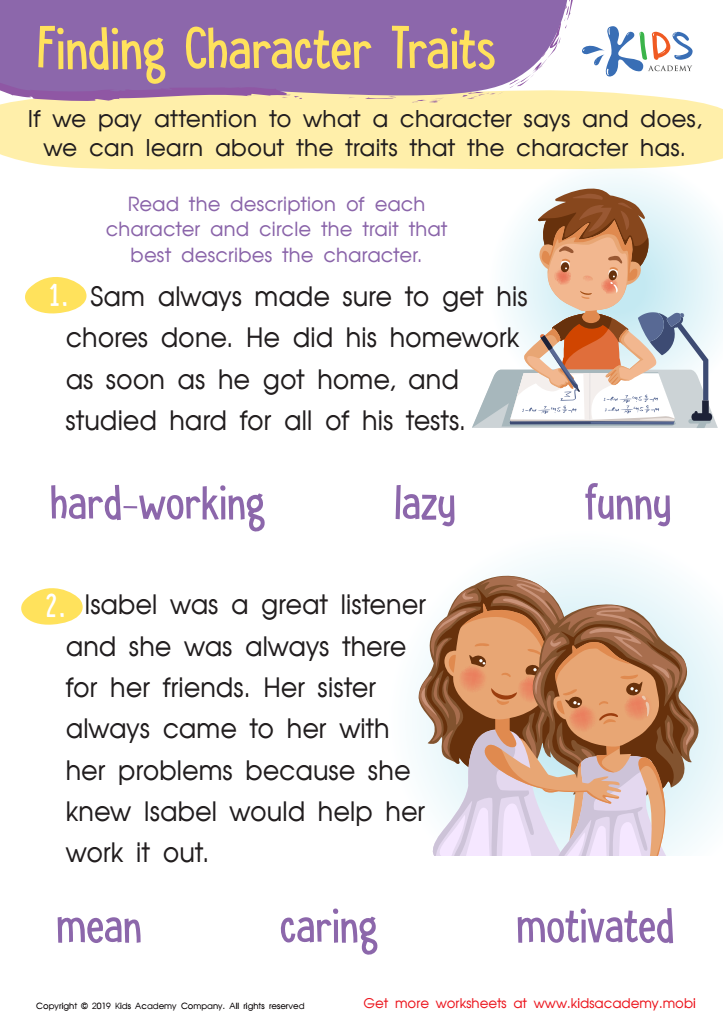
Finding Character Traits Worksheet
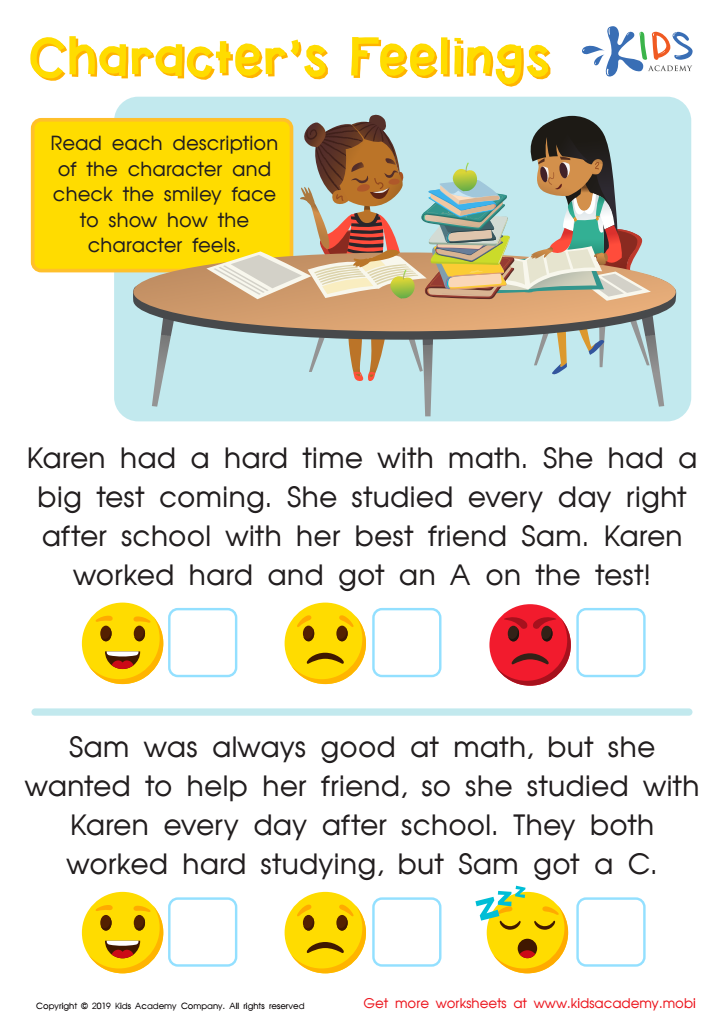
Character’s Feelings Worksheet







Character analysis reading comprehension is an essential skill for children aged 6-8, as it enhances their cognitive and emotional development. At this age, children are learning to recognize and understand different perspectives and emotions, which fosters empathy and critical thinking. By exploring characters in stories, children can better relate to the experiences and feelings of others, helping them develop crucial social skills.
Understanding characters also aids in the development of inferential reasoning. Young readers learn to draw conclusions based on clues given in the text, enriching their overall comprehension. This analytical approach encourages them to think beyond the surface, asking questions like “Why did the character act that way?” or “What can this character teach us?”
For teachers and parents, encouraging character analysis helps establish foundations for stronger literacy skills. These skills not only improve reading comprehension but also carry over into writing and communication. Additionally, engaging with diverse characters broadens children's worldviews, allowing them to appreciate variation in human experience.
Fostering this analytical approach to reading is integral to nurturing confident, empathetic readers who are prepared for more complex literary themes in the future. Ultimately, it’s about creating thoughtful, informed individuals who understand themselves and the world around them.








