
Critical Thinking Reading Fiction Worksheets for Ages 6-8
38 filtered results
Difficulty Level
Grade
Age
-
From - To
Subject
Activity
Standards
Discover our engaging Critical Thinking Reading Fiction Worksheets designed specifically for children ages 6-8! These interactive worksheets help young learners enhance their comprehension and analytical skills through age-appropriate fiction texts. Activities focus on understanding character motivations, identifying themes, and making predictions. Every worksheet encourages creativity and independent thought, supporting essential cognitive development. Ideal for classroom use or at-home learning, these resources foster a love for reading while developing critical thinking abilities. Equip your child with the tools to become an insightful reader and thinker today! Explore our collection and watch their confidence soar as they delve into the world of fiction!
Favorites
With answer key
Interactive
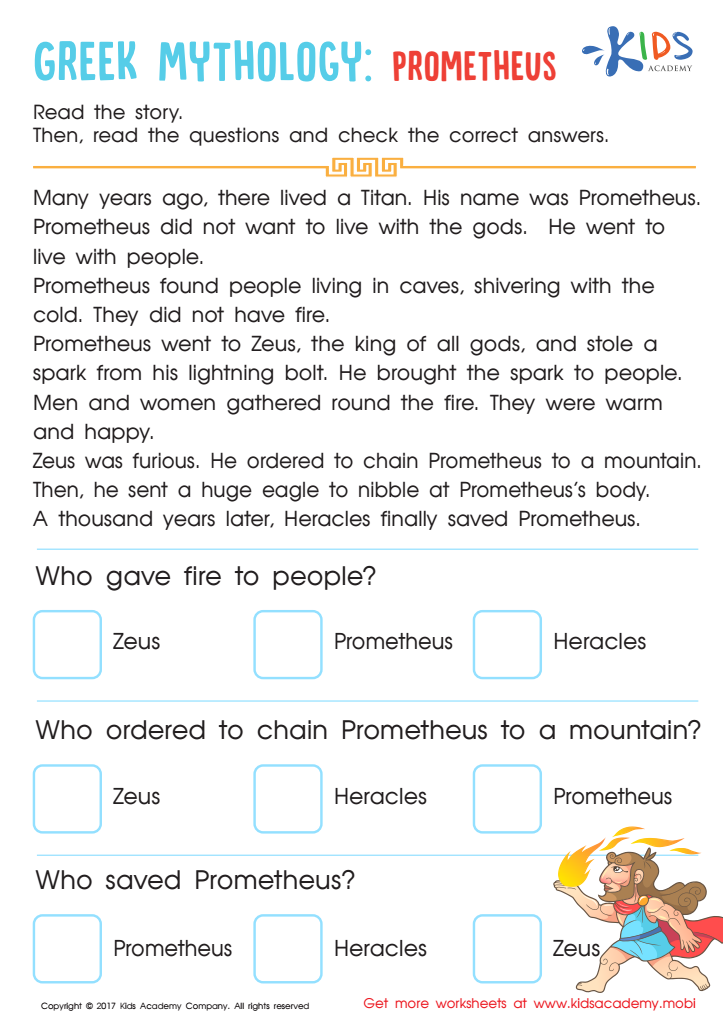
Prometheus Story Worksheet
Help kids improve reading comprehension with this Prometheus story worksheet! Learn about this classic mythological tale and break down the plot into understandable parts. By doing so, children will understand the story each step of the way.
Prometheus Story Worksheet
Worksheet
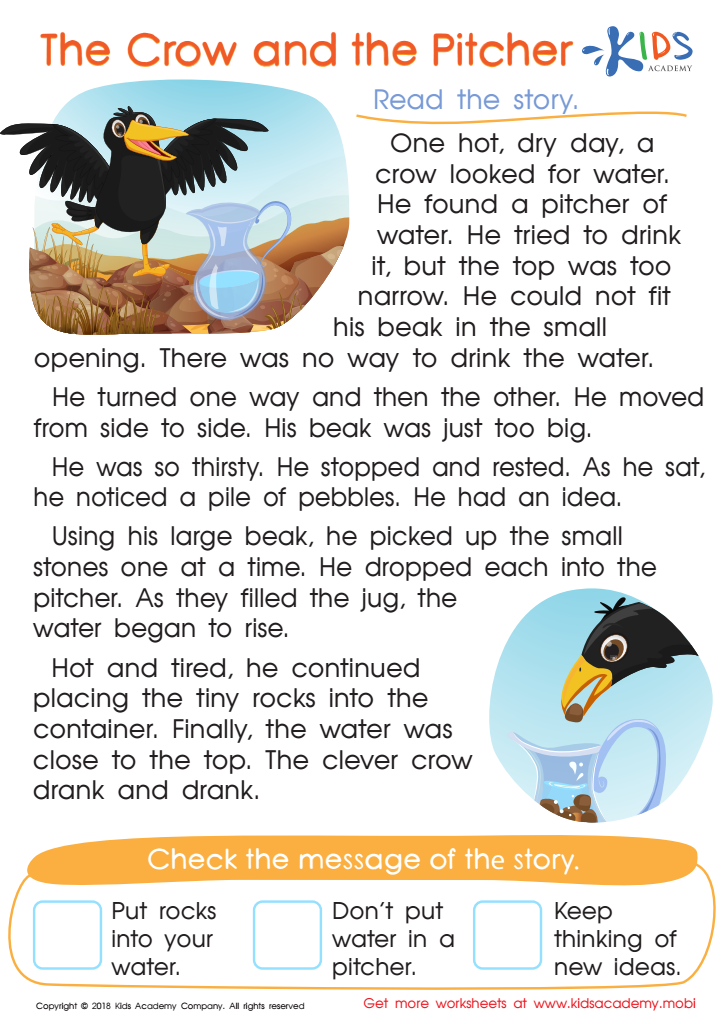
The Crow and the Pitcher Worksheet
Introduce your child to reading comprehension with this fascinating worksheet from Kids Academy! Featuring Aesop's fable of a thirsty crow, your child will enjoy reading and determining the central theme of the passage. This worksheet is a great way to give your child a purpose for reading while helping to build their comprehension skills.
The Crow and the Pitcher Worksheet
Worksheet
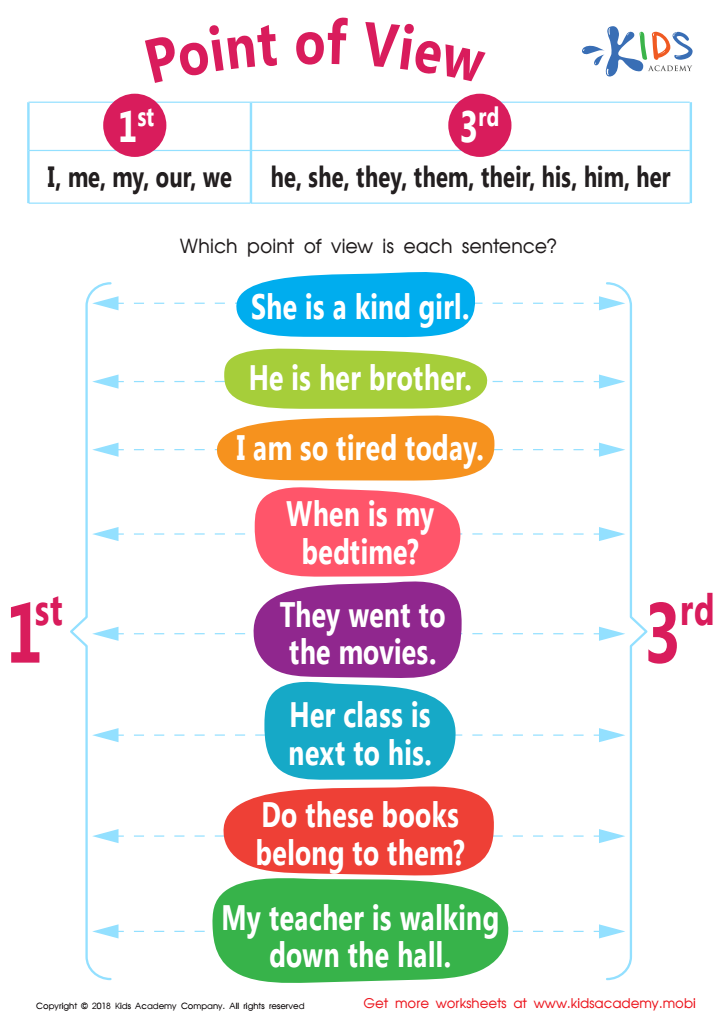
Point of View Worksheet
This printable worksheet helps kids understand Point of View by providing 1st and 3rd person choices. It's a fun way to practice differentiating between the two viewpoints and improve their reading comprehension. Match the sentences to 1st or 3rd person to strengthen understanding and enjoy the task!
Point of View Worksheet
Worksheet
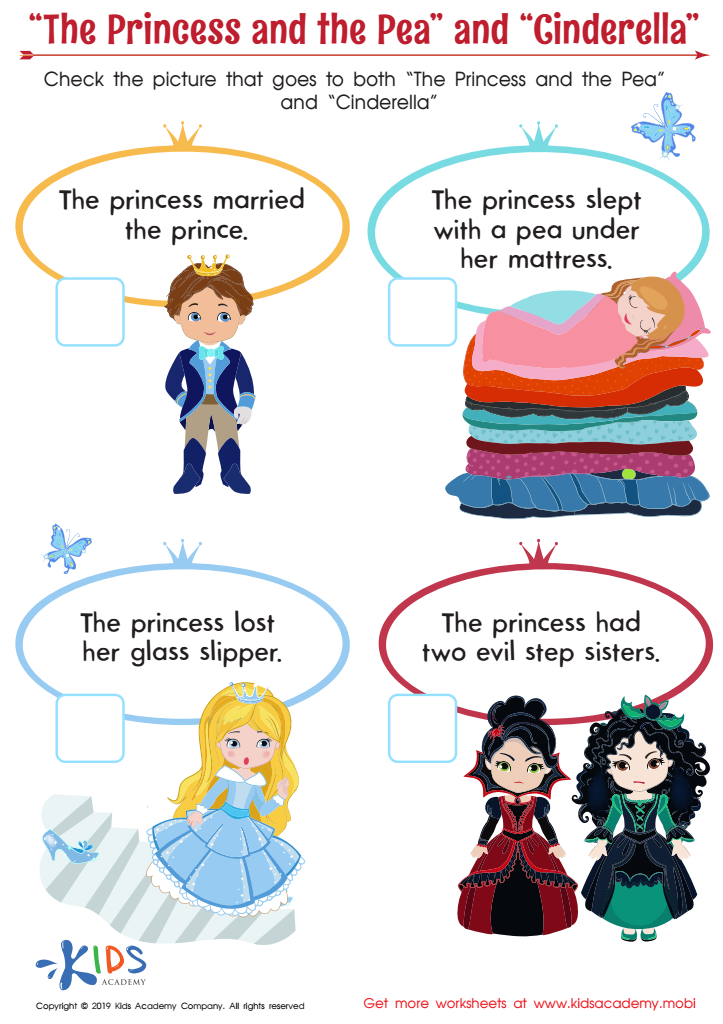
“The Princess and the Pea” and “Cinderella” Worksheet
Read "Cinderella" and "The Princess and the Pea" to your little ones. Ask them what their favorite parts were and what similarities they found in the princesses. This worksheet has four pictures of scenes from the stories. Ask your kids which picture goes with both tales.
“The Princess and the Pea” and “Cinderella” Worksheet
Worksheet
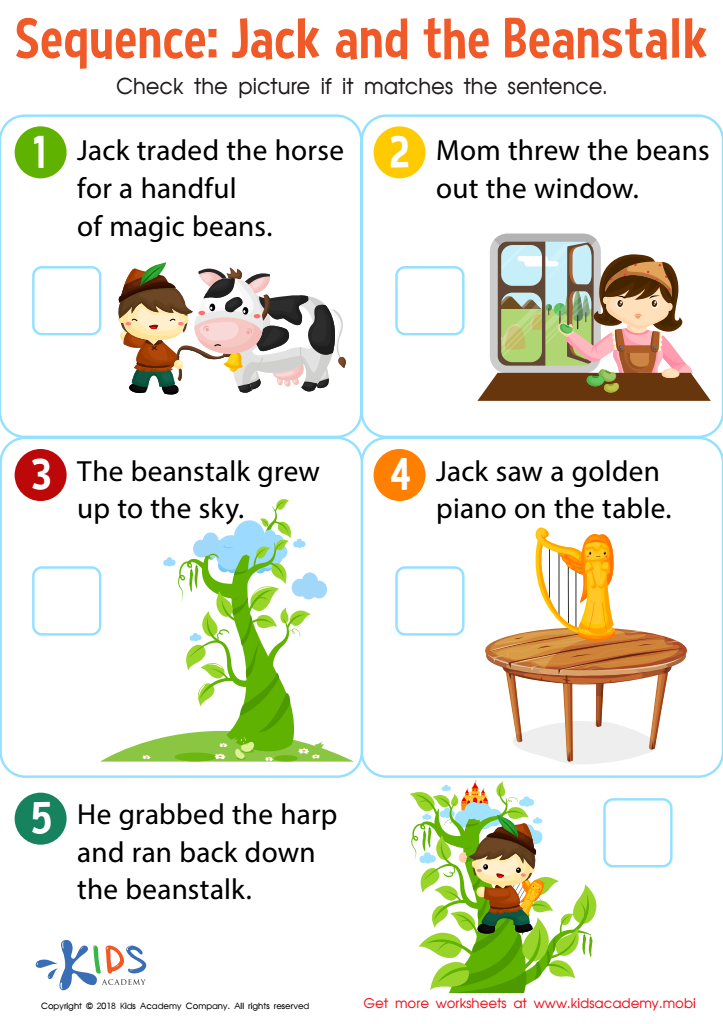
Sequence: Jack and The Beanstalk Worksheet
Ensure your kids are familiar with Jack and the Beanstalk before starting this worksheet. If not, read them the story. In the pdf, there are five pictures with sentences. Read the sentences, ask your kid if it matches the picture, then help them check if it does.
Sequence: Jack and The Beanstalk Worksheet
Worksheet
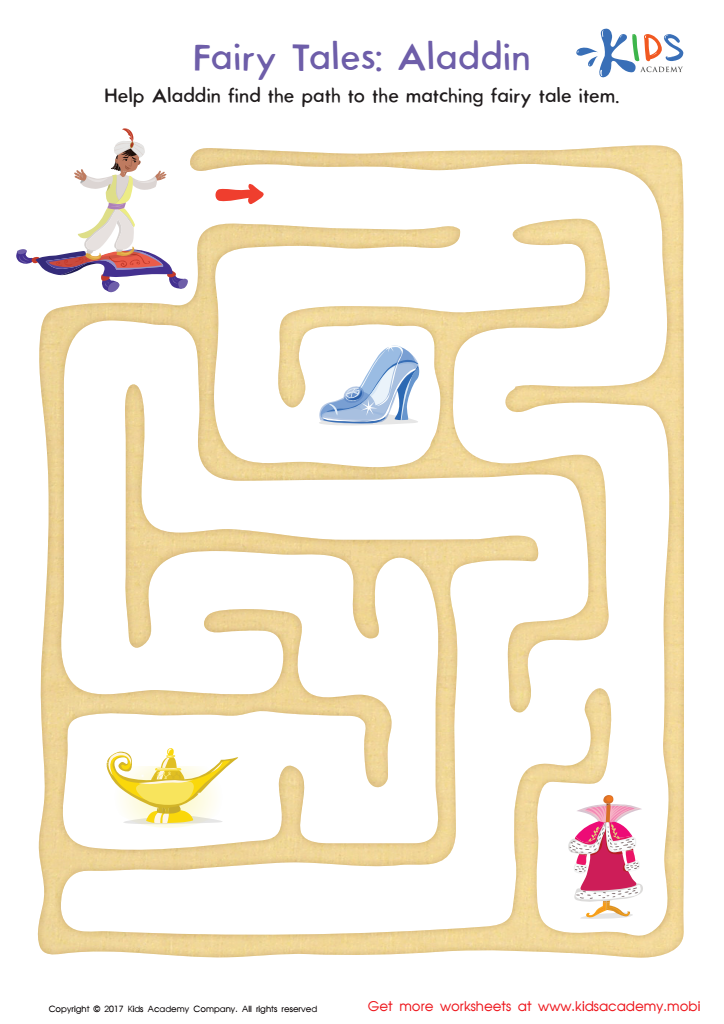
Fairy Tales Aladdin Printable
Test your child's reading recall with this challenge: the Aladdin maze worksheet! Guide your learner to identify objects linked to the story, then ask them to retell it afterwards. Hone those memory skills while having fun!
Fairy Tales Aladdin Printable
Worksheet
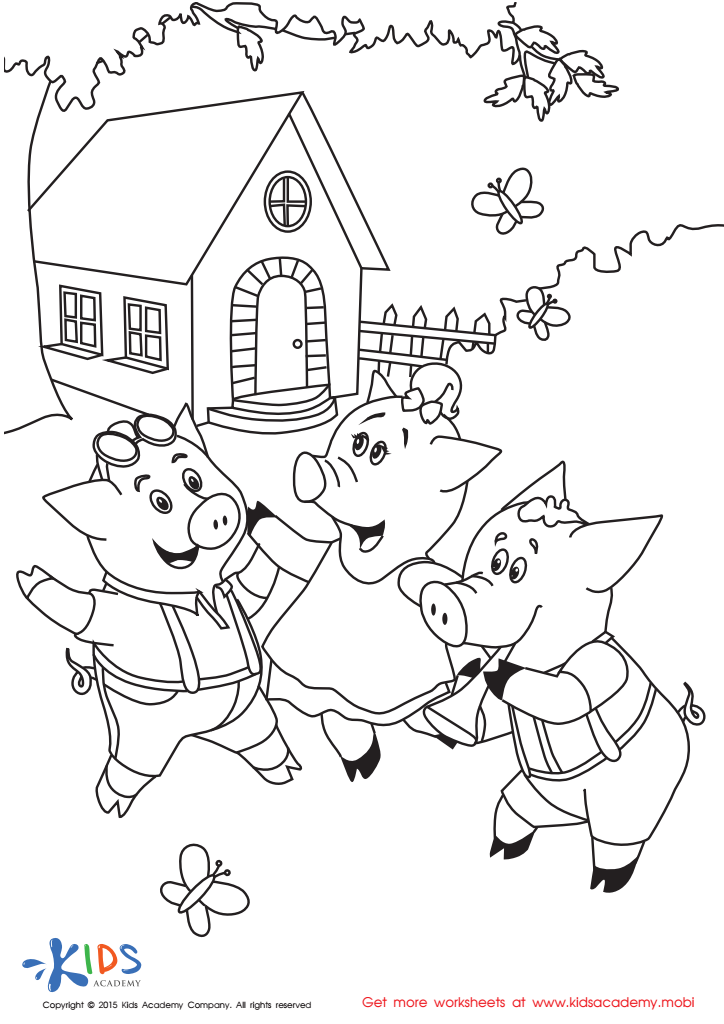
Folktales Printable PDF Worksheet: The 3 Little Pigs
Then, help your child to color the scene with pink piglets, blue sky and green grass. Make the brick house bright and vivid. Enjoy!
Download (PDF)
 Assign to My Students
Assign to My Students
Folktales Printable PDF Worksheet: The 3 Little Pigs
Worksheet
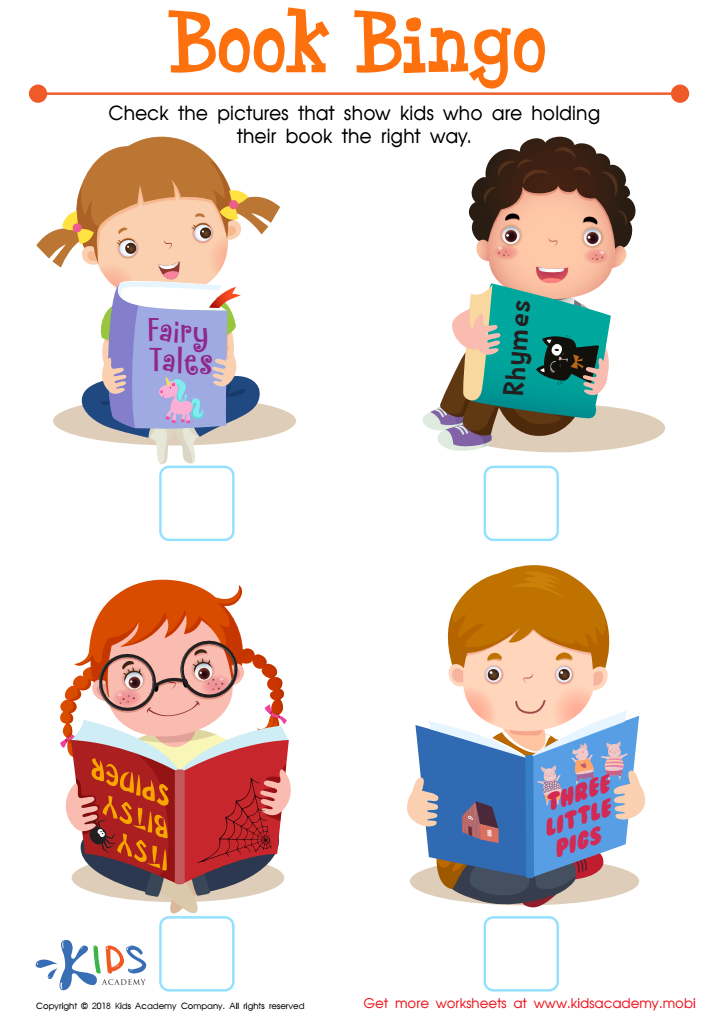
Book Bingo Worksheet
Help your kids spot which of the kids in the worksheet are reading correctly. Early instruction in reading helps ensure kids won't face problems later on, plus any impairments can be identified and corrected quickly. Can your child read? Have them check the pictures of kids holding books the right way.
Book Bingo Worksheet
Worksheet
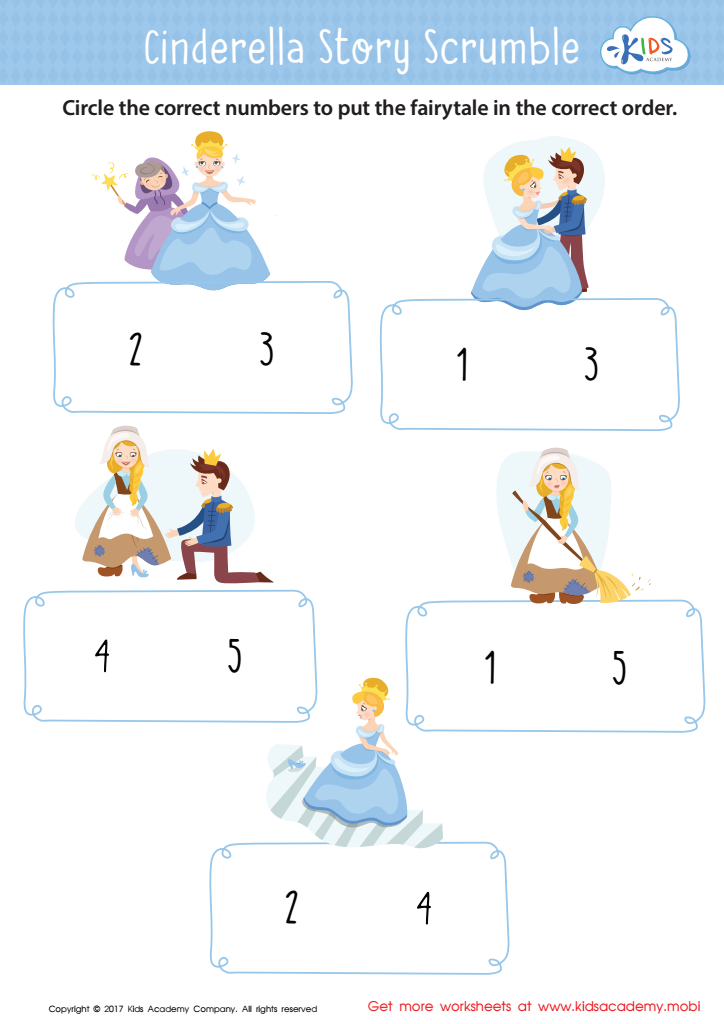
Cinderella Story Sequencing Worksheet
This worksheet helps strengthen reading comprehension skills by getting your child to remember key moments from the Cinderella story. They'll be asked to place pictures in the right order to tell the story.
Cinderella Story Sequencing Worksheet
Worksheet
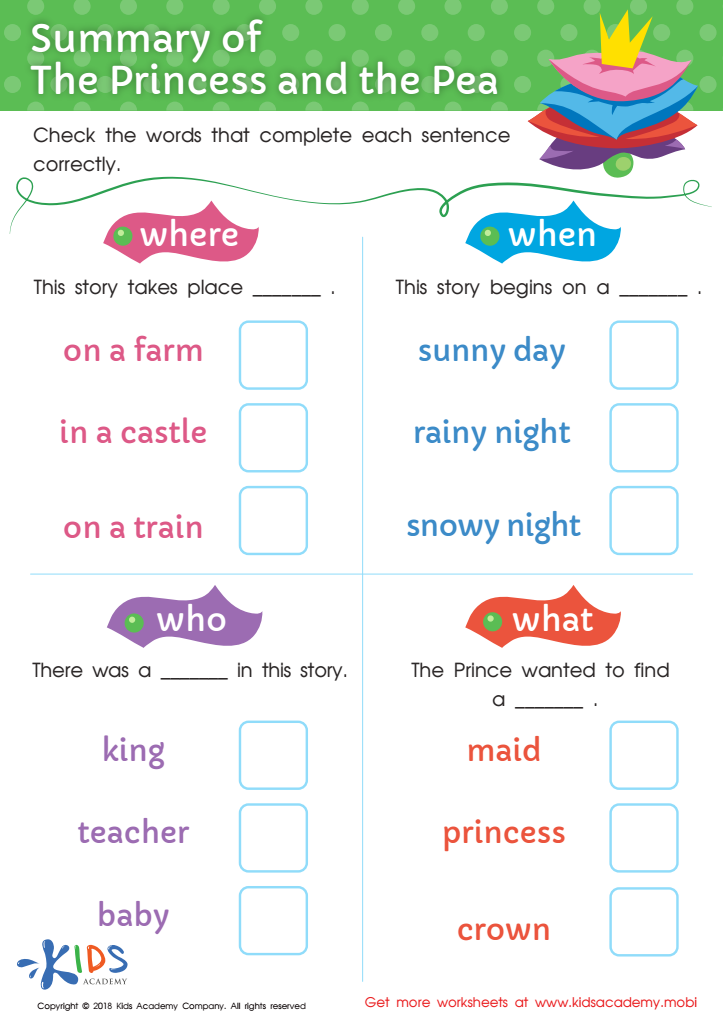
The Summary of the Princess and the Pea Worksheet
Test your student’s knowledge of the story The Princess and the Pea with this quick worksheet. With who, what, when and where questions, it's a great way to assess comprehension skills. It's a perfect resource for school or home classrooms. Download it now and start improving comprehension skills!
The Summary of the Princess and the Pea Worksheet
Worksheet
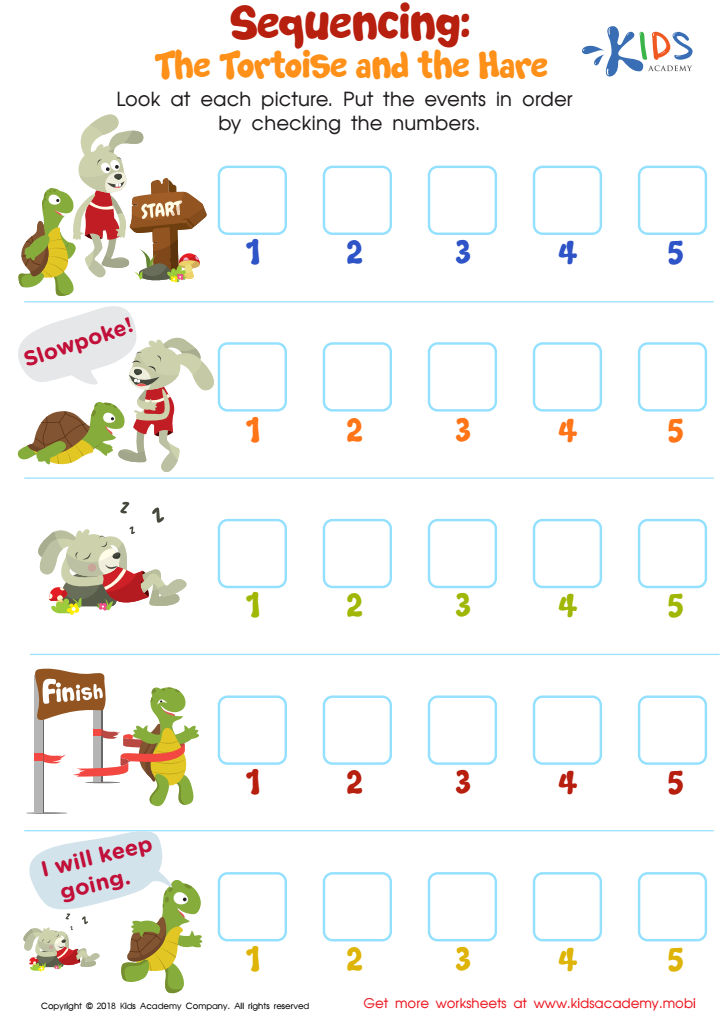
Sequencing: The Tortoise and the Hare Worksheet
Help your child become an independent reader and critical thinker with a sequencing worksheet from Kids Academy! Have them read the classic tale of the tortoise and the hare and use the accompanying worksheet to check their understanding of the story's sequence of events. Have kids identify the correct order of events by selecting the box next to the correct number for each image!
Sequencing: The Tortoise and the Hare Worksheet
Worksheet
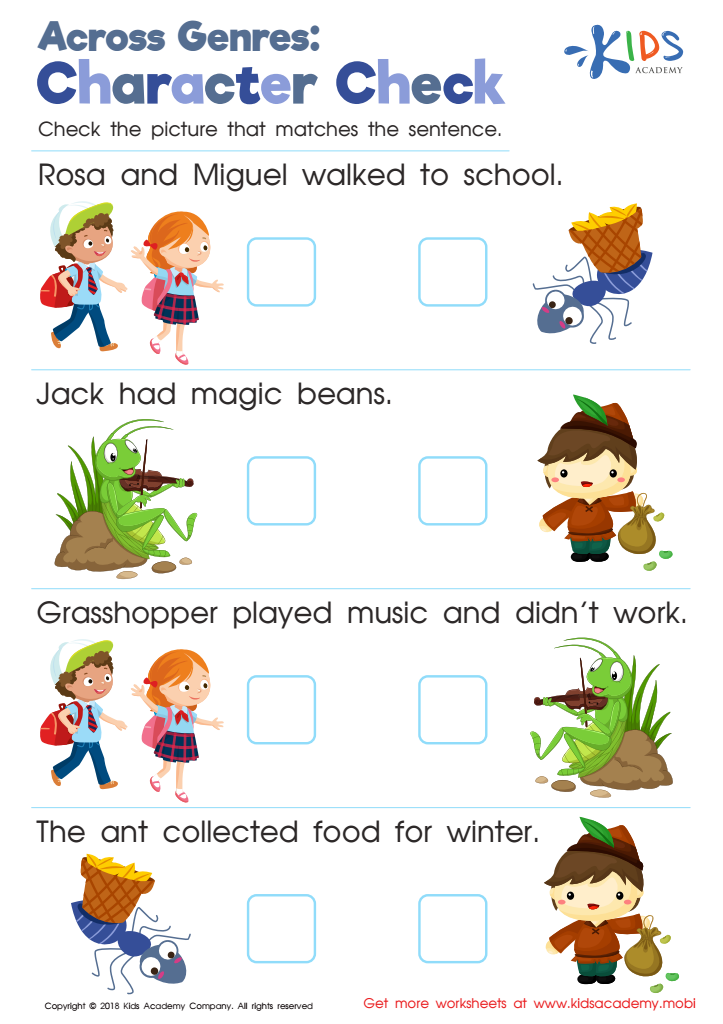
Across Genres: Character Check Worksheet
Read the sentences to your kids, then have them match the pictures to them. Ask them to look at the pictures and help them check which one goes with the sentence. The aim is to see how well they can do this exercise. (80 words)
Across Genres: Character Check Worksheet
Worksheet
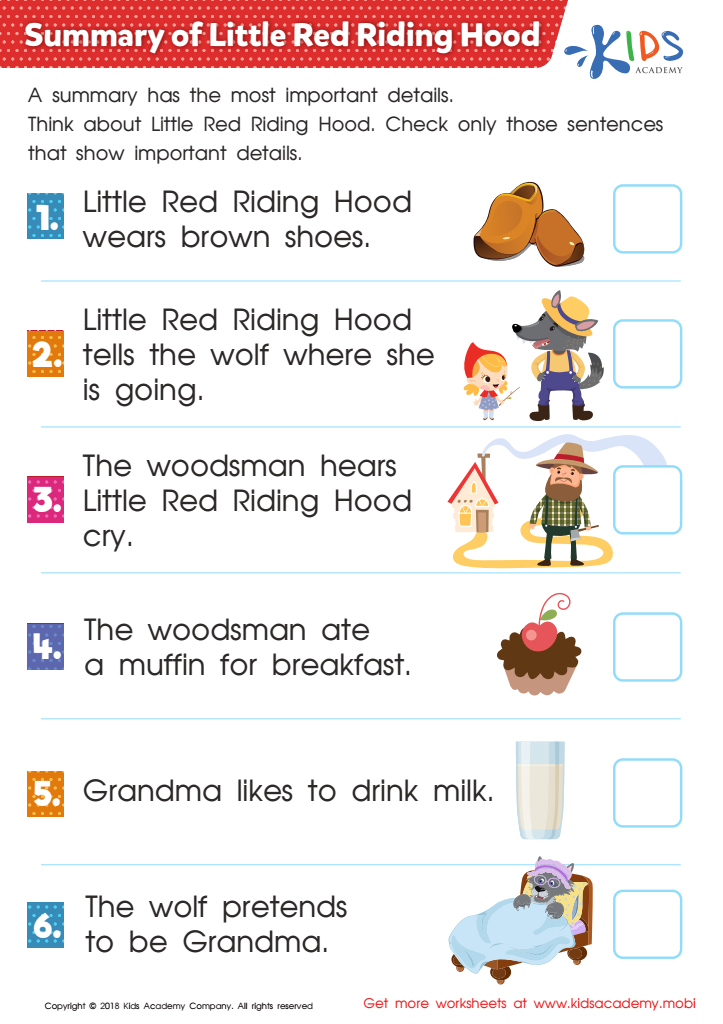
Summary of Little Red Riding Hood Worksheet
Young students may find it hard to summarize stories. This worksheet helps them learn to distinguish between important story details and unimportant ones. Practice reading Little Red Riding Hood and pick out only the important details with the help of this downloadable worksheet.
Summary of Little Red Riding Hood Worksheet
Worksheet
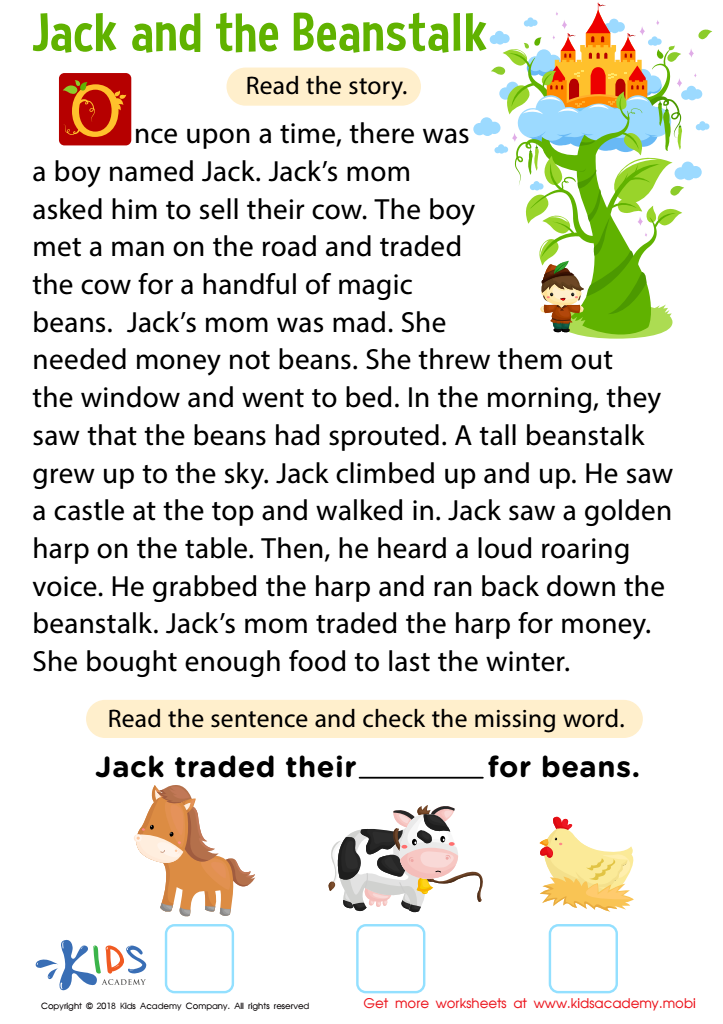
Jack and Beanstalk Worksheet
Story time can be a fun and educational experience for your kids. Read them the classic Jack and the Beanstalk - and even read it twice to help them pay attention. Afterwards, help them fill in the blank on the worksheet to expand their vocabulary and learn more from the story.
Jack and Beanstalk Worksheet
Worksheet
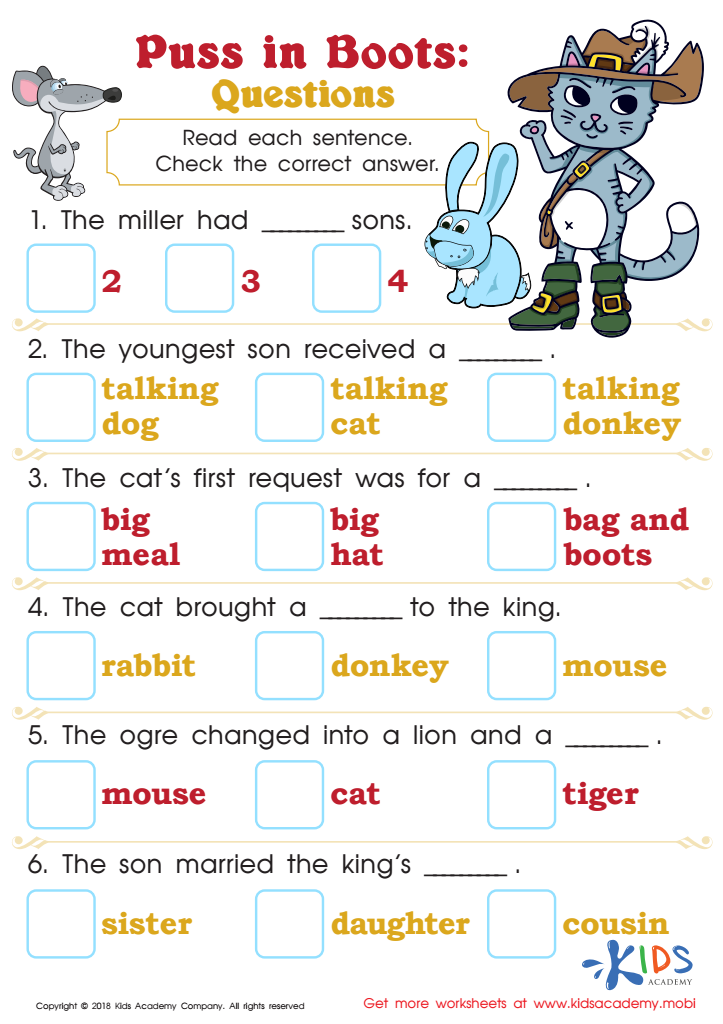
Puss in Boots: Questions Worksheet
This worksheet contains questions to be checked with boxes for the correct answers. It also has pictures of animals; ask kids to identify them, noting the objects with them. Read the questions and have kids provide the answers. Help them check the boxes for the right answer.
Puss in Boots: Questions Worksheet
Worksheet
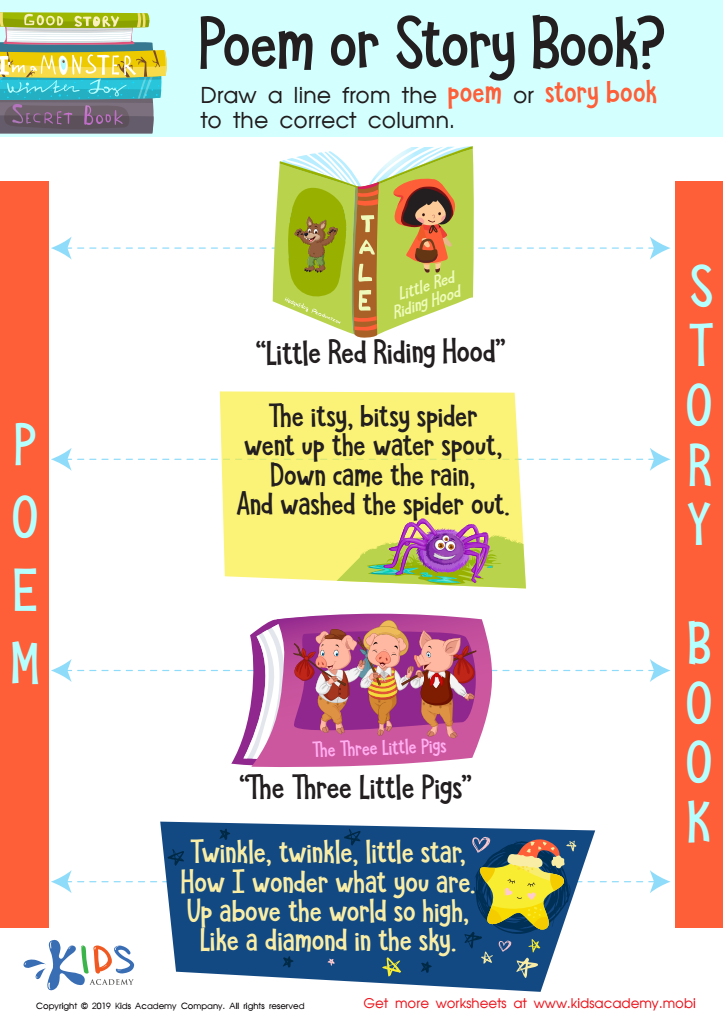
Poem or Story Book? Worksheet
Help your little readers comprehend different genres with this free worksheet! Colorful images and familiar themes help them distinguish between poems and story books. They'll identify which is which, then connect the picture to the right column with traceable lines. A fun way to expand their understanding!
Poem or Story Book? Worksheet
Worksheet
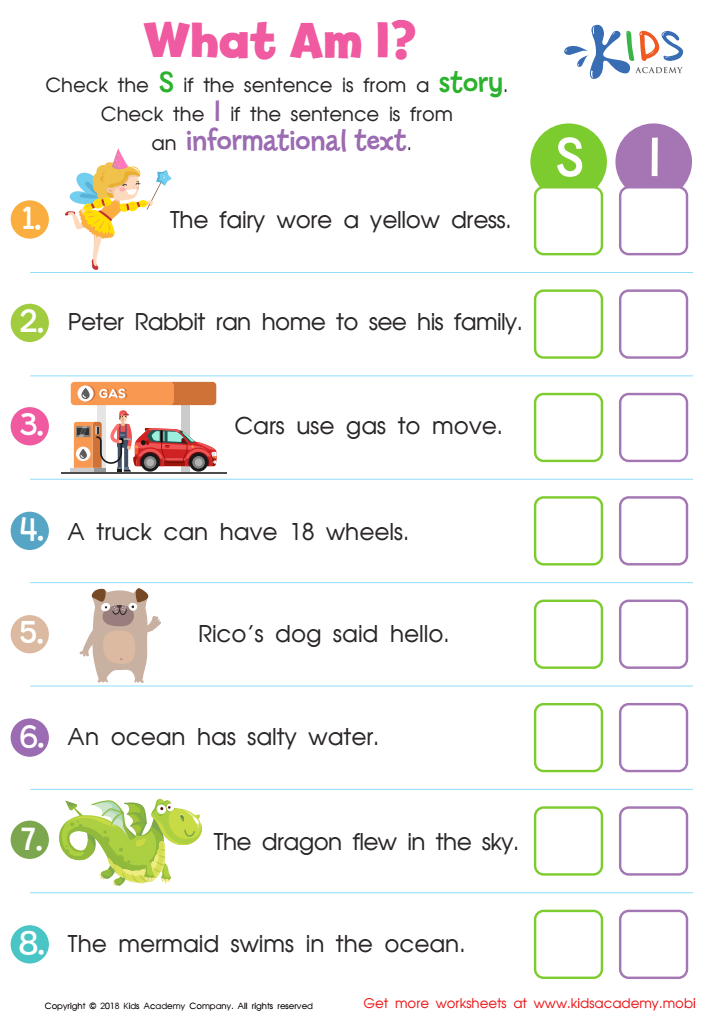
What Am I? Worksheet
This worksheet assesses students' ability to differentiate between stories and texts they read for facts. Students learn to distinguish between reading for pleasure and reading for information. It includes statements from both a story and an informational text, and students must decide what type of text it is.
What Am I? Worksheet
Worksheet
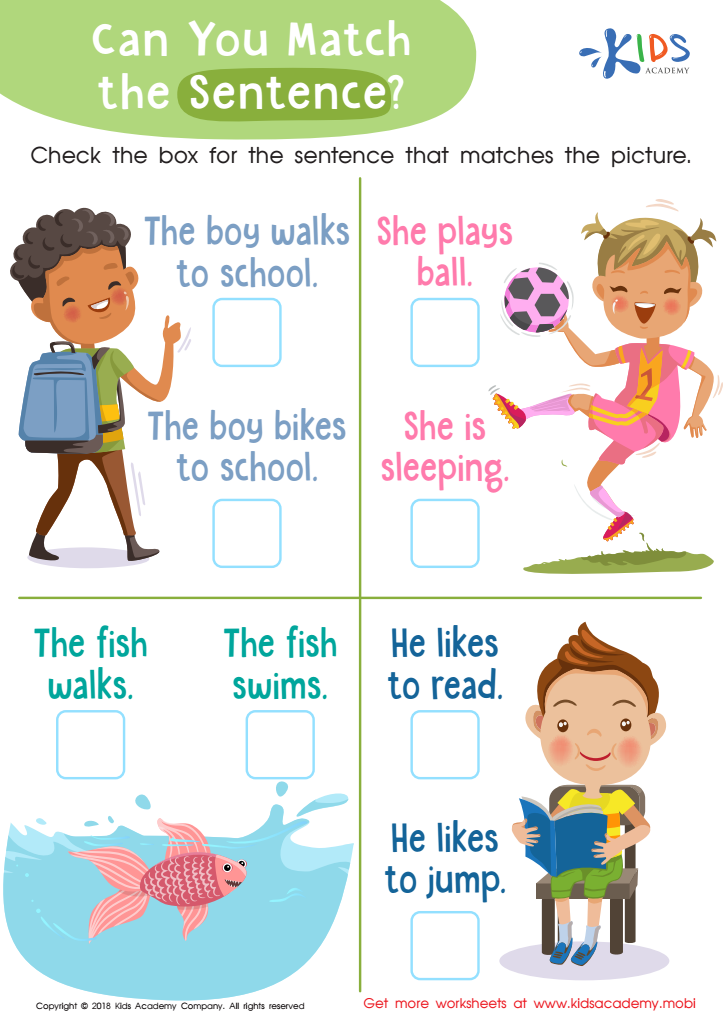
Can You Match the Sentence? Worksheet
Kids gain fluency with this worksheet which uses bright pictures. They select the sentence that matches the image and check the box. This repetition of words and phrases helps them improve their reading skills while having fun.
Can You Match the Sentence? Worksheet
Worksheet
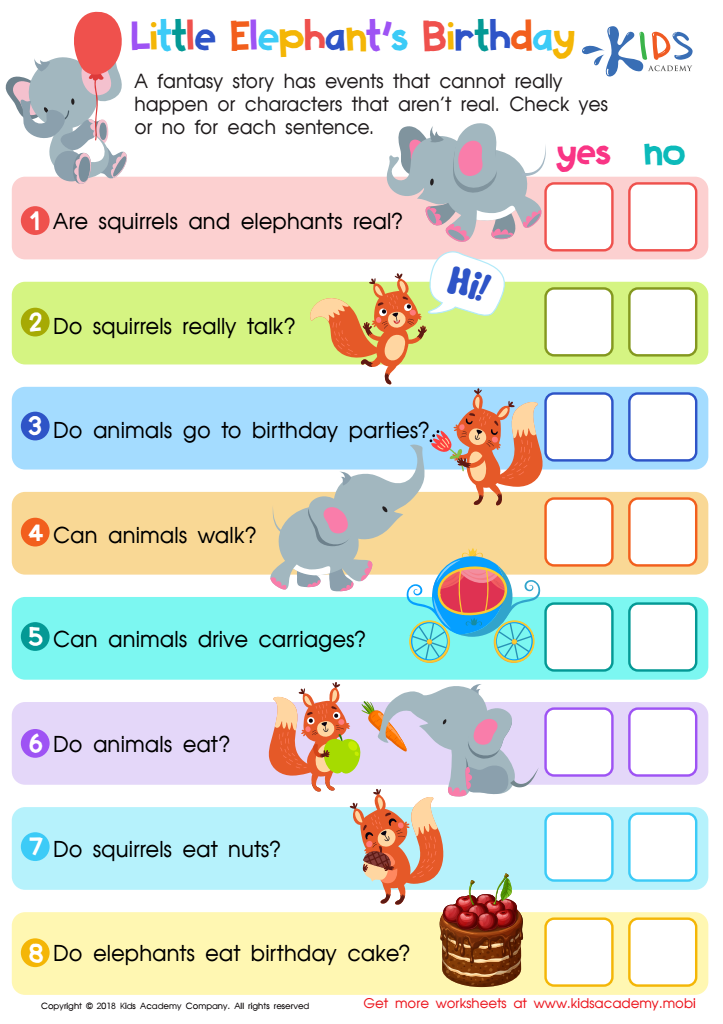
Little Elephant's Birthday Worksheet
It's Little Elephant's birthday! Help your students celebrate with this fun worksheet full of colors and pictures. Deciding which questions are facts and which are fiction will help them differentiate between fantasy stories and reality. Let them have fun learning why certain elements of fantasy can't be true!
Little Elephant's Birthday Worksheet
Worksheet
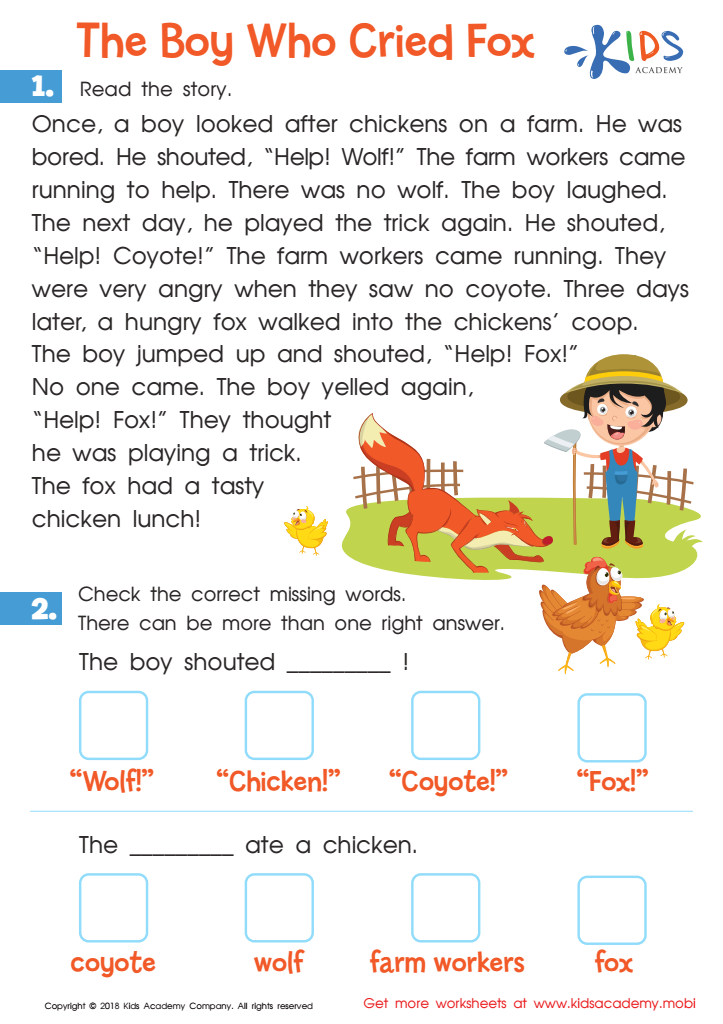
The Boy Who Cried Fox Worksheet
This worksheet encourages students to recall details from a story and answer questions to test their comprehension. Perfect for reading lessons, enrichment, or extra help.
The Boy Who Cried Fox Worksheet
Worksheet
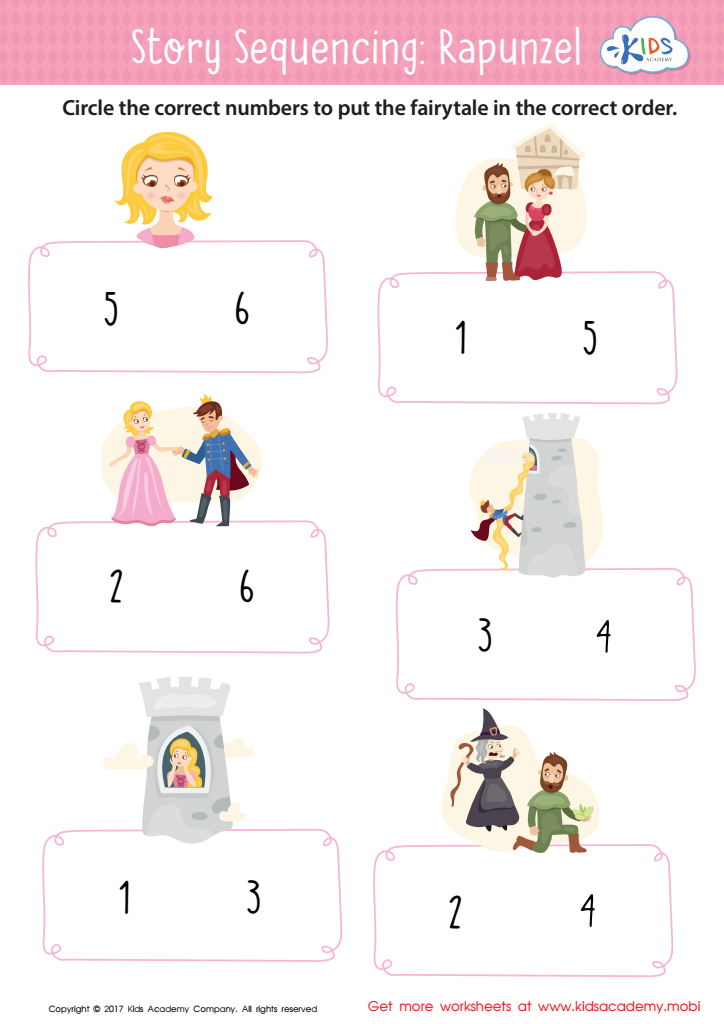
Rapunzel Story Sequencing Worksheet
Enhance your child's reading comprehension and help them sequence story events with this Rapunzel worksheet – it's thrilling and educational! Max 80 words.
Help your child develop their reading comprehension with this exciting Rapunzel story sequencing worksheet! Kids view pictures from the classic fairytale and number them in the right order, reinforcing their understanding of story events. Educational and entertaining!
Rapunzel Story Sequencing Worksheet
Worksheet
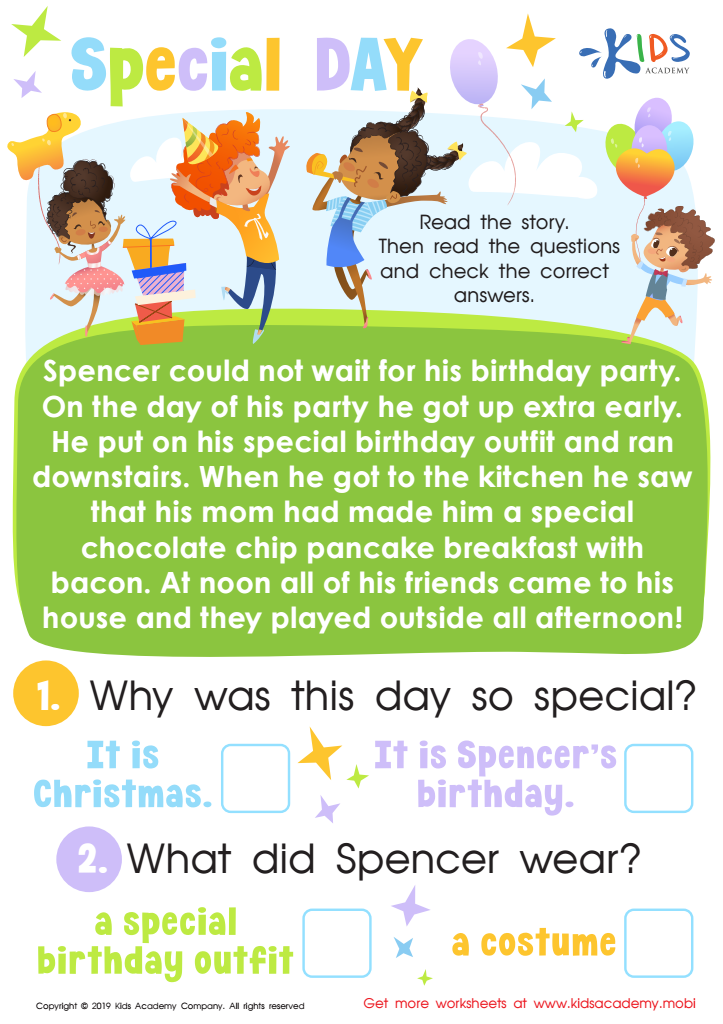
Special Day Worksheet
What's your child's favorite day? Let them tell you what makes it special and what they enjoy most. With the worksheet, show them the picture and ask them to identify the day. Read the story aloud, and help them answer the questions and check the right responses.
Special Day Worksheet
Worksheet
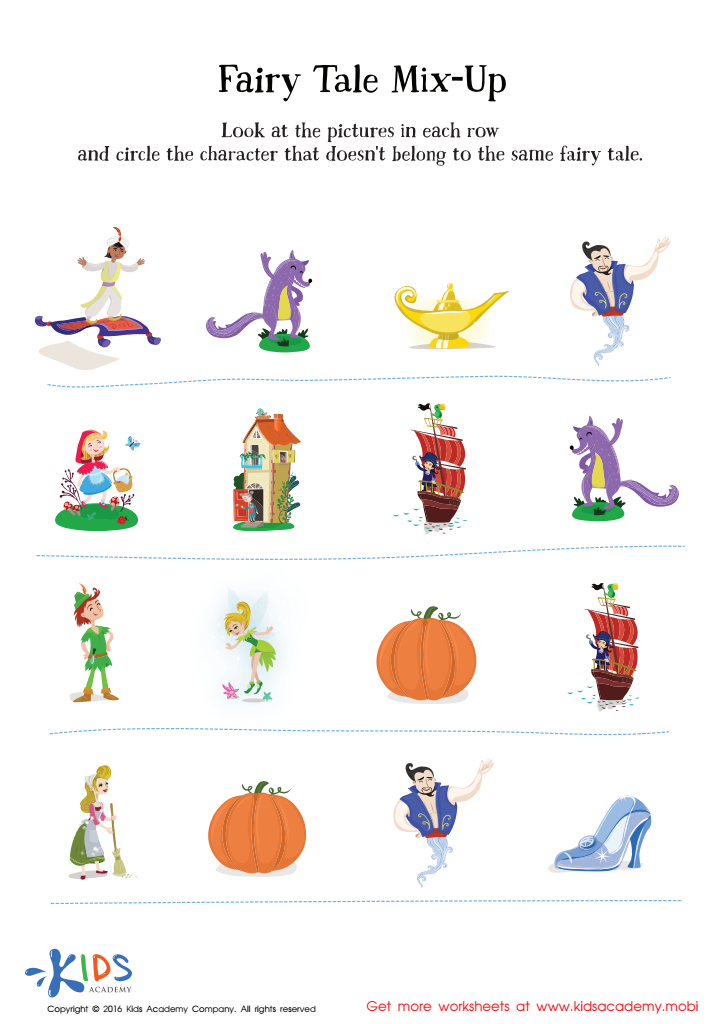
Fairy Tale Worksheet: Story Mix Up
Kids love fairy tales! Encourage your child to engage with their favorite stories using our vibrant worksheet. It'll help sharpen cognitive and comprehension skills, build problem-solving skills, and strengthen classification skills. Beforehand, read or watch the fairy tales and talk about each one's characters and elements. Your child will love the story and time spent together! Print the worksheet and get ready for a magical experience.
Fairy Tale Worksheet: Story Mix Up
Worksheet
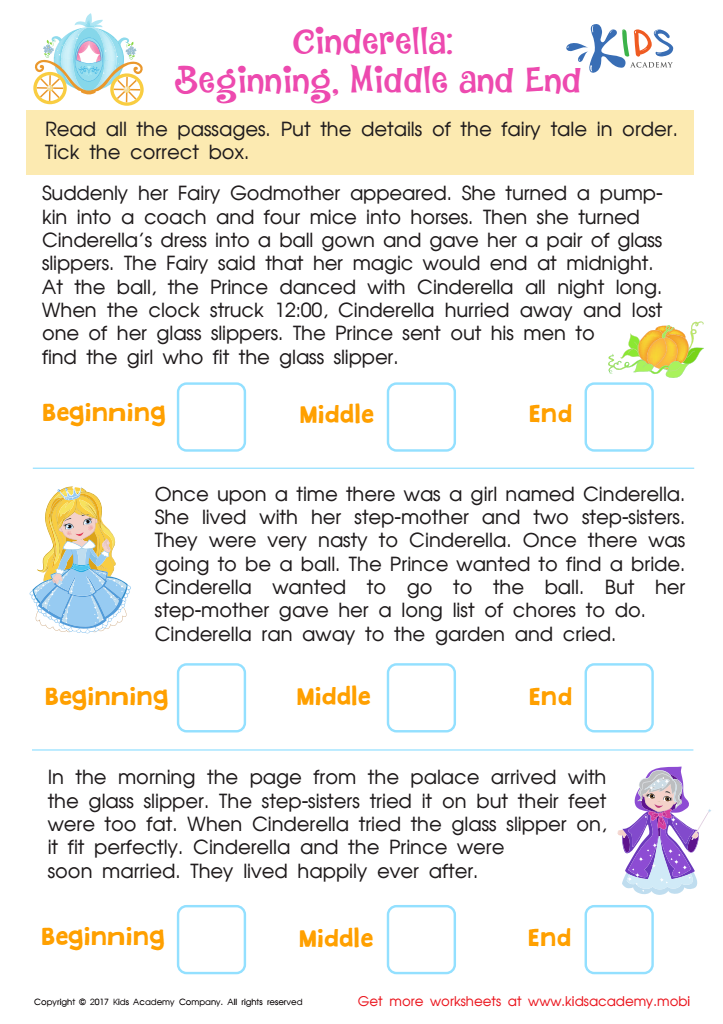
Cinderella: Beginning, Middle and End Worksheet
This Cinderella-themed worksheet provides an excellent opportunity for your child to practice reading comprehension and understanding the basics of story structure.
Help your child learn a key story concept with this Cinderella-themed reading comprehension worksheet. It's an excellent way for them to practice understanding the different parts of a story, from the beginning to the end. Kids will love getting to know the beloved fairy tale of Cinderella!
Cinderella: Beginning, Middle and End Worksheet
Worksheet
Join Kids Academy for Free
Who is primarily going to use this learning content?







Critical thinking in reading fiction is essential for children aged 6-8 as it fosters cognitive development, enhances comprehension, and nurtures a love for literature. At this crucial stage of development, children are not just learning to read; they are learning to think deeply about the stories and characters. Engaging with fiction allows young readers to reflect on various perspectives, to analyze motives, and to engage with complex themes such as empathy and morality.
When parents and teachers encourage critical thinking while reading fiction, they support students in developing essential skills such as reasoning, problem-solving, and hypothesis testing. These skills are foundational for academic success and are applicable in everyday life. For instance, discussing a character's choices encourages children to think critically about their actions and their consequences, linking literature to real-world scenarios.
Furthermore, nurturing critical thinking helps children articulate their thoughts and opinions, fostering communication skills. In sum, focusing on critical thinking in fictional reading empowers children to become independent, thoughtful learners, prepared for the challenges of both school and life. Investing in these skills at a young age lays the groundwork for lifelong learning and intellectual curiosity.








