Counting practice Science Worksheets for Ages 6-8
6 filtered results
-
From - To
Encourage your child's scientific curiosity while honing their counting skills with our interactive "Counting Practice Science Worksheets" designed for ages 6-8. Each worksheet blends fundamental science concepts with fun counting exercises, making learning an exciting adventure. Children will explore basic scientific principles such as measurement and data collection while practicing their numbering abilities in engaging and educational contexts. Ideal for homeschooling or classroom use, our worksheets promote critical thinking and problem-solving. Watch your little learners thrive as they count insects, measure plant growth, and track weather patterns—all while solidifying their foundational math skills. Discover the joy of learning with our extensive resources!
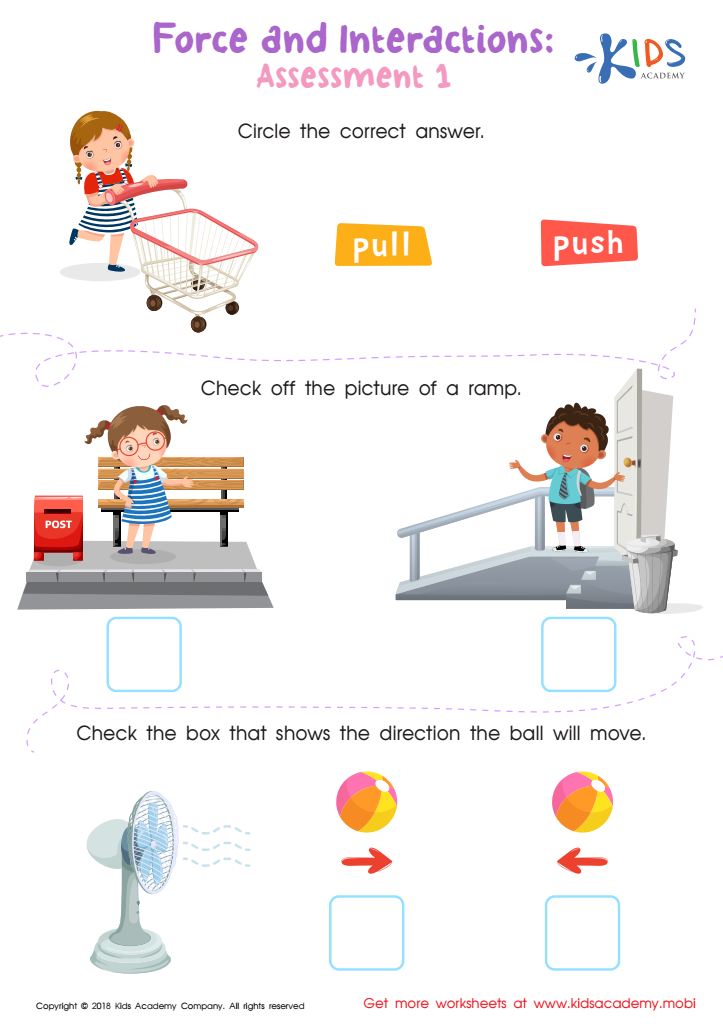
Force and Interactions: Assessment 1 Worksheet
 Assign to My Students
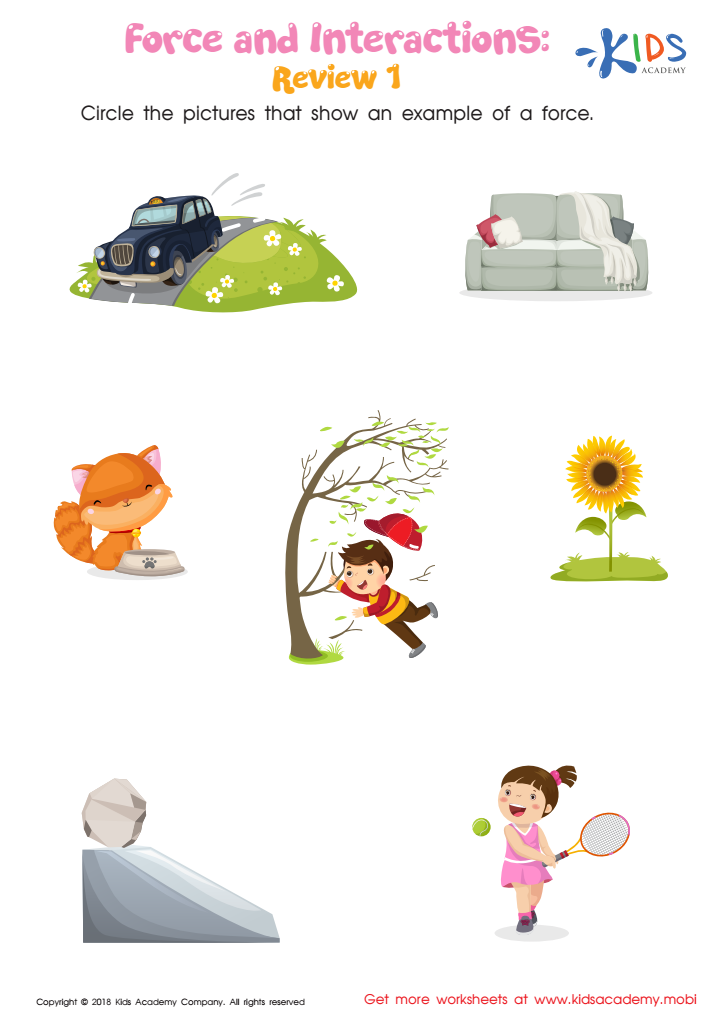
Force and Interactions: Review 1 Worksheet
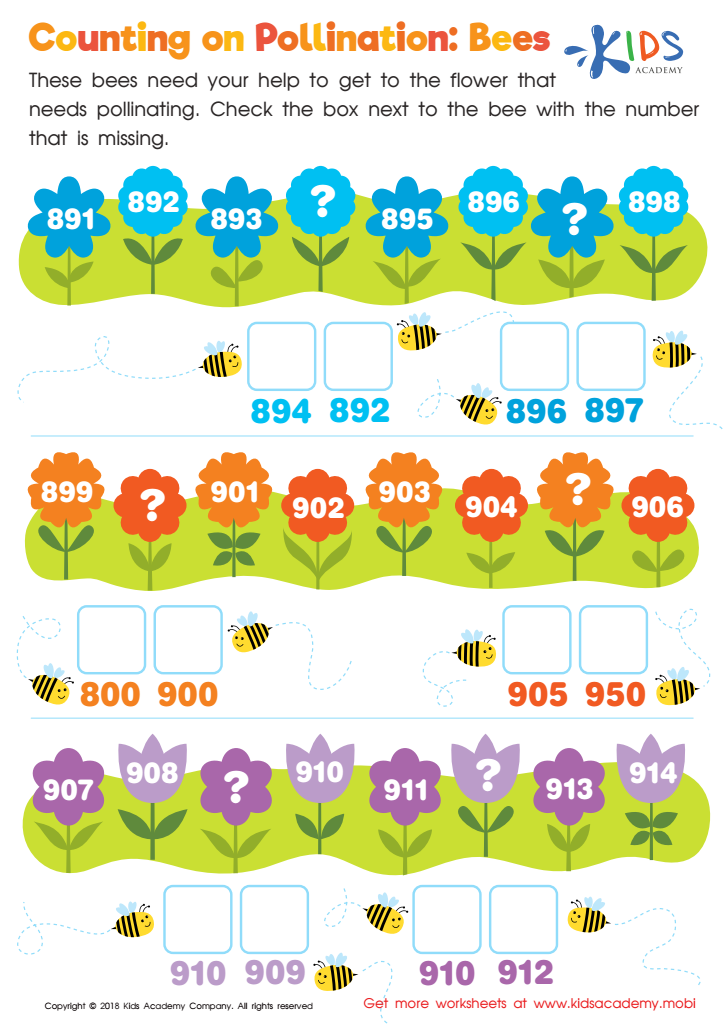
Counting on Pollination: Bees Worksheet
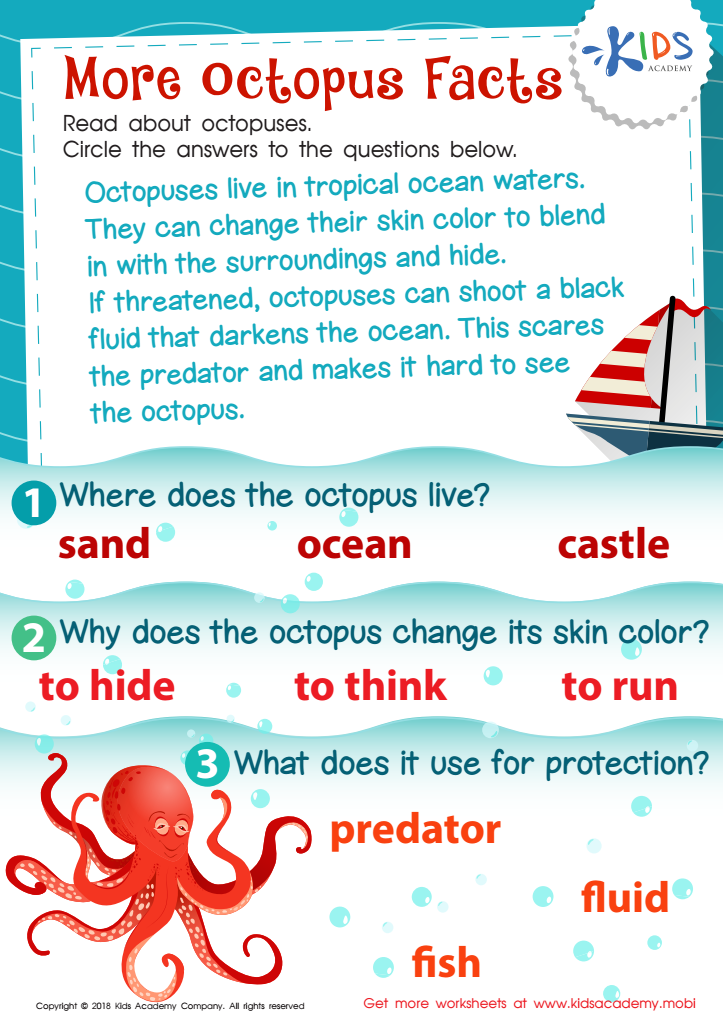
More Octopus Facts Worksheet
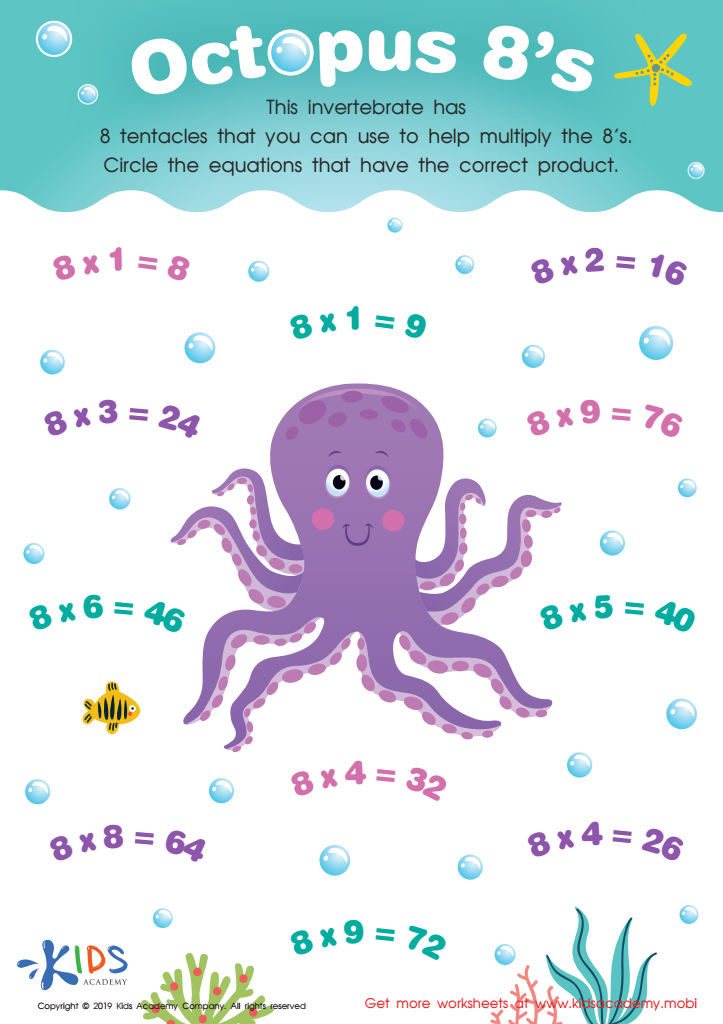
Octopus 8’s Worksheet







Counting practice is an essential component of early education, particularly in the context of science for children aged 6-8. During these formative years, children develop foundational skills that will shape their understanding of the world around them. Counting not only enhances numeracy but also fosters critical thinking and problem-solving abilities essential for scientific inquiry.
In science, counting helps children engage in observation and experimentation, as they measure, quantify, and analyze data. For instance, when conducting simple experiments or nature observations, children can count items, categorize organisms, or measure changes in variables. This hands-on experience reinforces the connection between math and science, demonstrating that numbers are not just abstract concepts, but vital tools for exploration.
Moreover, counting practice enhances vocabulary and language skills, as children describe their observations and findings. It lays the groundwork for more advanced mathematical concepts, empowering children to solve real-world problems effectively.
Thus, parents and teachers should prioritize counting practice within the broader science curriculum to prepare children for future academic success. By integrating numeracy into science, they can foster a love for learning, cultivate curiosity, and inspire future scientists and innovators.







