Logical thinking development Science Worksheets for Ages 6-8
3 filtered results
-
From - To
Nurture your child's problem-solving skills with our Logical Thinking Development Science Worksheets, specially designed for ages 6-8. These engaging activities foster critical thinking, enhancing your child's ability to recognize patterns, draw conclusions, and make predictions based on given data. Through puzzles, classification exercises, and scientific explorations, youngsters develop foundational STEM skills in a fun, interactive way. Each worksheet is crafted to challenge young minds while reinforcing the scientific principles they need for future academic success. Discover the perfect balance of learning and play with our expertly designed resources, proven to inspire a life-long love for science and logical reasoning.

Which Direction Will it Go? Worksheet
 Assign to My Students

Comparing Solutions Worksheet
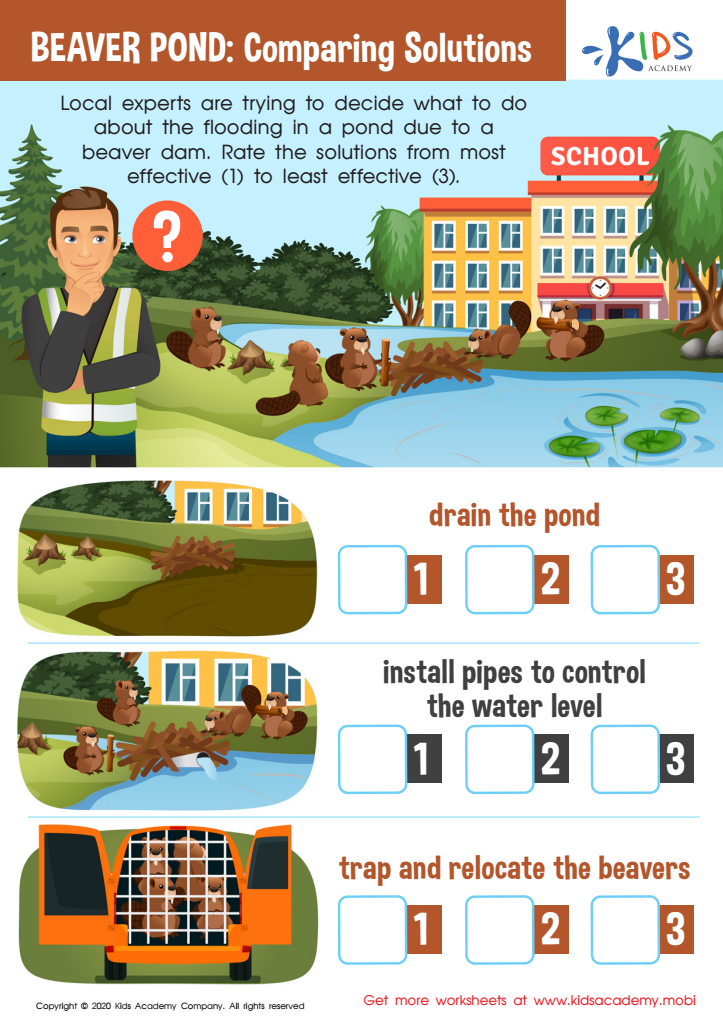
Beaver Pond: Comparing Solutions Worksheet








Logical thinking development is crucial for children ages 6-8 as it lays the foundation for their future success in both education and everyday life. By encouraging logical thinking, parents and teachers help children enhance their problem-solving and reasoning skills. These skills are not only fundamental for understanding math and science concepts but also for making informed decisions and developing the ability to think critically about the world around them.
Logical thinking stimulates cognitive development, improving memory, attention span, and the ability to understand cause-and-effect relationships. For instance, when children learn to categorize objects, recognize patterns, or follow sequences, they are building the skills needed for more complex tasks later in life, such as coding or scientific analysis. Additionally, these skills help in improving academic performance across subjects.
Encouraging logical thinking also prepares children for collaborative activities, as it fosters clear communication and the ability to understand different perspectives. This emotional and social intelligence aspect is crucial for teamwork and interpersonal relationships.
Incorporating logical thinking activities, such as puzzles, games, and discussions, into daily routines makes learning enjoyable and keeps children engaged. By investing in logical thinking development at this critical age, parents and teachers are setting the stage for lifelong learning, curiosity, and adaptability in an ever-changing world.







