Sequencing Skills Science Worksheets for Ages 6-8
4 filtered results
-
From - To
Enhance your child’s scientific understanding with our Sequencing Skills Science Worksheets for ages 6-8! These engaging, printable worksheets are designed to help young learners develop critical sequencing abilities through fun, age-appropriate activities. Children will explore essential concepts by organizing events in the correct order, making connections between scientific processes, and improving their reasoning skills. Each worksheet is crafted to ignite curiosity and foster a love for science while reinforcing key learning outcomes. Perfect for both classroom use and homeschooling, our Sequencing Skills worksheets provide a practical approach to enhancing your child's literacy and comprehension in the fascinating world of science.
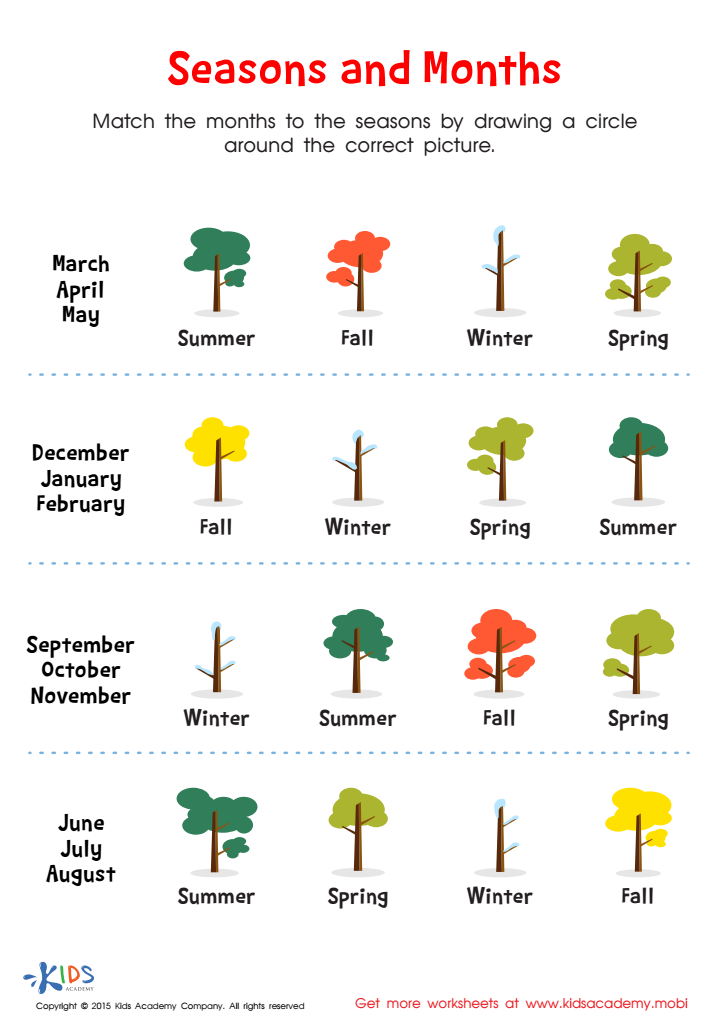
Seasons and Months Worksheet
 Assign to My Students
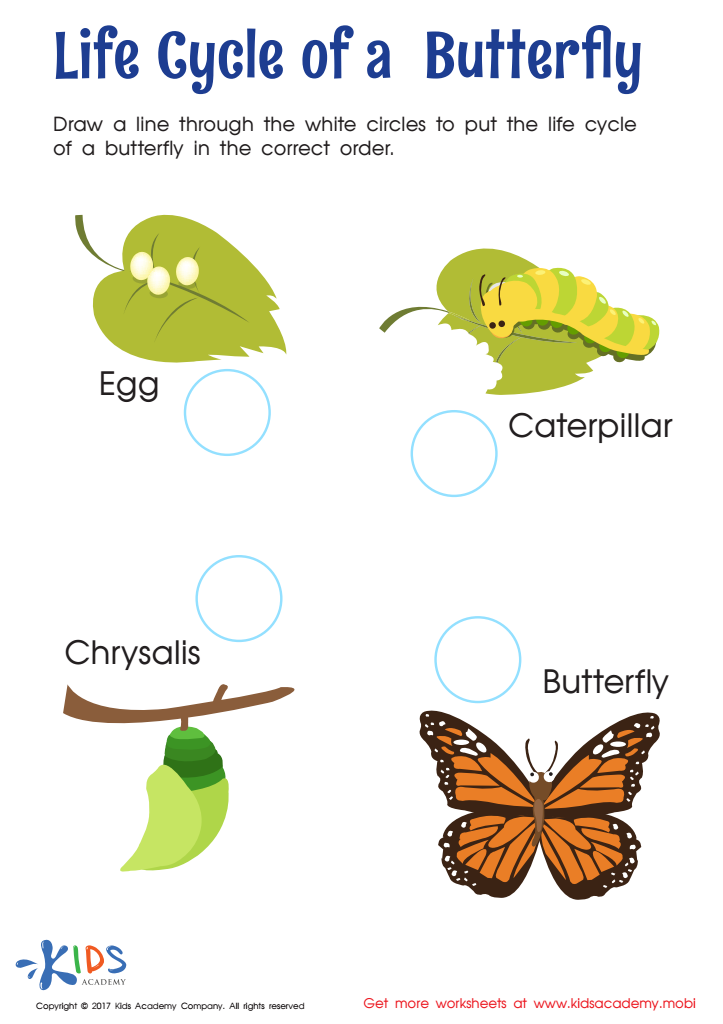
Life Cycle of Butterfly Worksheet
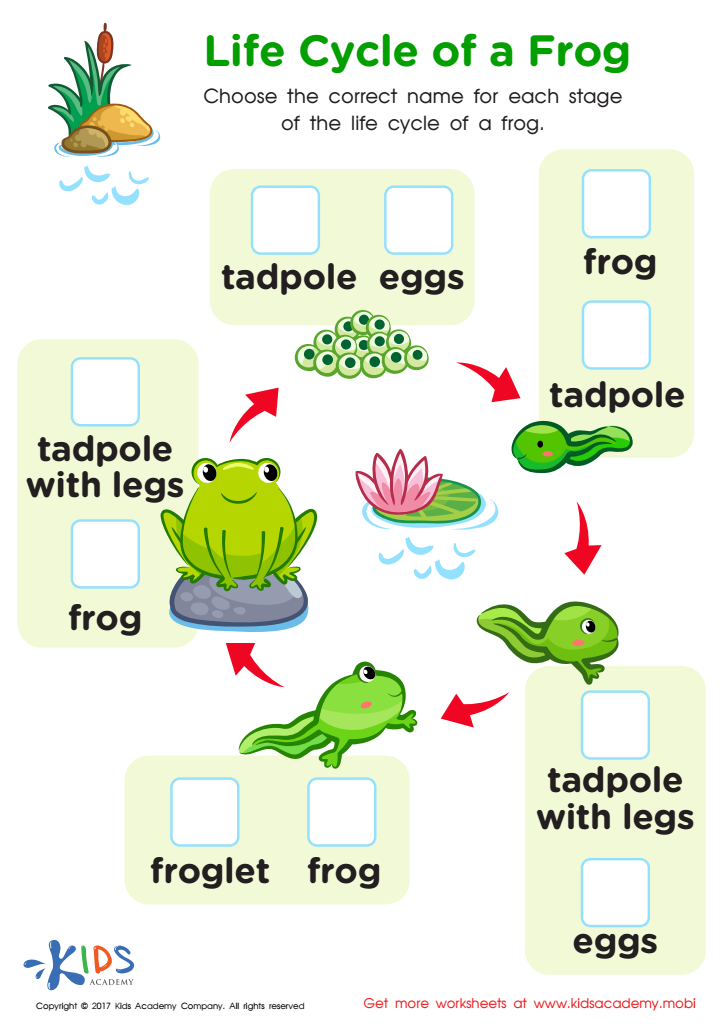
Life Cycle Frog Printable
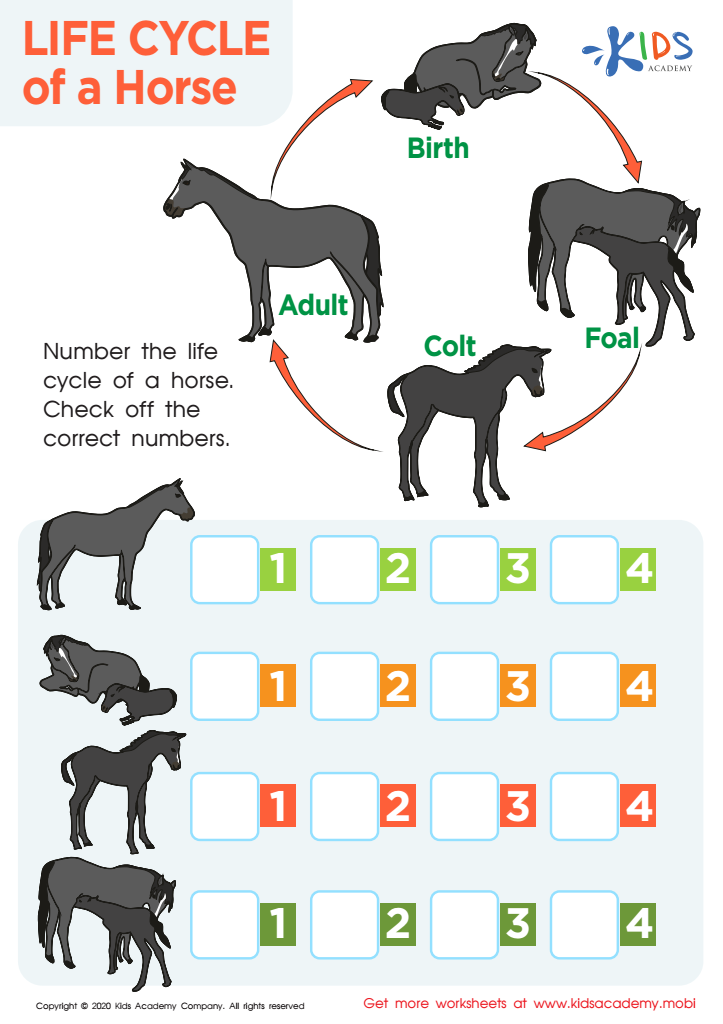
Life Cycle of a Horse Worksheet







Sequencing skills are crucial for children aged 6-8, particularly in the context of science education. This developmental stage is marked by significant cognitive growth, where children begin to understand cause and effect, logical order, and the complexities of processes in the natural world. Teaching kids how to sequence information helps them in grasping scientific concepts, such as the scientific method, life cycles, and ecosystems, as they learn to identify steps in experiments or natural phenomena.
Parents and teachers should care about sequencing skills because these skills foster critical thinking and comprehension abilities. When children can effectively order events or steps, they enhance their understanding of scientific inquiry and reasoning. Additionally, savoring the learning process through sequencing encourages retention of information, as the brain can more easily encode ordered sequences.
Effective sequencing practices can translate into improved performance not just in science, but across all subjects, as children learn to make connections and understand relationships. This foundational skill is vital for future success in academic and everyday contexts, preparing children to approach complex problems systematically. Supporting the development of sequencing skills at this critical age sets the stage for lifelong learning and scientific exploration.







