
Understanding life cycles Science Worksheets for Ages 6-8
8 filtered results
Difficulty Level
Grade
Age
-
From - To
Subject
Activity
Standards
Explore the fascinating world of life cycles with our engaging worksheets designed for children ages 6-8. Our "Understanding Life Cycles" science worksheets encourage curious young minds to learn about the growth and development of various living organisms, including plants, insects, and animals. Each worksheet features fun activities, including matching games and diagram labeling, that simplify complex concepts and nurture critical thinking skills. These resources align with curriculum standards and foster an interactive learning experience, making science enjoyable. Perfect for classroom use or homeschooling, our worksheets promote discovery and deepen understanding of nature’s intricate cycles. Dive into the wonders of life cycles today!
Favorites
With answer key
Interactive
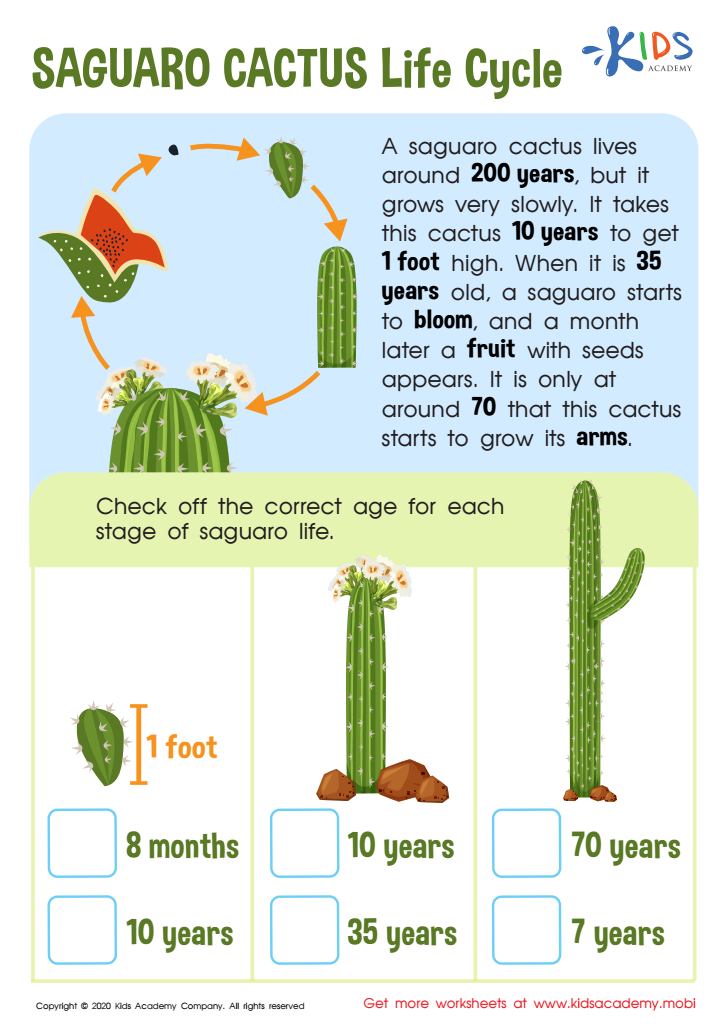
Saguaro Cactus Life Cycle Worksheet
Teach your child about the saguaro cactus, which takes 35 years to bloom and can live up to twice the lifespan of a human! Print this free PDF worksheet to engage learners with an interesting passage. Check off the correct answers to reflect their learning!
 Assign to My Students
Saguaro Cactus Life Cycle Worksheet
Worksheet
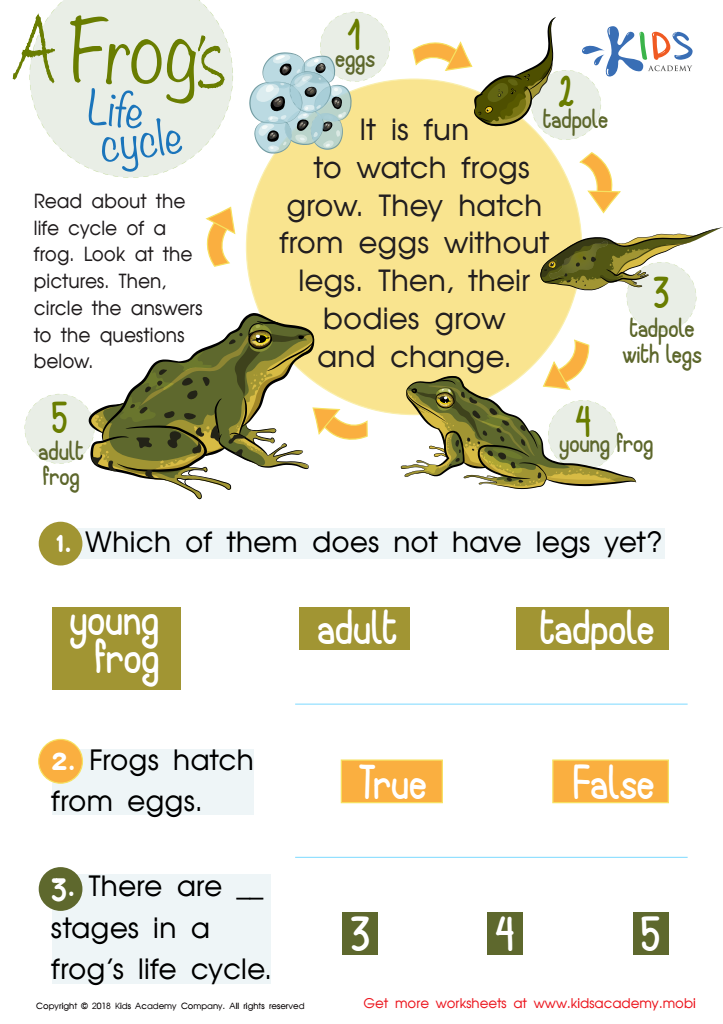
A Frog’s Life Cycle Worksheet
Encourage your kids to learn about frogs! Ask them to tell you some features, then read and discuss the text that explains the frog's life cycle. Show them the pictures to help them visualize it. Finish by helping them answer the questions at the bottom of the worksheet.
A Frog’s Life Cycle Worksheet
Worksheet
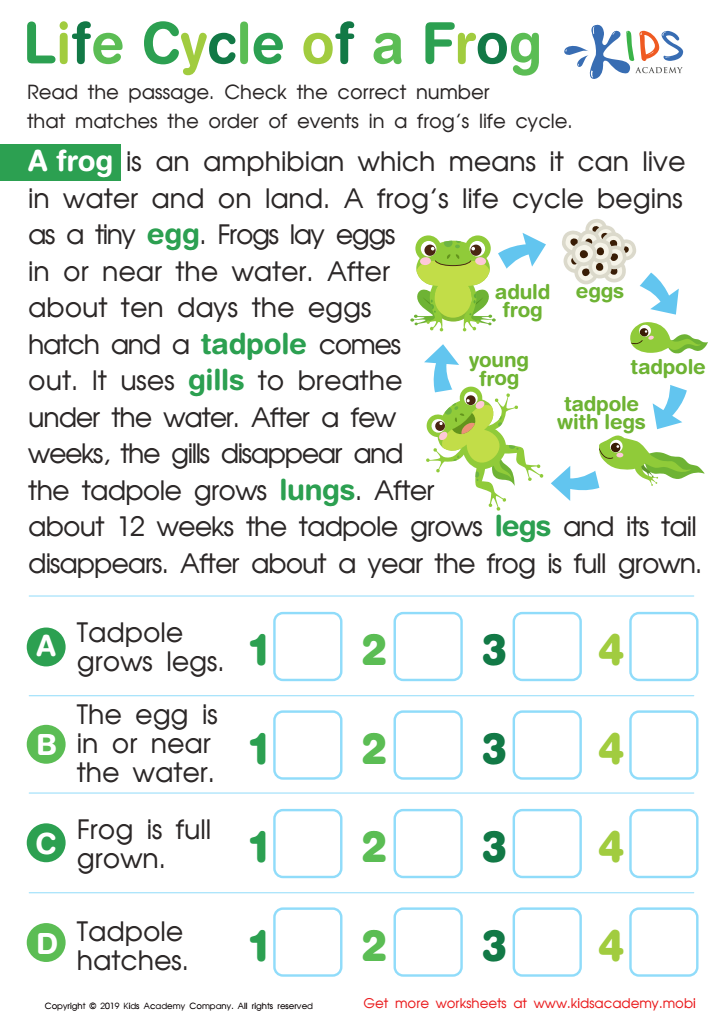
Life Cycle of a Frog Worksheet
Teach your kids to read and open their eyes to new knowledge. Frogs have fascinating life cycles. Show them the worksheet with pictures and guide them as they read the passage about it. Encourage them to check the number that matches the frog's life cycle order.
Life Cycle of a Frog Worksheet
Worksheet
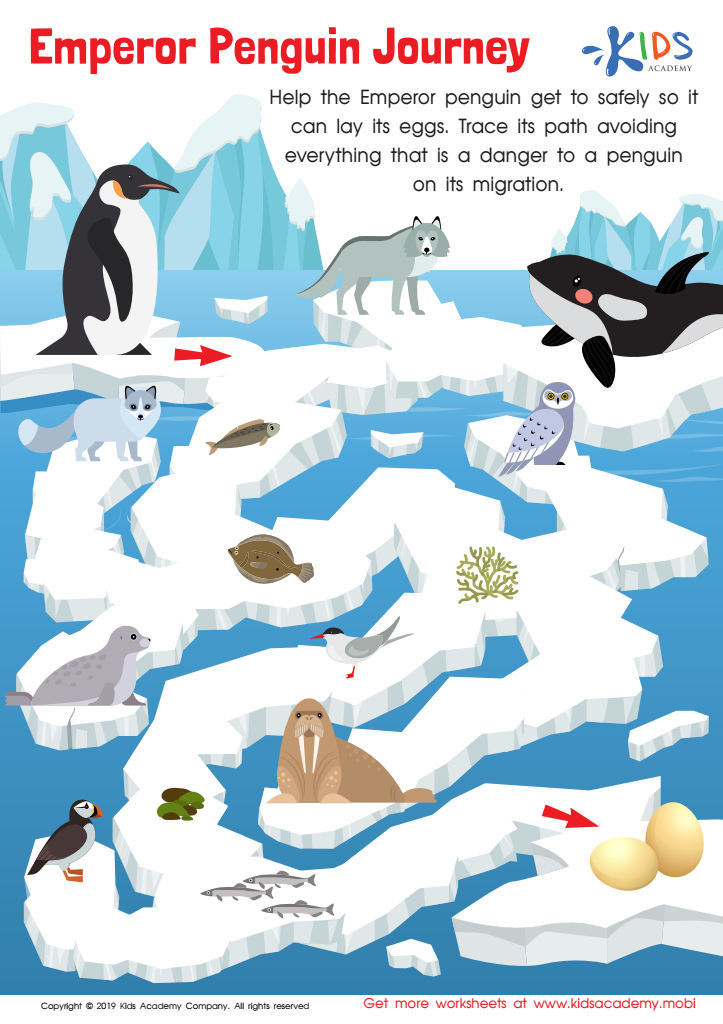
Emperor Penguin Journey Worksheet
Kids love learning about animal habitats! This bright worksheet on Emperor Penguins is a fun way for your child to explore the risks of migration. Download the free PDF and help the penguin make its way through the maze and to its eggs - all while stimulating fine motor skills. Kids will have a blast helping the Emperor Penguin waddle to safety!
Emperor Penguin Journey Worksheet
Worksheet
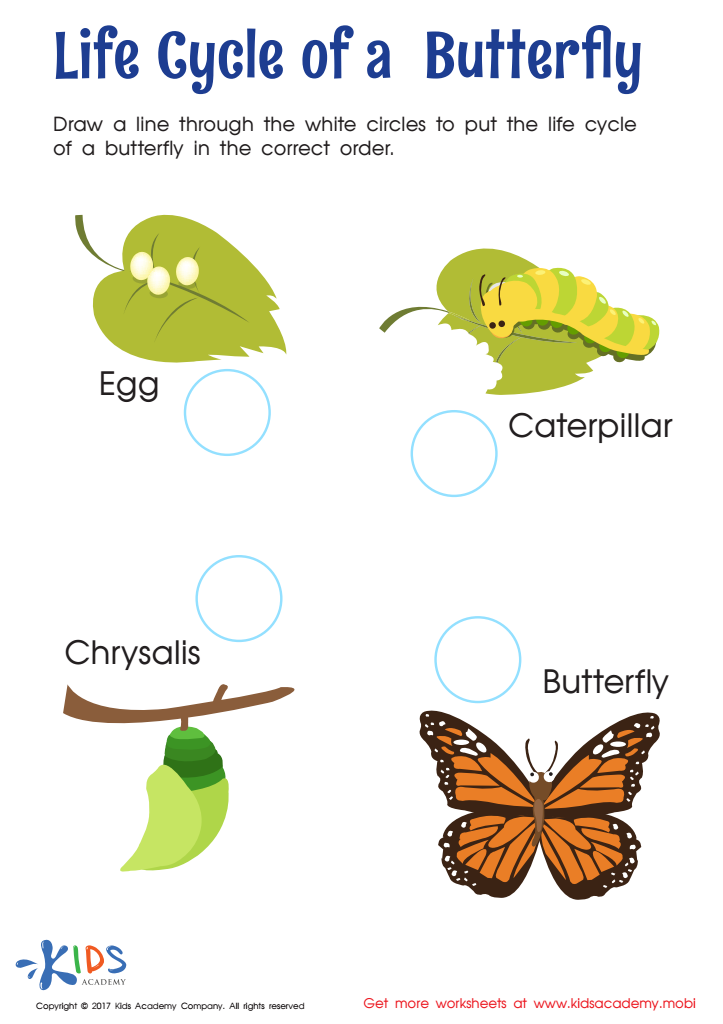
Life Cycle of Butterfly Worksheet
Kids Academy offers an exciting activity – a Life Cycle of a Butterfly Worksheet PDF. It shows four stages in the lifecycle of a butterfly with vivid pictures. Kids put the stages in the correct order to study the lifecycle.
Life Cycle of Butterfly Worksheet
Worksheet
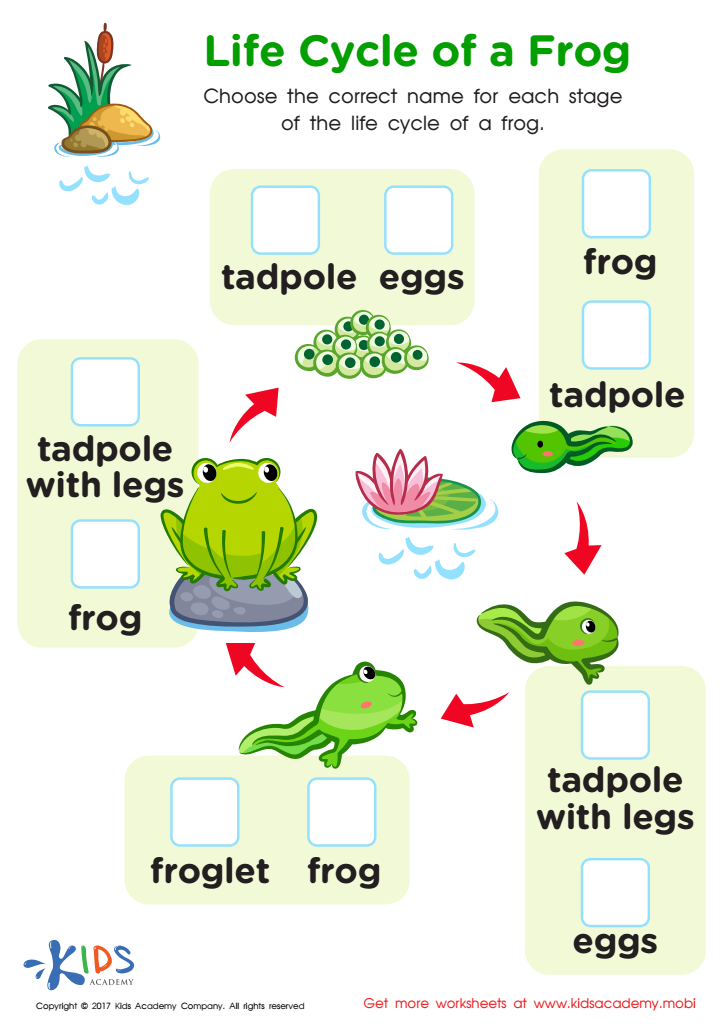
Life Cycle Frog Printable
Kids can explore the life cycle of frog with this fun worksheet! Draw lines from one stage to the next to follow the transformation from tadpole to frog and learn about the cycle of life.
Life Cycle Frog Printable
Worksheet
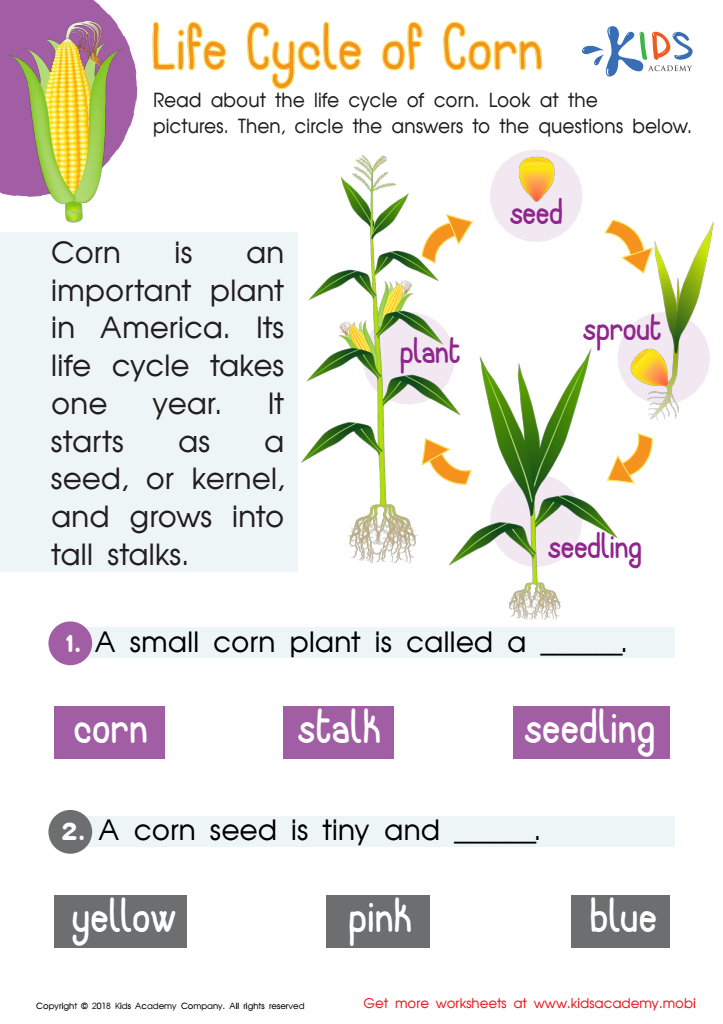
Life Cycle of Corn Worksheet
Help your kids learn about corn! Ask them what foods it's used to make. Read this worksheet and look at the pictures to learn the life cycle of corn. Then, have them circle the answers to the questions at the bottom. Corn is an important crop for farmers, used to make many foods we eat today.
Life Cycle of Corn Worksheet
Worksheet
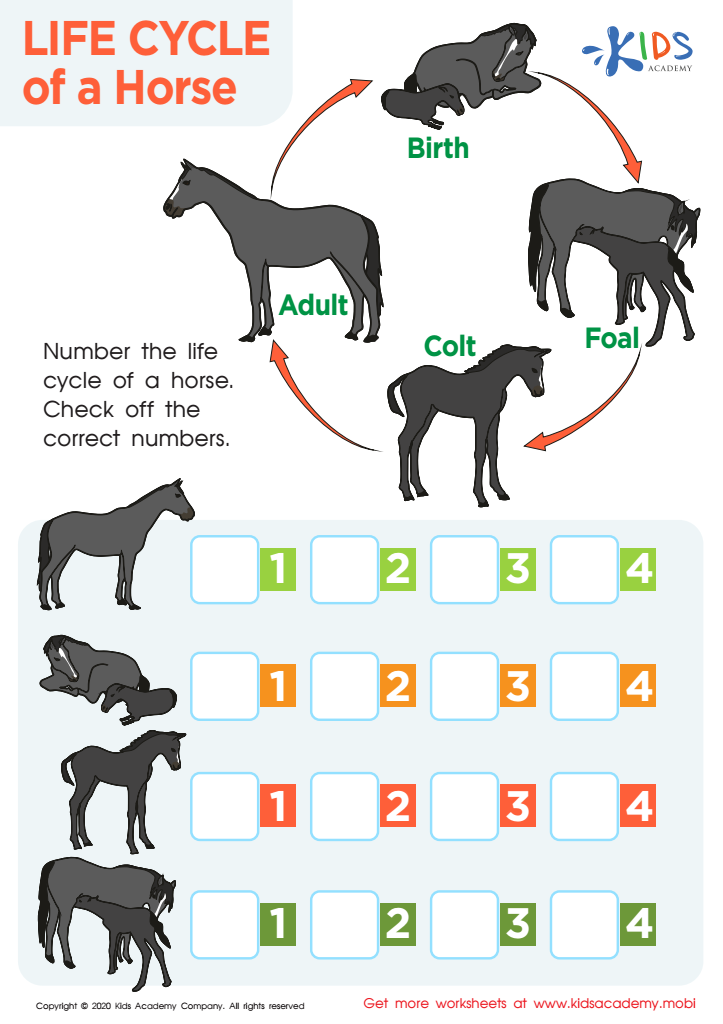
Life Cycle of a Horse Worksheet
Kids Academy's science worksheet on horses' lifecycles offers an engaging way for kids to learn! They'll study the diagram and label each stage of life, from birth to adulthood, and then number the pictures to mark the correct sequence. Fun and educational - a perfect way to get your kids learning!
Life Cycle of a Horse Worksheet
Worksheet
Join Kids Academy for Free
Who is primarily going to use this learning content?




.jpg)


Understanding life cycles is crucial for children aged 6-8 as it lays the foundation for their scientific knowledge and appreciation of the natural world. At this developmental stage, children are naturally curious about their environment, and introducing life cycles fosters that curiosity. Learning about the stages of development in plants, animals, and even humans helps children grasp the concept of growth, change, and interdependence within ecosystems.
For parents and teachers, incorporating life cycles into education promotes critical thinking and observation skills. Children learn to make connections between different living organisms and understand the relationships within their ecosystems, nurturing environmental stewardship from an early age. This knowledge not only enhances their academic development but also encourages empathy for living beings and an appreciation for biodiversity.
Additionally, engaging with life cycles can spark creativity in young learners. Activities like observing caterpillars transform into butterflies or planting seeds can be hands-on experiences that solidify their understanding. Ultimately, this foundation in life cycles cultivates a generation that values science, respects nature, and is equipped to address environmental challenges in the future. Teachers and parents play a vital role in guiding children through this fascinating aspect of science, ensuring a lifetime of curiosity and understanding.







