Understanding photosynthesis Science Worksheets for Ages 6-8
3 filtered results
-
From - To
Unlock the wonders of nature with our "Understanding Photosynthesis" Science Worksheets for ages 6-8! Perfectly designed for young learners, these engaging worksheets simplify the complex process of photosynthesis into fun, easy-to-understand activities. Through colorful diagrams, interactive exercises, and captivating illustrations, kids will grasp how plants convert sunlight into energy. Enhance your child's curiosity and scientific knowledge with content tailored to their reading level and cognitive skills. Ideal for teachers and parents alike, our worksheets not only reinforce essential science concepts but also inspire a lifelong love for learning. Get started today and watch your young scientists bloom!
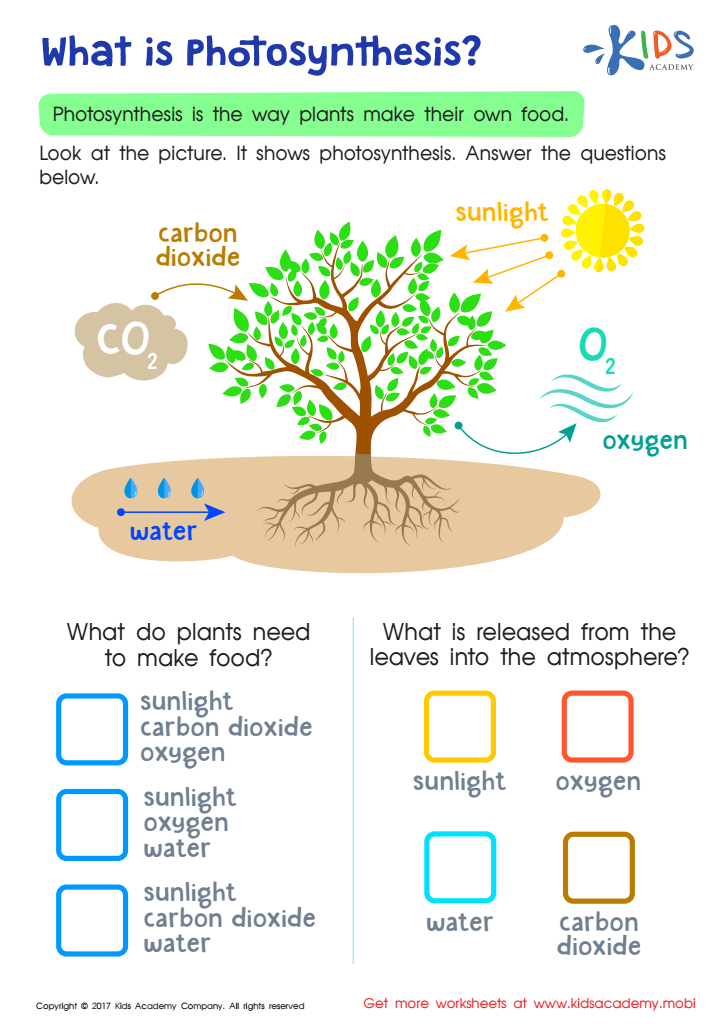
What is Photosynthesis Printable
 Assign to My Students
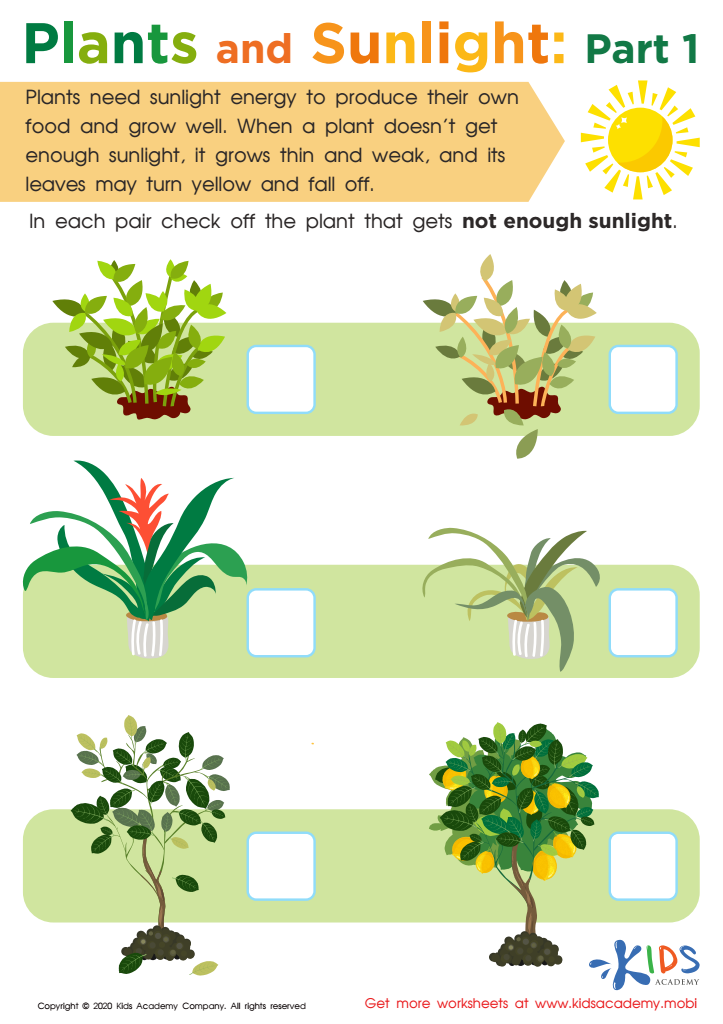
Plants and Sunlight: Part 1 Worksheet
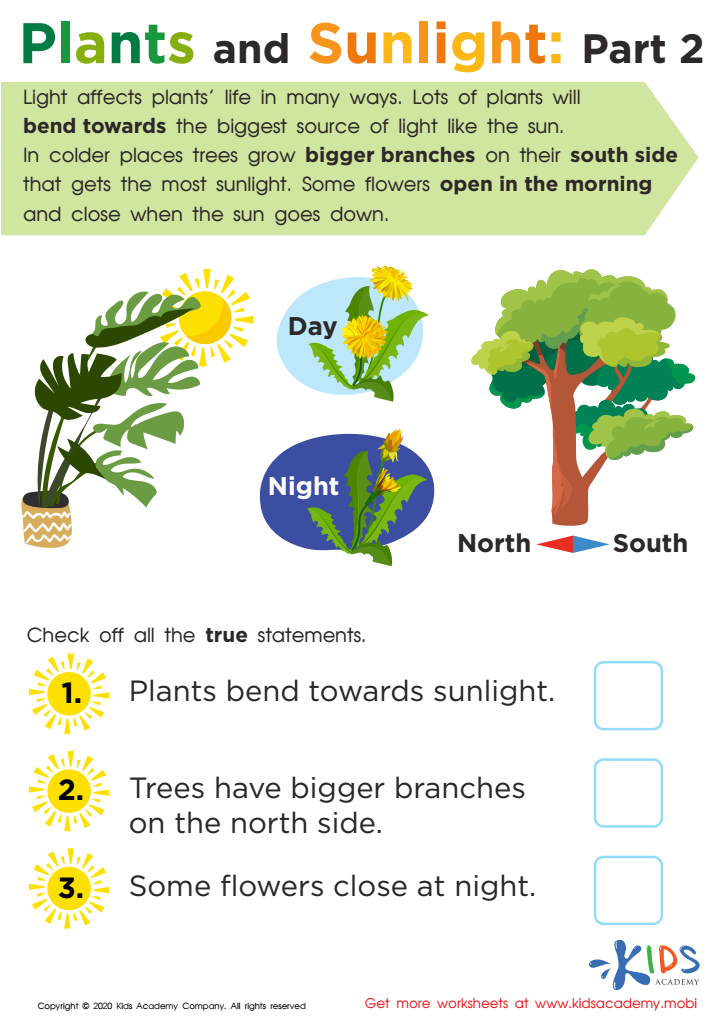
Plants and Sunlight: Part 2 Worksheet






Parents and teachers should care about teaching photosynthesis to children aged 6-8 because it lays the groundwork for scientific literacy and environmental awareness. Understanding photosynthesis introduces children to essential biological processes that sustain life on Earth. At this foundational age, learning that plants convert sunlight into energy through photosynthesis can spark curiosity and a sense of wonder about the natural world.
Early education about photosynthesis also helps children appreciate the interconnectedness of life. They learn that plants not only provide food and oxygen but also form the basis of food chains, supporting entire ecosystems. This insight fosters respect for the environment and can inspire a lifelong interest in science and conservation.
Moreover, discussing photosynthesis enhances children’s critical thinking skills. It encourages them to observe, question, and investigate their surroundings, key components of scientific inquiry. These skills are transferable across all areas of learning and are crucial for their overall cognitive development.
Incorporating photosynthesis into the curriculum aligns with educational standards aimed at promoting STEM (Science, Technology, Engineering, and Mathematics) education from an early age. This foundational knowledge prepares children for more complex scientific concepts in later grades and can ignite passions that lead to academic and career pursuits in scientific fields.
Thus, prioritizing an understanding of photosynthesis in young learners enriches their educational experience and builds a foundation for responsible and informed future citizens.







