Understanding symmetry Science Worksheets for Ages 6-8
3 filtered results
-
From - To
Welcome to our "Understanding Symmetry Science Worksheets" designed specifically for children aged 6-8! These engaging and interactive worksheets introduce young learners to the concept of symmetry through fun activities. Students will identify symmetrical shapes, complete patterns, and explore nature’s symmetry, fostering critical thinking and observational skills. Our worksheets are suitable for home or classroom use, making it easy for teachers and parents to support their children's learning journey. With colorful images and simple explanations, children will develop a solid understanding of symmetry all while enjoying the learning process. Dive into the world of symmetry and watch your child's curiosity blossom!
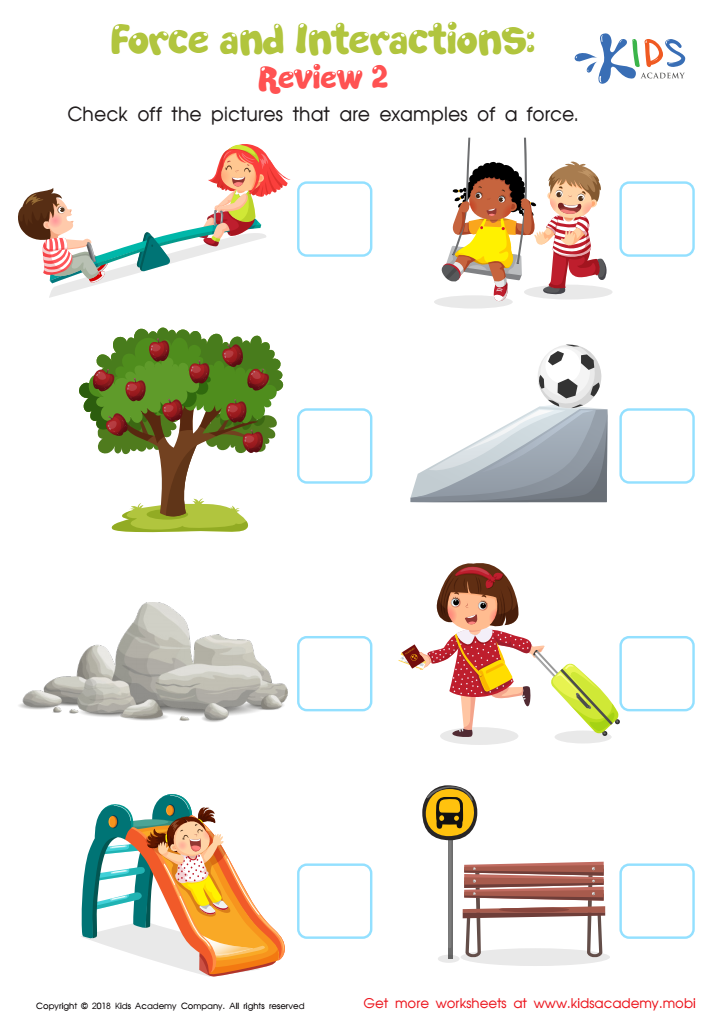
Force and Interactions: Review 2 Worksheet
 Assign to My Students
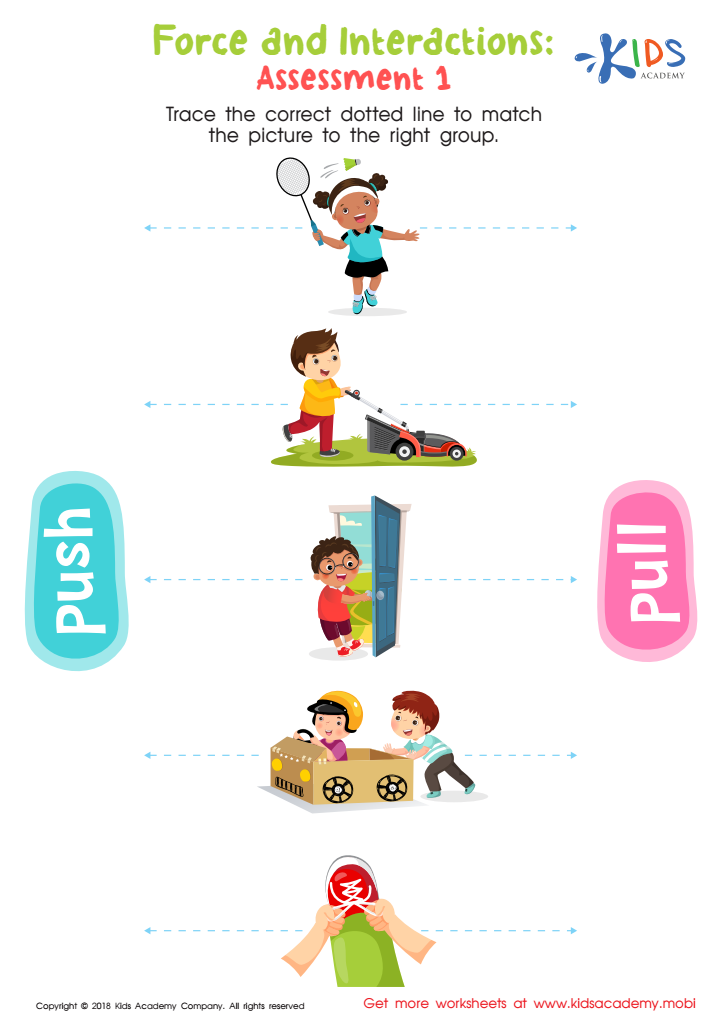
Force and Interactions: Assessment 2 Worksheet
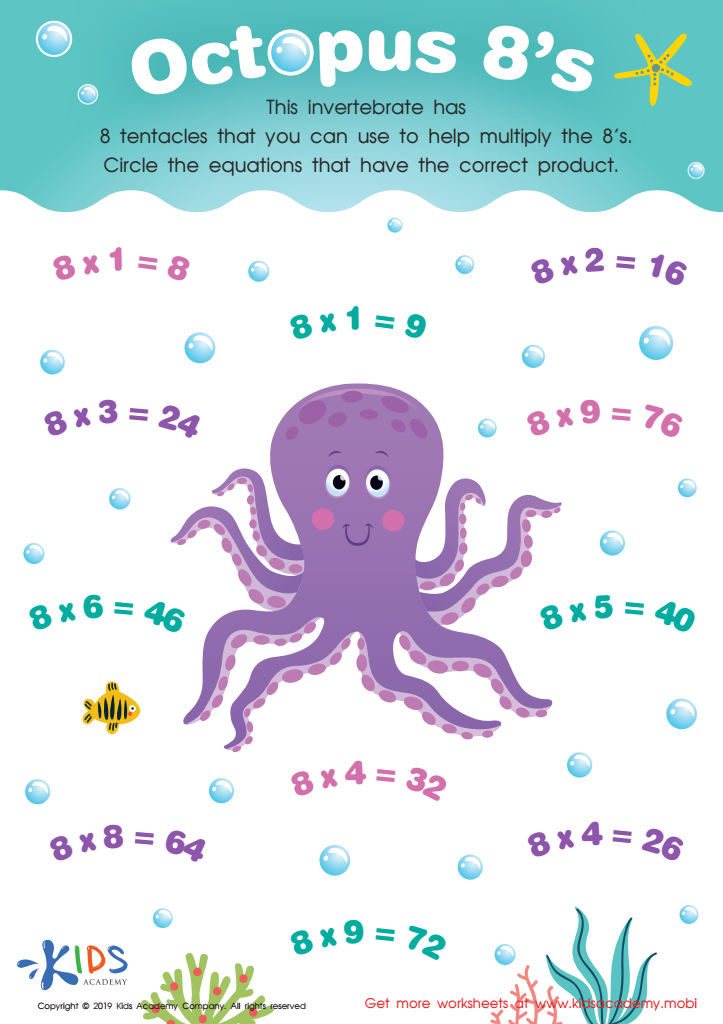
Octopus 8’s Worksheet








Understanding symmetry is fundamental for children aged 6-8 as it lays the groundwork for critical thinking and spatial reasoning. Symmetry, found not just in math but in nature, art, and everyday life, helps children recognize patterns and shapes, fostering keen observation skills and promoting creativity. When children grasp the concept of symmetry, they learn to classify objects, compare dimensions, and appreciate balance and harmony in visual appearances, which enhances their problem-solving abilities.
Moreover, symmetry is integral to mathematical concepts. It prepares students for geometry, encouraging them to explore attributes of shapes, develop an understanding of congruence, and improve their manipulation of geometric figures. Incorporating symmetry-related activities, such as creating symmetric art or identifying symmetrical objects in the environment, can make learning interactive and engaging.
For parents and teachers, promoting an understanding of symmetry is vital as it enriches the overall learning experience. It cultivates a child's ability to connect mathematical ideas to real-world contexts, enhancing their appreciation for STEM fields. Ultimately, nurturing a strong foundation in symmetry primes children for academic success, inspires them to explore their creativity, and builds confidence in their ability to approach mathematical concepts as they progress in their education.







