Understanding life cycles Plants and Animals Worksheets for Ages 6-8
6 filtered results
-
From - To
Explore the rich and fascinating world of nature with our "Understanding Life Cycles: Plants and Animals Worksheets for Ages 6-8". Designed to engage young minds, these worksheets help children uncover the mysteries of life's stages, from seed to plant and from egg to adult animal. Through vibrant illustrations and interactive activities, kids enhance their understanding of growth, development, and environmental interactions. Perfect for classroom and at-home learning, our worksheets align with educational standards, offering fun and solid foundational skills in science. Help your children discover the wonders of nature and foster a lifelong love for learning with these captivating resources.
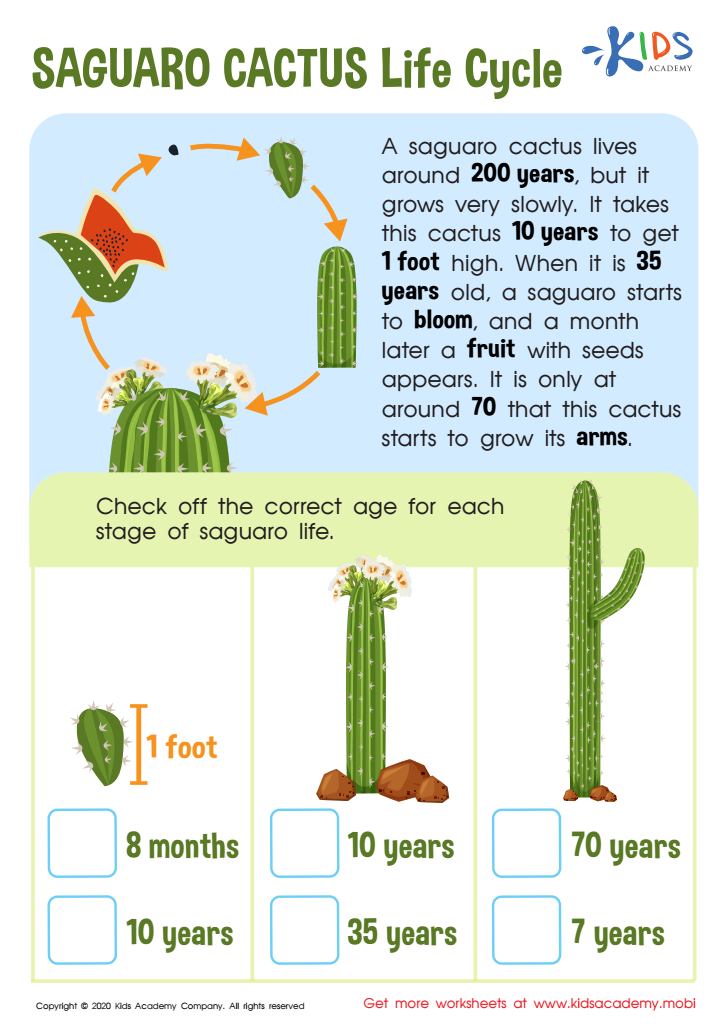
Saguaro Cactus Life Cycle Worksheet
 Assign to My Students

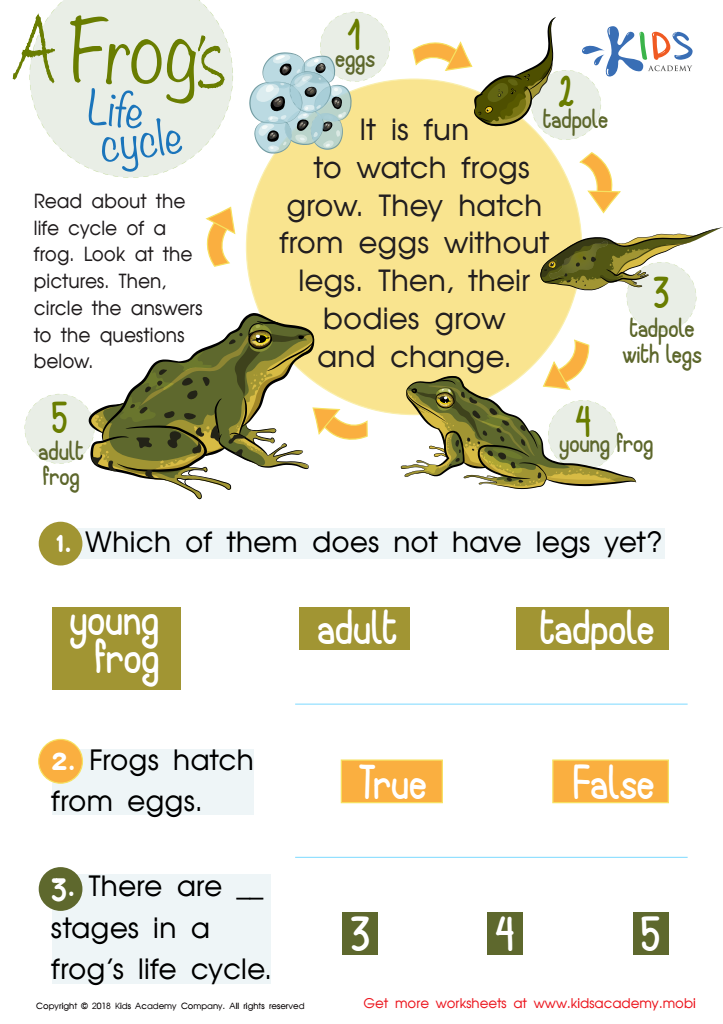
A Frog’s Life Cycle Worksheet
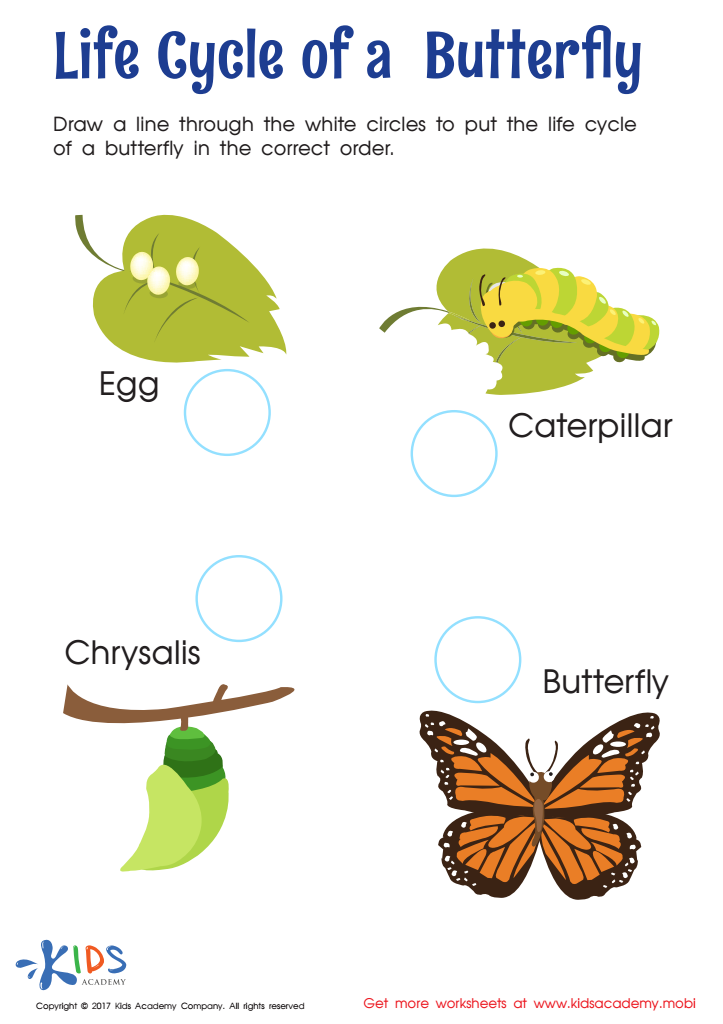
Life Cycle of Butterfly Worksheet
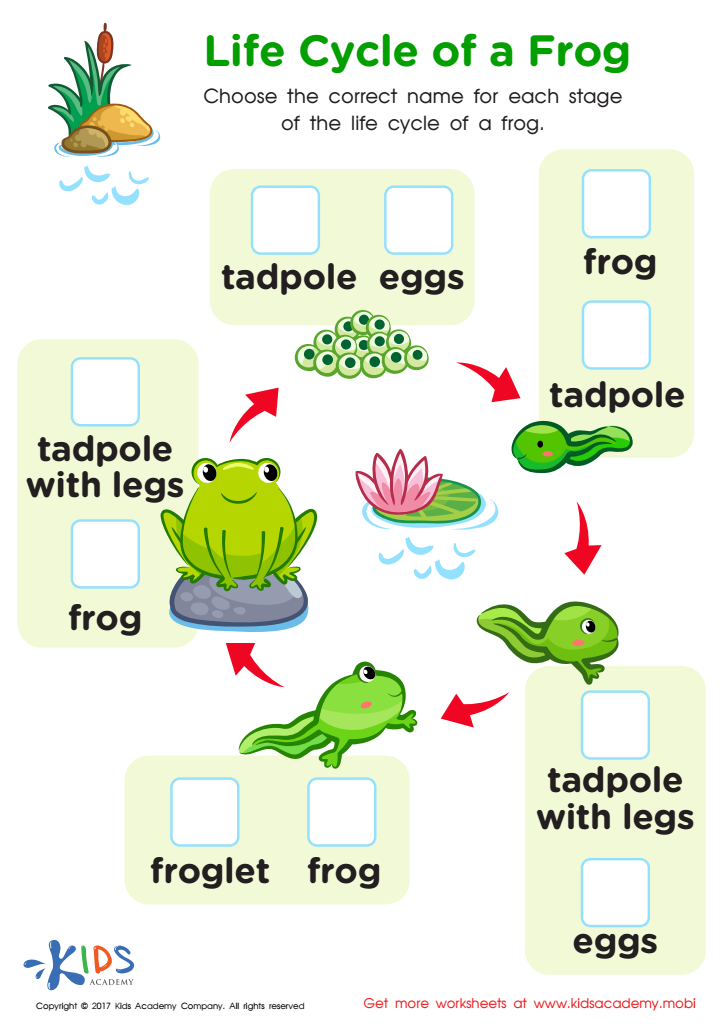
Life Cycle Frog Printable
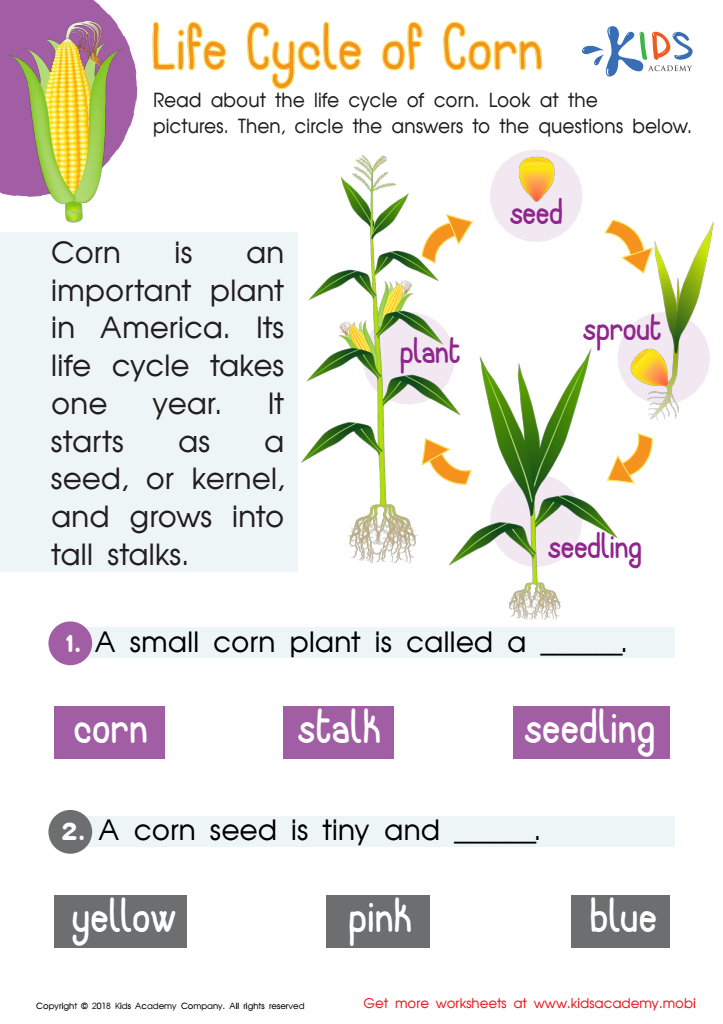
Life Cycle of Corn Worksheet
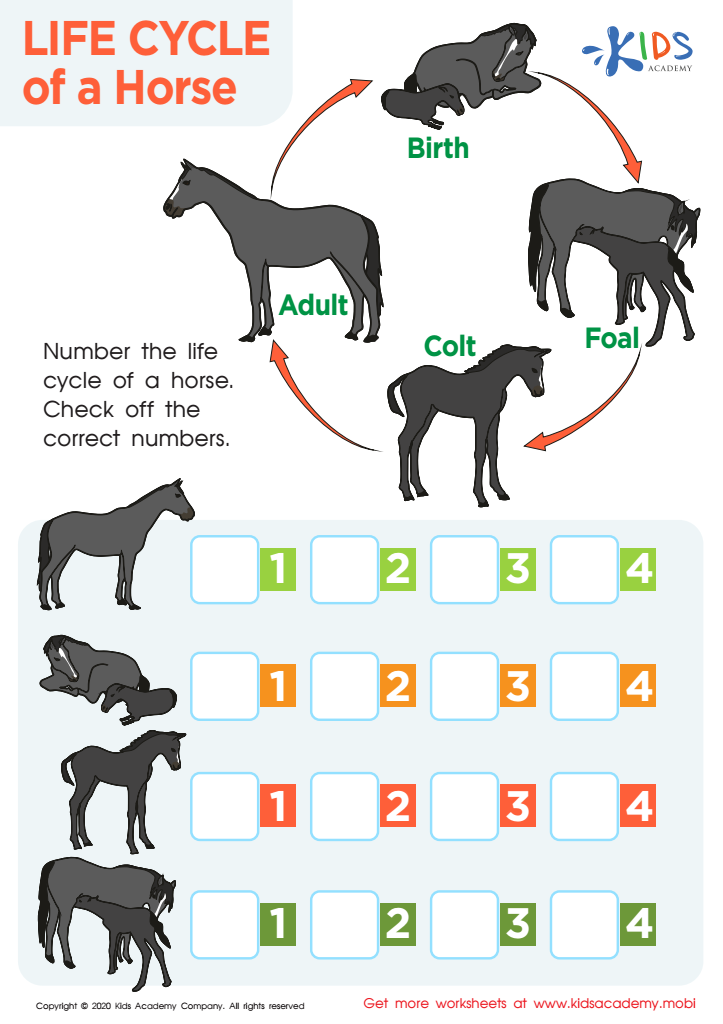
Life Cycle of a Horse Worksheet





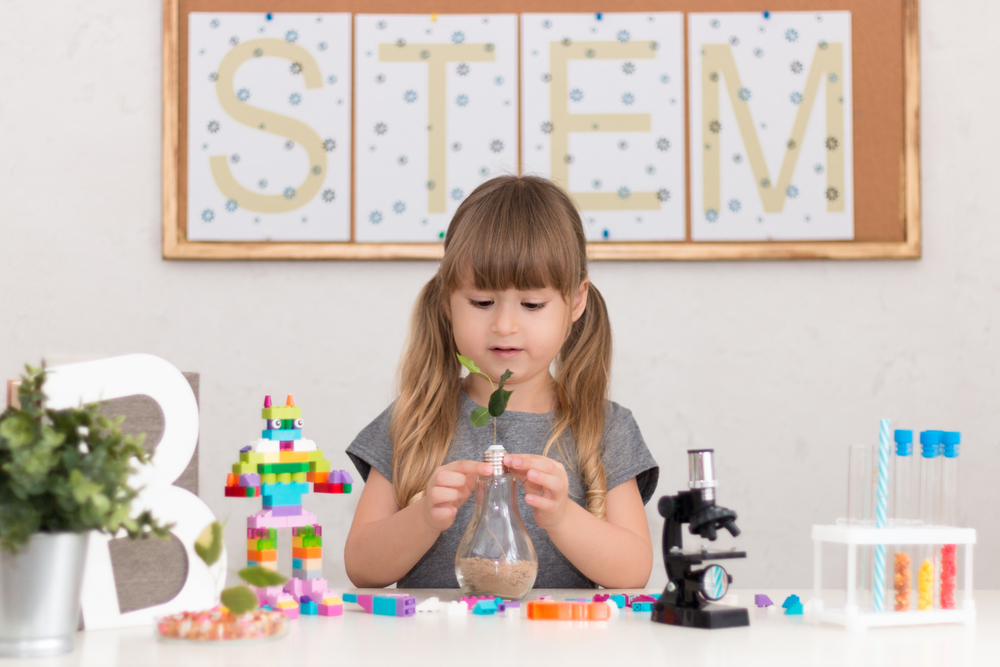


Parents and teachers should invest in explaining life cycles of plants and animals to children aged 6-8 because it builds foundational knowledge critical to understanding biology and environmental science. At this age, children are naturally curious and enthusiastic learners. Providing them with insights into life cycles nurtures their sense of curiosity and respect for nature.
Studying life cycles of plants and animals allows children to grasp important concepts such as growth, development, reproduction, and interdependence of organisms. Comprehending these processes helps them realize the importance of each stage, fostering a sense of responsibility and stewardship for living beings and the environment.
Additionally, learning about life cycles develops critical thinking and observation skills. By engaging in activities like planting seeds or observing insects transform from larvae to adults, children gain practical experience that enhances their understanding. Discussions about these topics in the classroom or at home encourage vocabulary expansion, scientific inquiry, and environmental awareness.
Besides academics, there's an emotional and ethical component. Understanding life cycles cultivates empathy and respect for life in all forms, traits that contribute to compassionate and mindful individuals. This early exposure lays a strong foundation for future learning and fosters a lifelong connection with nature, helping to produce environmentally conscious citizens.








