
Spatial awareness Space Worksheets for Ages 6-8
3 filtered results
Difficulty Level
Grade
Age
-
From - To
Subject
Activity
Standards
Boost your child's spatial awareness with our engaging Space Worksheets designed for ages 6-8! At Kids Academy, our carefully crafted worksheets combine fun and learning, helping young learners understand concepts related to space, distance, and direction. These activities encourage critical thinking and problem-solving, making it easier for kids to navigate shapes, sizes, and skies above. Designed with age-appropriate challenges, our worksheets promote interactive learning through colorful visuals and stimulating tasks. Perfect for home or classroom use, these resources will enhance your child's spatial skills, paving the way for success in math, science, and more! Explore our collection today for an out-of-this-world learning experience!
Favorites
With answer key
Interactive
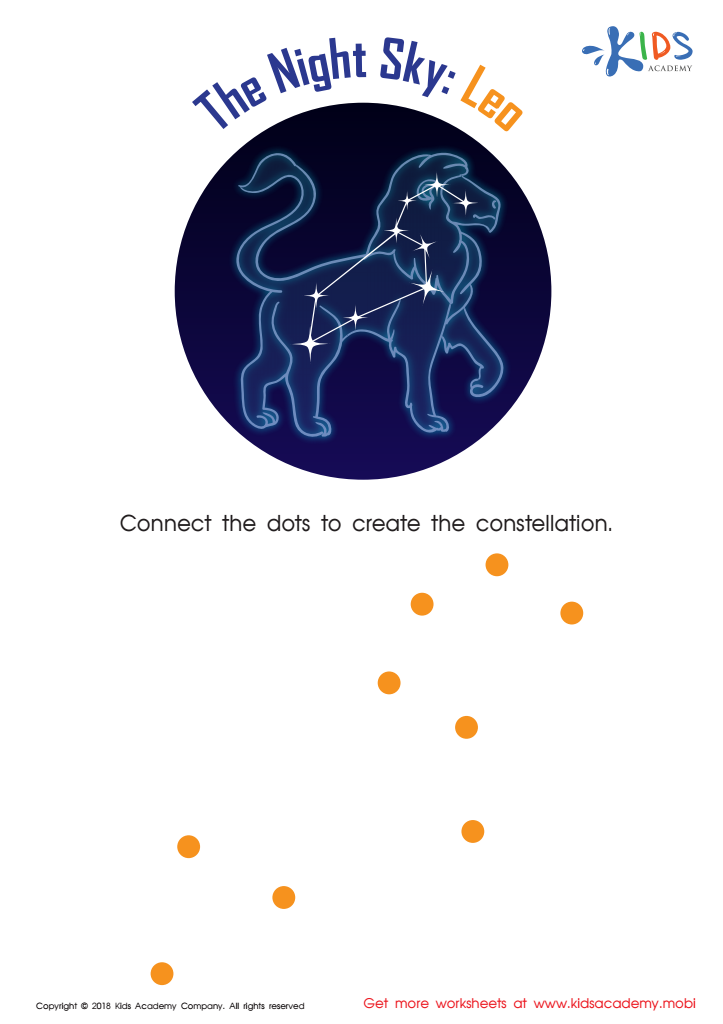
The Night Sky: Leo Worksheet
Let your kids explore the wonders of the stars with this fun worksheet! They'll connect the dots to create the constellation Leo. Night gazing instruments, a telescope or this printout can help your kids learn about constellations and horoscopes. Download the worksheet and let the star watching begin!
 Assign to My Students
The Night Sky: Leo Worksheet
Worksheet
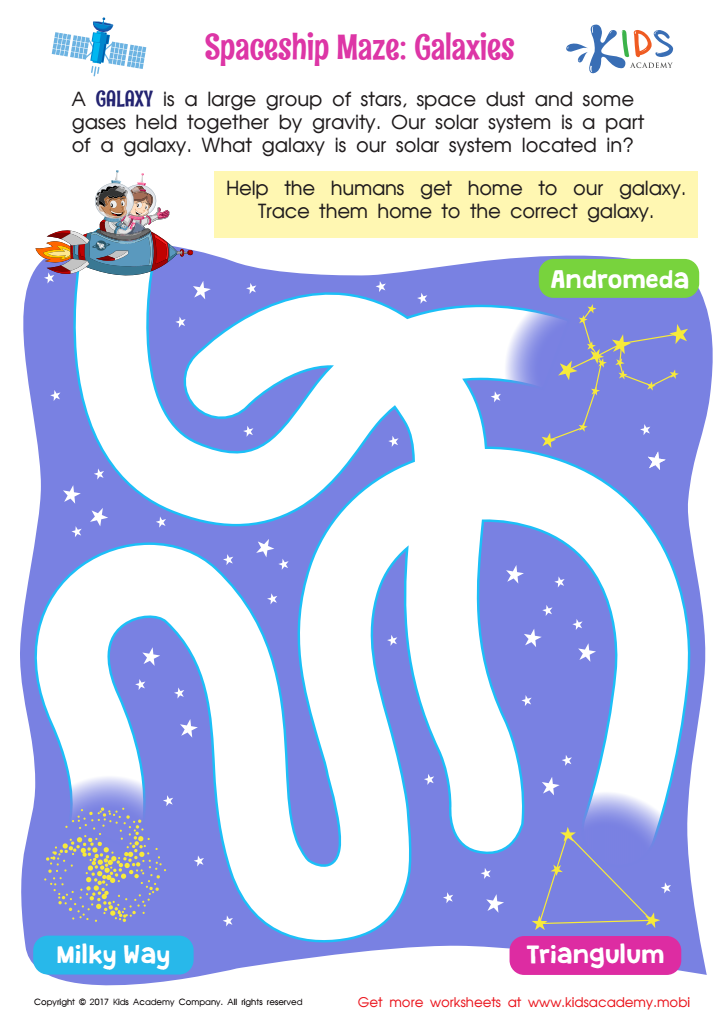
Spaceship Maze: Galaxies Worksheet
Guide lost humans home with this fun space maze: Galaxies! Once the journey is complete, kids can discover the name of our galaxy: the Milky Way! An exciting way to teach kids about space and help humans find their way back home.
Spaceship Maze: Galaxies Worksheet
Worksheet
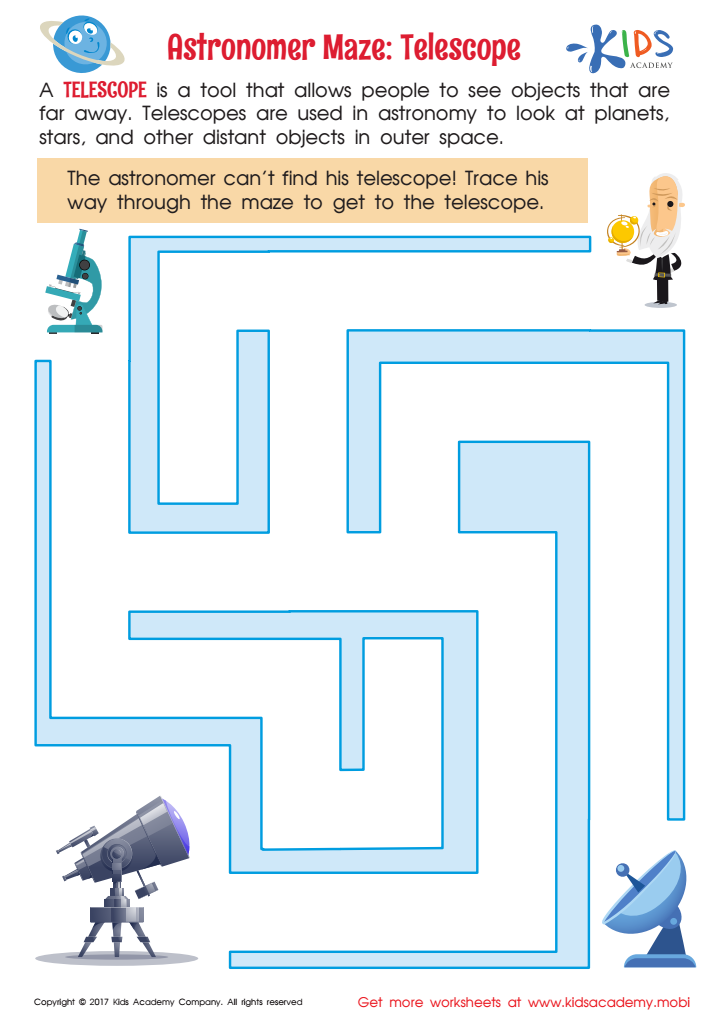
Astronomer Maze: Telescope Worksheet
Let your mini astronomer explore the galaxy with this fun and puzzling space maze worksheet – Telescope! Your child will have a great time navigating the maze, while learning how telescopes help scientists study the stars.
Astronomer Maze: Telescope Worksheet
Worksheet
Join Kids Academy for Free
Who is primarily going to use this learning content?


%20(1).jpg)





Spatial awareness is a crucial developmental skill for children aged 6-8, playing a significant role in their overall growth and learning. First, spatial awareness enhances a child's ability to understand their environment, which is fundamental for navigation and interaction with the world around them. This skill helps with reading maps, understanding directions, and comprehending geometric concepts that are foundational in math and science.
Moreover, developing spatial awareness benefits physical coordination, impacting activities like sports, drawing, or even daily tasks such as dressing. Good spatial skills promote greater confidence during physical activities, thereby encouraging active play, which is vital for healthy development.
In the classroom, improved spatial awareness allows children to better engage with geometry and science concepts, facilitating understanding of shapes, sizes, and spatial relationships. This cognitive ability fosters critical thinking and problem-solving skills essential for academic success.
Lastly, spatial awareness is linked to creativity, enabling children to visualize and manipulate objects in their minds. For parents and teachers, nurturing this skill means providing children with enriching experiences—through puzzles, building blocks, and outdoor activities—that encourage exploration and imaginative play. By prioritizing spatial awareness, adults can significantly influence a child's cognitive, physical, and emotional development.







