Chess Worksheets for Ages 6-9 - Page 5
97 filtered results
-
From - To
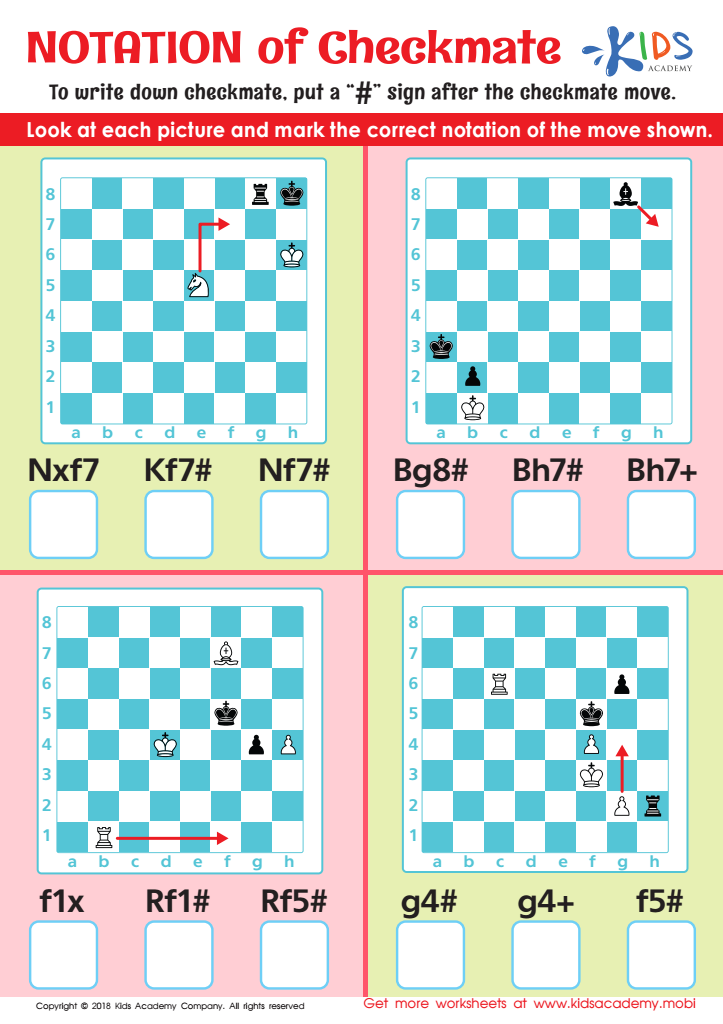
Notation of Checkmate Worksheet
 Assign to My Students







Chess is a powerful tool for developing critical skills in children aged 6-9, and parents and teachers should care deeply about its integration into young learners' lives. Firstly, chess fosters critical thinking; it challenges kids to analyze positions, foresee consequences, and strategize their moves, which enhances problem-solving skills. This mental exercise promotes cognitive development, enabling children to think independently and make informed decisions.
Additionally, chess helps improve concentration and patience, as each move requires a focus on details and an understanding of long-term planning. These qualities are essential not just in chess but in all areas of life, including academics.
Socially, engaging in chess can enhance teamwork and sportsmanship among peers. Children learn to respect each other, whether they win or lose, nurturing emotional intelligence and resilience.
Furthermore, chess can significantly boost self-esteem. Mastering a game of chess gives children a sense of accomplishment, encouraging them to tackle other challenges.
Incorporating chess in educational settings offers a fun way to build these foundational life skills while promoting a lifelong love for learning and strategic thinking that can benefit them in countless ways. Encouraging chess at an early age can set the stage for future success in school and beyond.