Adding up to 1000 Without Regrouping Worksheets for Ages 6-9 - Page 2
73 filtered results
-
From - To
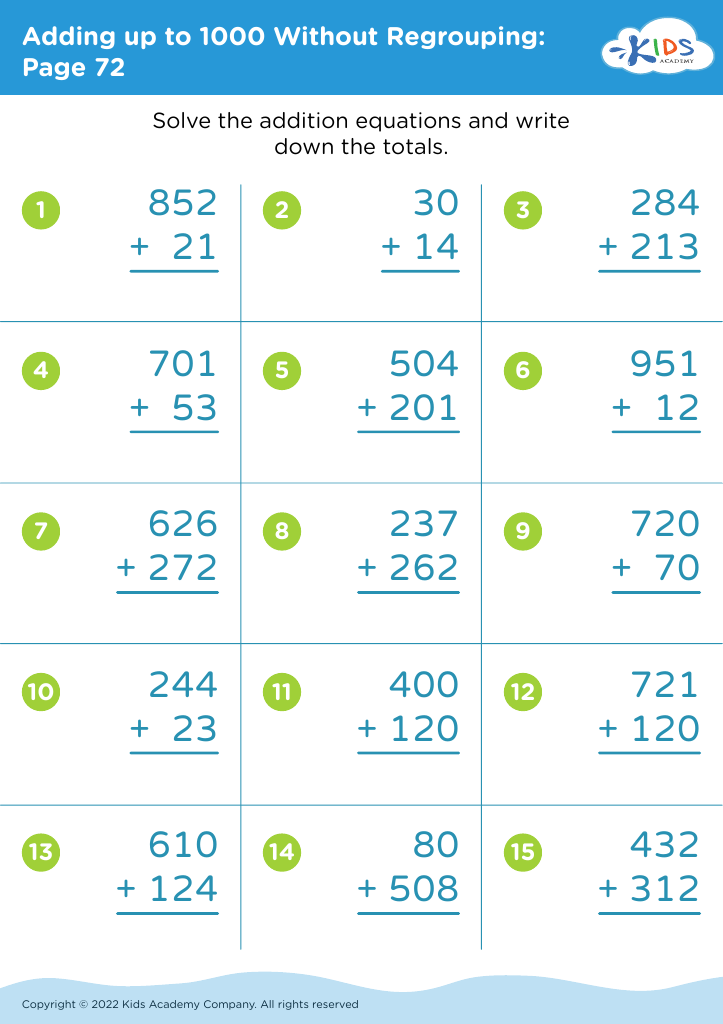
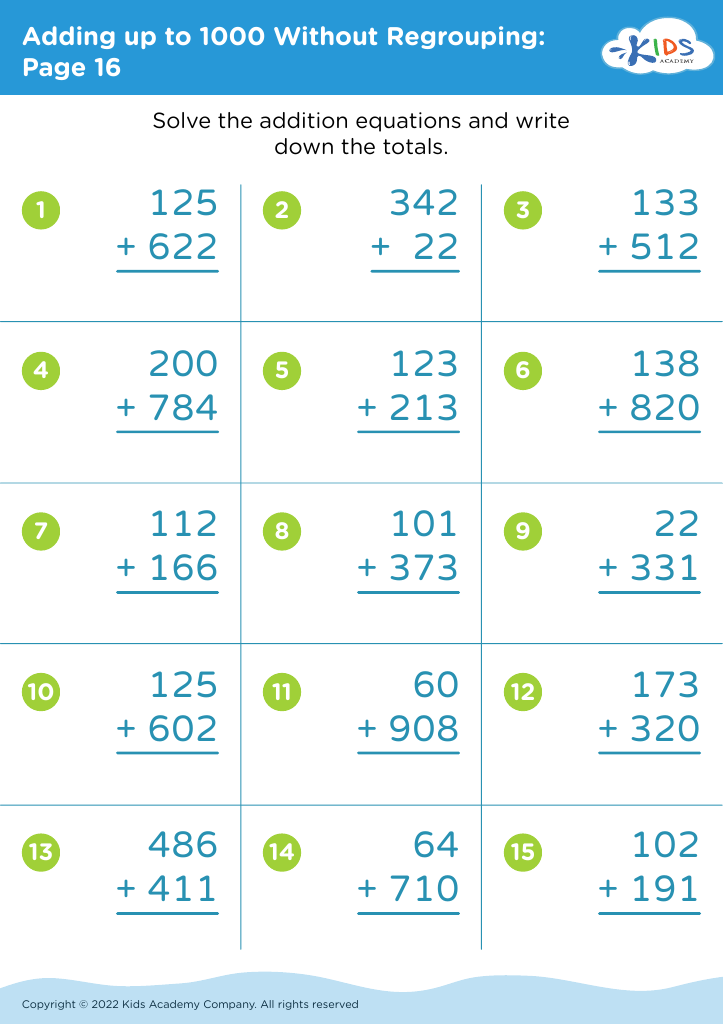
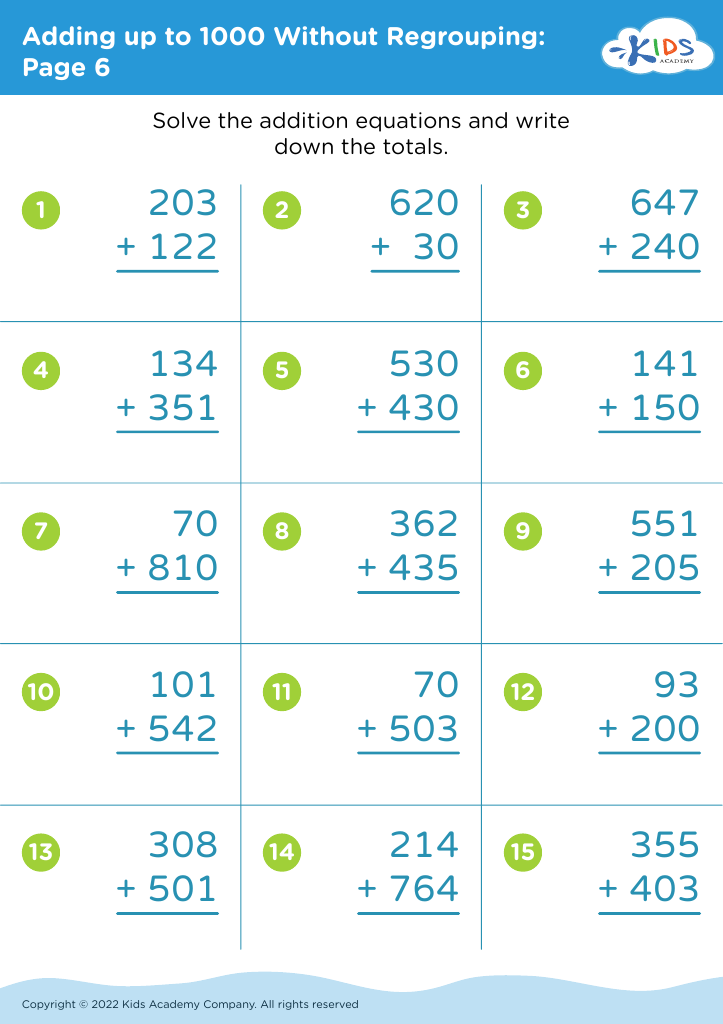
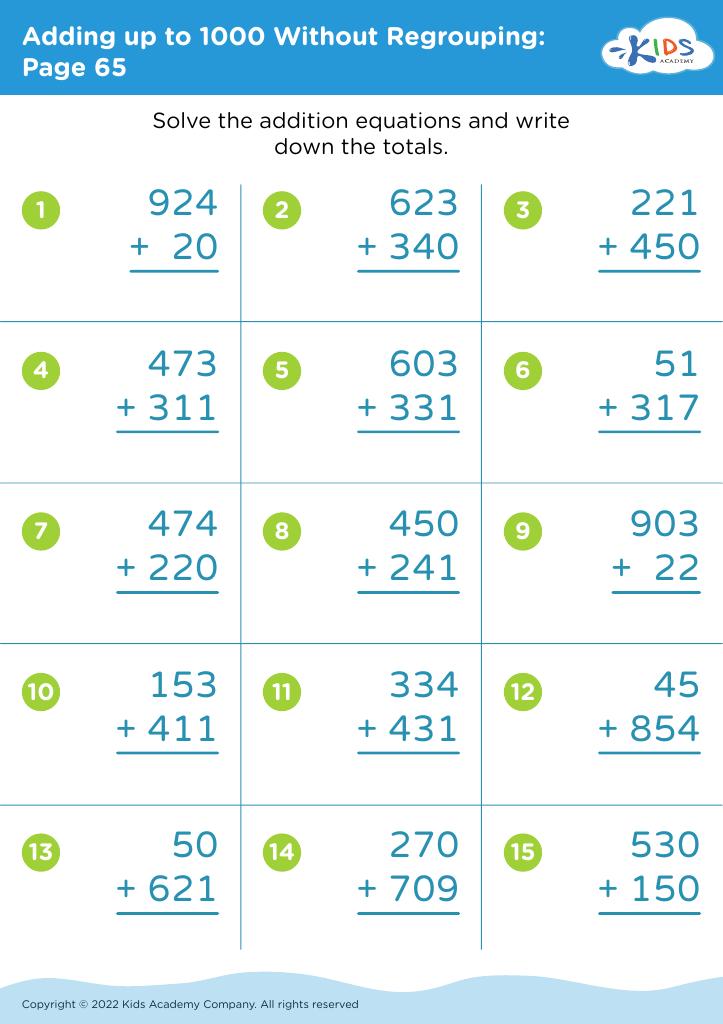
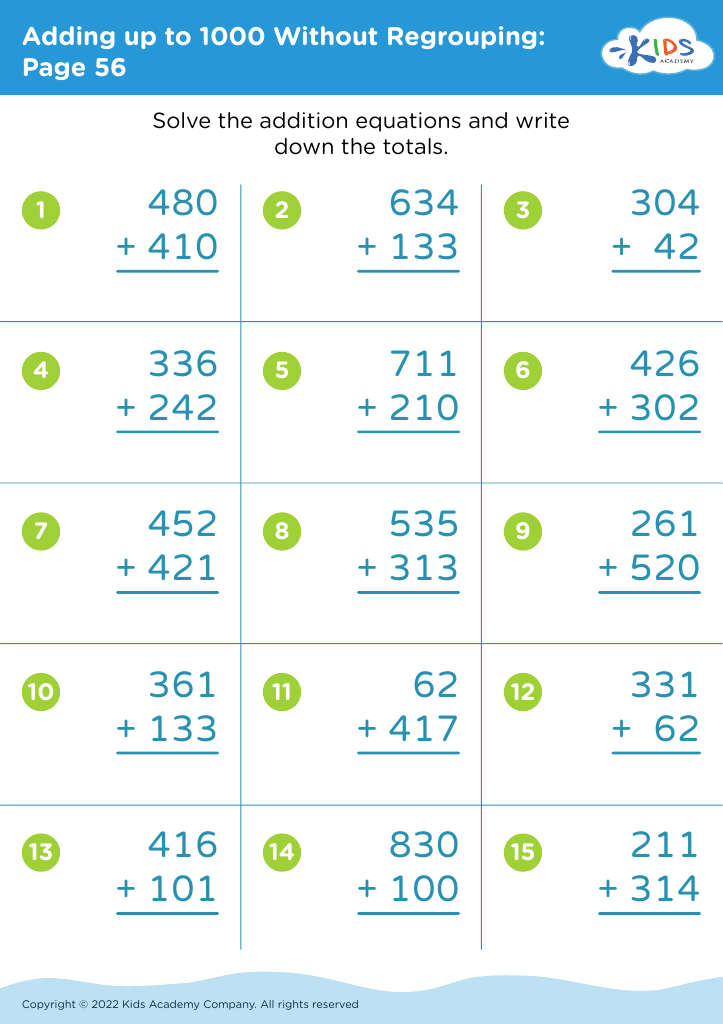
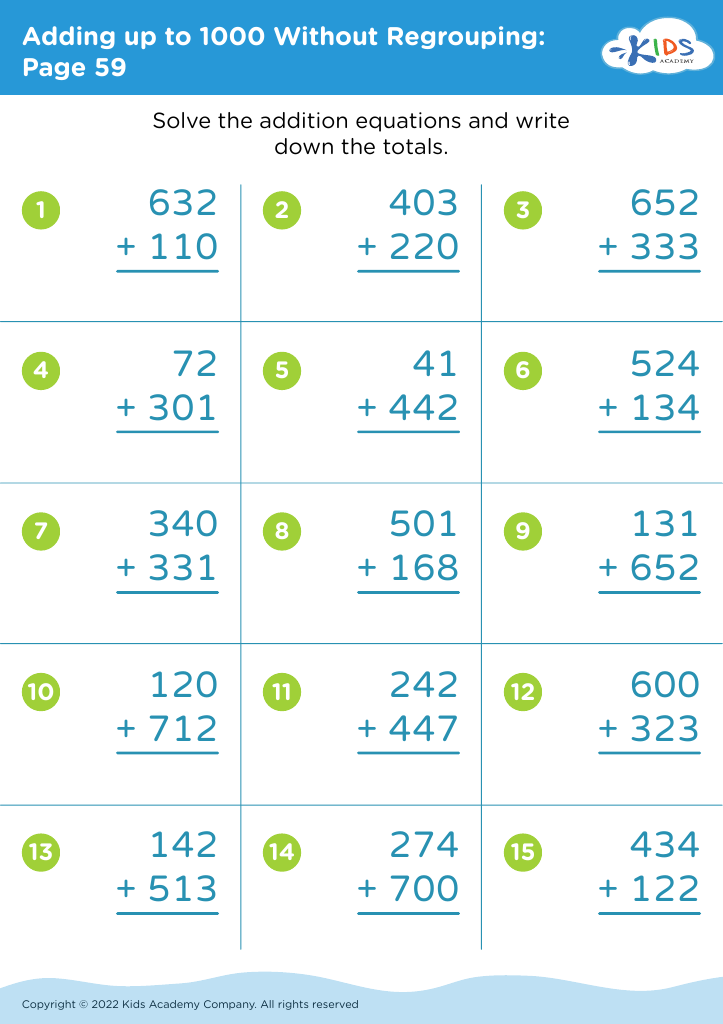
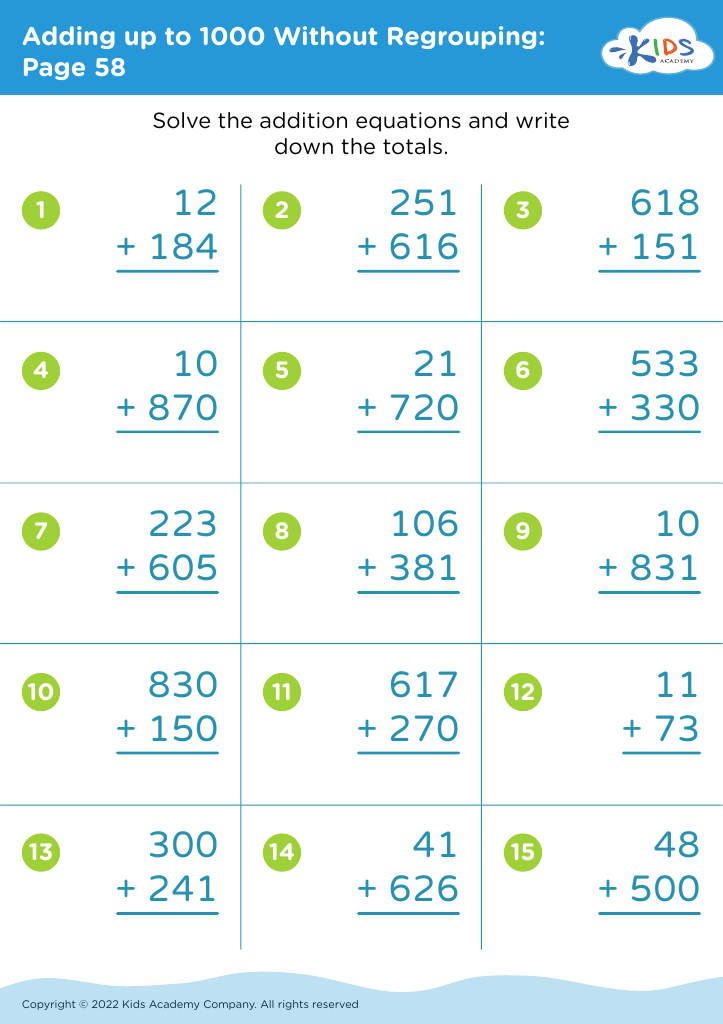
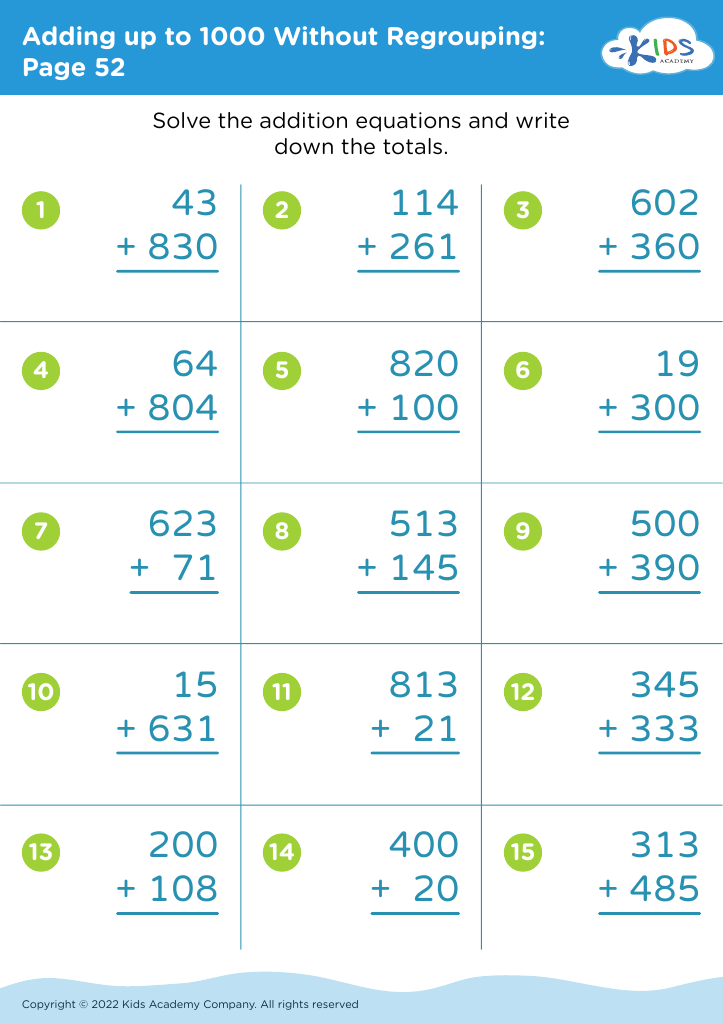
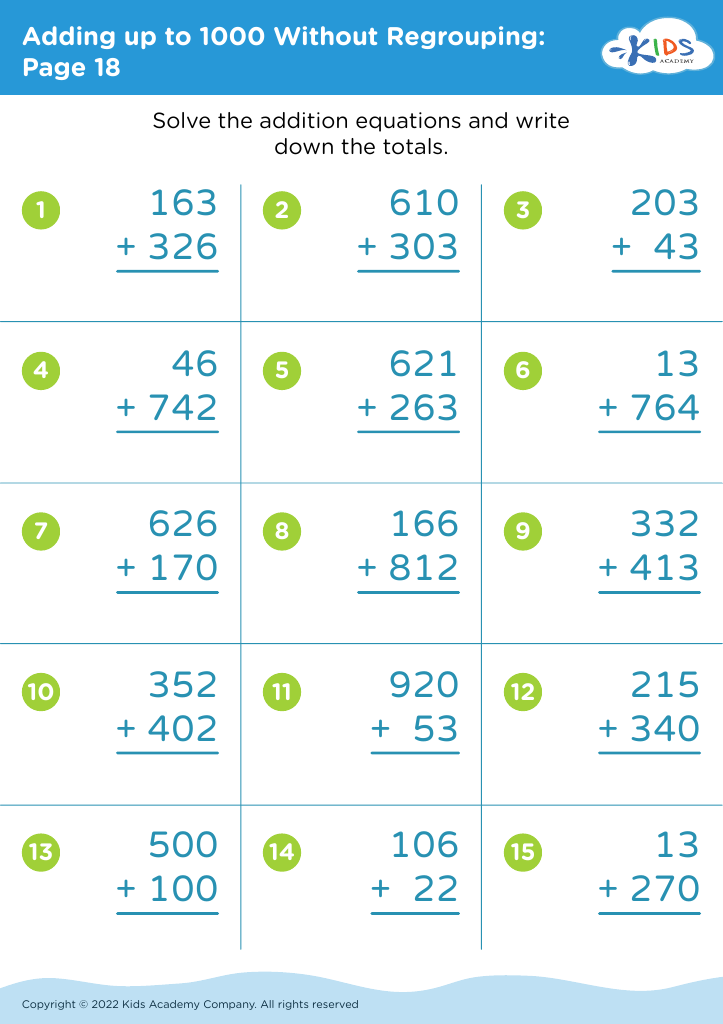
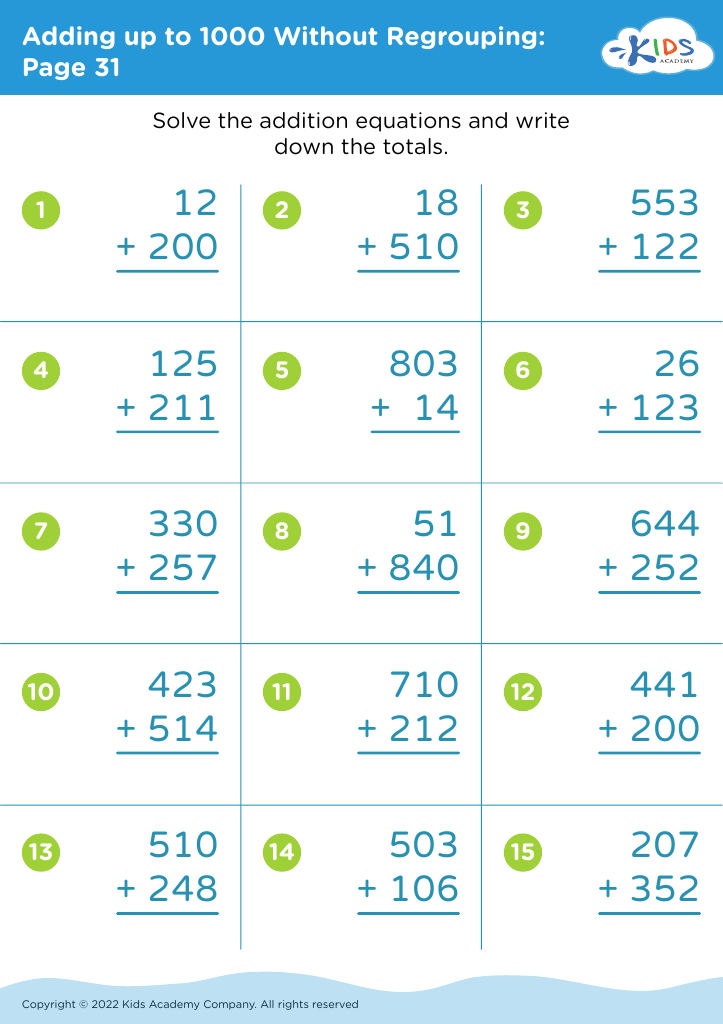
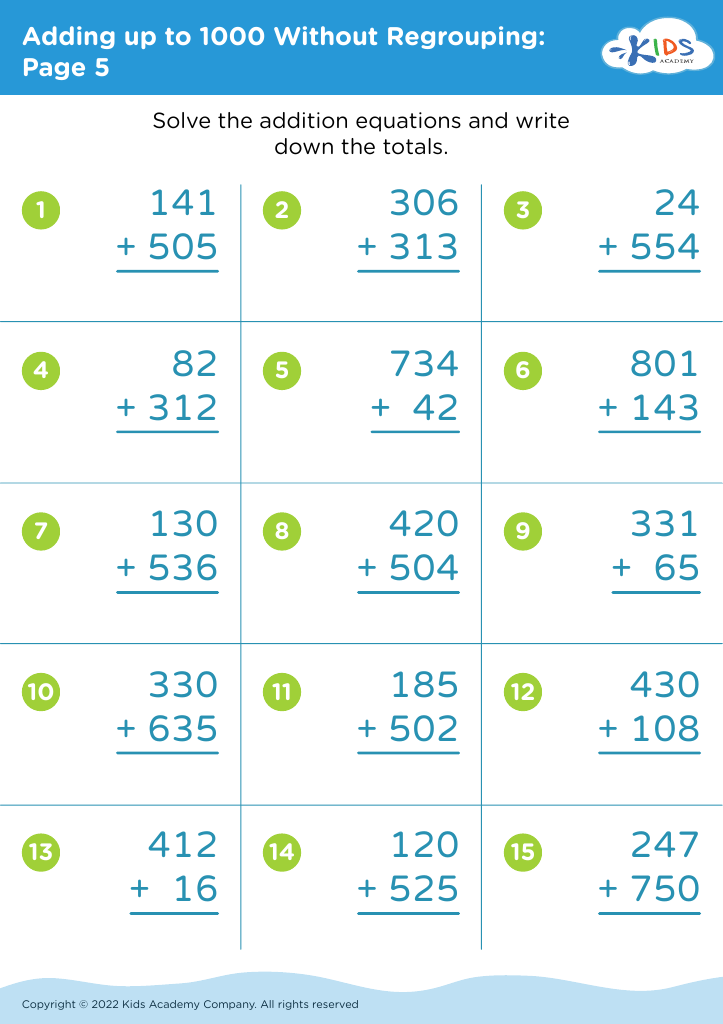
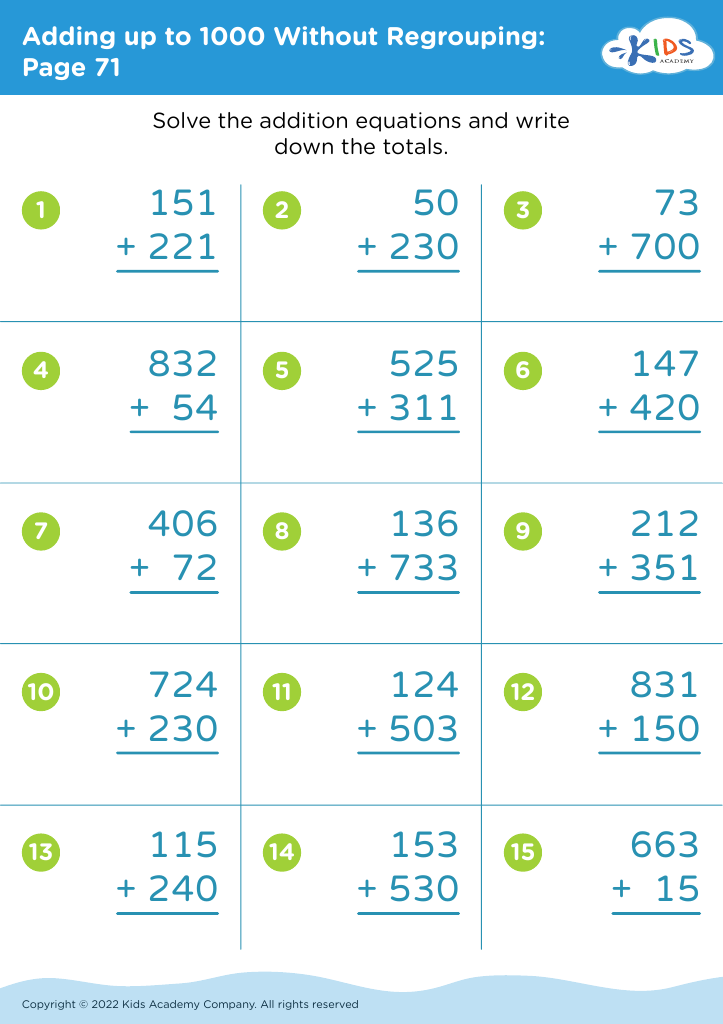
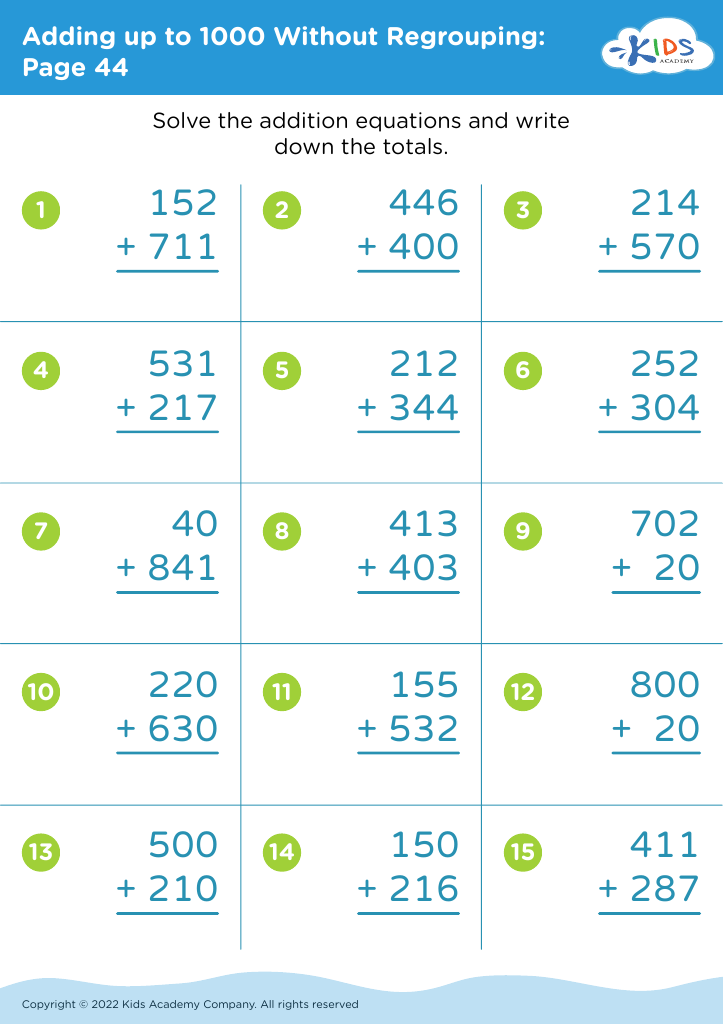
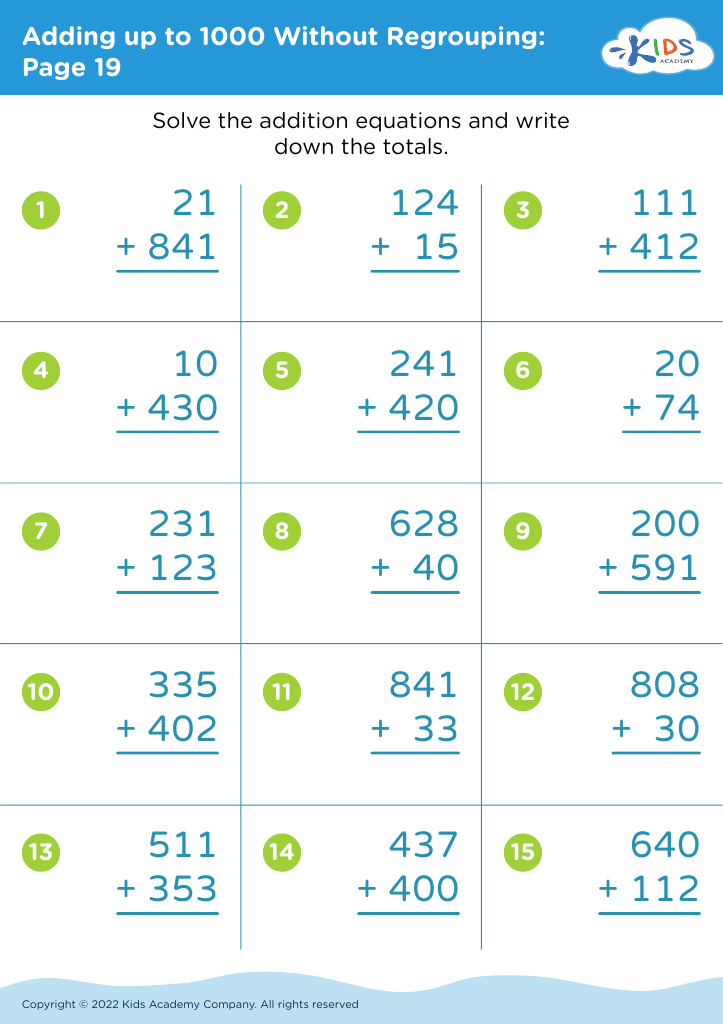
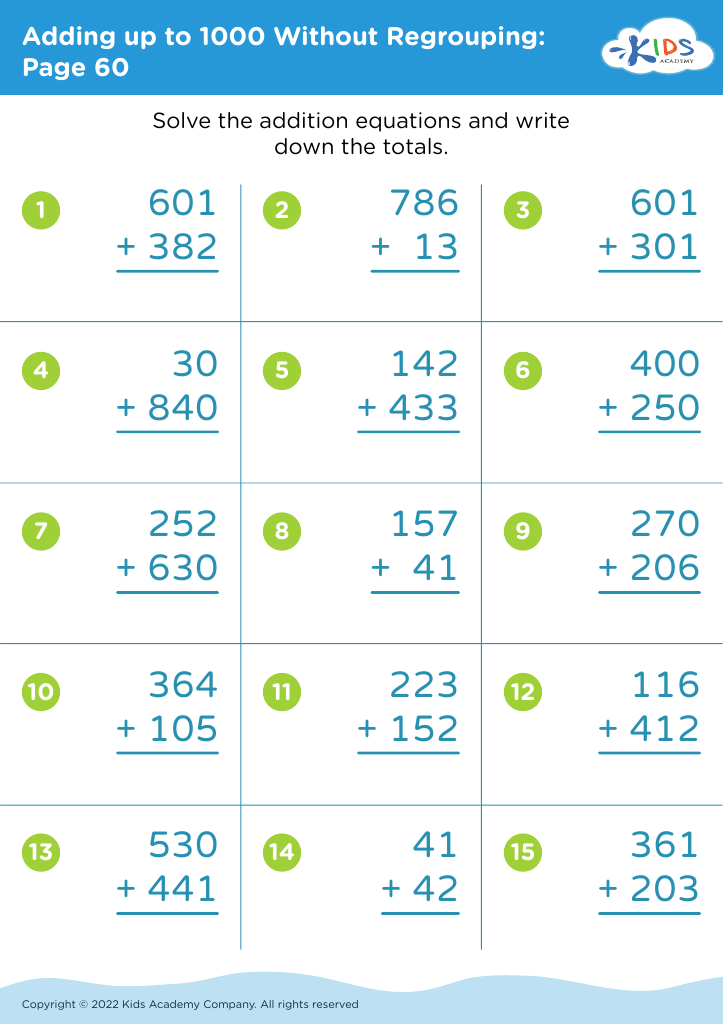
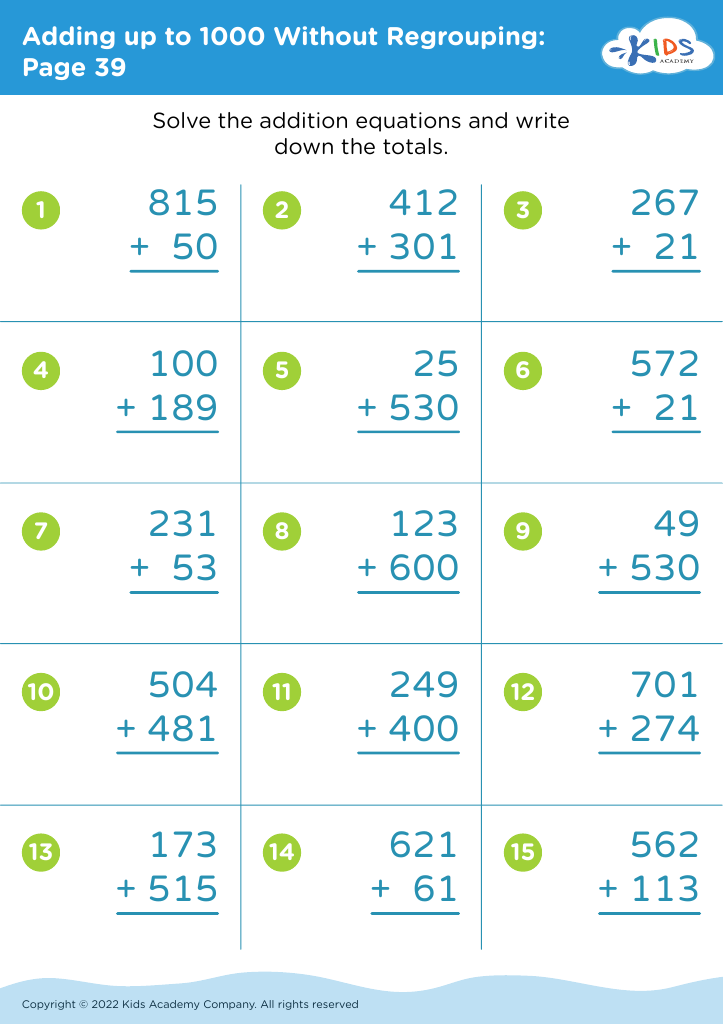
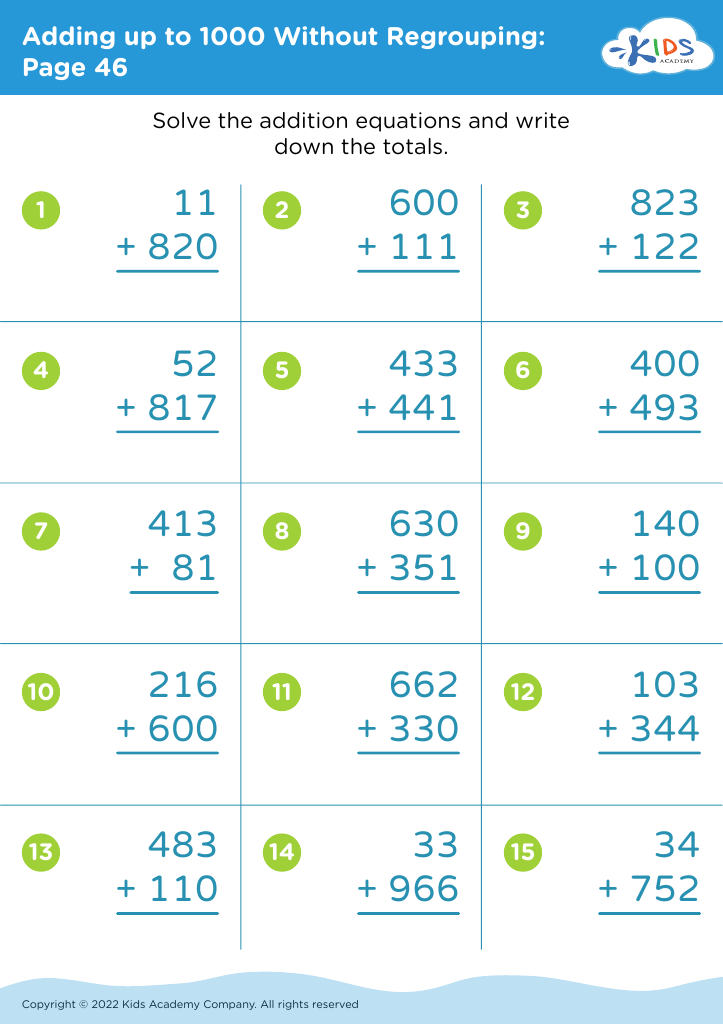
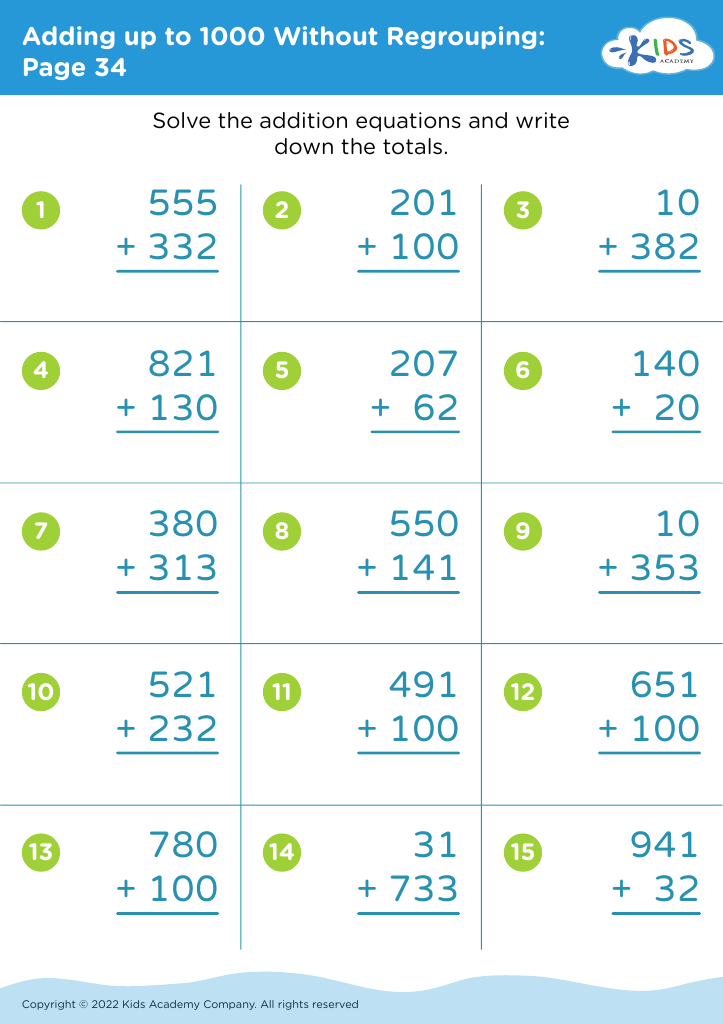
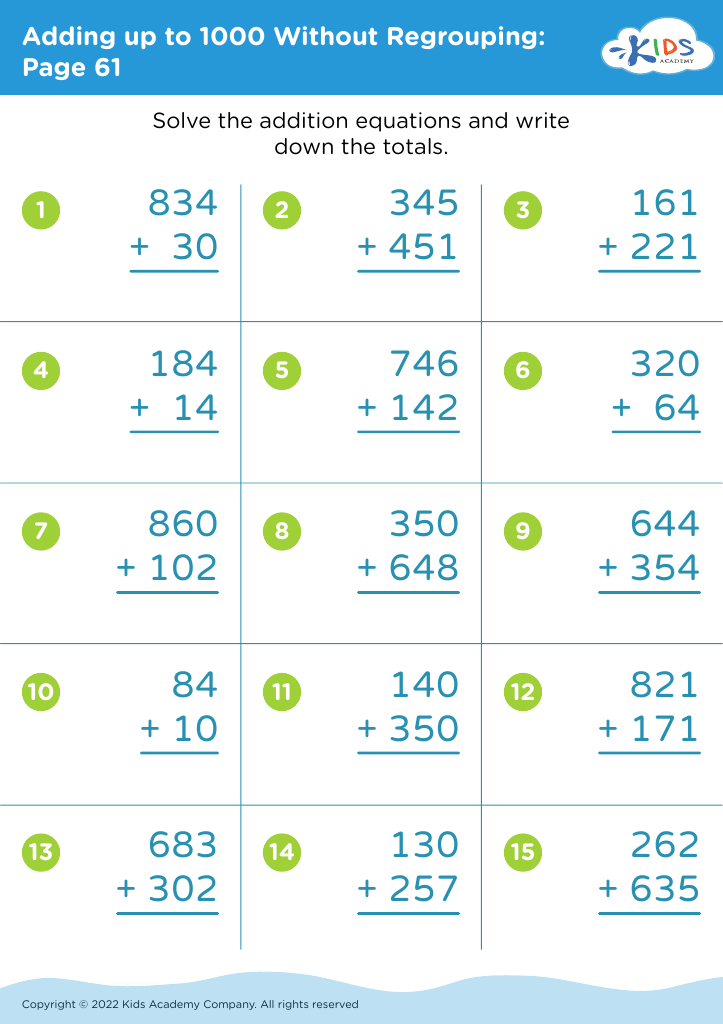
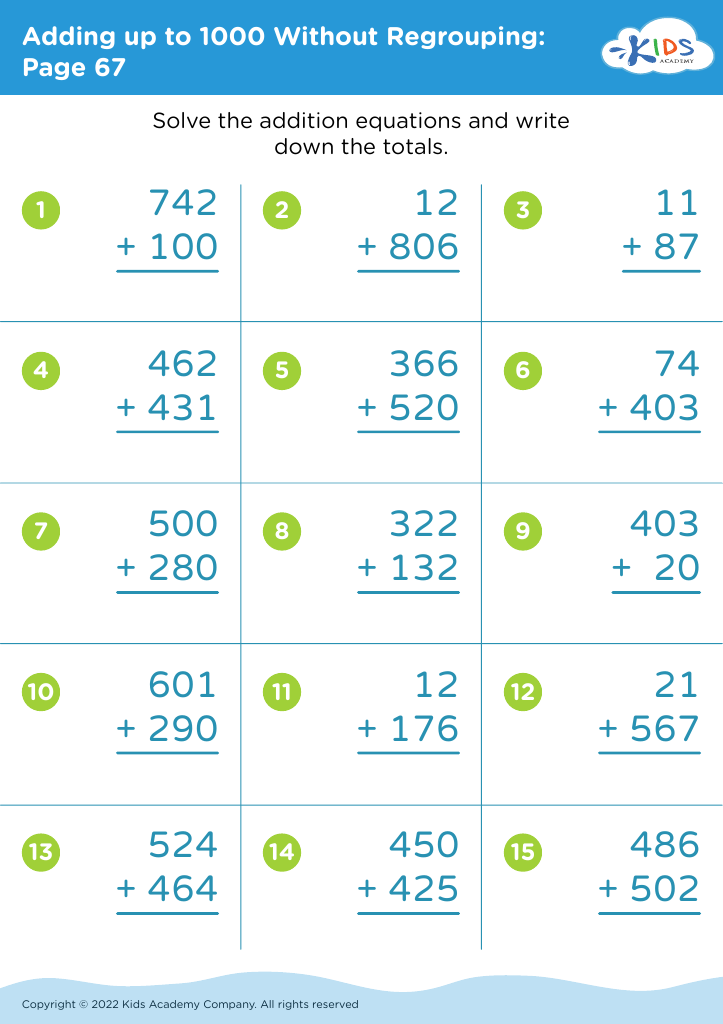
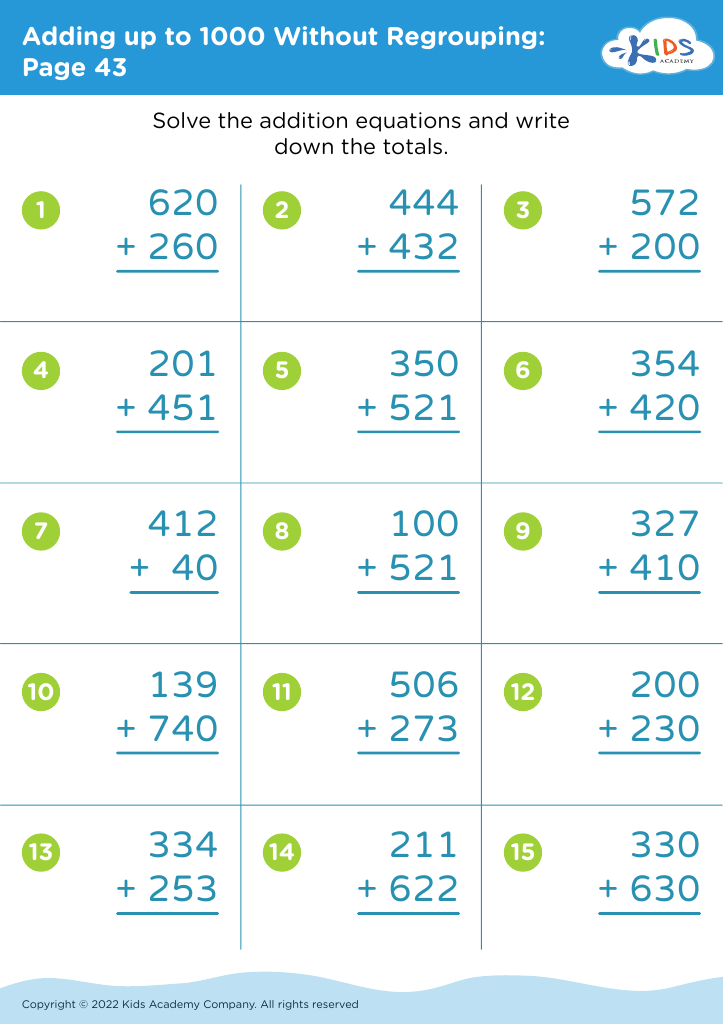
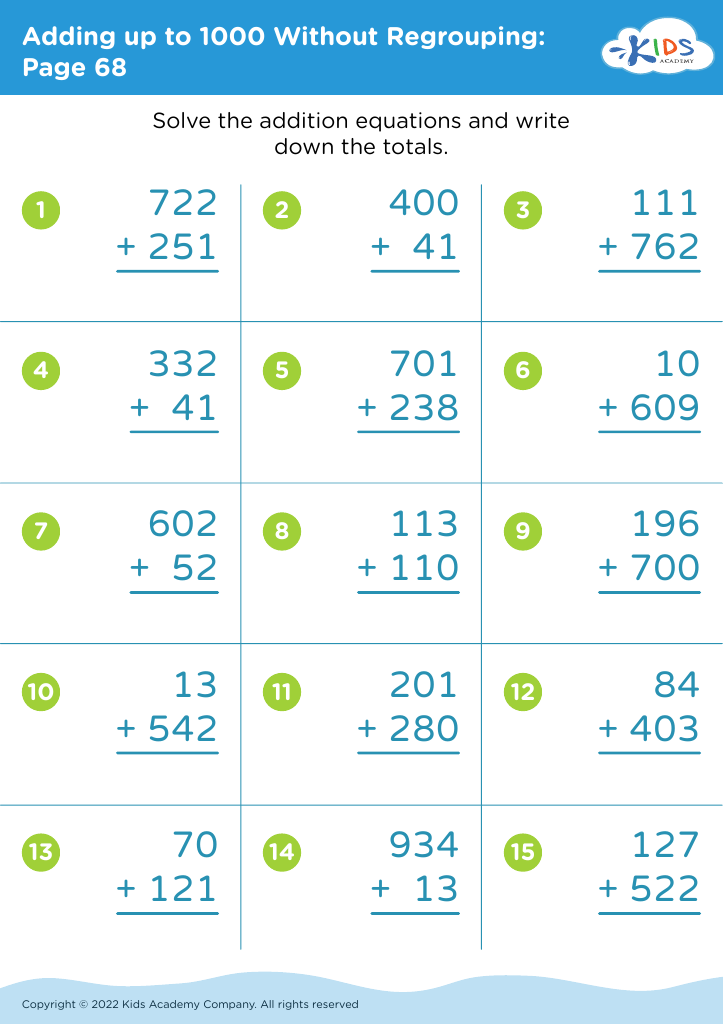
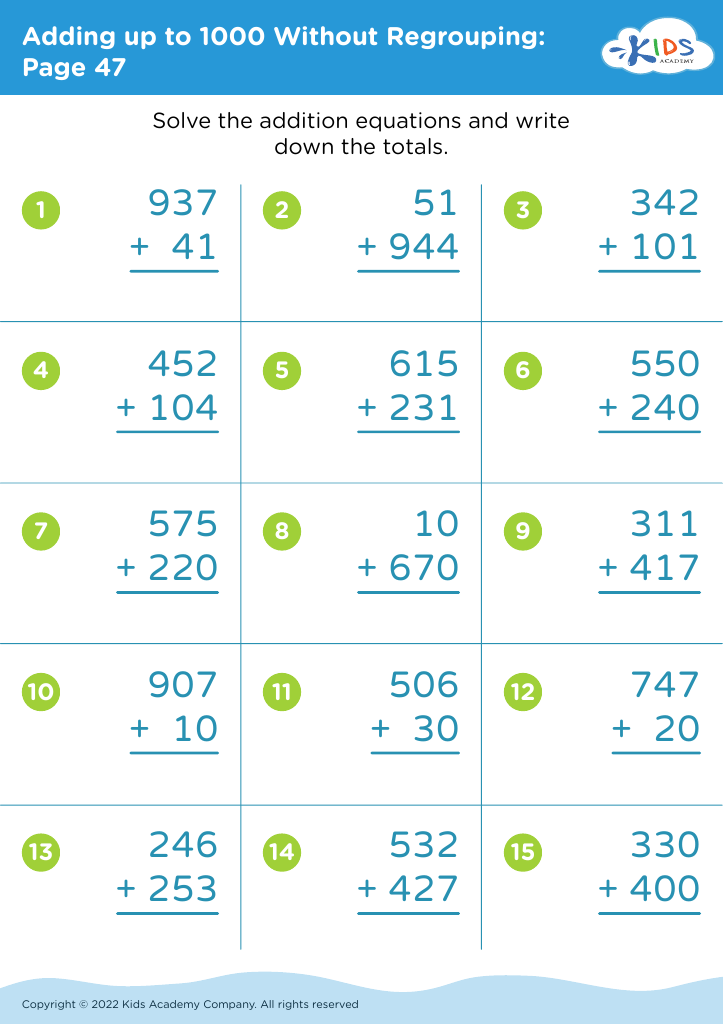
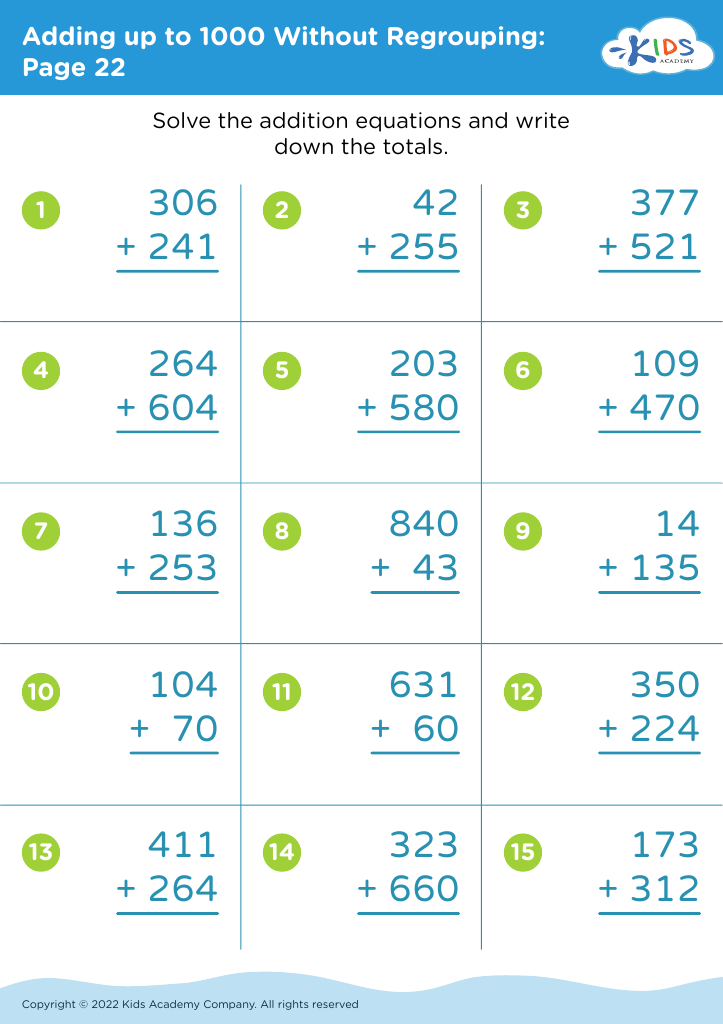



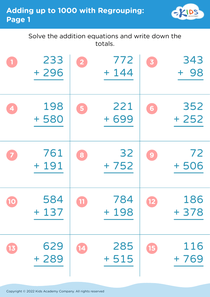
Adding up to 1000 without regrouping for children aged 6-9 is a fundamental skill that lays the groundwork for future mathematical understanding. When children learn to add numbers up to 1000 without regrouping, they enhance their mental math capabilities and build number sense—a crucial component of overall numeracy skills. This practice helps kids become comfortable handling larger numbers and recognizing patterns, such as place value: units, tens, and hundreds.
By mastering this non-regrouping technique, students also develop their confidence and accuracy with addition, which is vital for progressing to more complex arithmetic operations like subtraction, multiplication, and division. Furthermore, achieving this skill at a young age ensures that children meet early educational standards, positively influencing their performance in school.
For parents and teachers, focusing on addition up to 1000 without regrouping ensures that students have a solid grasp on basic arithmetic. This, in turn, helps them avoid future struggles in math and related fields. Encouraging this early mathematical fluency enables children to tackle more challenging problems with ease as they advance in their education. By supporting these foundational skills, educators and parents lay a robust groundwork for a child's long-term academic success and confidence in mathematics.