Basic Times Tables up to 12 Worksheets for Ages 6-9
12 filtered results
-
From - To
Discover our engaging Basic Times Tables up to 12 Worksheets designed specifically for children ages 6-9! These printable worksheets offer a fun and interactive way for young learners to master multiplication skills. Featuring colorful and educational exercises, each worksheet helps reinforce understanding of times tables in an easy-to-follow format. Perfect for home learning or classroom use, these resources encourage confidence and build foundational math skills. From simple multiplication problems to challenges that boost critical thinking, our worksheets cater to diverse learning styles. Start your child's journey to math mastery today with our comprehensive collection of times tables worksheets!
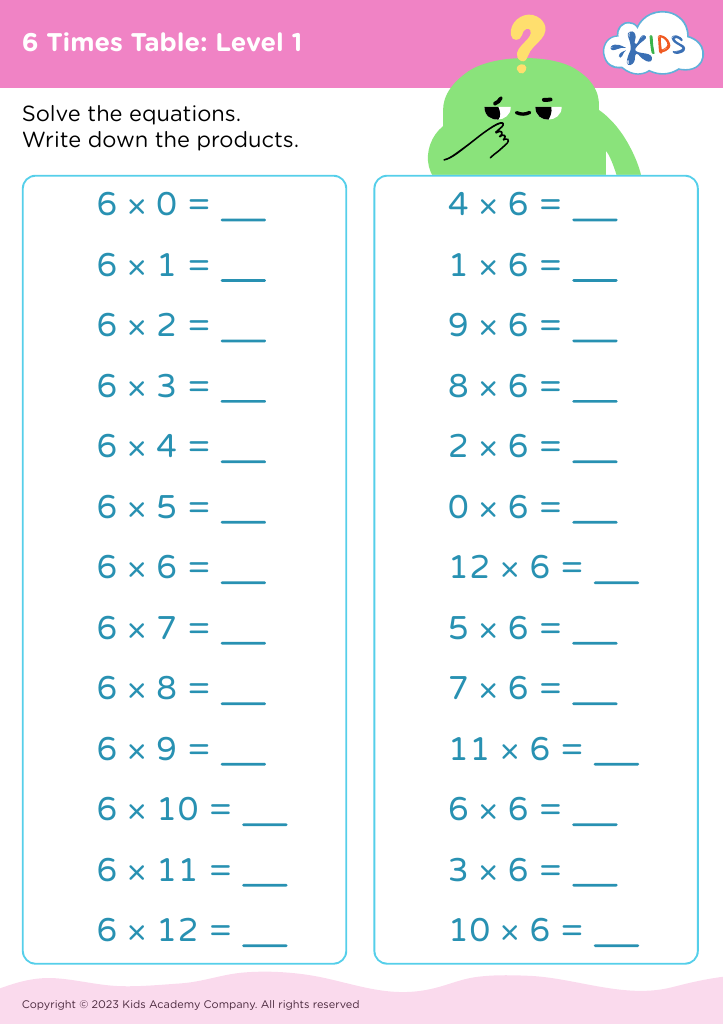
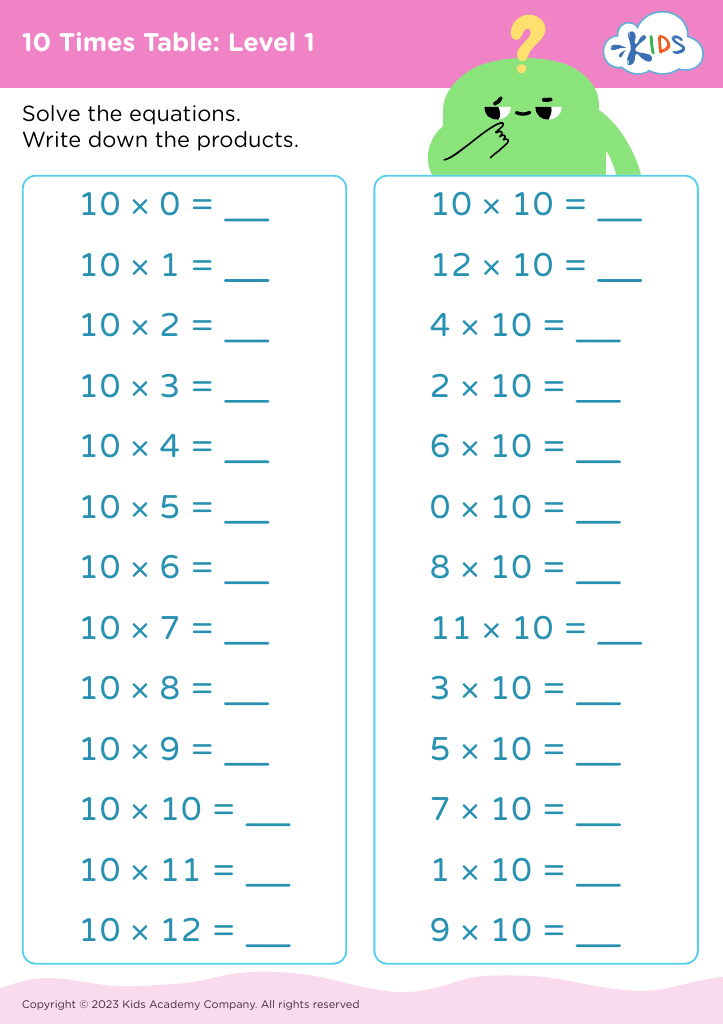
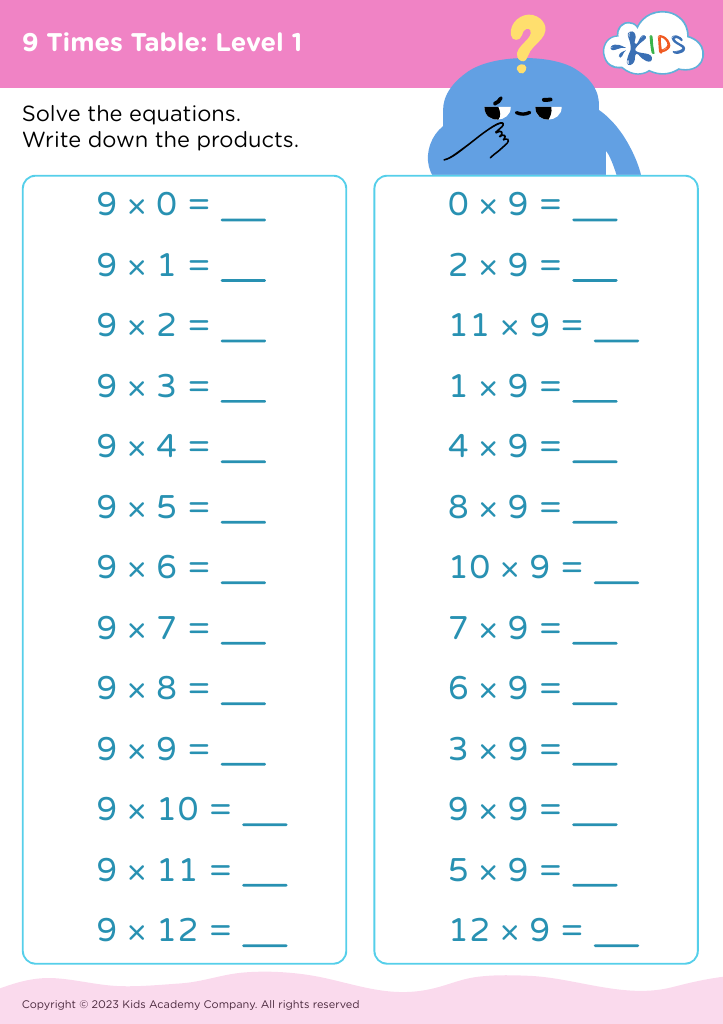
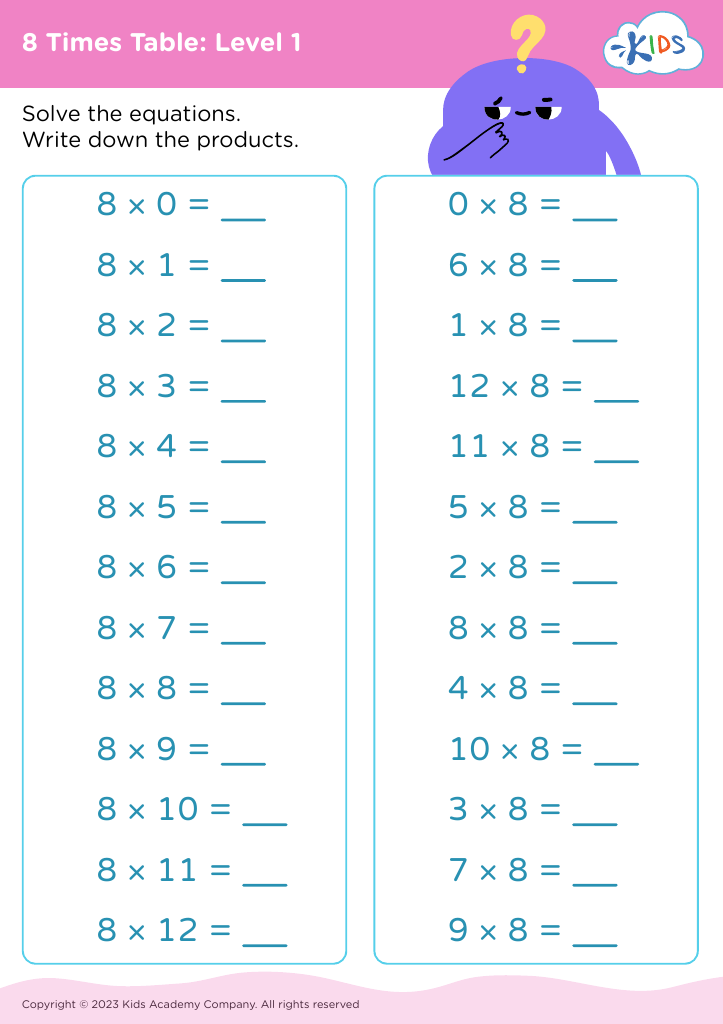
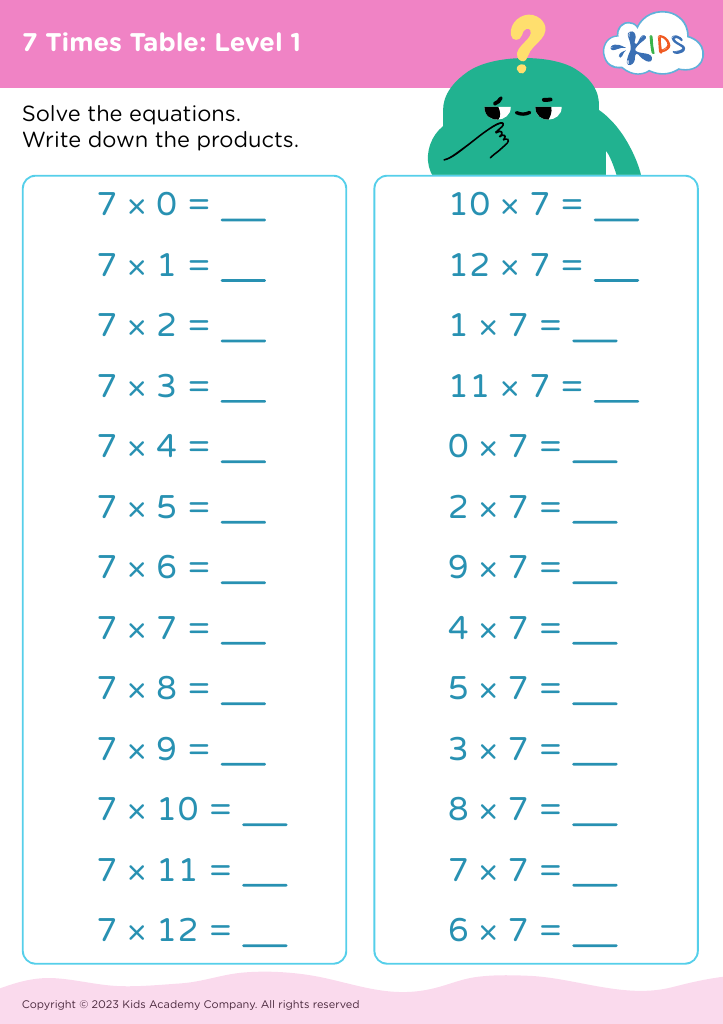
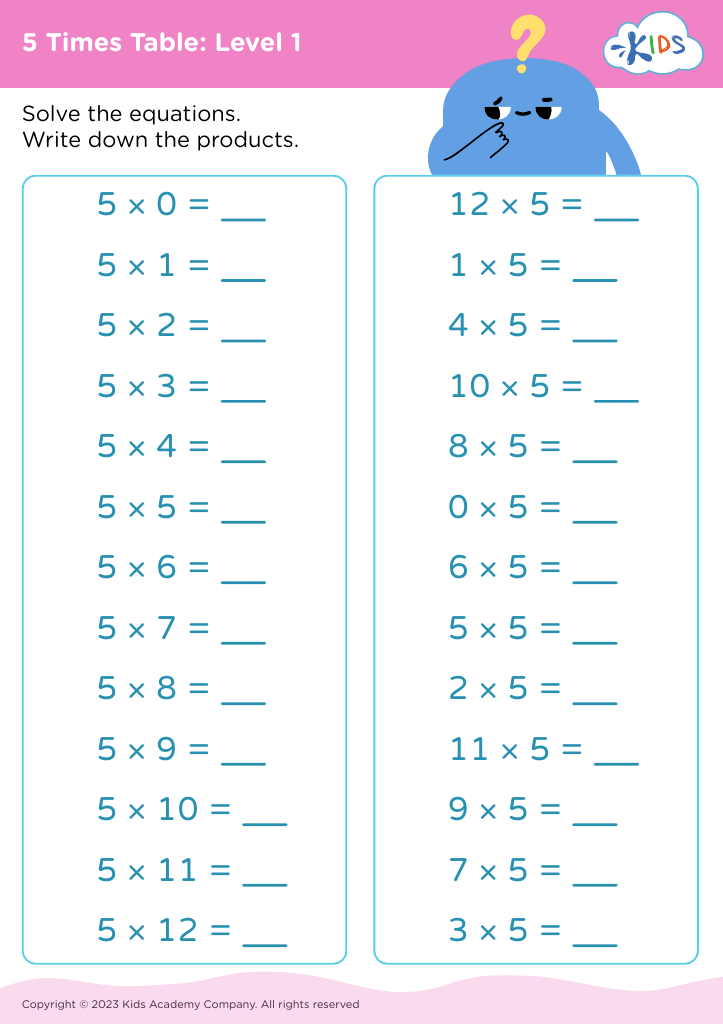
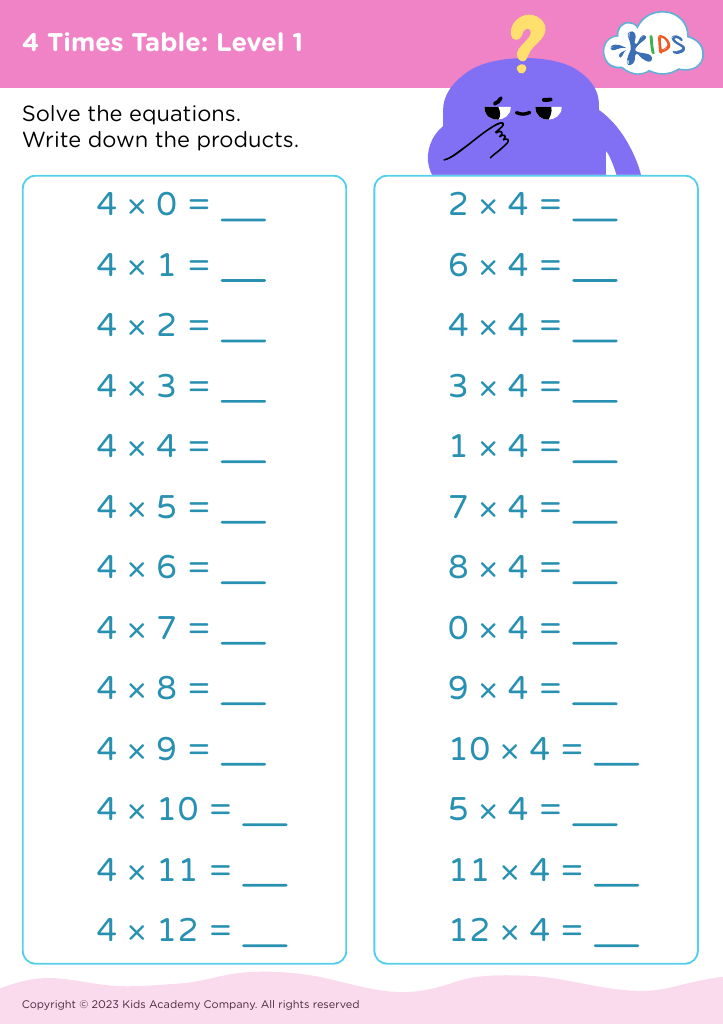
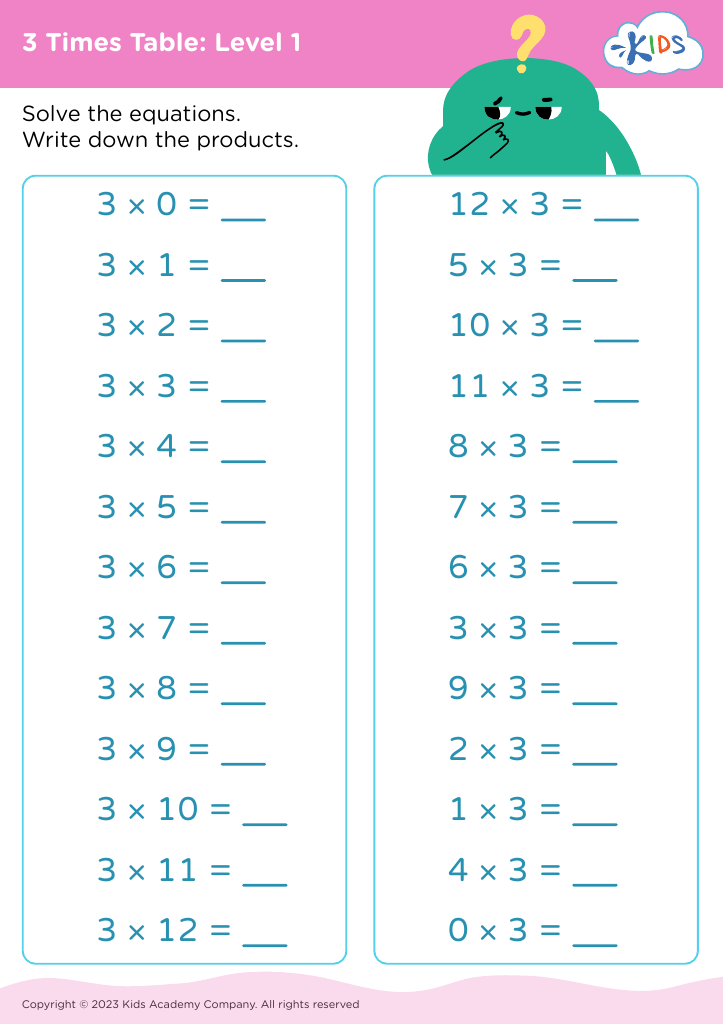
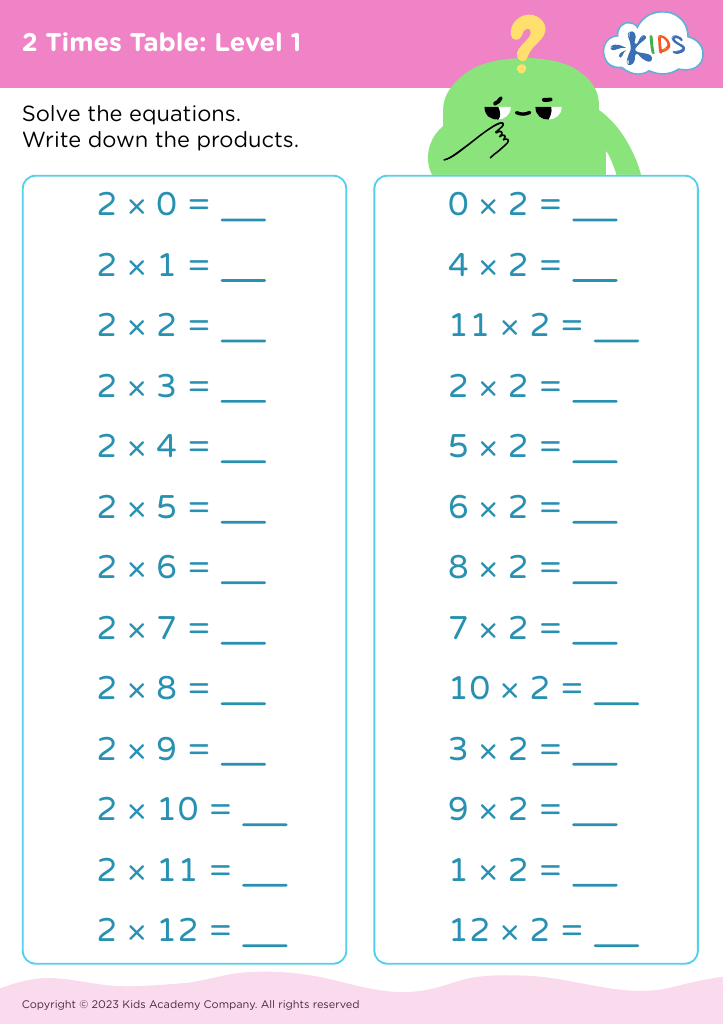
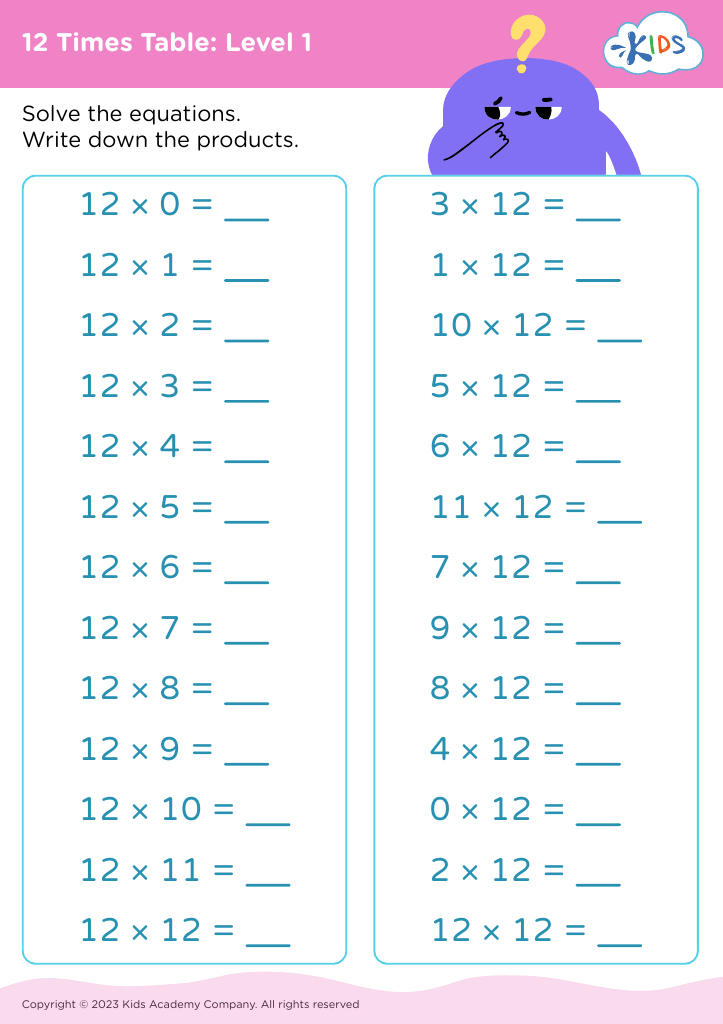
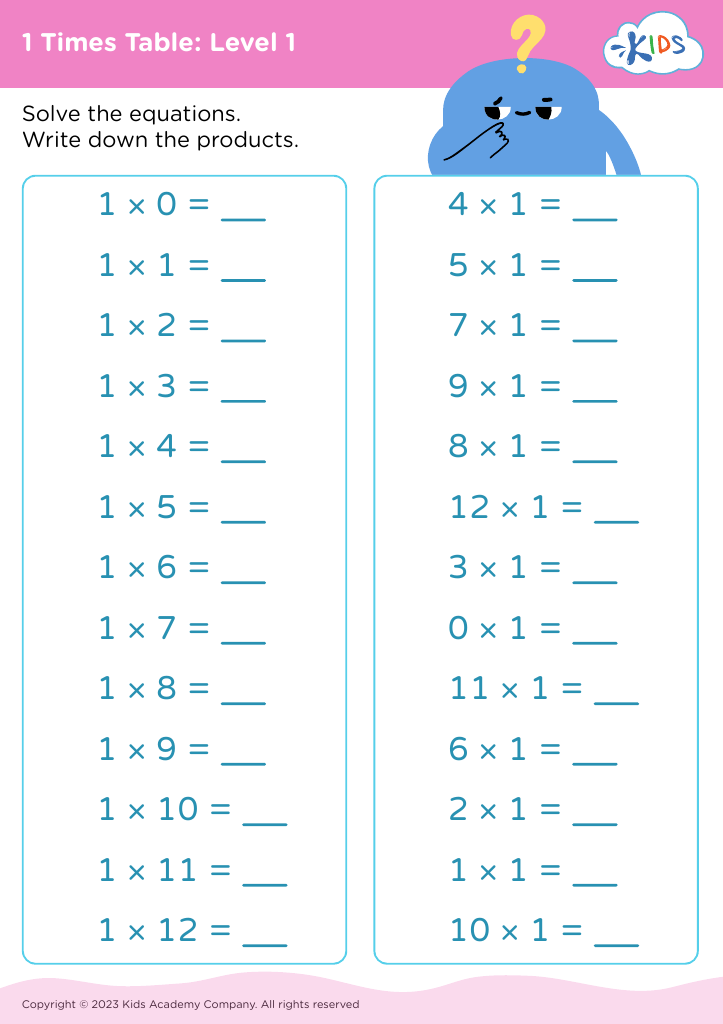
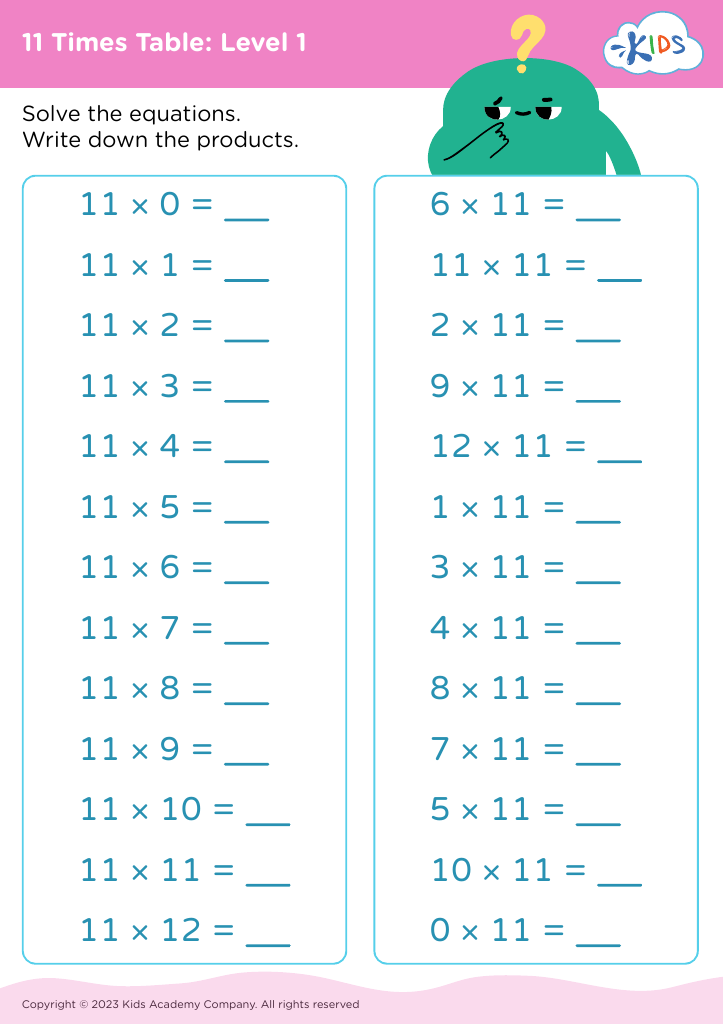


Understanding basic times tables up to 12 is crucial for children ages 6-9 for several reasons. First, mastering multiplication forms a foundational skill that supports overall mathematical fluency. As children encounter more complex concepts in mathematics, such as division, fractions, and problem-solving, a strong grasp of multiplication can significantly ease their learning curve.
Second, mental math capabilities are enhanced through times tables, which promote confidence and independence in solving math problems. When children can quickly recall multiplication facts, they participate more actively in classroom activities and group work, fostering a positive learning environment. This confidence can lead to a stronger interest in mathematics as a whole.
Additionally, basic times tables improve cognitive skills, such as memory and concentration, which are beneficial not just in math but in other areas of learning. Educators and parents play a vital role in reinforcing these skills through practice, games, and daily applications, making math more engaging and relatable.
Ultimately, building a solid foundation in multiplication during these formative years paves the way for future academic success, helping children become competent, confident, and enthusiastic learners. It is essential for adults to prioritize this learning to support children's holistic development in mathematics.








