Understanding tens Numbers Worksheets for Ages 6-9
4 filtered results
-
From - To
Welcome to our "Understanding Tens Numbers Worksheets" designed specifically for children ages 6-9! These engaging worksheets help young learners master the concept of tens, laying a strong foundation for their mathematical journey. With colorful illustrations and interactive activities, students will explore grouping, counting, and the significance of tens in everyday life. Our worksheets encourage critical thinking and independent learning while making math fun. Perfect for classrooms or at-home practice, these resources aim to enhance numerical skills and boost confidence in young mathematicians. Download your worksheets today and watch your child's understanding of tens come to life!
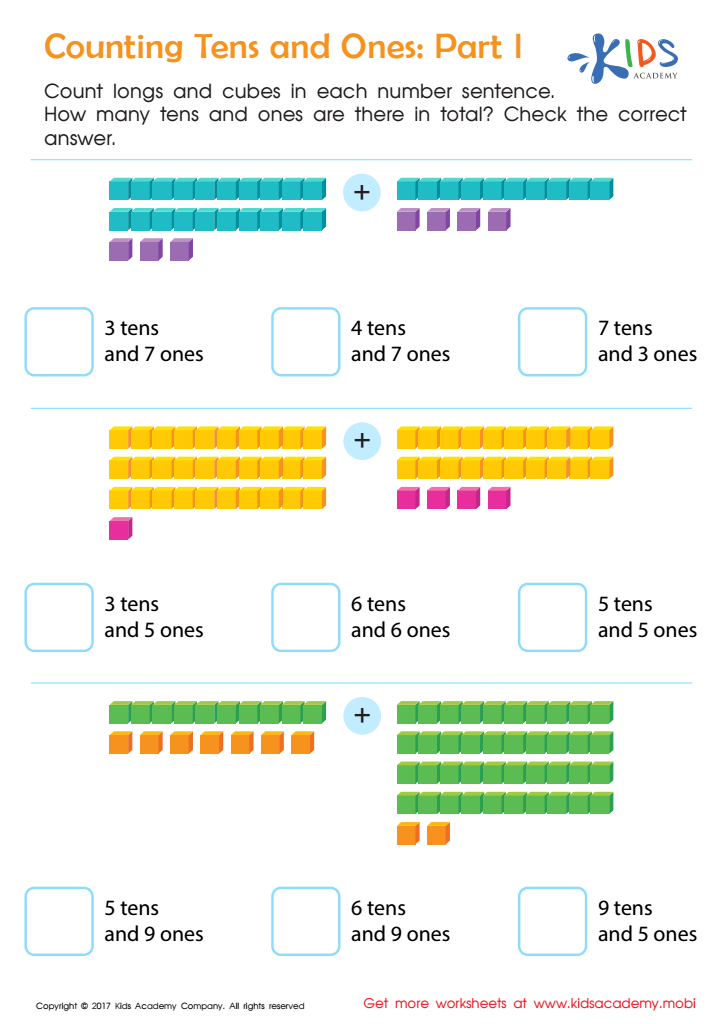
Counting Tens and Ones: Part 1 Worksheet
 Assign to My Students
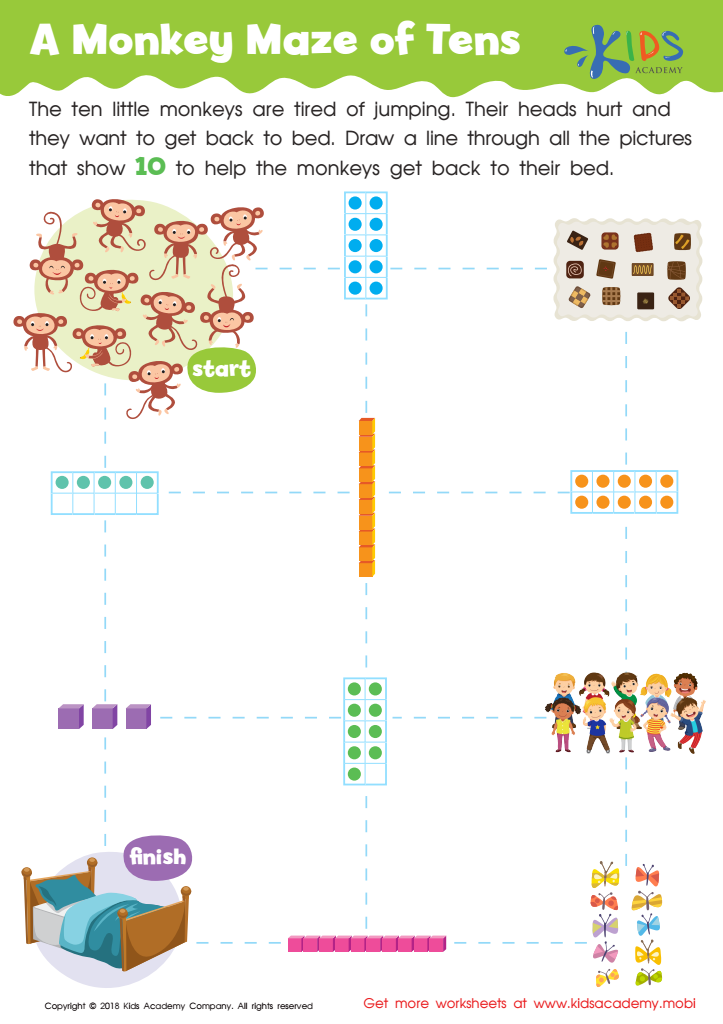
A Monkey Maze of Tens Worksheet
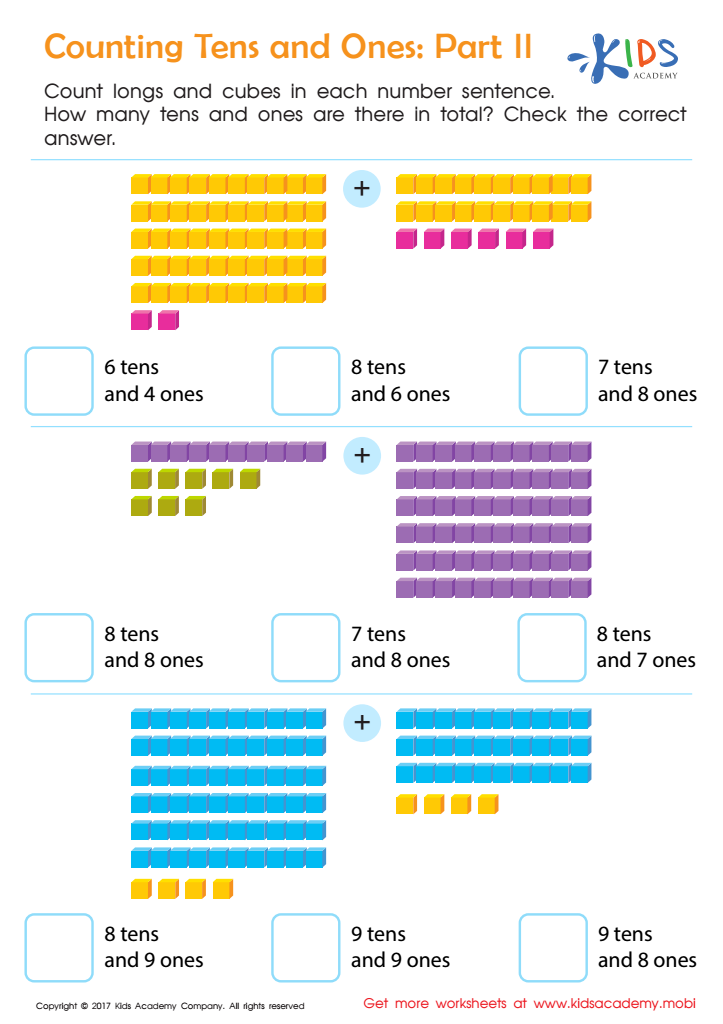
Counting Tens and Ones: Part 2 Worksheet
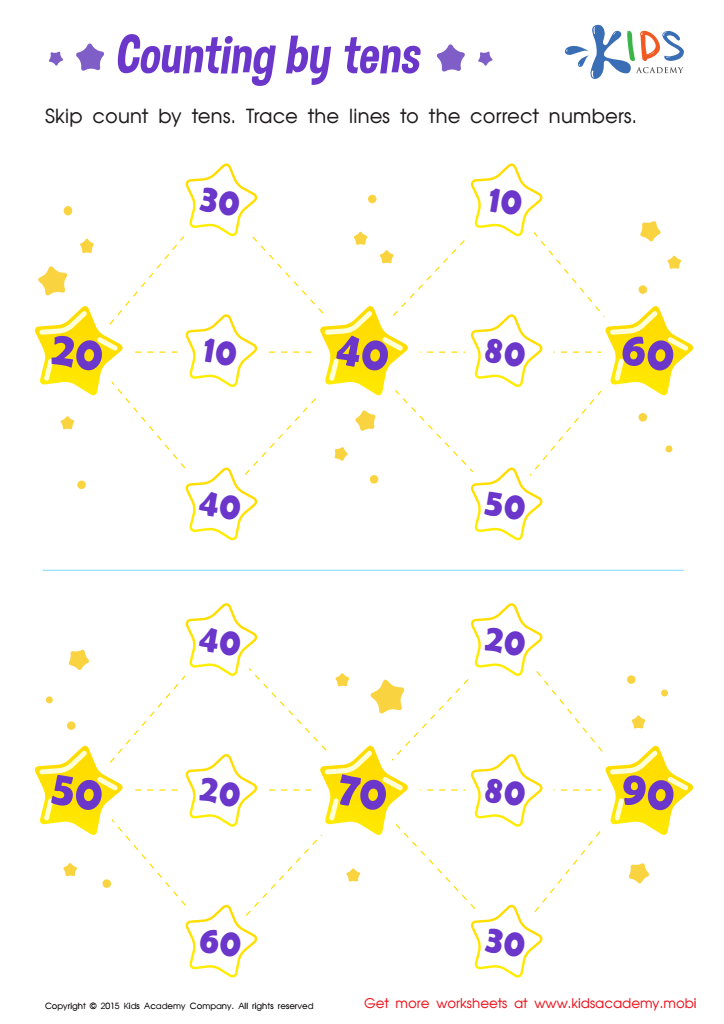
Learn Dozens: Counting by Tens Printable







Understanding tens numbers is foundational for young learners, particularly between the ages of 6 and 9. During this critical period in a child’s cognitive development, grasping the concept of tens forms the bedrock for more complex mathematical understanding. These numbers are a gateway to mastering place value, which is essential for addition and subtraction, multiplication, and even division later on.
By recognizing the role of tens in different numerical contexts, children learn to break down numbers into manageable parts. This skill not only boosts computational fluency but also enhances their problem-solving abilities. Furthermore, understanding tens numbers encourages logical reasoning, as students begin to see the relationships among numbers and can apply these skills to real-world situations—like budgeting or measuring.
Moreover, strengthening this understanding helps build confidence in academic pursuits. When children grasp how tens operate within the larger system of numbers, they feel more empowered to tackle mathematical challenges. Ultimately, engaging parents and teachers in nurturing this essential skill fosters a collaborative environment for learning, ensuring children not only excel in math but also develop a positive attitude towards learning overall. Investing time in understanding tens now pays dividends for children's future education.








