Handwriting practice Tracing Numbers Worksheets for Ages 6-9
7 filtered results
-
From - To
Discover our engaging "Handwriting Practice Tracing Numbers Worksheets" designed specifically for children aged 6-9. These worksheets provide a fun and educational way for young learners to improve their fine motor skills and handwriting proficiency by tracing numbers. Each worksheet features clear, easy-to-follow outlines that guide children through the process of writing various numbers. Our resources not only enhance handwriting skills but also promote number recognition and increase confidence in writing. Perfect for home or classroom use, these worksheets encourage a love for learning while developing essential skills. Start your child's handwriting journey today with our creative and interactive tracing worksheets!
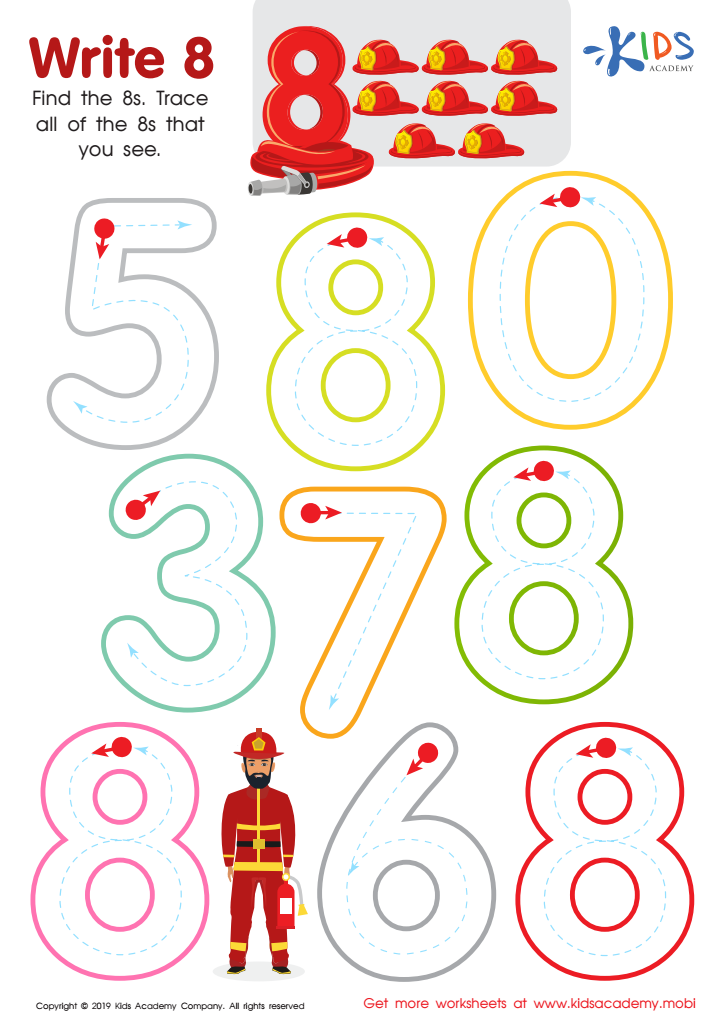
Write 8 Worksheet
 Assign to My Students
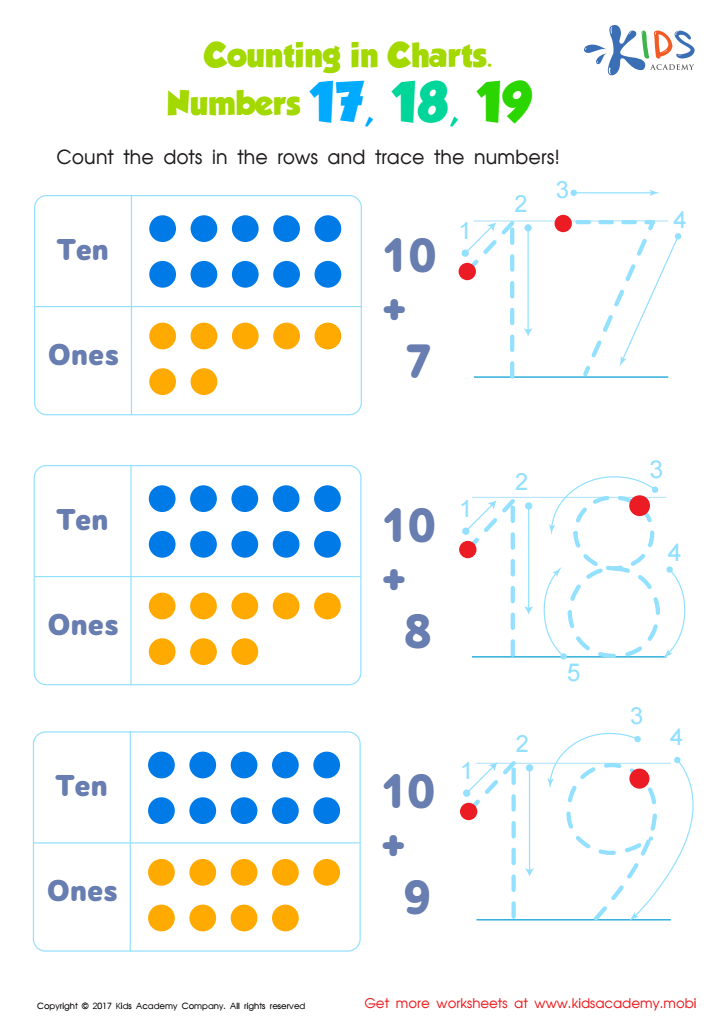
Kindergarten Number Tracing: Counting in Charts Worksheet
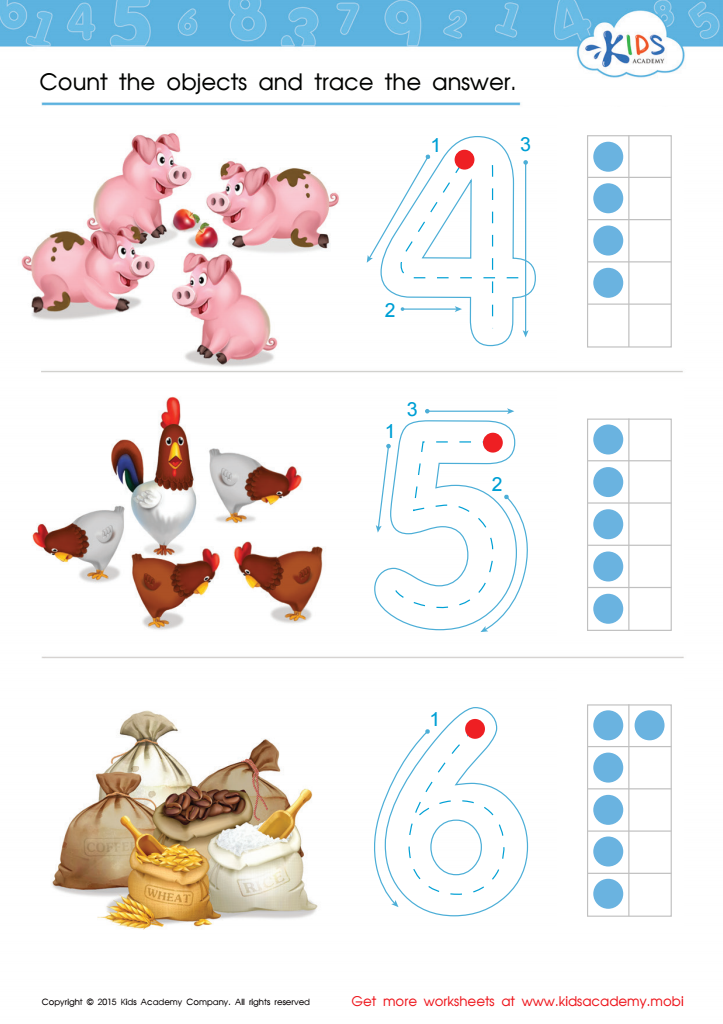
Count and Trace 4 – 6 Worksheet
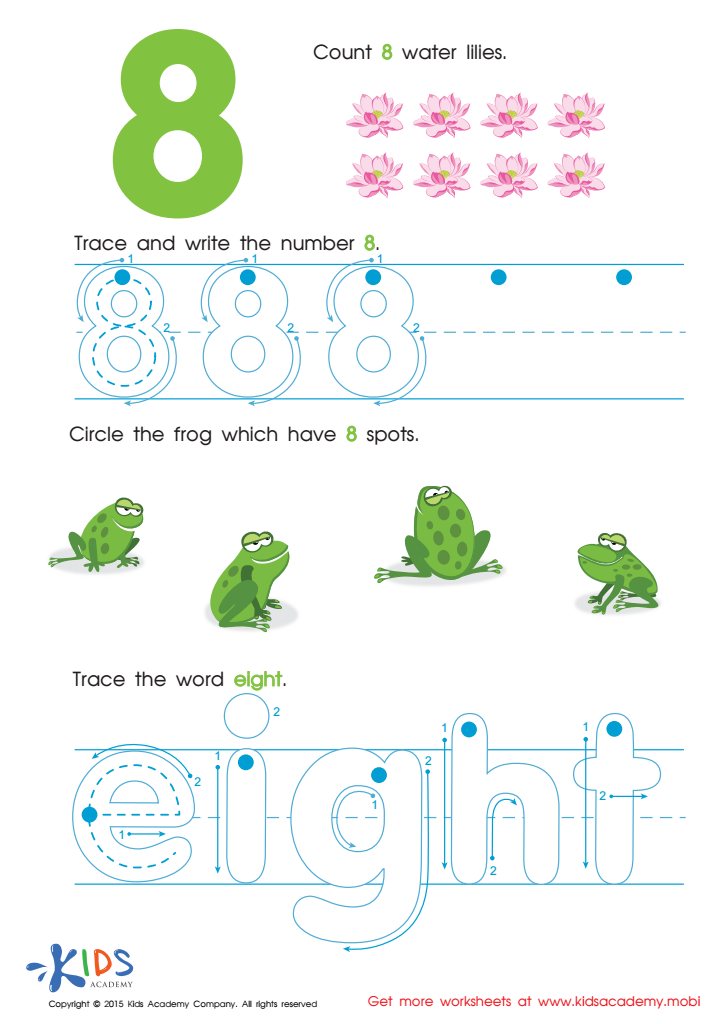
Learn Number 8 Easily Worksheet
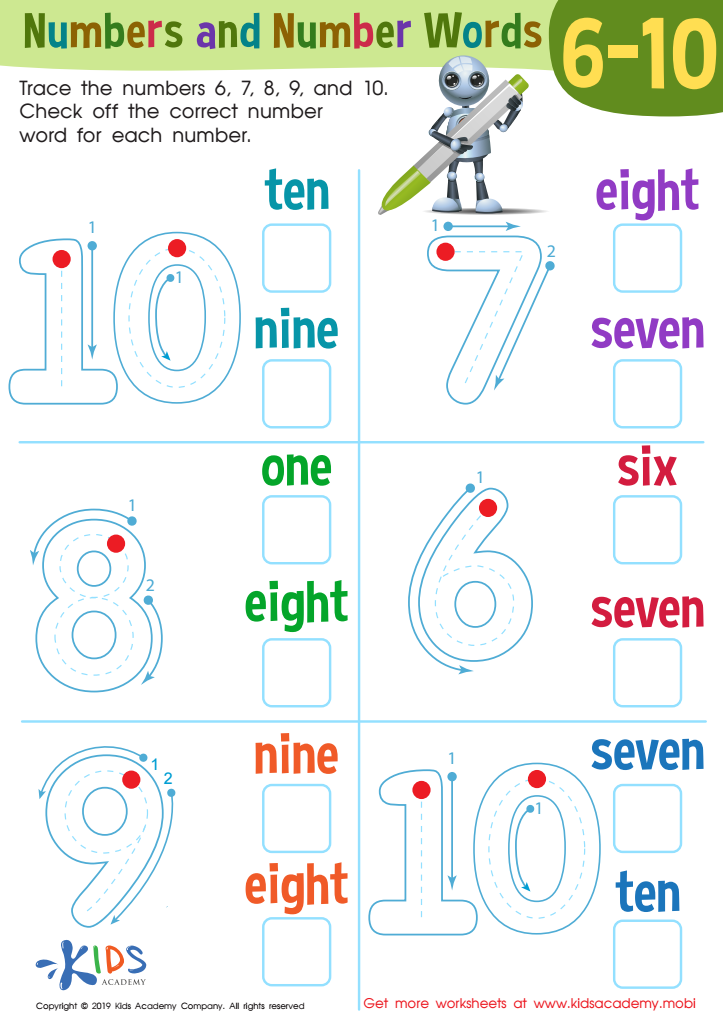
Numbers and Number Words 6–1 Worksheet
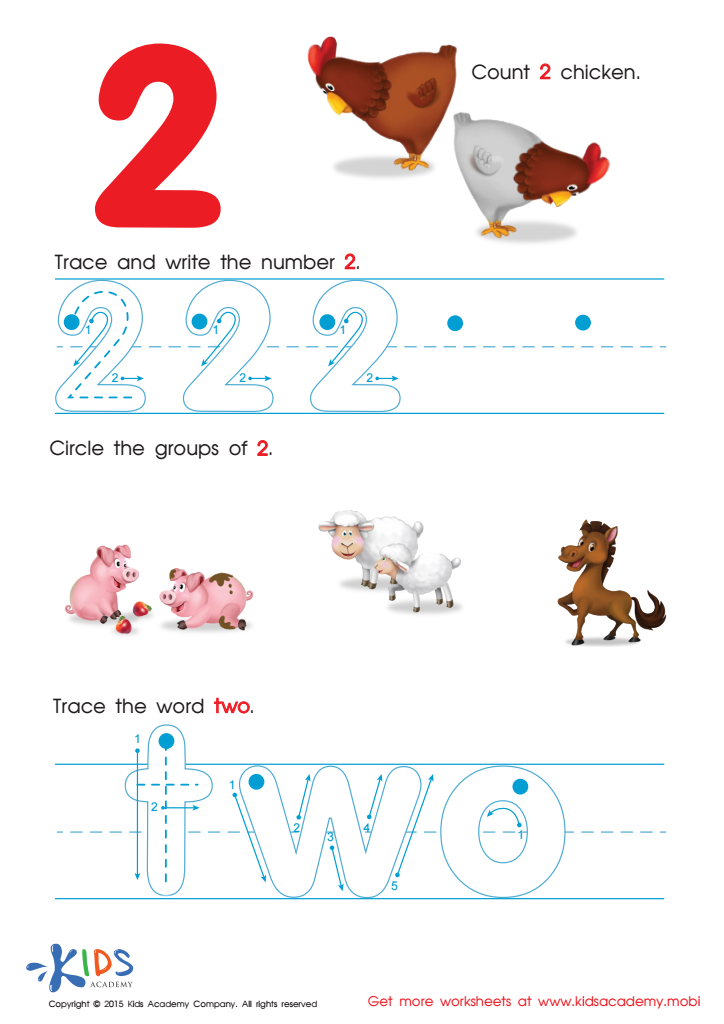
Learn to Write the Number 2 Worksheet
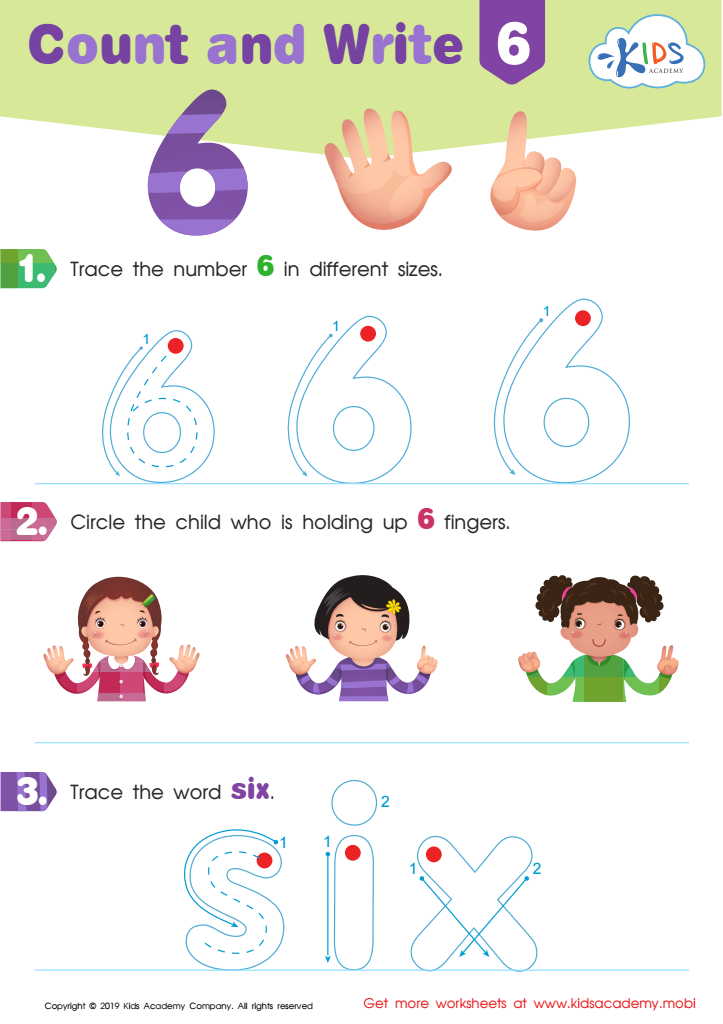
Count and Write 6 Worksheet








Handwriting practice, particularly tracing numbers for ages 6-9, is crucial for children’s development for several reasons. First, handwriting fosters fine motor skills, essential for future academic tasks. By tracing numbers, young learners enhance their grip and dexterity, facilitating smoother writing experiences later on.
Secondly, mastering numbers through tracing helps solidify early mathematical concepts. Writing numerals reinforces their visual recognition and understanding, making it easier for children to grasp mathematical operations as they advance in grade levels. Additionally, as handwriting involves cognitive processing, tracing numbers aids in memory retention and recall of mathematical symbols.
Moreover, consistent handwriting practice instills discipline and patience. Children learn to focus and develop a sense of accomplishment as they improve their skills. This can cultivate a positive attitude towards learning, ultimately contributing to a stronger educational foundation.
Lastly, neat handwriting significantly impacts a child’s ability to communicate clearly. In an increasingly digital world, the significance of being able to write legibly remains vital, especially in formal education and standardized assessments. By emphasizing tracing numbers in handwriting practice, parents and teachers equip children with tools not only for academic success but also for lifelong communication and organizational skills.