Text analysis Reading Worksheets for Ages 6-9
4 filtered results
-
From - To
Our Text Analysis Reading Worksheets for Ages 6-9 help young readers develop crucial comprehension skills in an engaging way. Designed specifically for early learners, these printable activities focus on enhancing vocabulary, identifying main ideas, and understanding text structure. Each worksheet fosters attention to detail and critical thinking, making reading both educational and fun. Whether it's through stories, informative texts, or interactive tasks, our worksheets provide a foundation for strong reading skills that will benefit your child in all academic areas. Free and easily accessible, these resources are perfect for classroom use or practice at home.
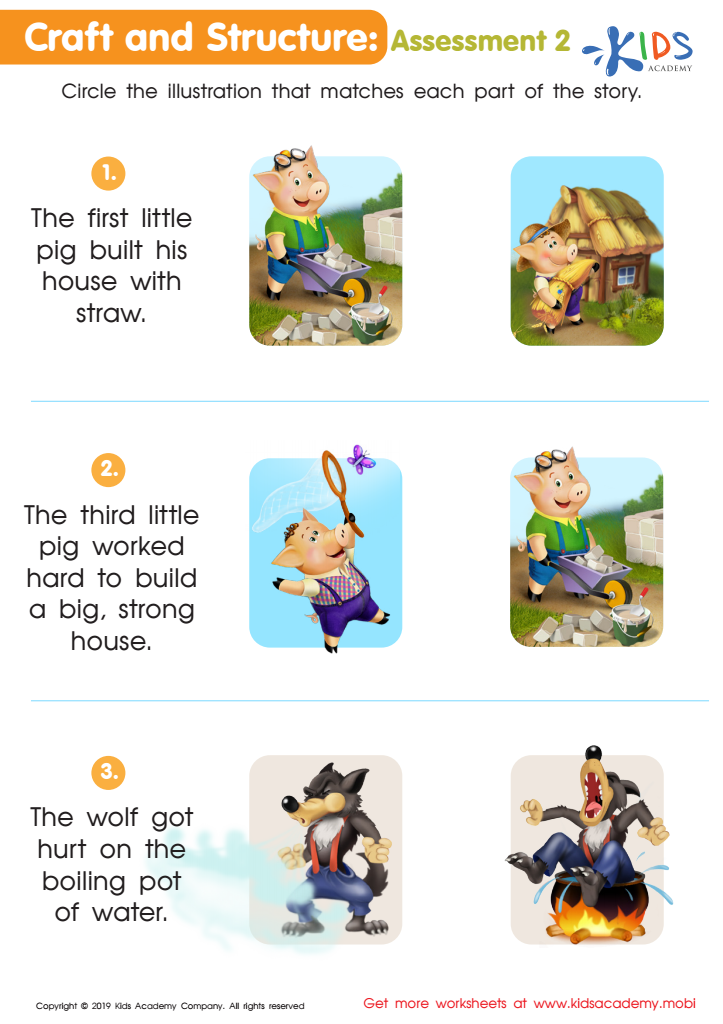
Craft and Structure: Assessment 2 Worksheet 2
 Assign to My Students
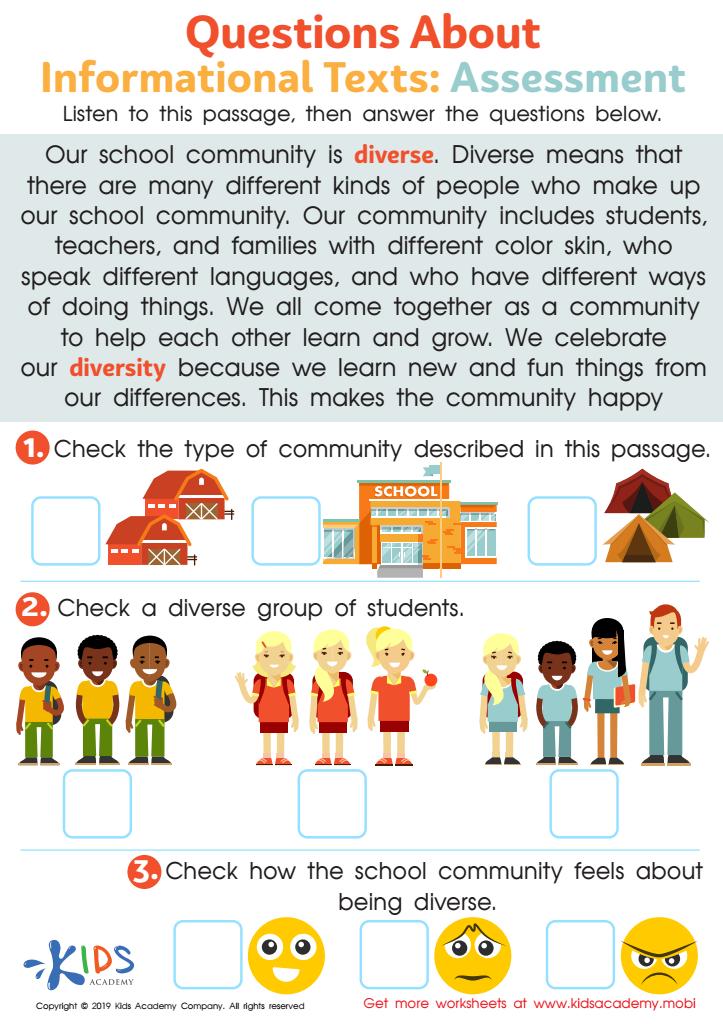
Questions About Informational Texts: Assessment 1 Worksheet
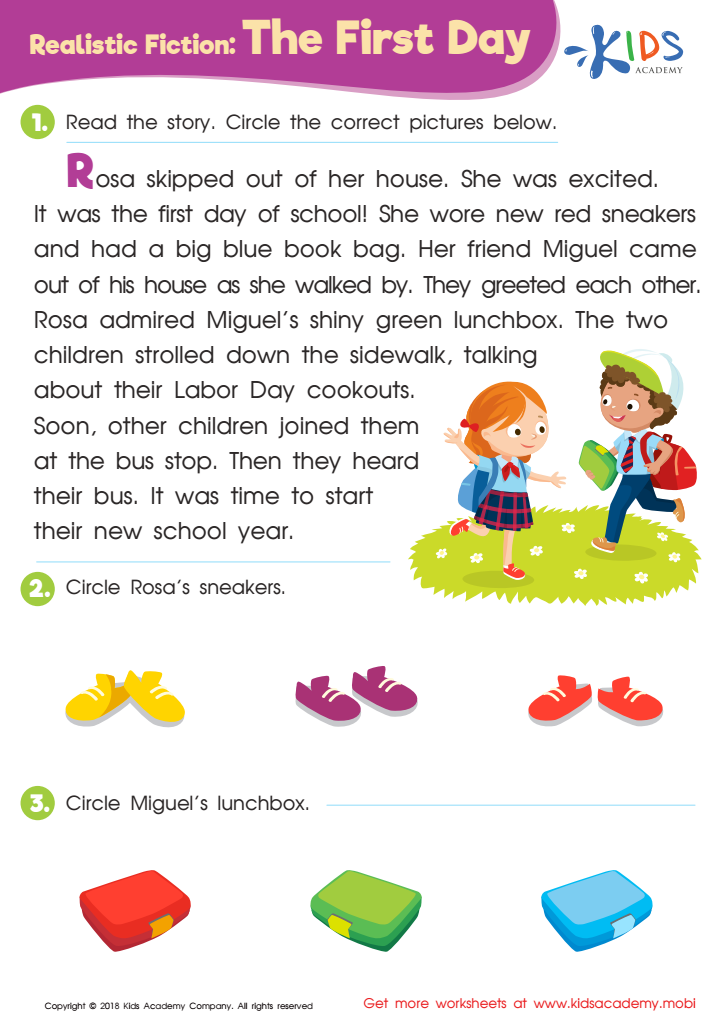
Realistic Fiction: The First Day Worksheet
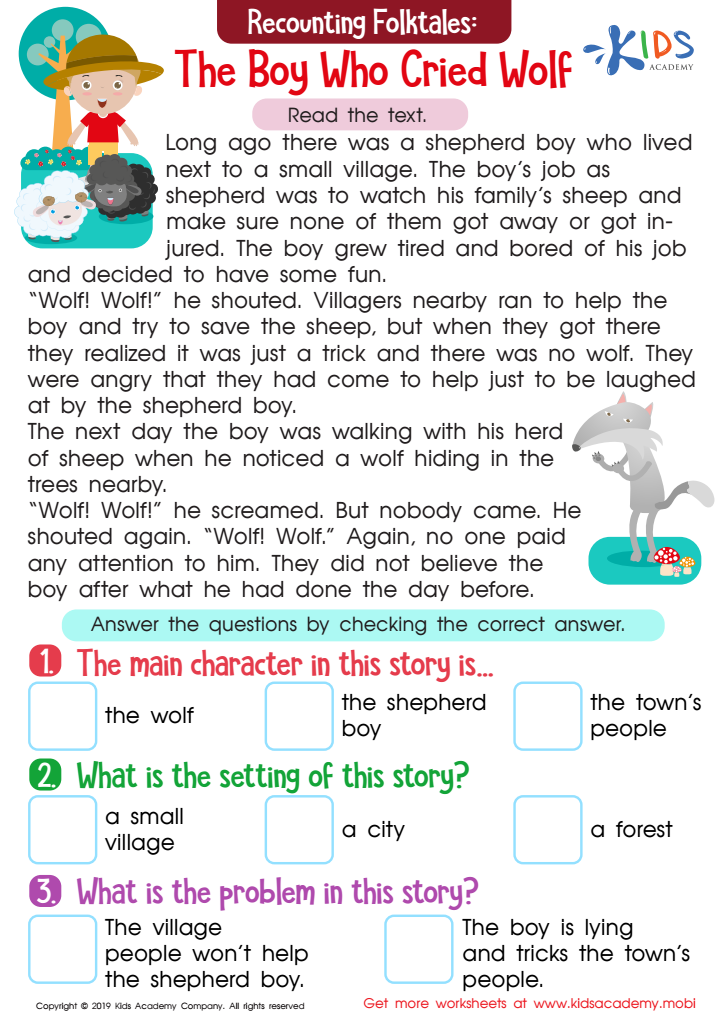
The Boy Who Cried Wolf Part 1 Worksheet








Text analysis reading is crucial for children aged 6-9 because it lays the foundation for critical thinking and comprehension skills essential for lifelong learning. During this age, children are transitioning from learning to read to reading to learn. This critical period is when they start to understand not just the words on the page, but the deeper meanings, themes, and contexts behind those words.
Parents and teachers who focus on text analysis reading methods help children develop the ability to delve into texts to analyze characters, plot, settings, and themes. This kind of reading enriches their vocabulary, improves grammar, and enhances their ability to express thoughts clearly. More importantly, it fosters an inquisitive mindset where kids learn to ask questions, make predictions, and draw inferences based on textual evidence.
Furthermore, fostering these skills early on can significantly boost academic performance across subjects. Text analysis is not merely a reading skill; it is a cognitive process that aids problem-solving and understanding complex concepts in subjects like mathematics, science, and social studies.
Therefore, prioritizing text analysis reading at a young age not only enhances literacy but also empowers children to become thoughtful, knowledgeable, and articulate individuals, well-prepared to tackle advanced education and everyday challenges in the future.








