Understanding symmetry Science Worksheets for Ages 6-9
3 filtered results
-
From - To
Introducing our "Understanding Symmetry Science Worksheets for Ages 6-9," meticulously crafted to spark young minds with the wonders of symmetry. These engaging activities blend fun and learning, guiding children through the basics and intricacies of symmetrical patterns found in nature. Perfectly tailored for early learners, these worksheets bolster critical thinking and observation skills while aligning with key educational standards. With vibrant illustrations and clear instructions, each sheet encourages self-paced exploration and discovery. Help your child or student grasp essential scientific concepts and foster a lifelong love for learning with our dynamic symmetry worksheets. Discover the beauty of balance today!
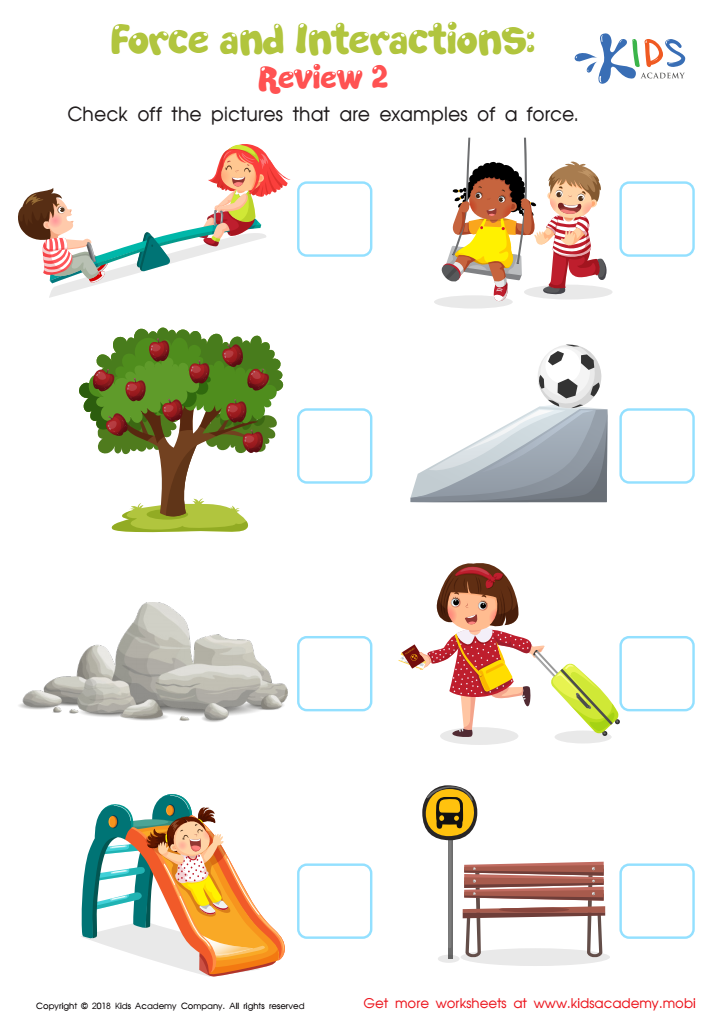
Force and Interactions: Review 2 Worksheet
 Assign to My Students
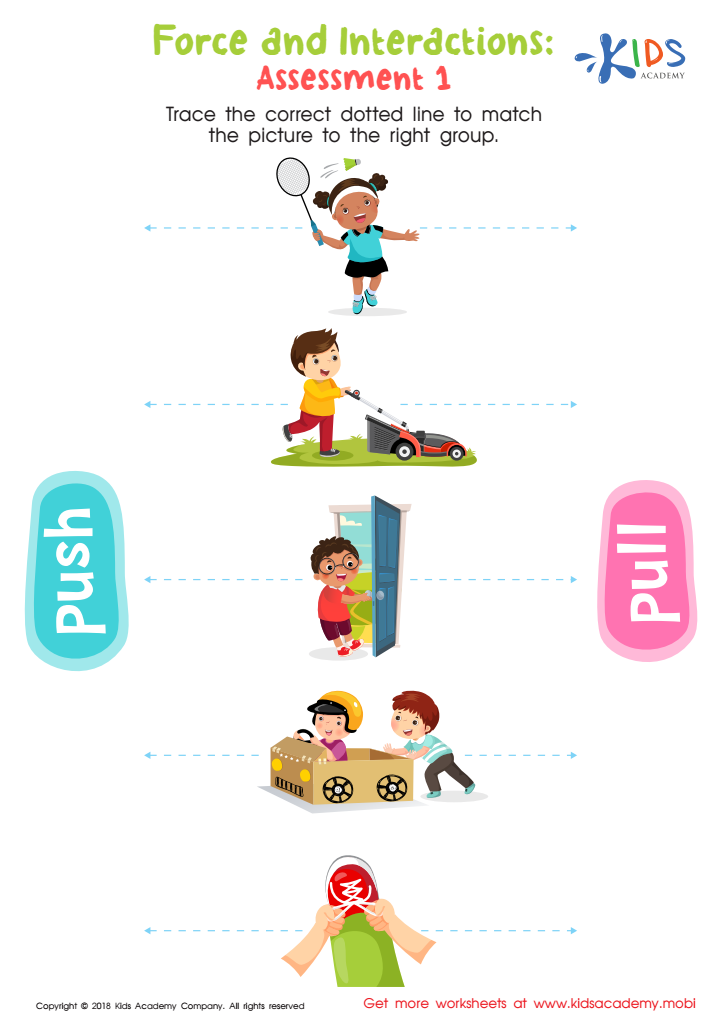
Force and Interactions: Assessment 2 Worksheet
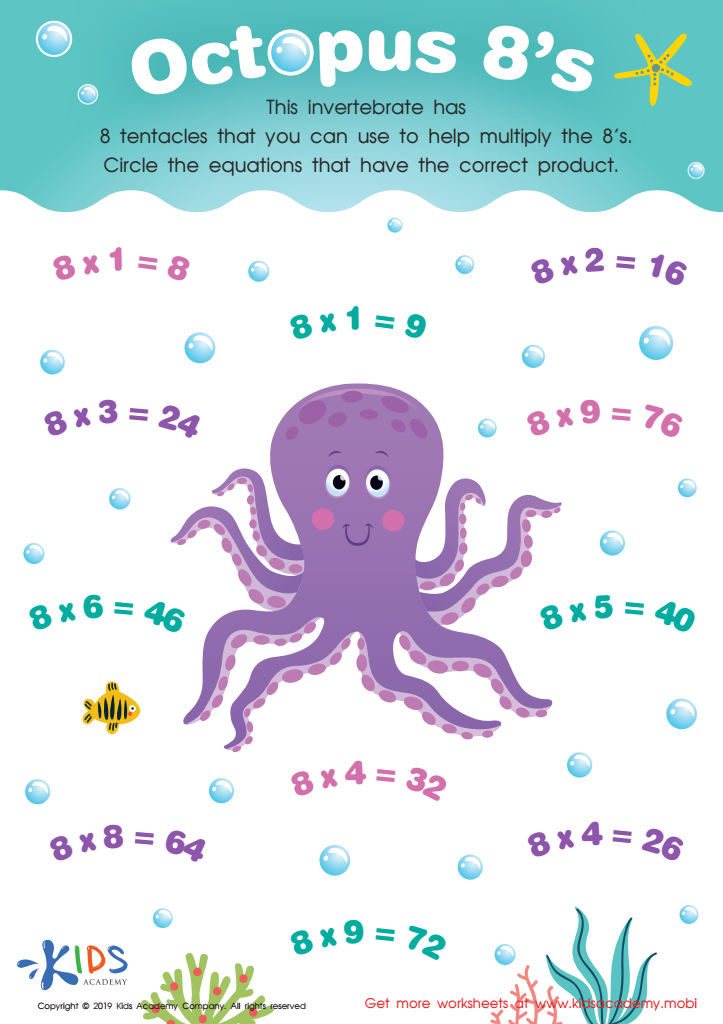
Octopus 8’s Worksheet








Understanding symmetry is essential for young children's cognitive and academic development, making it an important topic for both parents and teachers to address in early education. Symmetry, which involves balance and harmony in shapes and structures, lays a foundation for key mathematical concepts such as geometry, fractions, and patterns. By recognizing and creating symmetrical designs, children develop important spatial awareness skills that are crucial for solving puzzles, understanding maps, and grasping the layout of different objects and spaces.
Beyond math, symmetry plays a significant role in art and aesthetics, enabling children to appreciate beauty in nature, architecture, and design. Early exposure to these concepts fosters creativity and critical thinking, encouraging youngsters to explore and analyze the world around them. Additionally, symmetry is a cornerstone of scientific understanding, appearing in biology (e.g., symmetrical body structures) and physics (e.g., acoustics and optics) as well.
From a developmental perspective, engaging with symmetry also enhances fine motor skills through activities like drawing, cutting, and folding paper to create symmetrical shapes. These hands-on experiences support hand-eye coordination and precision.
In summary, understanding symmetry equips children with integral mathematical, scientific, and artistic skills that form a base for future learning. Parents and teachers should therefore actively introduce and explore symmetrical concepts to nurture well-rounded, inquisitive, and capable young minds.







