Critical Thinking Physical Science Worksheets for Ages 6-9
3 filtered results
-
From - To
Discover our engaging Critical Thinking Physical Science Worksheets designed for children aged 6-9. These innovative resources encourage young learners to explore fundamental concepts in physical science while enhancing their critical thinking abilities. Our worksheets promote inquiry-based learning, allowing kids to analyze, evaluate, and solve problems related to real-world scientific phenomena. Each worksheet is tailored to generate curiosity and aid comprehension through fun activities, experiments, and thought-provoking questions. Perfect for classrooms or home study, these worksheets provide an excellent way to foster a love for science and develop essential cognitive skills. Dive into the world of discovery with our dynamic physical science resources!
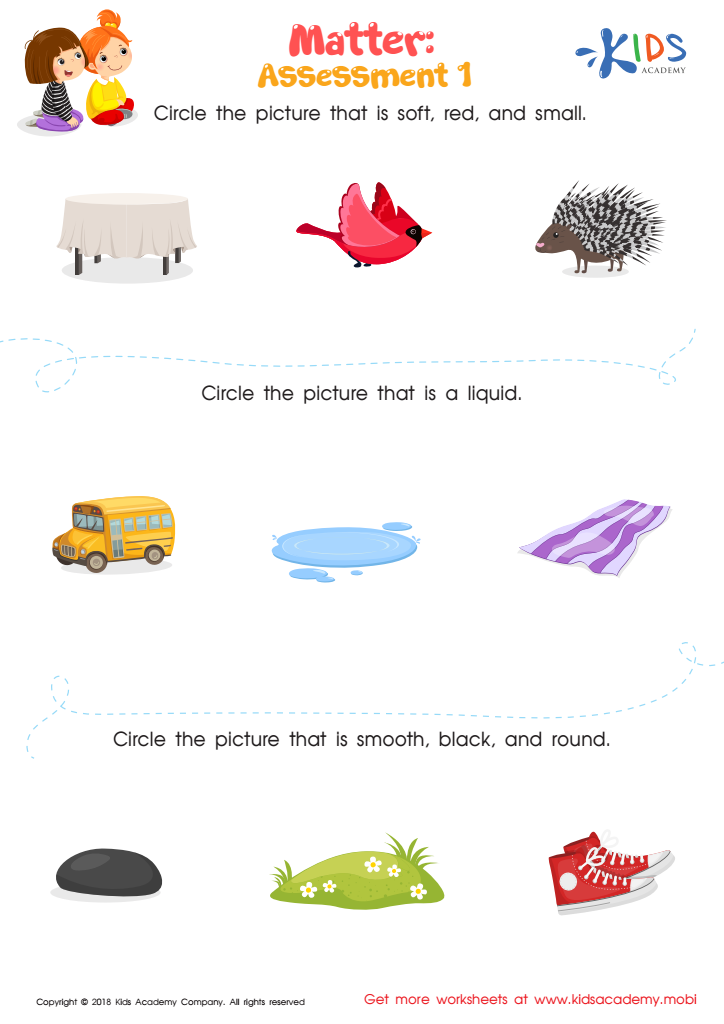
Matter: Assessment 1 Worksheet
 Assign to My Students
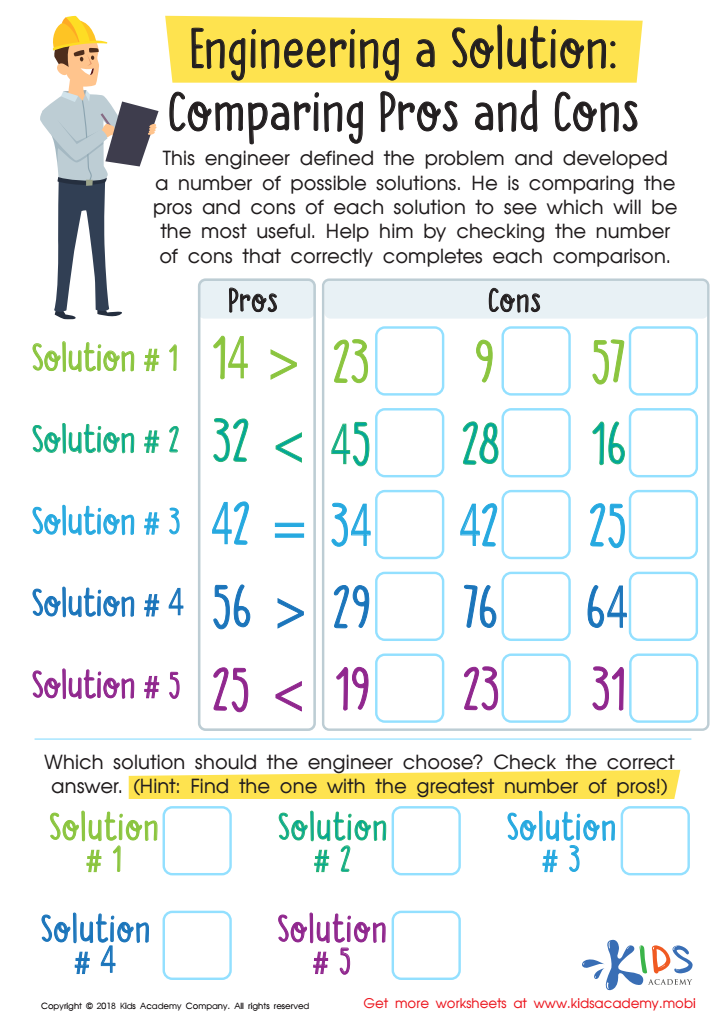
Engineering a Solution: Comparing Pros and Cons Worksheet
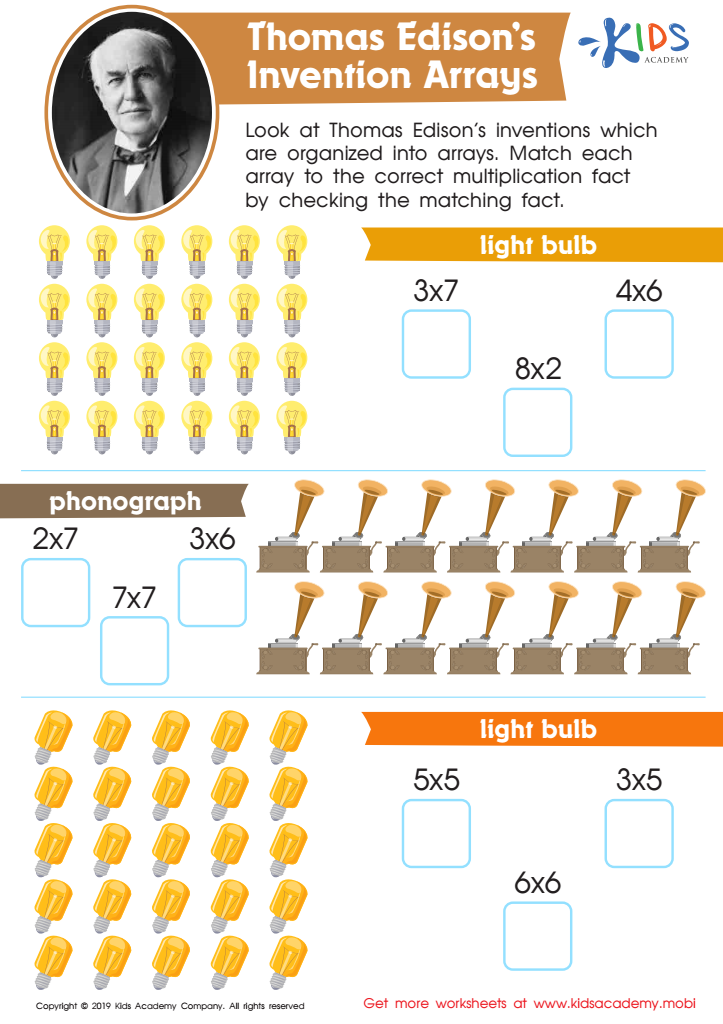
Thomas Edison’s Invention Arrays Worksheet







Parents and teachers should prioritize Critical Thinking in Physical Science for Ages 6-9 because this foundational stage of education shapes children's cognitive development and problem-solving skills. Engaging with physical science concepts encourages young learners to observe, ask questions, and make predictions, which are integral components of critical thinking. By exploring topics like gravity, motion, and matter, children develop a curiosity about the world, fostering an inquisitive mindset that can lead to lifelong learning.
Furthermore, critical thinking in science helps children understand the scientific method—observing a phenomenon, forming hypotheses, conducting experiments, and drawing conclusions. This systematic approach enhances their reasoning abilities, enabling them to tackle real-life situations methodically. Additionally, early exposure to science-related discussions helps develop essential skills such as collaboration, communication, and creativity.
Lastly, fostering critical thinking in physical science contributes to children’s overall academic success. As they master these skills, they become more adept in subjects across the curriculum, paving the way for more advanced learning in the future. Encouraging critical thinking in physical science ultimately cultivates informed, innovative, and resourceful individuals who can navigate an increasingly complex world.







