Sound-letter association Worksheets for 6-Year-Olds
4 filtered results
-
From - To
Boost your child’s reading skills with our engaging Sound-Letter Association Worksheets designed for 6-year-olds! These specially crafted worksheets help young learners understand the relationship between sounds and letters, laying a strong foundation for literacy. Through fun and interactive exercises, kids can practice identifying, matching, and writing letters while associating them with their respective sounds. Our worksheets cater to different learning styles, making phonics enjoyable and effective. Ideal for both classroom use and at-home practice, help your child embark on an exciting journey to reading proficiency today! Visit Kids Academy for a wide range of educational resources.
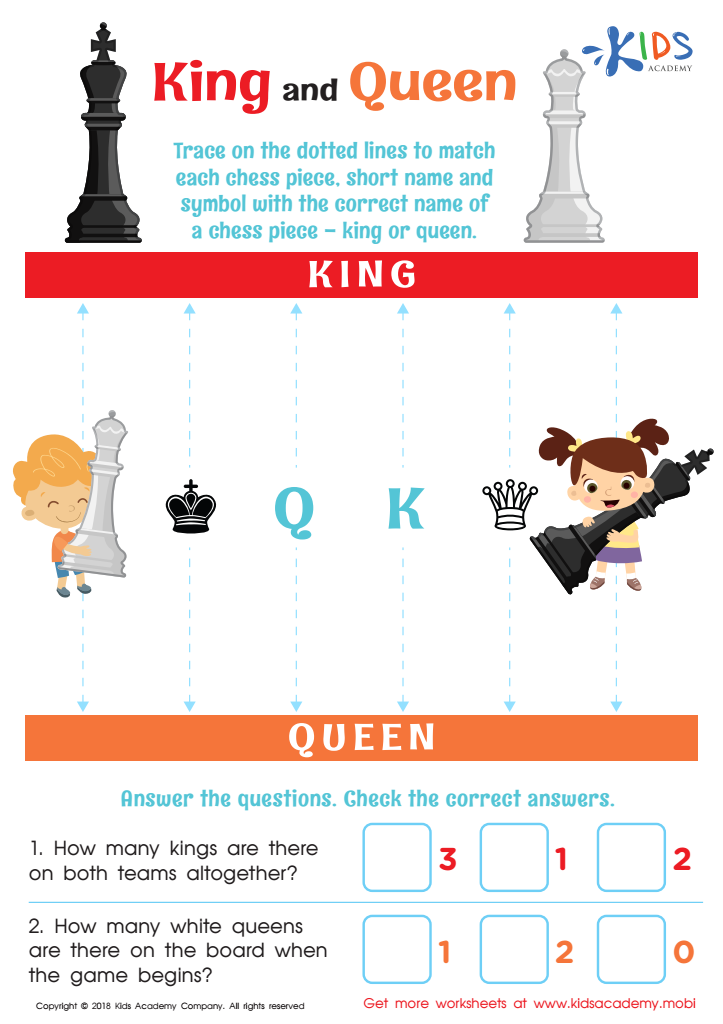
King and Queen Worksheet
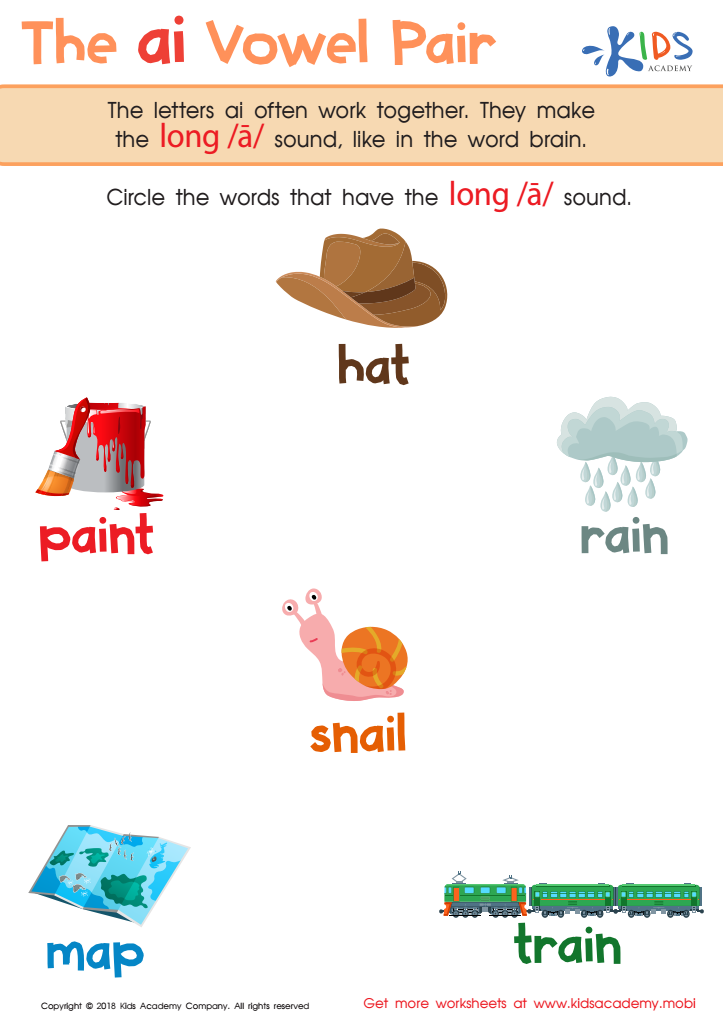
The AI Vowel Pair Worksheet
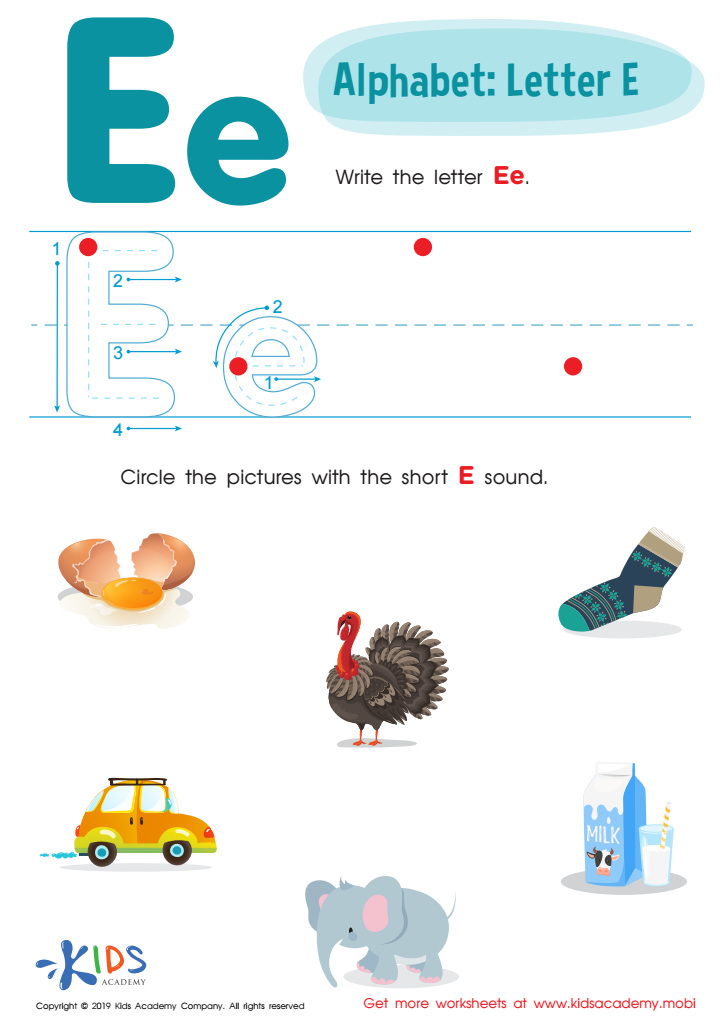
Letter E Tracing Worksheet
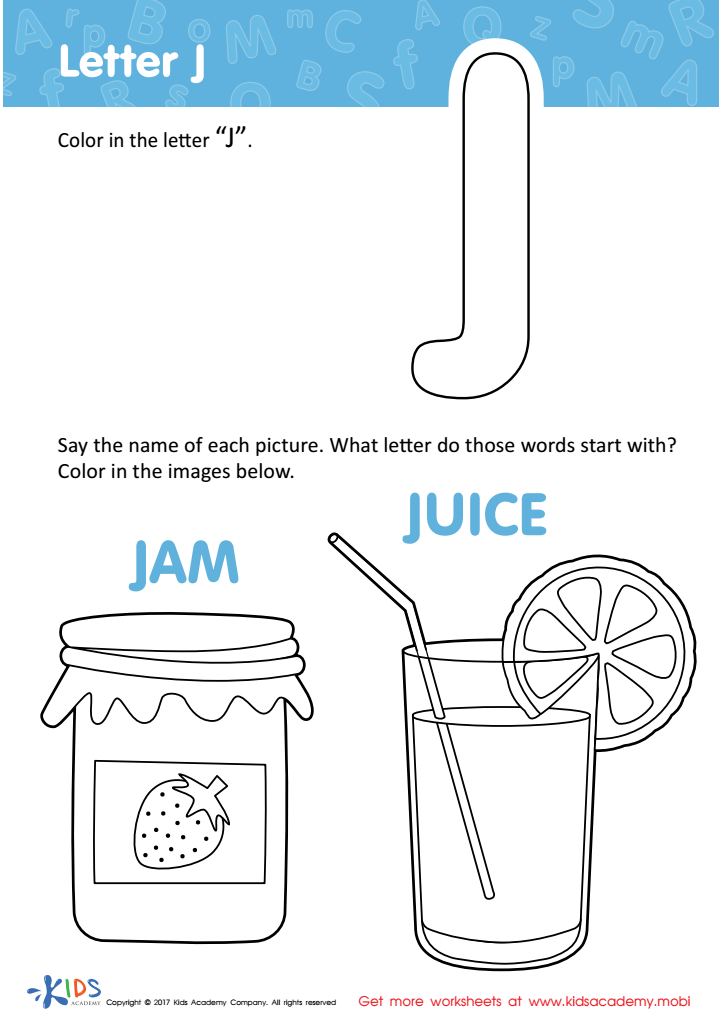
Letter J Coloring Sheet
 Assign to My Students








Parents and teachers should care about sound-letter association for 6-year-olds because it serves as the cornerstone of reading and writing development, crucial skills in a child's academic journey and beyond. At this formative age, children are in the prime stage of "emergent literacy," where they transition from recognizing sounds in speech (phonemic awareness) to mapping these sounds onto written symbols (phonics). This foundational skill not only aids in decoding words when reading but also supports spelling and word formation when writing.
Understanding sound-letter associations helps kids break down complex words into manageable parts, enabling them to read new words independently and improve reading fluency. The lack of this fundamental skill can lead to difficulties in recognizing words, leading to frustration and disinterest in reading activities, which can affect a child's ability to learn across subjects where reading is essential.
Moreover, early mastery of sound-letter relationships boosts a child’s confidence and enhances cognitive development. When a child successfully matches sounds to letters, they feel more competent and motivated to pursue new challenges. Therefore, investing time and resources to reinforce these skills sets the stage for lifelong learning and academic success. Ignoring this critical aspect of early education could undermine a child’s ability to achieve their full potential.








