Hand-eye Coordination Addition & Subtraction Worksheets for 6-Year-Olds
7 filtered results
-
From - To
Enhance your child's learning experience with our Hand-eye Coordination Addition & Subtraction Worksheets, specially designed for 6-year-olds. These engaging activities blend fundamental math skills with fun, hands-on exercises that promote hand-eye coordination. Ideal for young learners, these worksheets offer colorful illustrations and interactive tasks that keep children excited while mastering addition and subtraction concepts. As they practice, children will develop vital motor skills and cognitive capabilities, paving the way for academic success. Perfect for parents seeking to make learning enjoyable at home, these worksheets are easily accessible and printable, creating a stimulating environment that fosters a love for math!
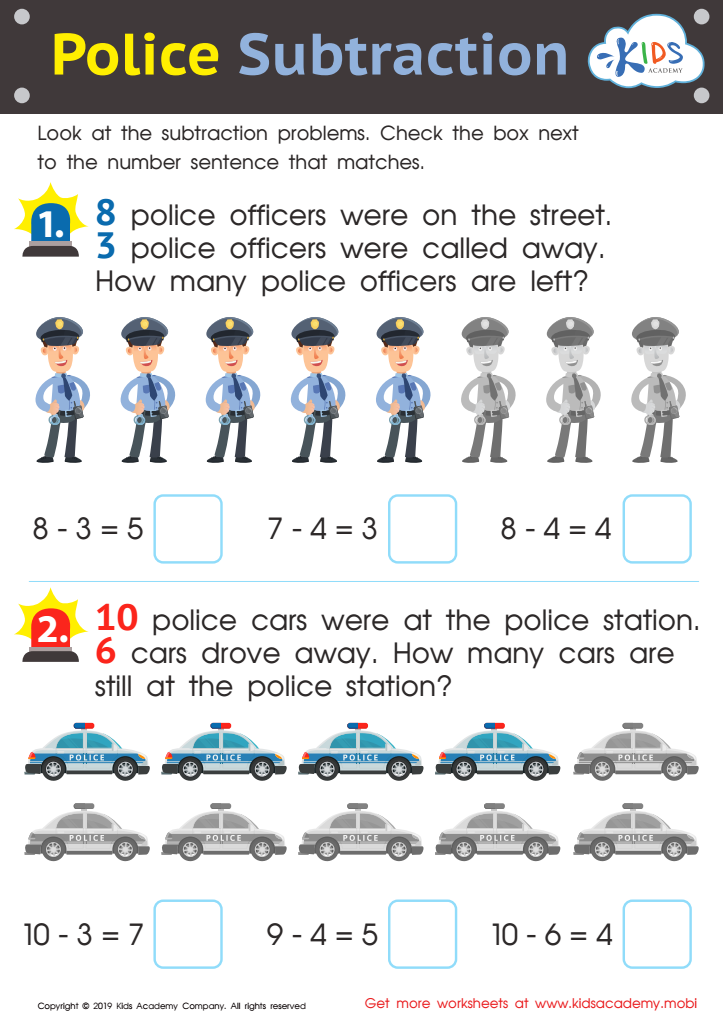
Police Subtraction Worksheet
 Assign to My Students
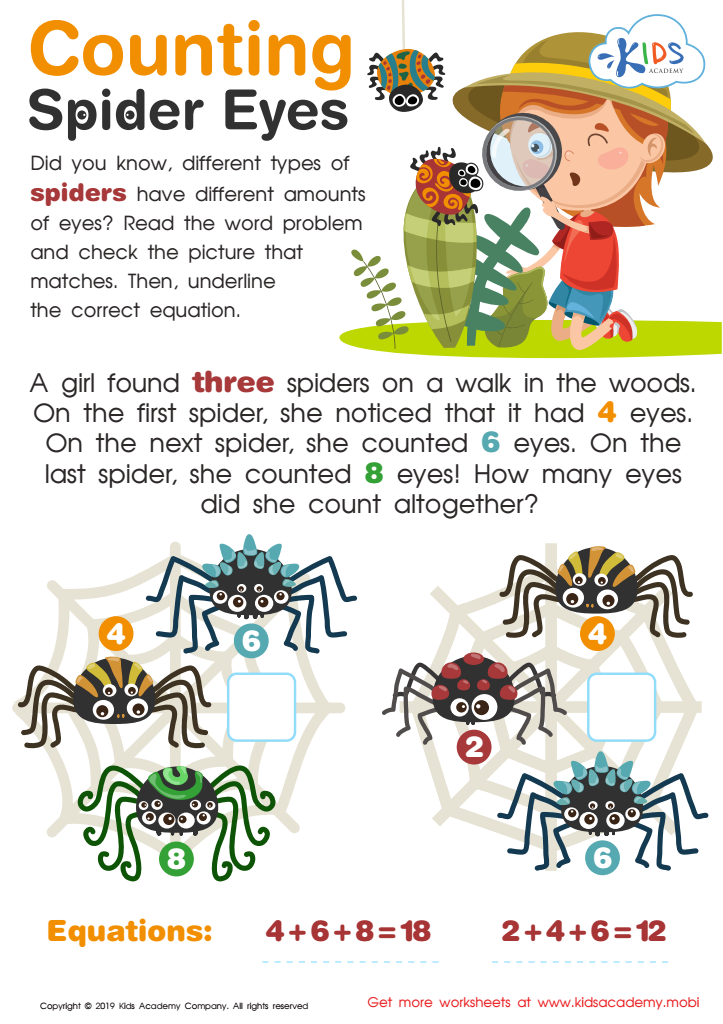
Counting Spider Eyes Worksheet
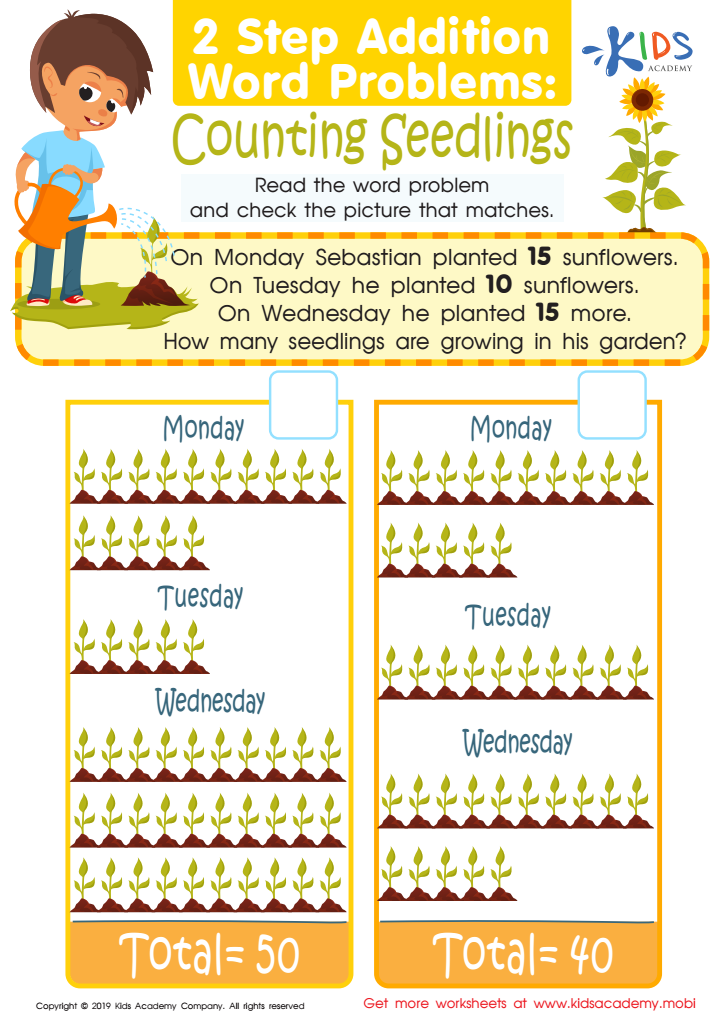
Counting Seedlings Worksheet
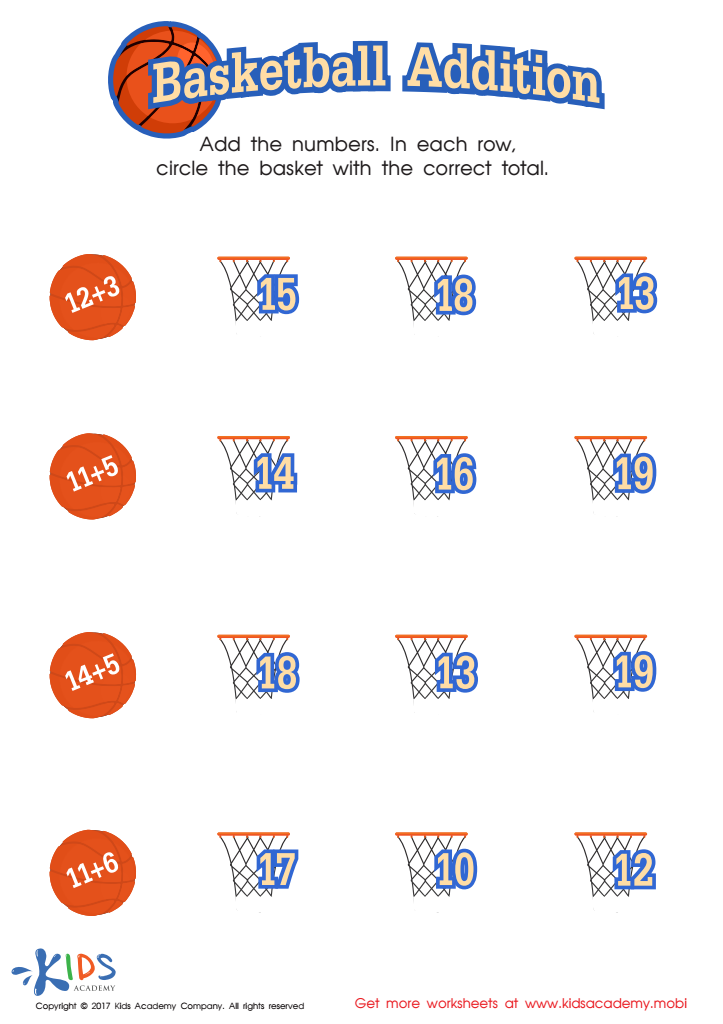
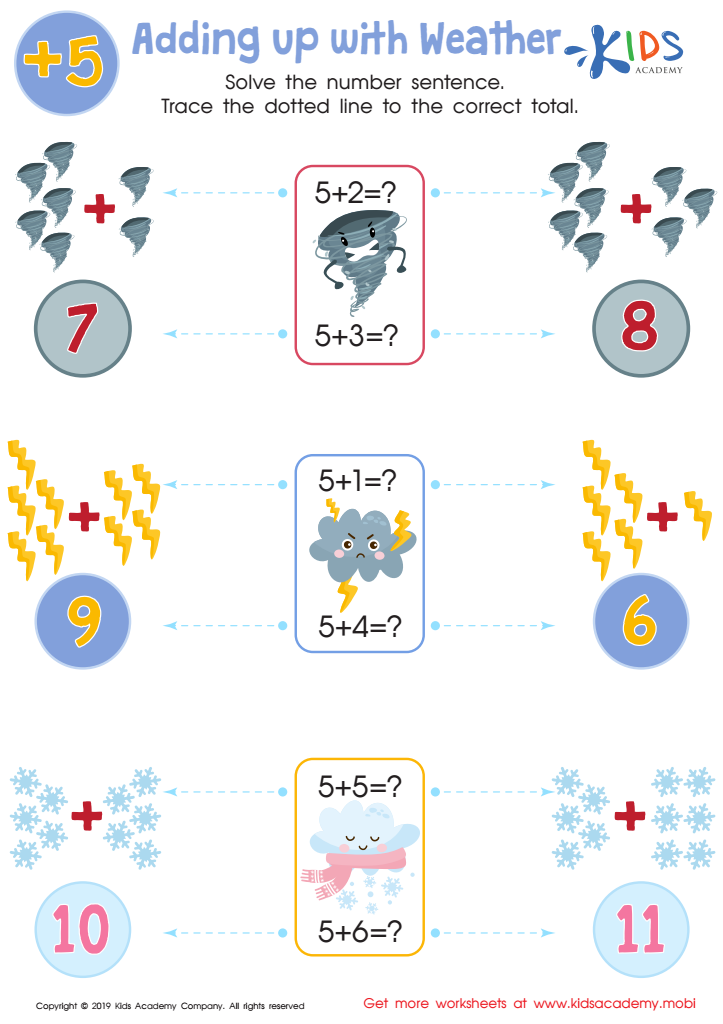
Adding up With Water Worksheet
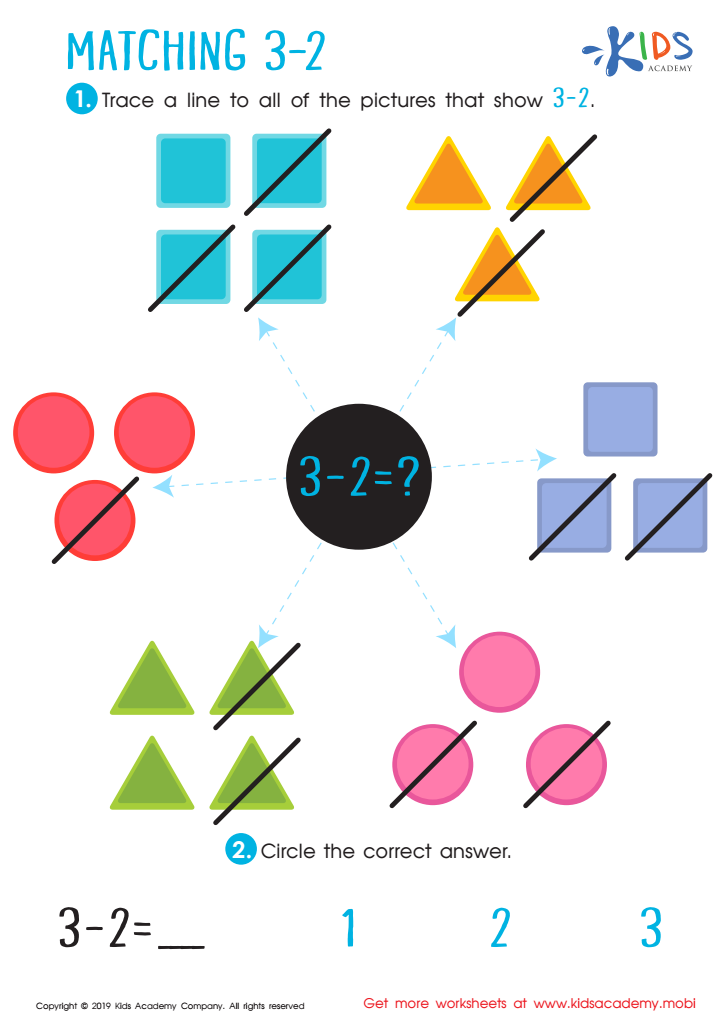
Matching 3-2 Worksheet
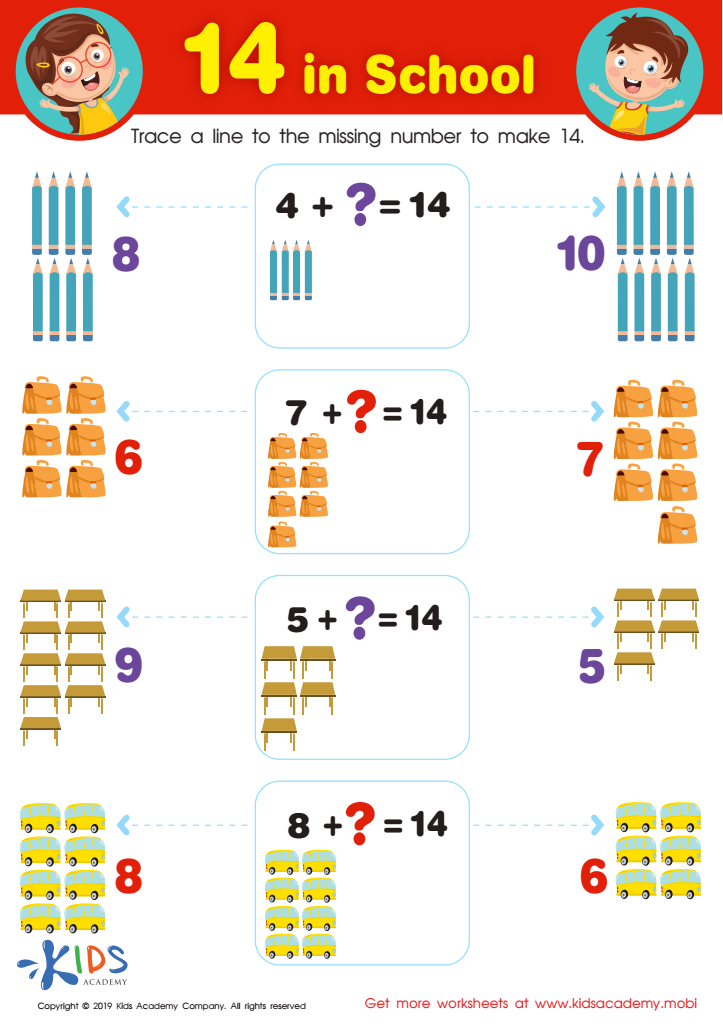
14 in School Worksheet








Hand-eye coordination is a crucial skill for six-year-olds, particularly when learning basic addition and subtraction. At this age, children are developing their fine motor skills, which are vital for mastering writing, drawing, and even tasks like buttoning clothes. Engaging in activities that promote hand-eye coordination, like using manipulatives for adding and subtracting, ensures that children not only understand the mathematical concepts but also improve their physical coordination.
Additionally, promoting hand-eye coordination through math activities fosters cognitive development. It helps children make connections between visual inputs and motor outputs, enhancing their problem-solving skills. When children physically manipulate objects to solve math problems, they develop a concrete understanding of abstract concepts, reinforcing their learning.
Moreover, integrating hand-eye coordination tasks into math acts as an engaging and fun way to learn. It can reduce frustration and anxiety related to math, helping children develop a positive attitude towards the subject. As parents and teachers witness progress in both coordination and mathematical competence, it builds confidence in young learners, setting a solid foundation for future academic success. Combining physical and cognitive learning in mathematics prepares children for a wide range of skills they'll employ throughout their education and daily life.








