Filters

9 filtered results

Clear all filters
Favorites
With answer key
Interactive

9 filtered results

Difficulty Level

Grade


Enhance your child's geometric understanding with our engaging "Problem-Solving Skills Geometry Worksheets for 6-Year-Olds." Designed to foster critical thinking and logical reasoning, these worksheets introduce young learners to essential math concepts through fun and interactive activities. Each worksheet features colorful visuals and age-appropriate challenges that encourage kids to explore shapes, sizes, and spatial relationships. By solving problems, children will develop their analytical abilities while building a strong foundation in geometry. Perfect for homeschooling or classroom use, our resources stimulate curiosity and promote a love for learning. Start your child’s math journey today with our exciting geometry worksheets!

Check out this FREE Trial Lesson on Geometry for age 6!

Lesson 3- Classify and Sort Shapes

Favorites
With answer key
Interactive
  • 6
  • Problem-Solving Skills
  • Geometry
Shared Food Worksheet

Shared Food Worksheet

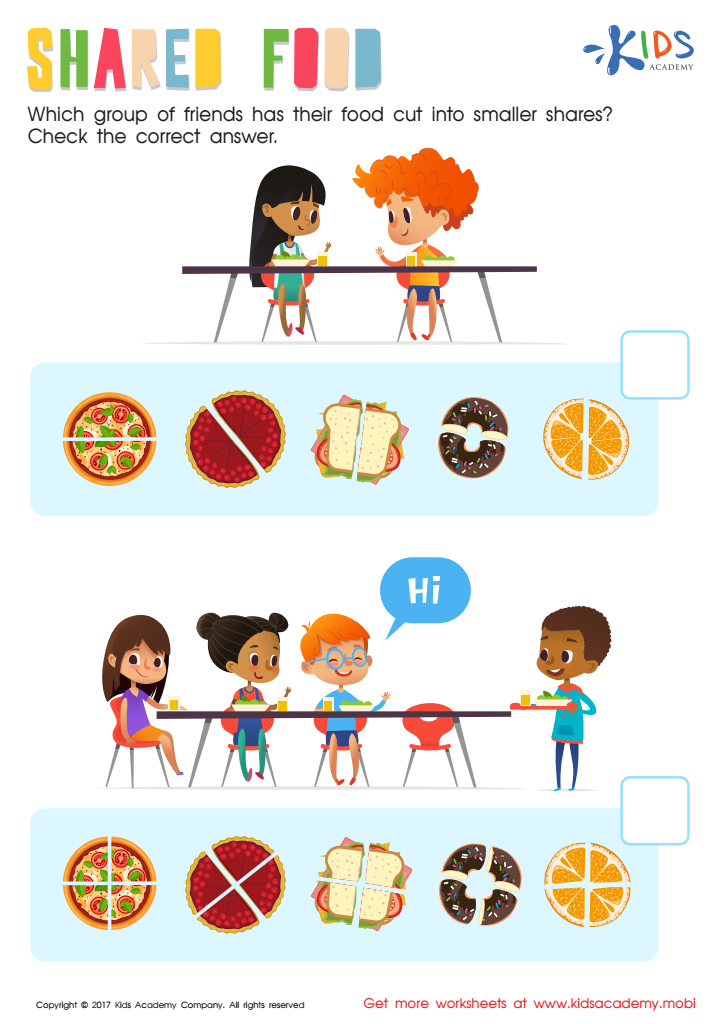
In this worksheet, kids learn about sharing and cutting shapes into equal parts. There are two groups of friends: one with two, the other with four. Ask your child which group has their food cut into smaller shares, and help them find the right answer.
Shared Food Worksheet
Worksheet
Using Triangles to Make Squares and Rhombuses Worksheet

Using Triangles to Make Squares and Rhombuses Worksheet

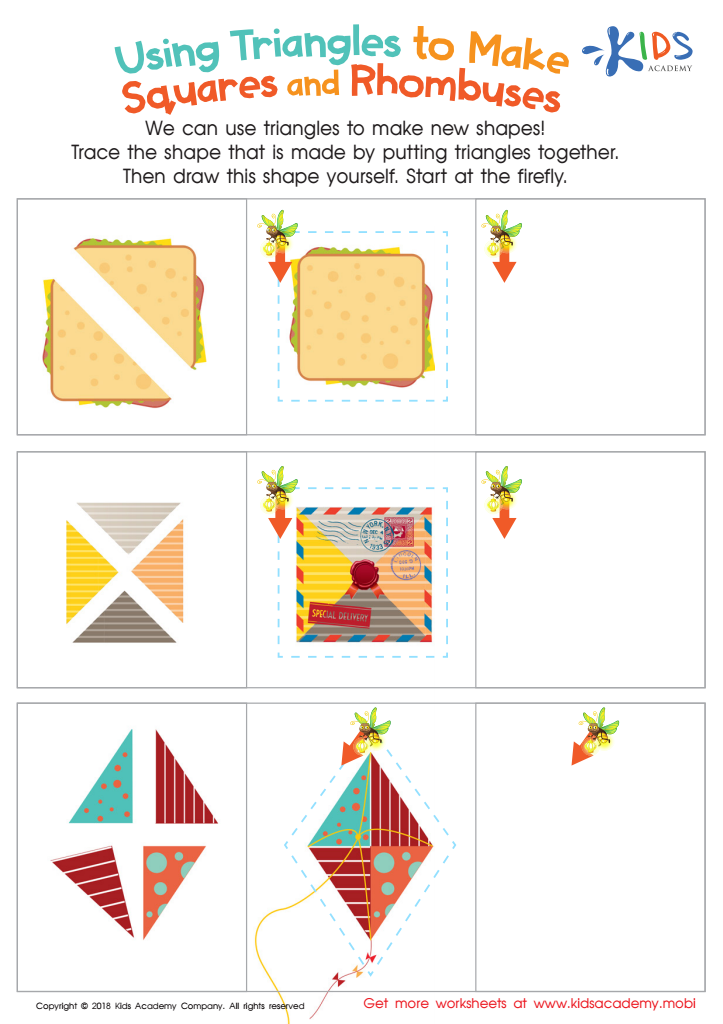
Learning shapes is a fun way to boost spatial skills and critical thinking. This worksheet shows children how to use triangles to construct squares and rhombuses. Clear illustrations and a printout help children draw the new shape. A great activity for the math classroom! 80 words.
Using Triangles to Make Squares and Rhombuses Worksheet
Worksheet
Geometric Maze for Kids

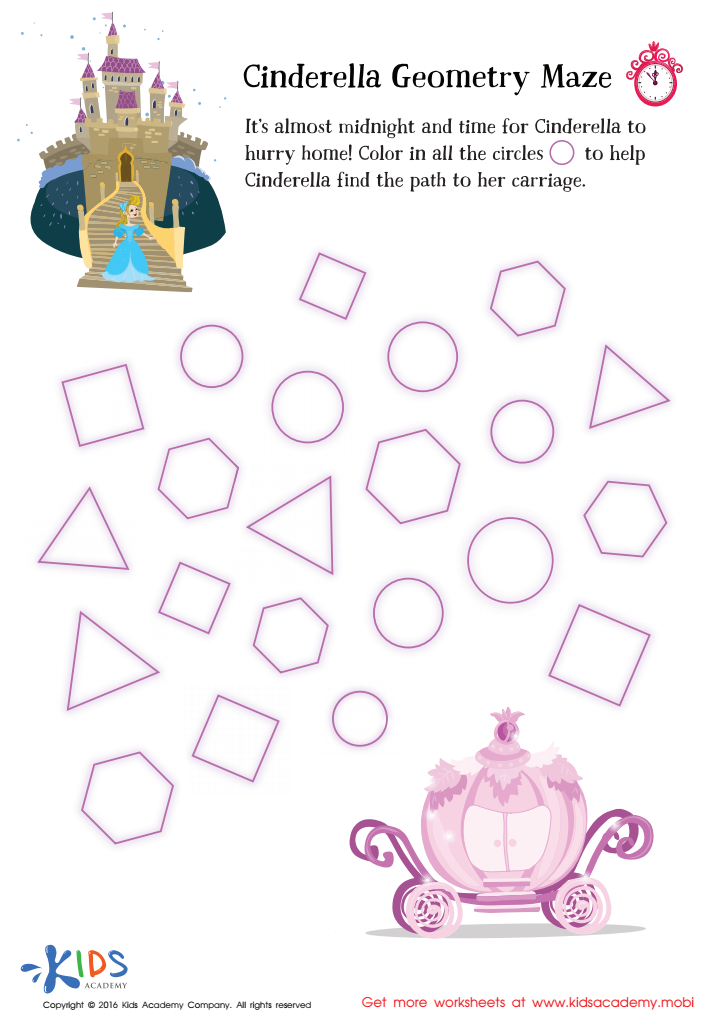
Cinderella Geometry Maze Worksheet

Help Cinderella hurry home! Your preschooler will have fun problem-solving and sorting shapes in this geometric maze. As they shade in the circles, they'll be helping their favorite princess reach her carriage on time. Not only that, but they'll strengthen their logic skills in the process. Get this and other fairy tale mazes to keep them entertained while learning.
Cinderella Geometry Maze Worksheet
Worksheet
Geometric Shapes for Kids: Learning to Draw Crescents And Triangles PDF

Learning to Draw Crescents And Triangles Worksheet
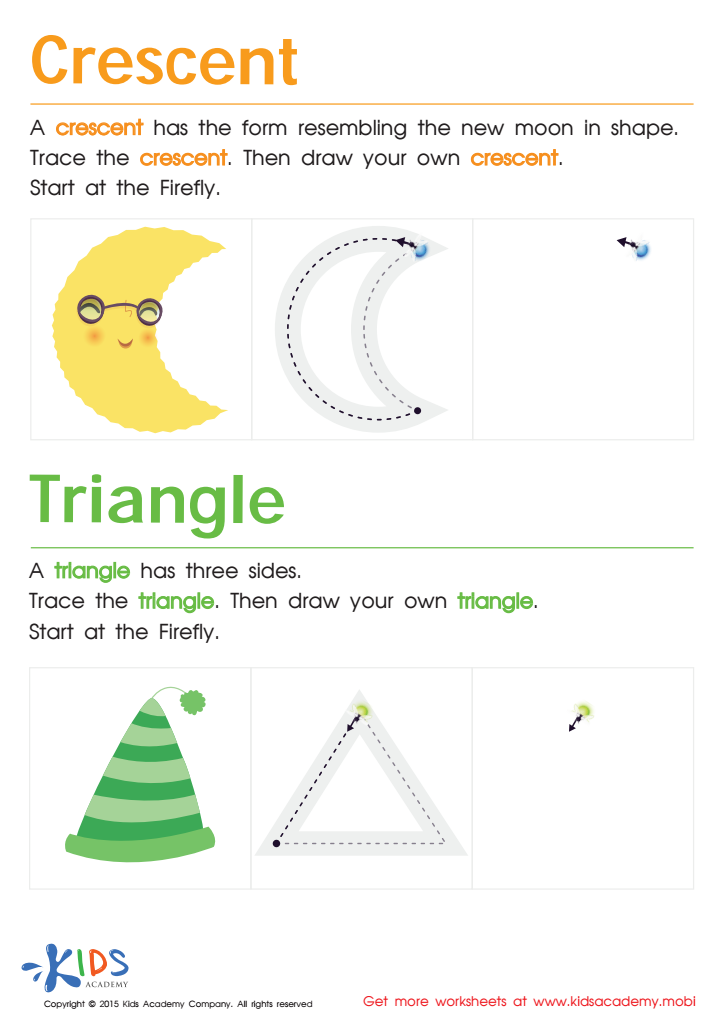
Help your kids draw a crescent and triangle with this free printable worksheet! Start by tracing a crescent in the form of the new moon, and then teach them that a triangle has three sides and looks like a hat. Find more geometry practice worksheets at Kids Academy!
Learning to Draw Crescents And Triangles Worksheet
Worksheet
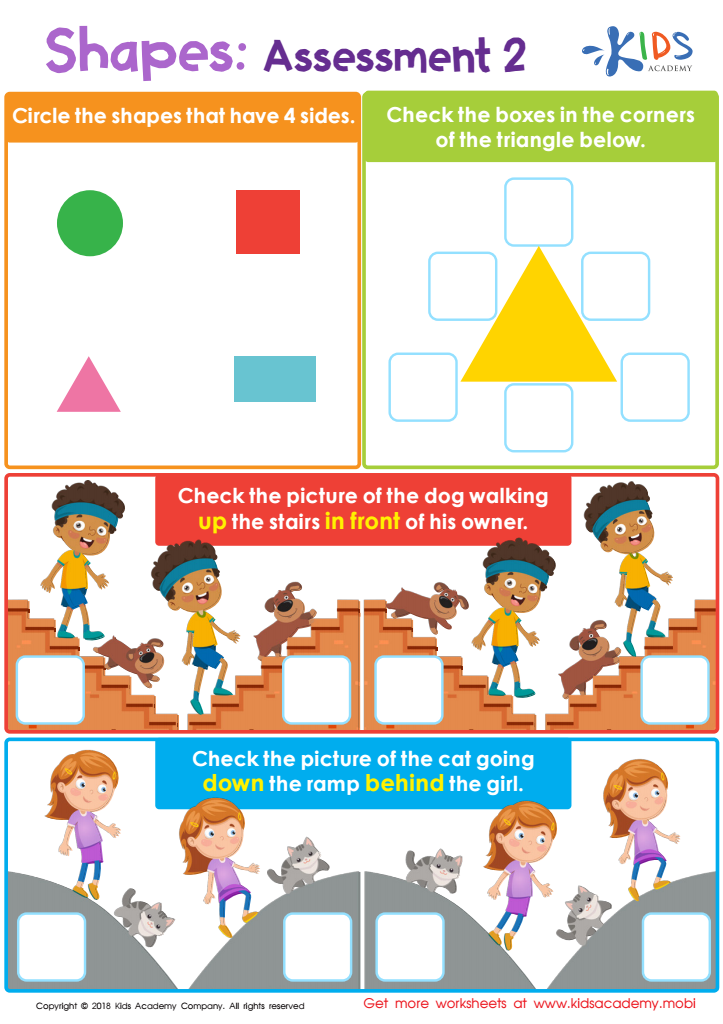
Shapes: Assessment 2 Worksheet

Shapes: Assessment 2 Worksheet

This geometry worksheet assesses a student's knowledge of shapes and positional words. They must identify shapes with 4 sides and corners on a triangle. The worksheet also tests understanding of words like "up", "front", "down" and "behind". Easily determine what your student knows about these concepts with this downloadable worksheet!
Shapes: Assessment 2 Worksheet
Worksheet
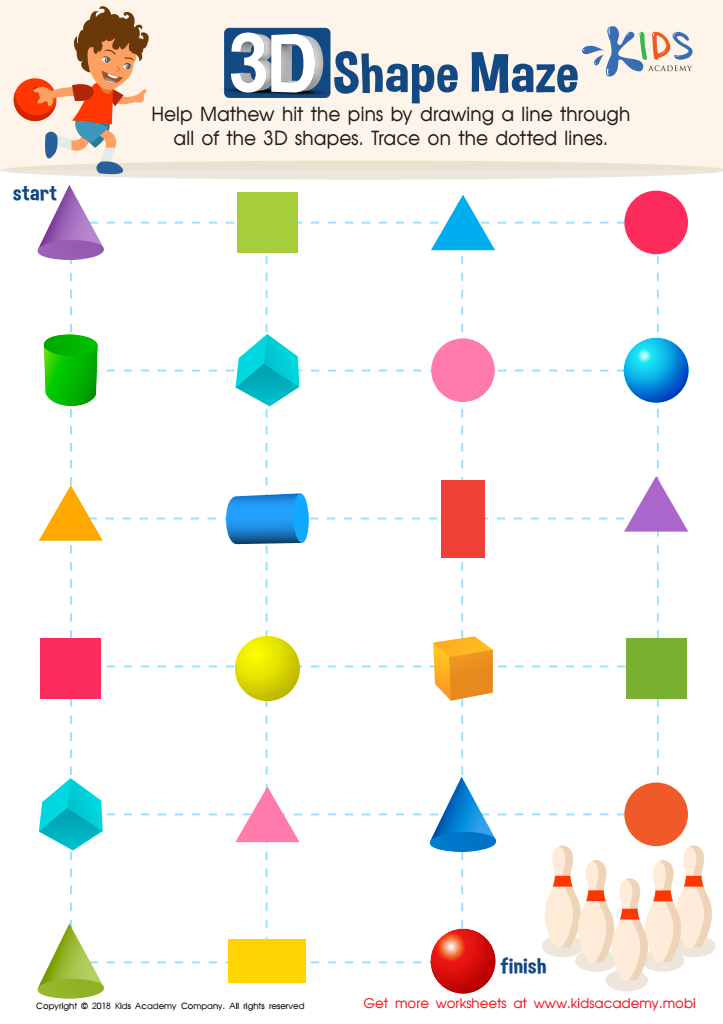
Shapes maze geometry worksheet

Shapes Maze Geometry Worksheet
Boost your child's geometry skills with this shapes maze worksheet! Help Matthew bowl a strike by guiding him through the maze to draw a line through every 3D shape. It's a fun and challenging way to practice foundational math skills!
Shapes Maze Geometry Worksheet
Worksheet
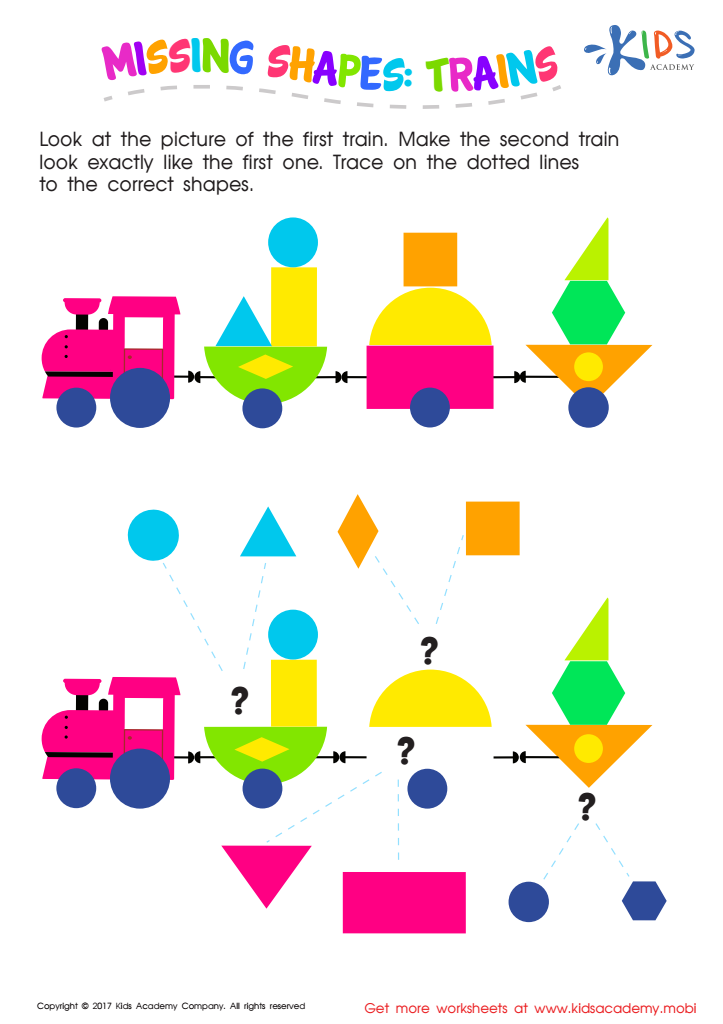
Missing Shapes: Trains Worksheet

Missing Shapes: Trains Worksheet

Before beginning, ask your child what the object in the picture is, the sound it makes and where it can be found. If they know, confidently move on. Help them make the second train look like the first by tracing dotted lines. Hold their hand for guidance.
Missing Shapes: Trains Worksheet
Worksheet
The Circle Maze Worksheet

The Circle Maze Worksheet

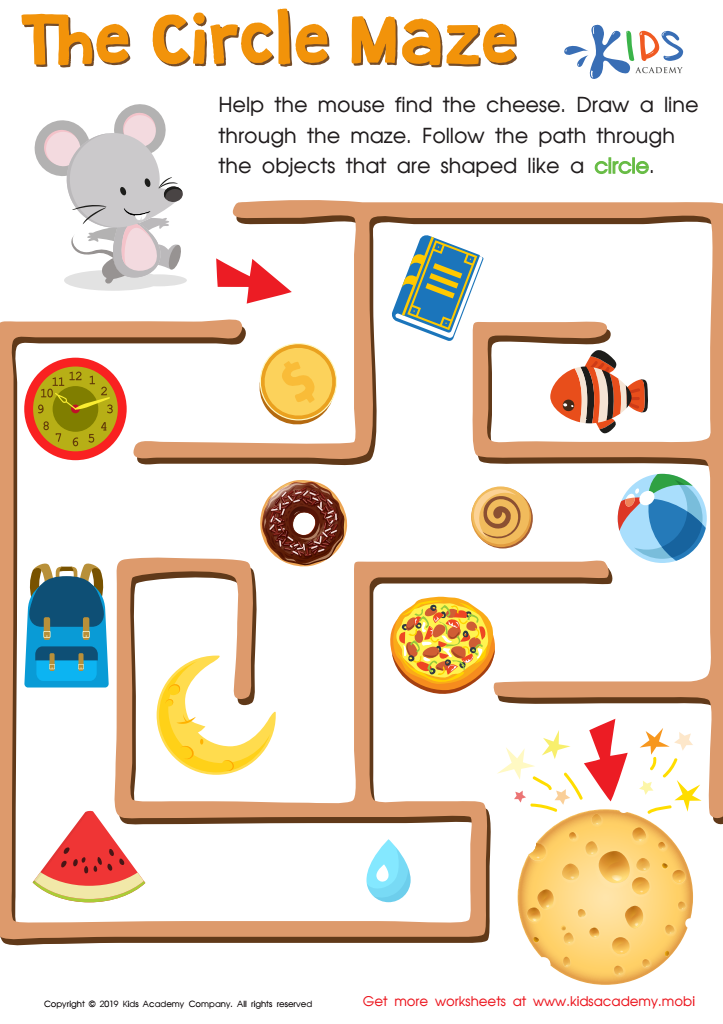
Kids can have fun learning shapes with this maze worksheet. They can help the mouse find its cheese by tracing the path of a circle through the maze. This printable is great for classroom learning or as an activity at home.
The Circle Maze Worksheet
Worksheet
Matching 2D and 3D Shapes Worksheet


Matching 2D and 3D Shapes Worksheet

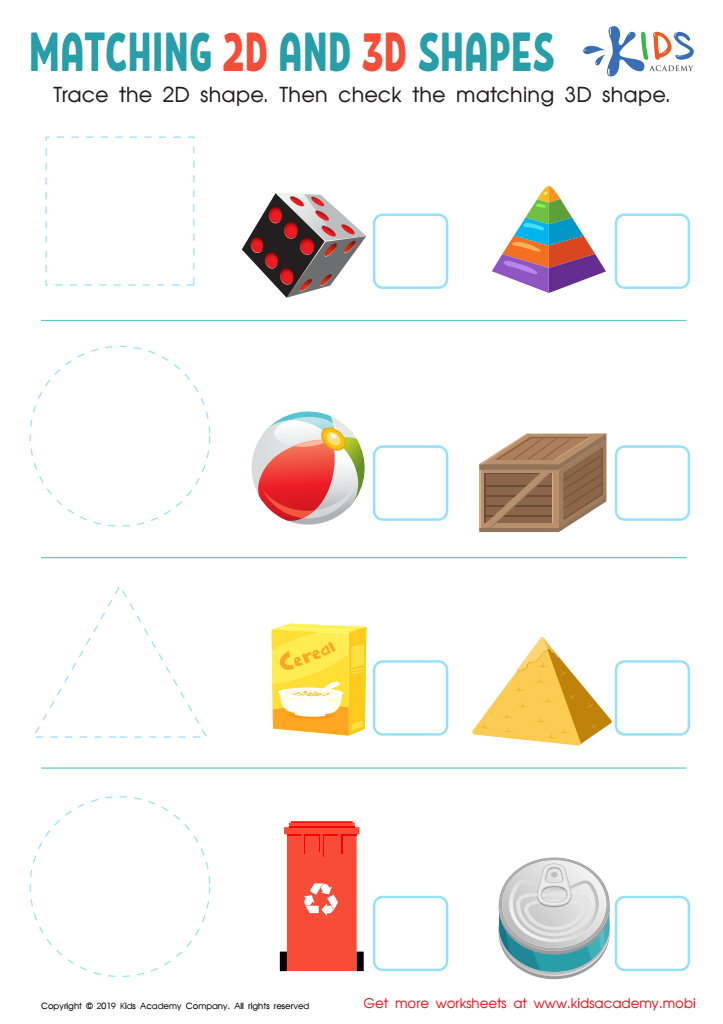
Before starting this worksheet, ask your kids what shapes they know and point out the 2D and 3D shapes on it. Help your kids trace the 2D shapes and then match them to the 3D versions. It'll be a fun new world for your kids to explore!
Matching 2D and 3D Shapes Worksheet

Worksheet


Problem-solving skills in geometry for 6-year-olds are crucial for several reasons, making it essential for parents and teachers to prioritize their development. First, geometry exposes young learners to fundamental mathematical concepts, such as shapes, spatial relationships, and measurements. Understanding these concepts lays the groundwork for more advanced math skills in the future.

Second, problem-solving fosters critical thinking. When children tackle geometric problems, they learn to analyze situations, identify patterns, and develop strategies to find solutions. This cognitive development is not just limited to math; it enhances reasoning skills applicable in everyday life.

Moreover, engaging in problem-solving activities boosts creativity and curiosity. Young learners experiment with different ways to approach challenges, which nurtures their ability to think outside the box—a valuable life skill.

In addition, early exposure to geometry helps improve fine motor skills through hands-on activities like drawing shapes or building models.

Finally, strong problem-solving capabilities in geometry can boost children's confidence in their abilities. When they succeed in solving challenges, they build a positive mindset towards learning and are more likely to embrace complexities in academics as they progress. Supporting these skills now ensures a solid foundation for their lifelong learning journey.