Addition Practice Numbers Worksheets for 6-Year-Olds - Page 2
28 filtered results
-
From - To
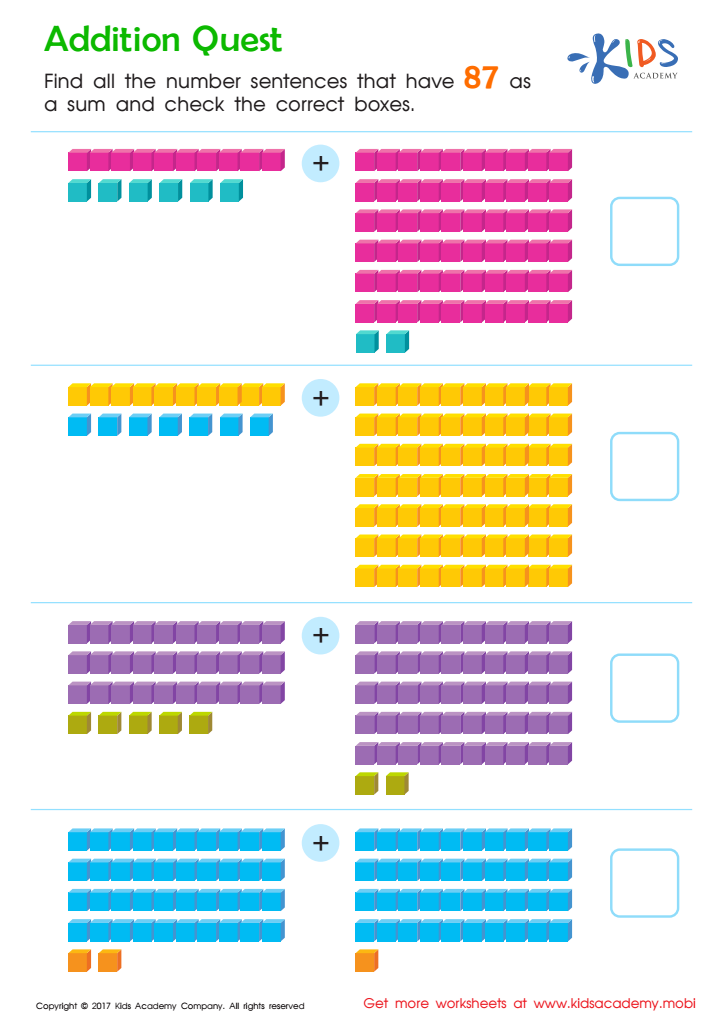
Addition Quest Worksheet: Part 1
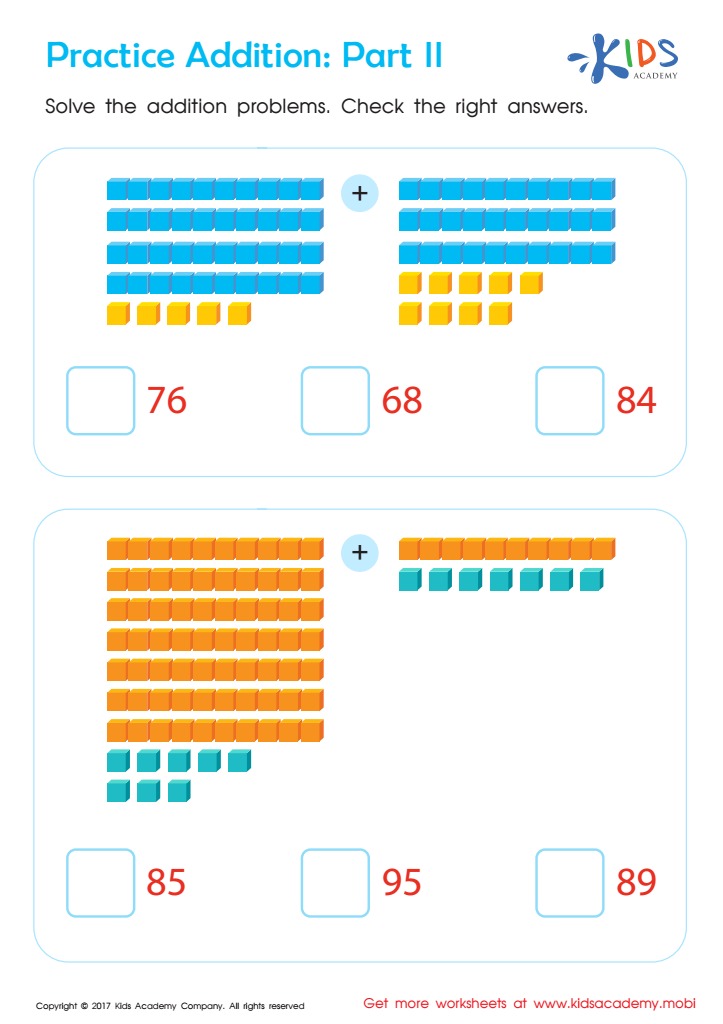
Practice Addition: Part 2 Worksheet
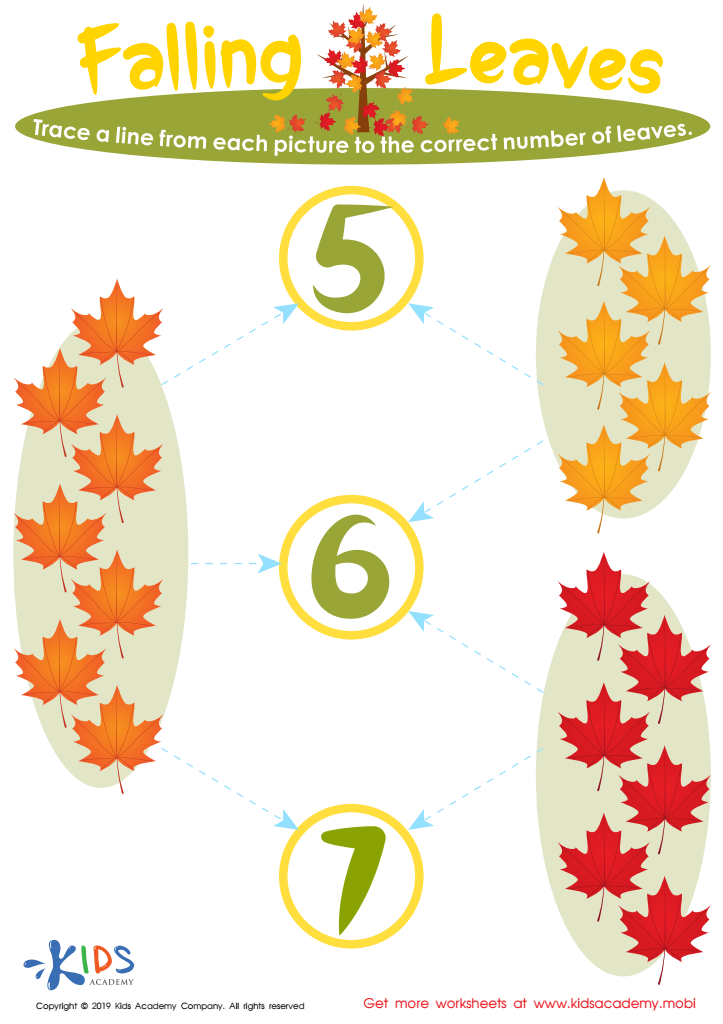
Falling Leaves Worksheet
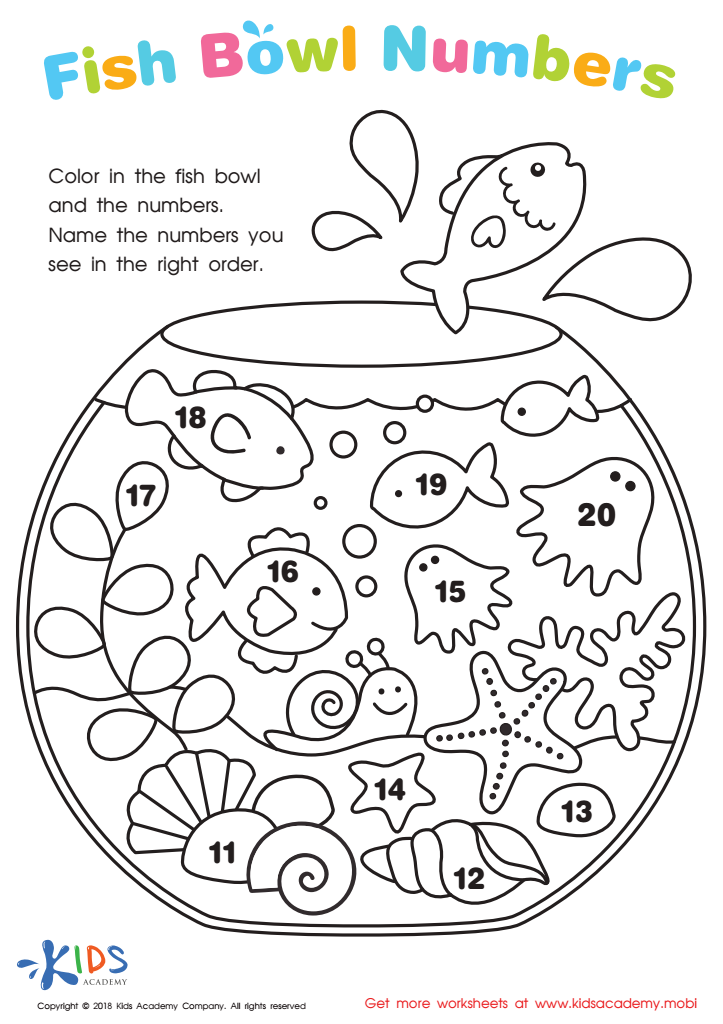
Fish Bowl Numbers Worksheet
 Assign to My Students








Addition practice is crucial for 6-year-olds as it lays the foundation for their mathematical development. At this age, children are beginning to build a basic understanding of numbers and quantities, which is vital for their academic success. Mastery of simple addition boosts their confidence, enhances their problem-solving skills, and prepares them for more complex mathematical concepts in the future.
Practicing addition helps children develop numerical fluency, enabling them to perform mental calculations more efficiently. This skill not only supports their math education but also plays a significant role in everyday life, such as handling money, measuring time, or even managing simple recipes. When parents and teachers engage children in fun and interactive addition activities, they're making learning enjoyable, which fosters a positive attitude toward mathematics.
Moreover, addition practice is a great way to reinforce critical thinking and reasoning abilities. Through challenges, games, or real-world applications, children learn to approach problems strategically. Parents and teachers can play a pivotal role in nurturing these skills, ensuring that children are prepared not just for elementary math but for lifelong learning. Ultimately, caring about addition practice means investing in children's future, equipping them with essential tools for both academic and everyday success.








