Pattern recognition Numbers Worksheets for 6-Year-Olds
4 filtered results
-
From - To
Our Pattern Recognition Numbers Worksheets for 6-Year-Olds offer engaging activities to boost early math skills. Perfect for young learners, these printable worksheets help children identify and predict numerical patterns using vibrant illustrations and fun exercises. By fostering critical thinking and problem-solving skills, these worksheets aid in solidifying number sequences and strengthening foundational math abilities. Ideal for both homeschooling and classroom use, they provide an interactive way to make learning numbers exciting and intuitive. Ignite your child's love for math with our expertly designed pattern recognition worksheets, setting the stage for future academic success.
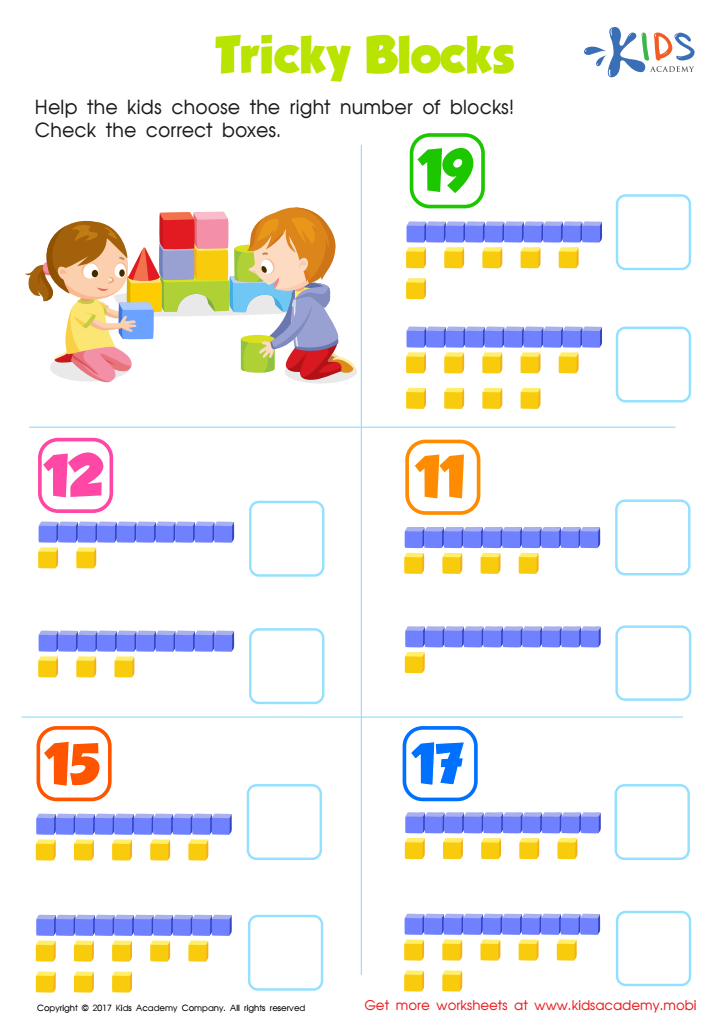
Tricky Blocks Worksheet
 Assign to My Students
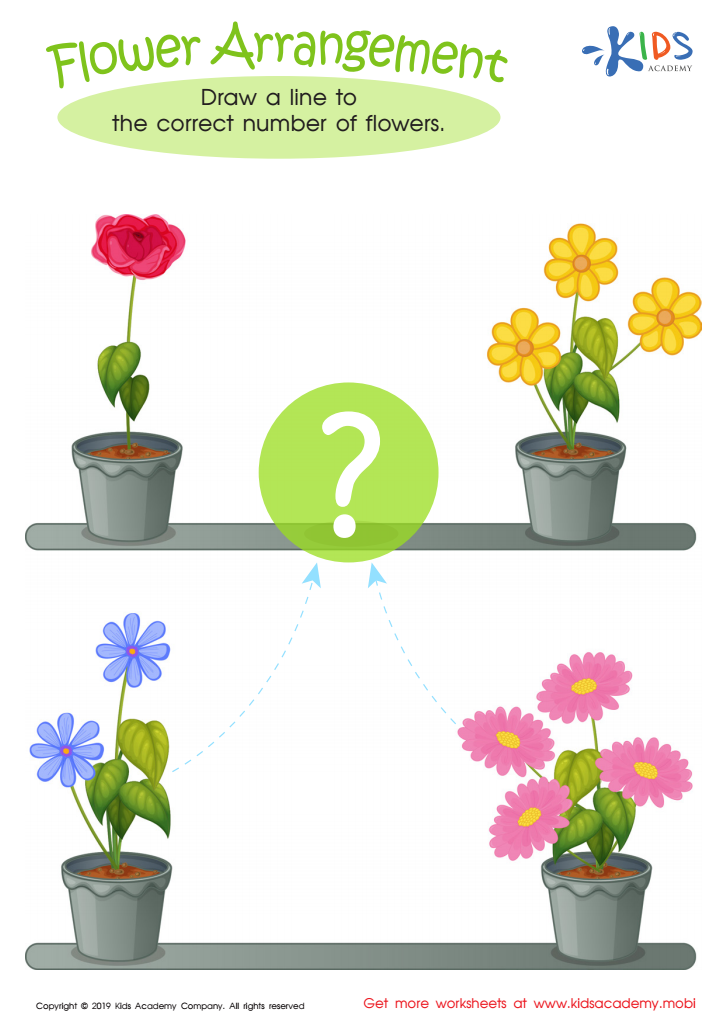
Flower Arrangement Worksheet
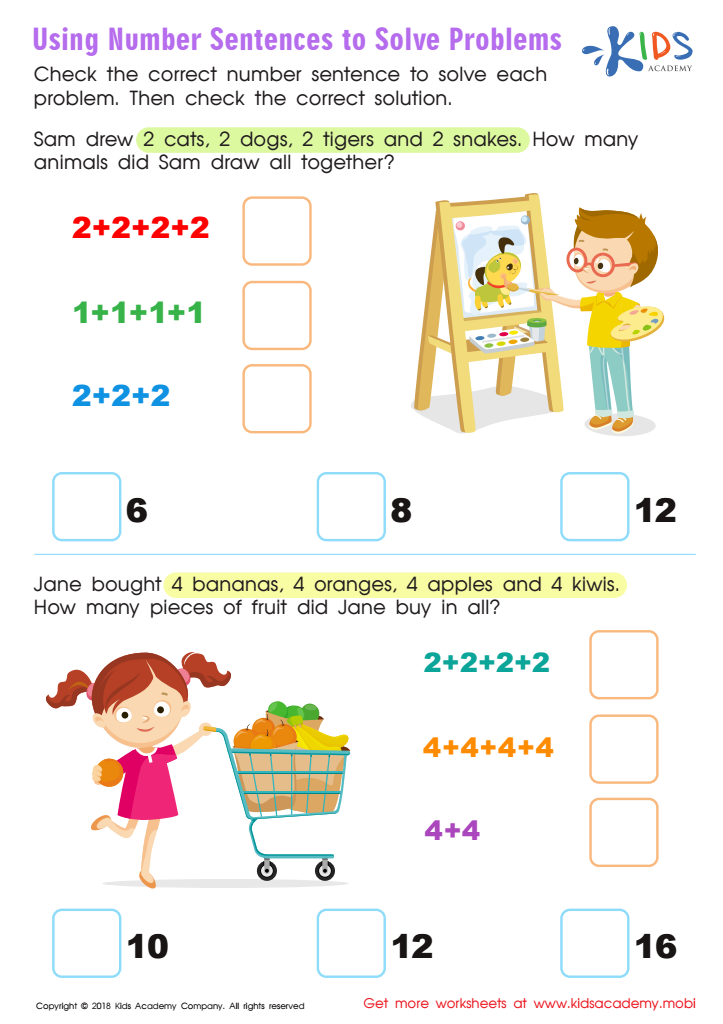
Using Number Sentences to Solve Problems Worksheet
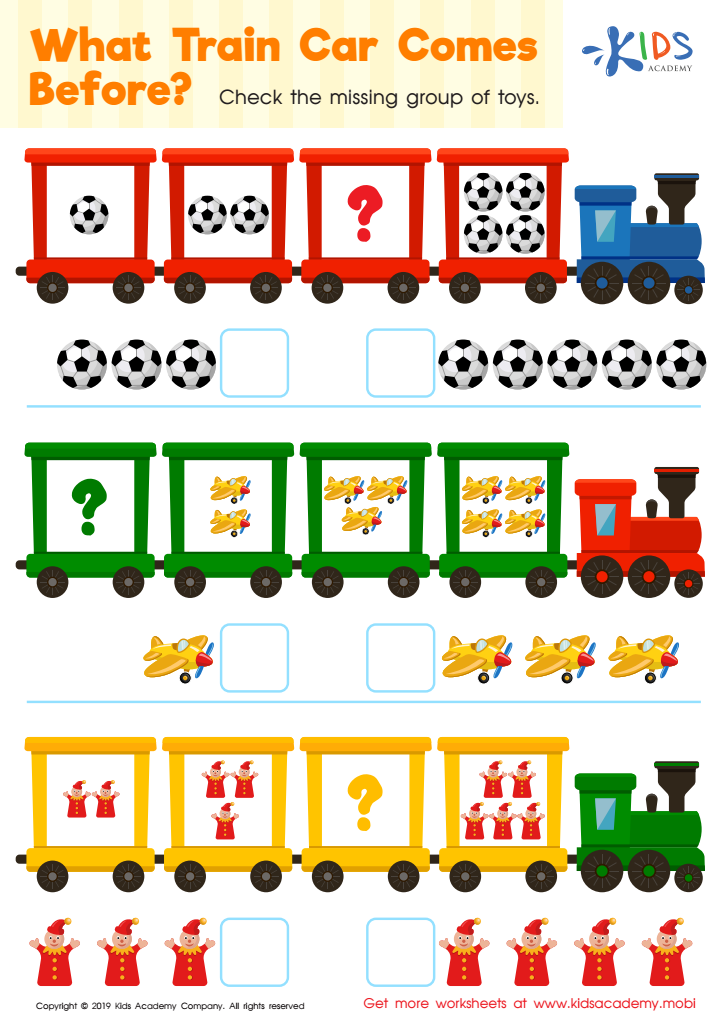
What Train Car Comes Before? Worksheet








Pattern recognition in numbers is a crucial skill for 6-year-olds as it lays the foundation for many aspects of cognitive development and academic learning. First, identifying and understanding patterns is directly linked to early mathematics education. Grasping numerical patterns helps children make sense of mathematical concepts such as counting, addition, subtraction, and even the basics of multiplication and division later on. When children recognize sequences and repetitive sets in numbers, it enhances their ability to predict future numbers, thereby improving problem-solving skills.
Additionally, pattern recognition extends beyond math. It promotes logical thinking and enhances cognitive abilities like memory and attention. Recognizing patterns in numbers encourages children to observe relationships and make connections between different pieces of information, a skill useful in all subjects, including reading and science.
Moreover, early exposure to pattern recognition can boost confidence. When children successfully identify and extend patterns, it gives them a sense of achievement, motivating them to tackle more complex challenges. It also helps in developing analytical thinking and critical reasoning, which are essential life skills.
Therefore, parents and teachers should nurture this skill early on to provide a strong academic foundation and foster overall intellectual growth in young learners.








