
Cognitive Development Math Worksheets for 6-Year-Olds
64 filtered results
Difficulty Level
Grade
Age
-
From - To
Subject
Activity
Standards
Enhance your child's cognitive abilities with our specially designed math worksheets for 6-year-olds. At Kids Academy, we focus on nurturing critical thinking, problem-solving, and analytical skills through engaging and age-appropriate activities. Our worksheets cover fundamental concepts, including counting, addition, subtraction, pattern recognition, and spatial understanding, providing a strong foundation for future academic success. Each worksheet is crafted to make learning fun and interactive, boosting your child's confidence and love for math. Ideal for classroom and home use, our cognitive development math worksheets are the perfect tool to support and enrich your child's educational journey.
Favorites
With answer key
Interactive
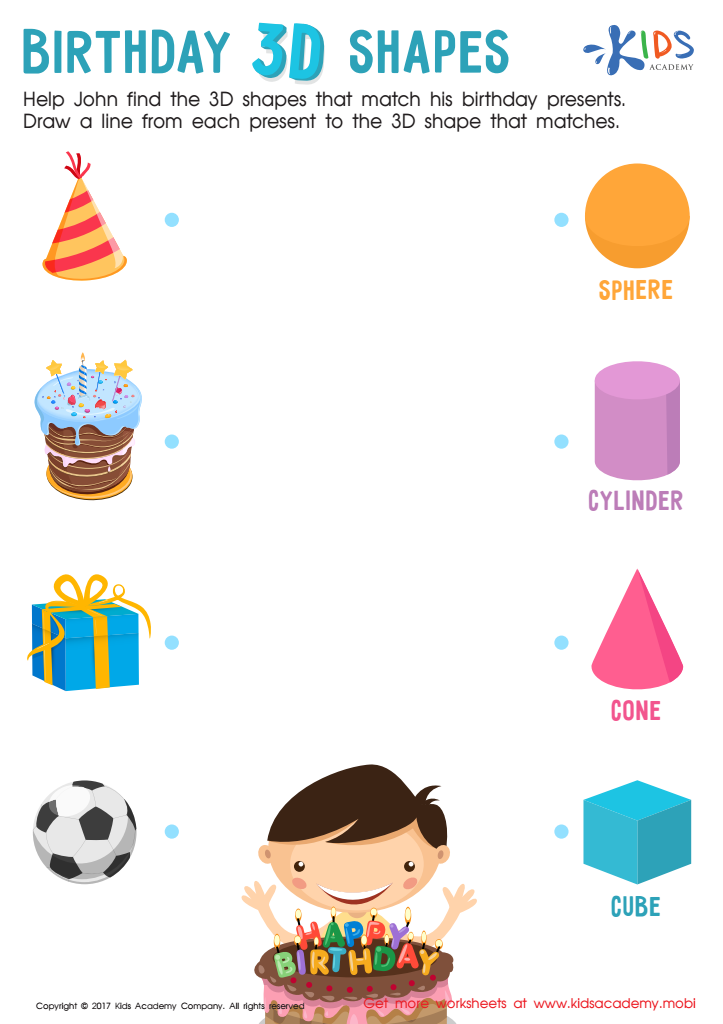
Birthday 3D Shapes Worksheet
It's John's birthday and he needs your help. Ask your kids to draw a line from each present to the matching 3D shape. First, check they understand the difference between 2D and 3D shapes. Then, they can help John figure out which 3D shape matches each present.
 Assign to My Students
Birthday 3D Shapes Worksheet
Worksheet
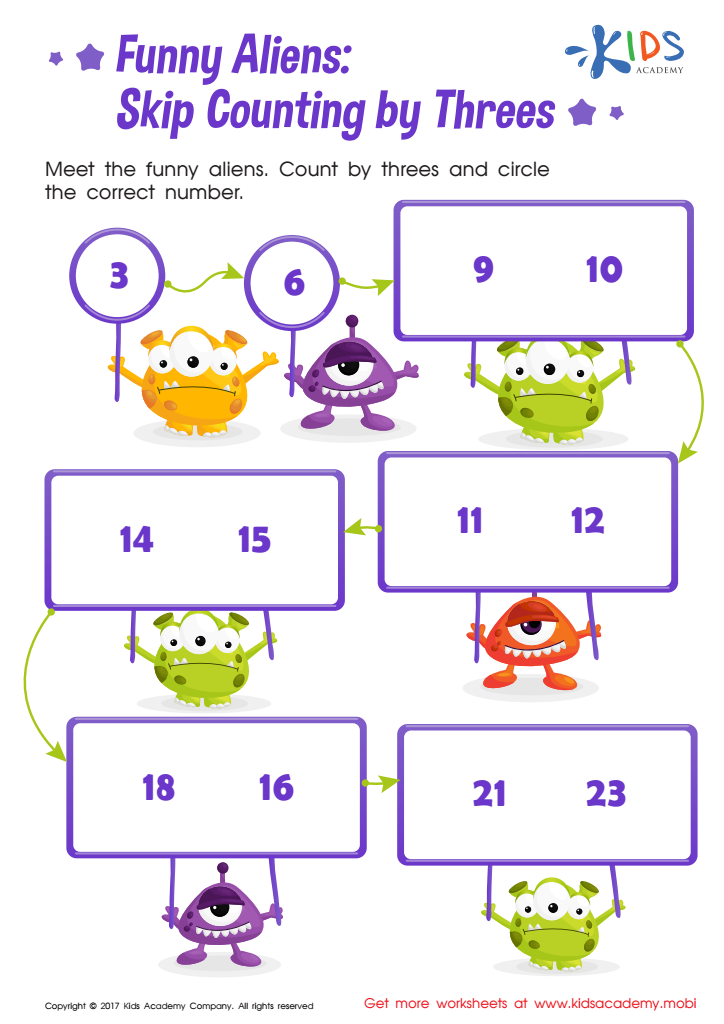
Skip Counting by 3s: Funny Aliens Printable
Blast off to outer space learning fun with this skip counting by 3 worksheet!
Skip Counting by 3s: Funny Aliens Printable
Worksheet
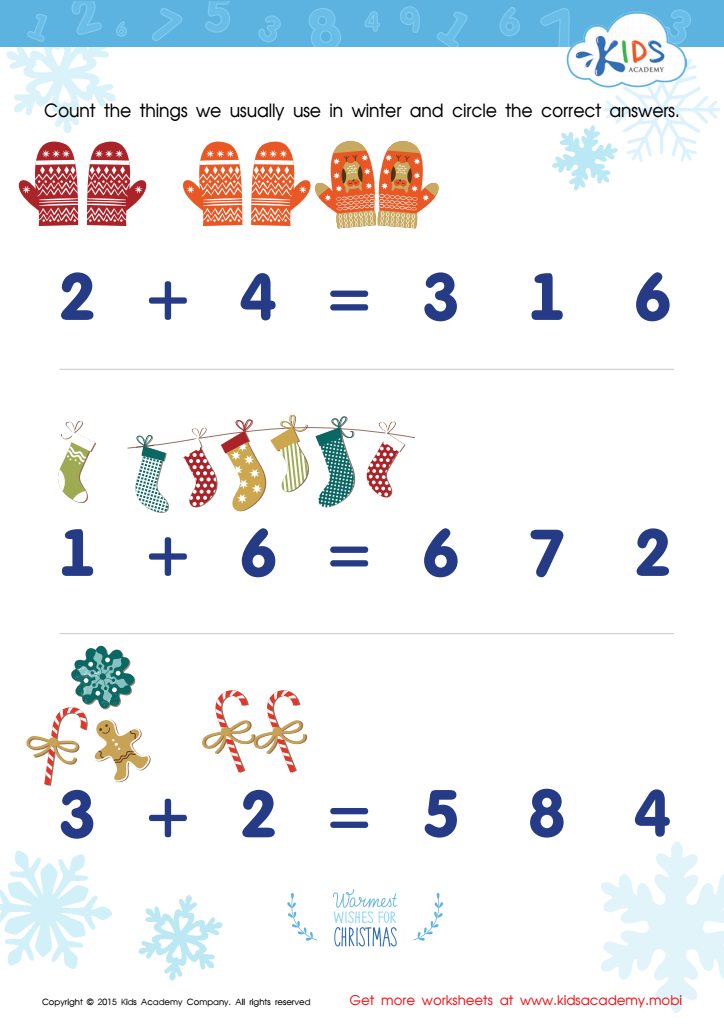
Count Winter Things Worksheet
This chilly winter afternoon, help your kid warm up with Kids Academy's free math worksheet - full of bright pictures and addition practice. Let them count the things and write in the numbers for a great brain training and math head start. Get more free math worksheets here. (80 words)
Count Winter Things Worksheet
Worksheet
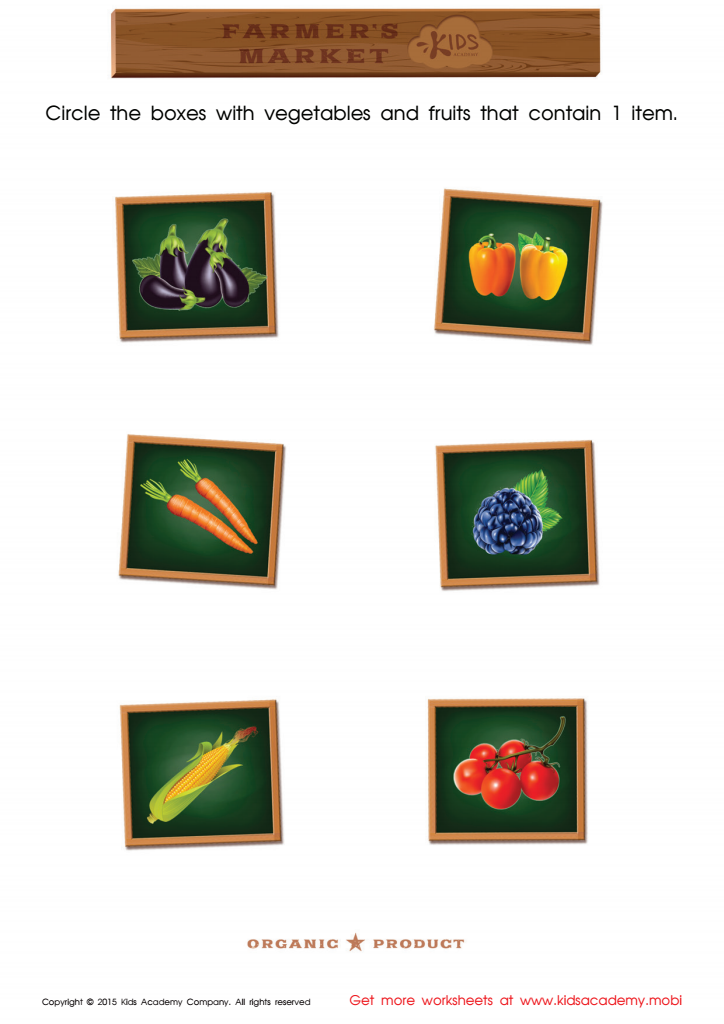
Count and Match Boxes with Vegetables
Print one and help your kid sharp his counting skills. With a variety of veggies to count, such as raspberries and eggplants, your little mathematician will have lots of fun.
Count and Match Boxes with Vegetables
Worksheet
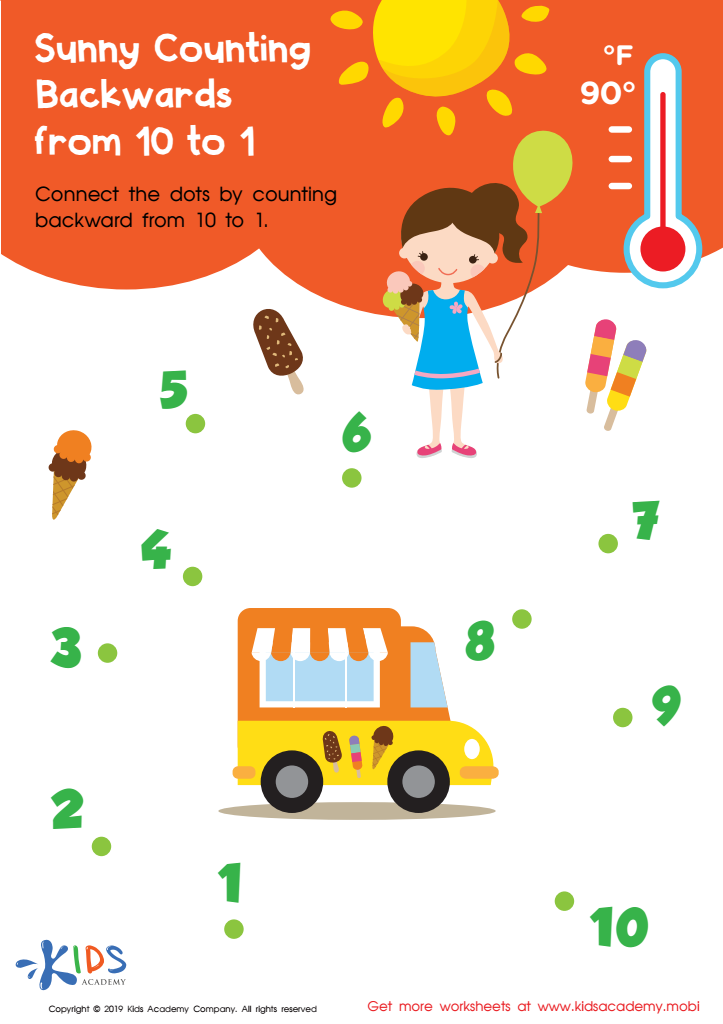
Sunny Counting Backwards from 10 to 1 Worksheet
Ask your kids what they like to do in summer heat. Look at the worksheet and ask them to identify the items in the picture. Count the numbers together then help them with connecting the dots from 10 to 1. It's a fun activity for the little girl, just like your kids.
Sunny Counting Backwards from 10 to 1 Worksheet
Worksheet
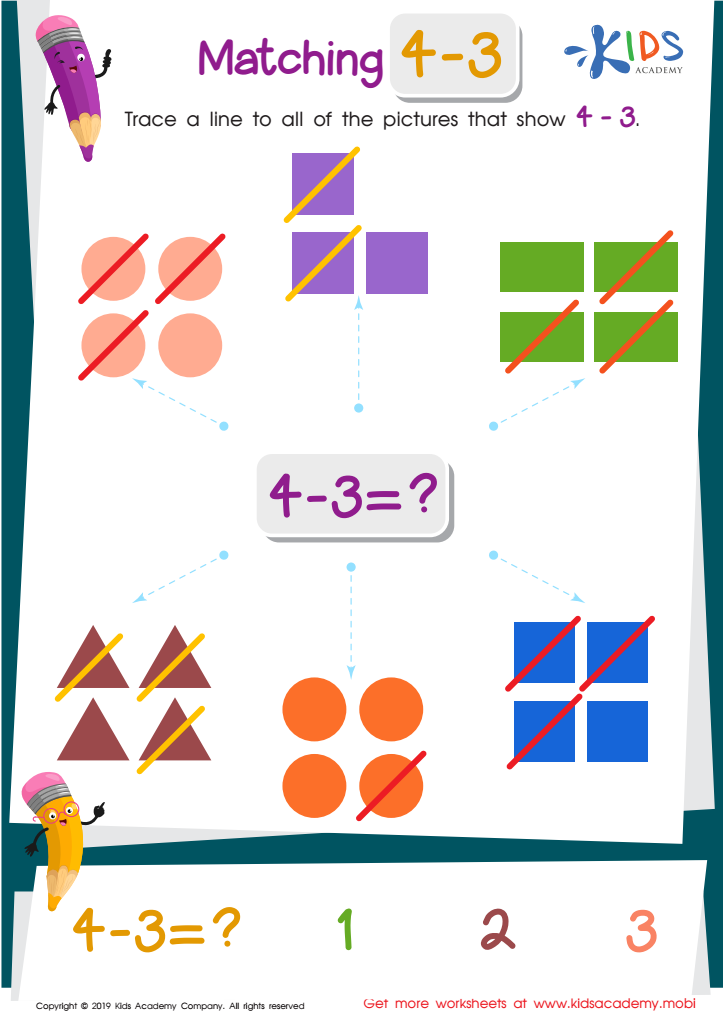
Matching 4 – 3 Worksheet
Help your kids master basic math concepts like addition and subtraction with fun exercises. Test their understanding with simple problems. For example, in this worksheet, ask them to count the objects in each picture and draw a line to the pictures that show 4 - 3 = 1. This will help them get better at solving equations.
Matching 4 – 3 Worksheet
Worksheet
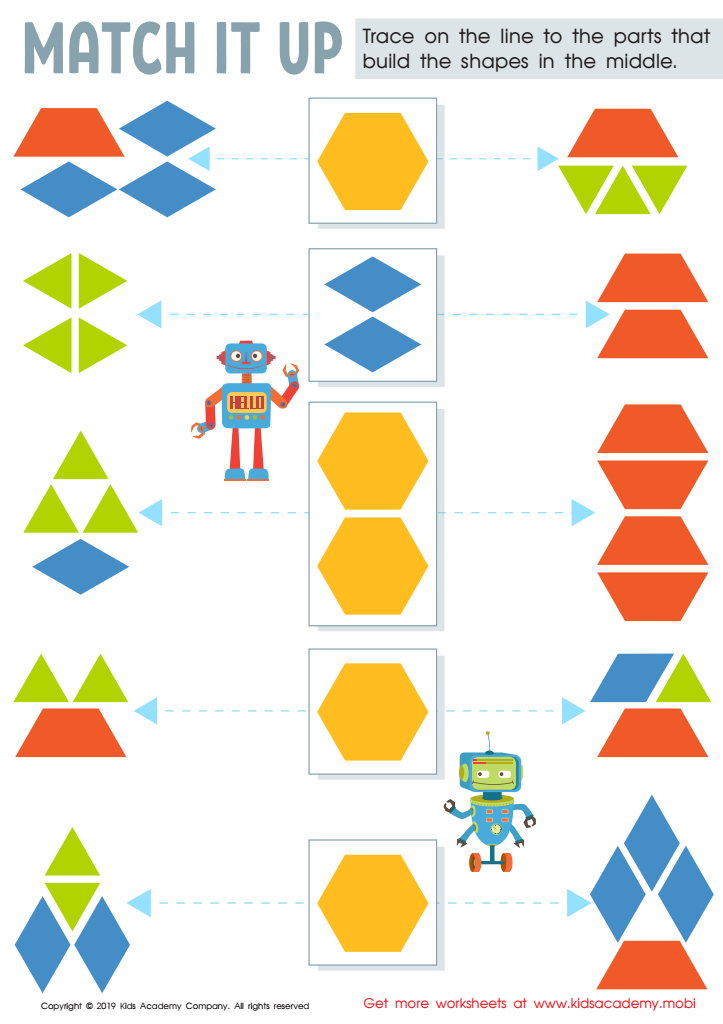
Match It up Worksheet
If your kids are into robots, they'll be thrilled to work on this worksheet. Ask them to name shapes they know, and help them draw and identify these shapes. Look at the shapes in the middle, and the sides. Finally, help your kids trace the lines to build the shapes in the middle.
Match It up Worksheet
Worksheet
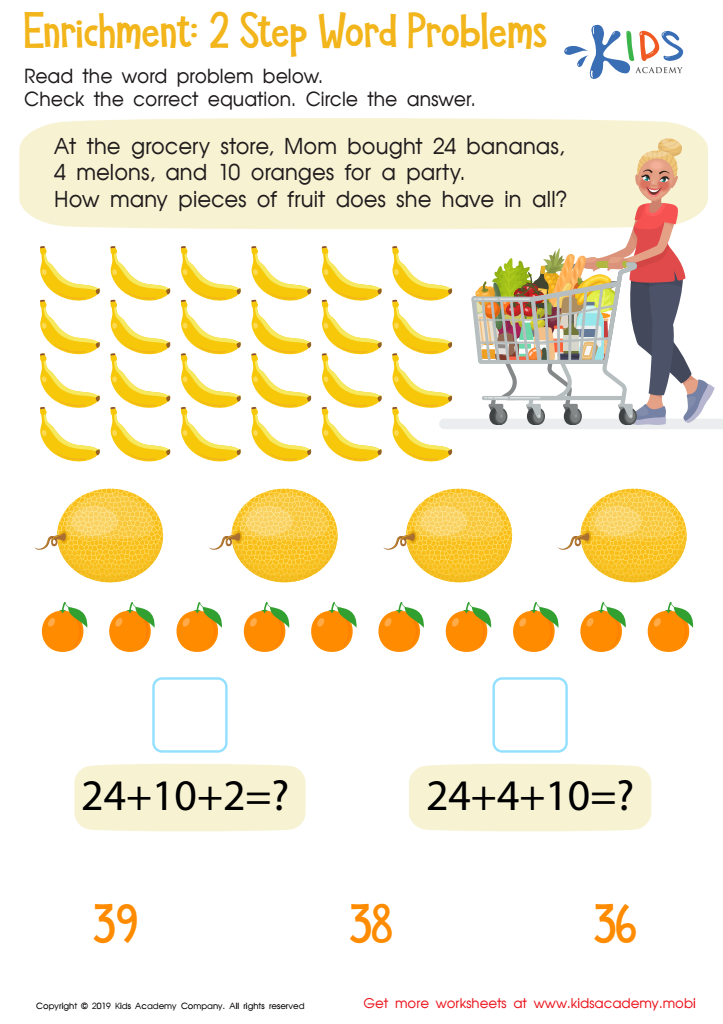
Enrichment -2 Step Word Problems Worksheet
Help your students learn math easier and faster with this colorful worksheet. Read the word problem and then guide them in checking the correct equation and finding the answer. Your students will benefit from the extra help, as they work through new concepts each day.
Enrichment -2 Step Word Problems Worksheet
Worksheet
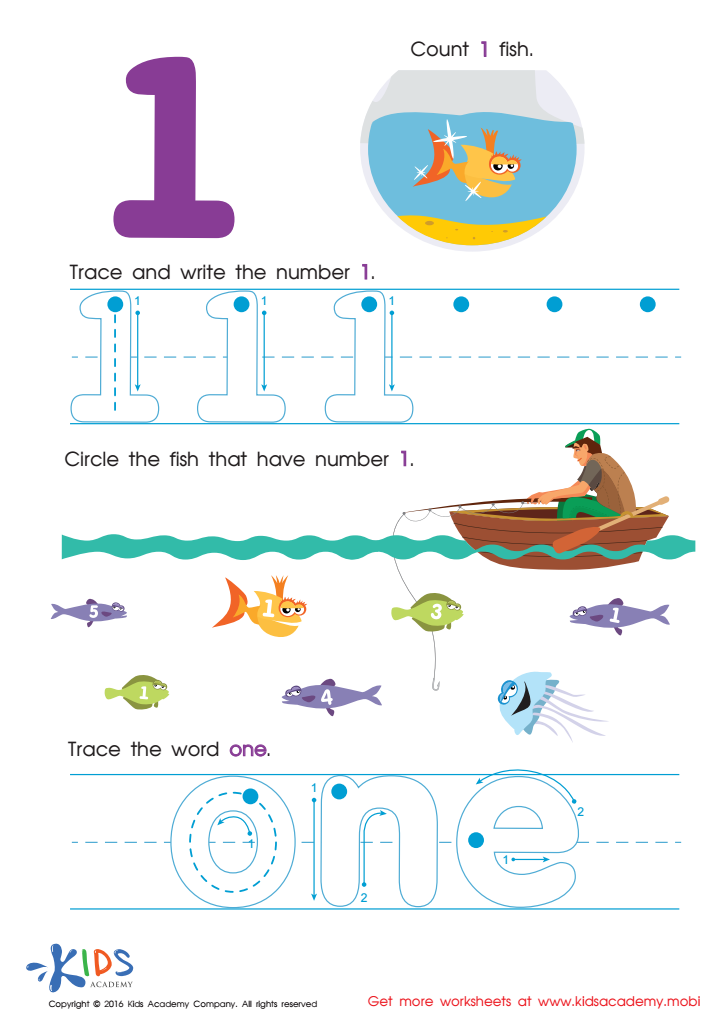
Learning to Write 1 Worksheet
Learning to write numbers can be easy and fun! Get this new number worksheet to help your child excel. Practice counting, tracing and writing the number “one”, then circle the fish with “1” on them. Revise spelling and have fun! Get more tracing numbers worksheets at Kids Academy and enjoy the learning process.
Learning to Write 1 Worksheet
Worksheet
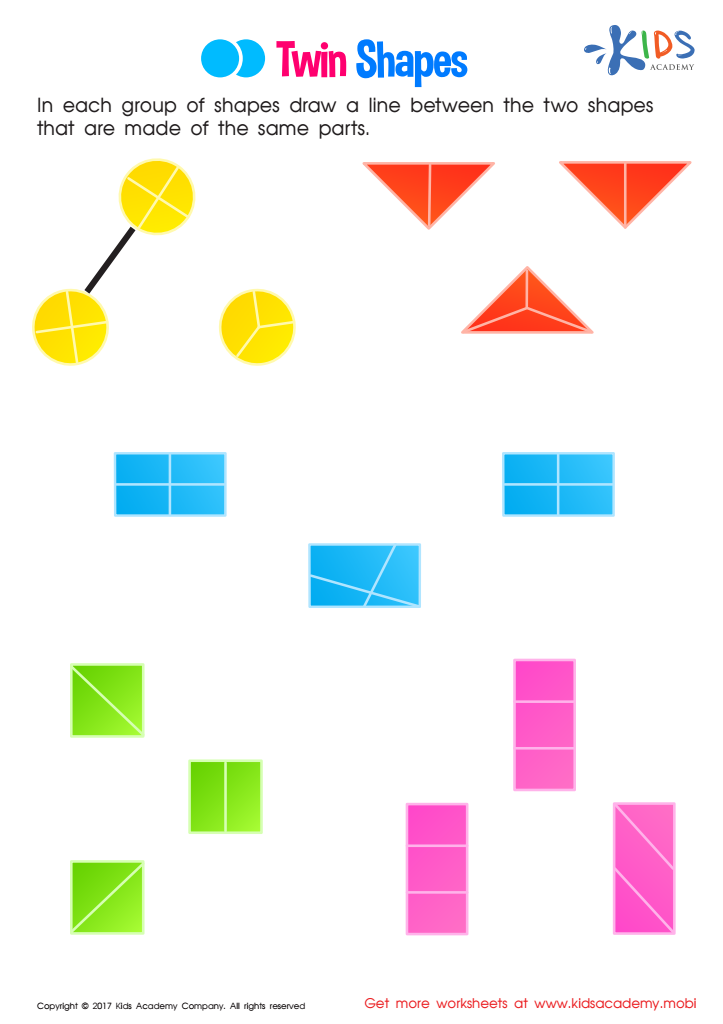
Twin Shapes Worksheet
Your students' goal in this worksheet is to find the twin shapes: drawing a line between two shapes made of the same parts. Likely, the first shapes encountered were circles, triangles, rectangles and squares - examples of which are seen frequently in everyday life. Encourage them to apply what they know and work out which is the twin shape!
Twin Shapes Worksheet
Worksheet
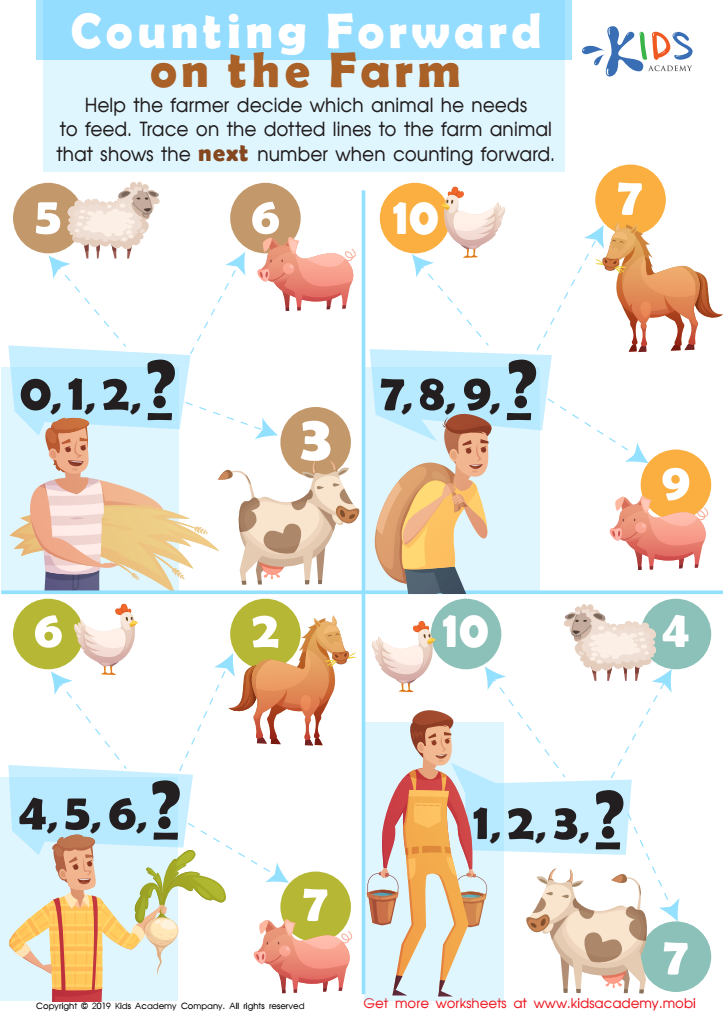
Counting Forward On the Farm Worksheet
Help your child practice counting with this fun worksheet. Have them help a farmer feed the right animal by counting on from a starting point. This activity will help them build number line thinking and refine fine motor skills.
Counting Forward On the Farm Worksheet
Worksheet
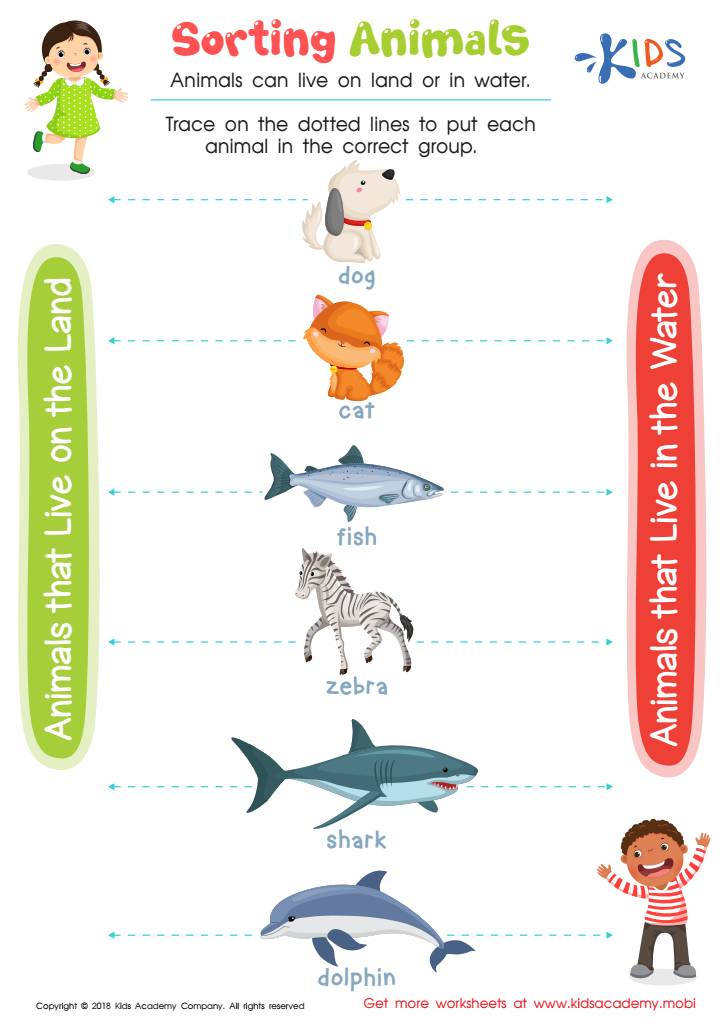
Sorting Animals Worksheet
Your kids will love this free, interactive worksheet! With image clues, they can read and trace the animal names, and then sort them into groups of land or water animals. It's an enjoyable way to boost their critical thinking, fine motor and prior knowledge skills.
Sorting Animals Worksheet
Worksheet
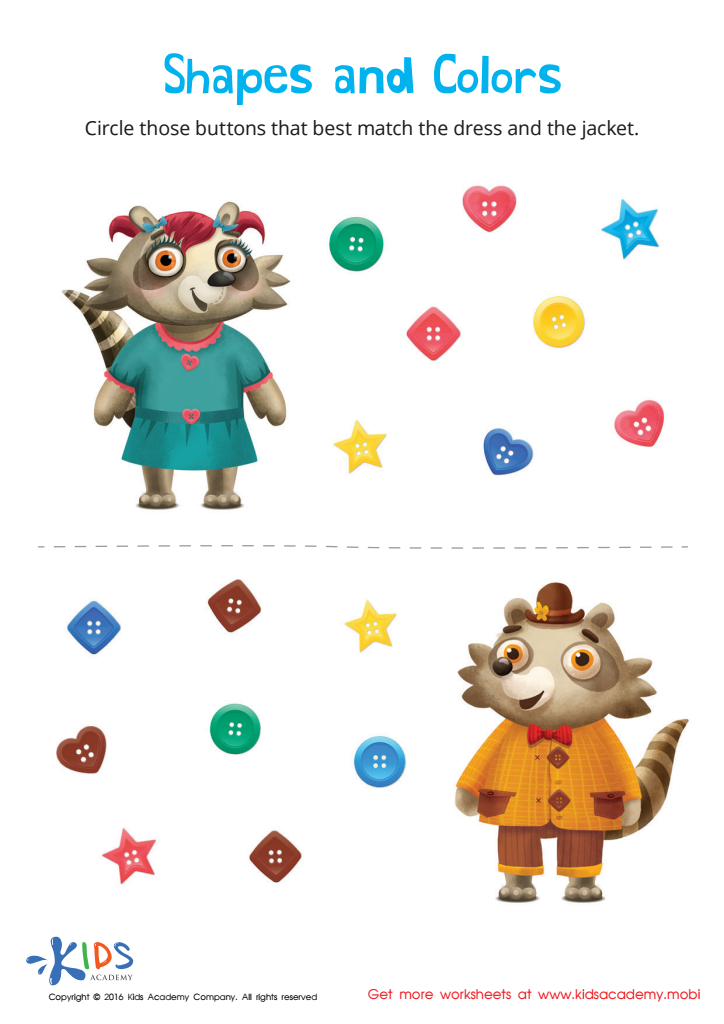
Matching: Shapes and Colors Worksheet
Help Mr. and Mrs. Raccoon find the right buttons to match their shirts! Kids will identify shapes and colors and learn to match them correctly.
Matching: Shapes and Colors Worksheet
Worksheet
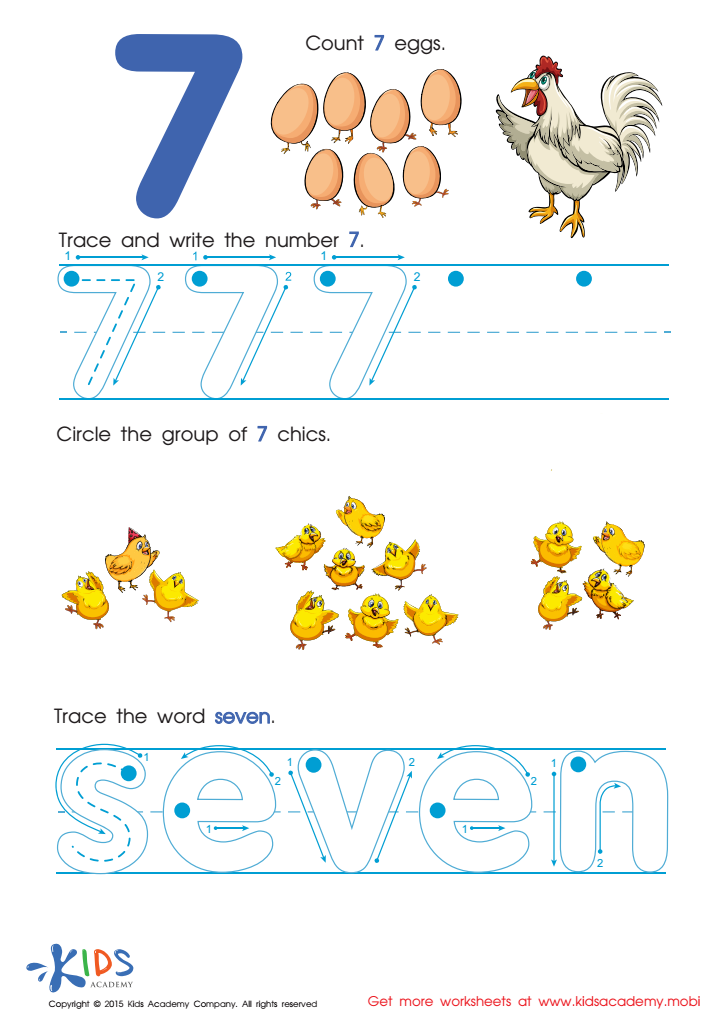
Trace And Write Number 7 with Fun Worksheet
Try one with a cute hen and its seven eggs! Trace and write the number 7, circle the group of seven chicks, and trace the word "seven". Fun and educational!
Trace And Write Number 7 with Fun Worksheet
Worksheet
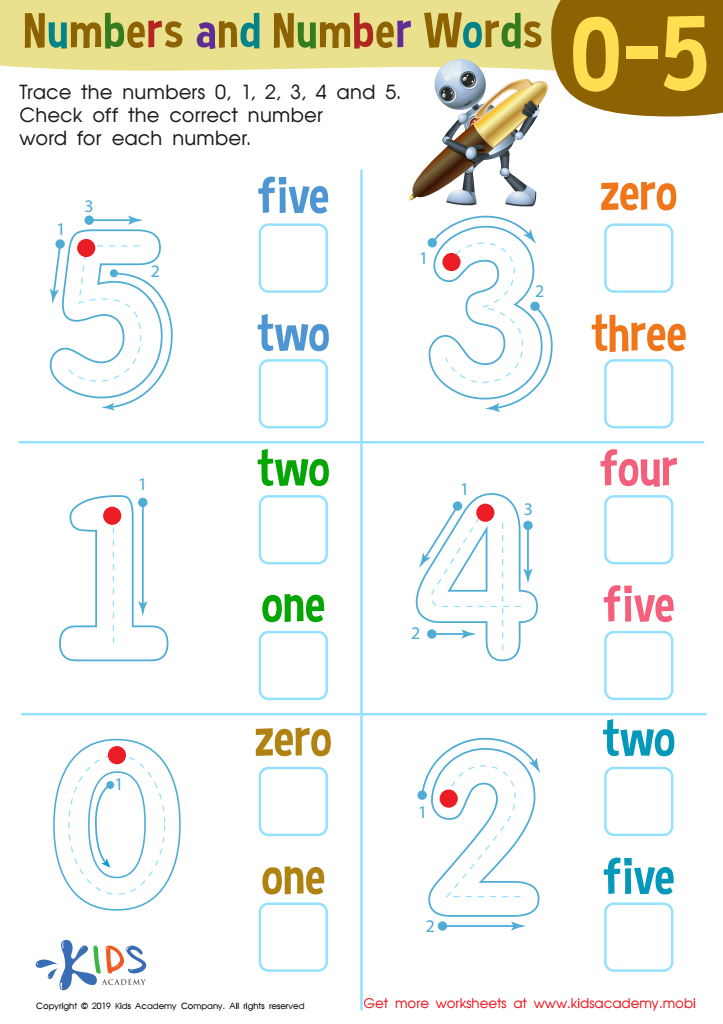
Numbers and Number Words Worksheet
Preschoolers can practice counting and recognizing numbers with this worksheet. Students trace the numbers zero through five and check the boxes next to each number to show the correct number word. Ideal for young kids, this printable helps them learn early math and number words.
Numbers and Number Words Worksheet
Worksheet
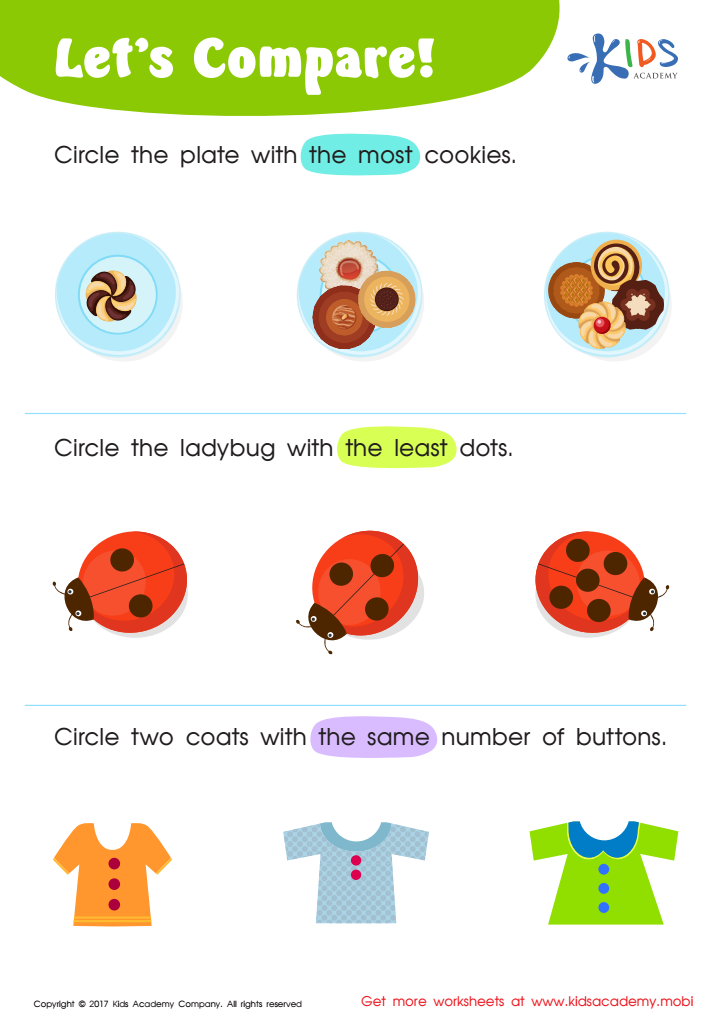
Matching: Classifying Toys by Size Worksheet
.
Have your young one's observation and counting skills ready for this worksheet; carefully look through the images and count the objects, then circle the plates with the least, most or equal number of patterns. Pay attention and have good counting abilities to make this task easy.
Matching: Classifying Toys by Size Worksheet
Worksheet
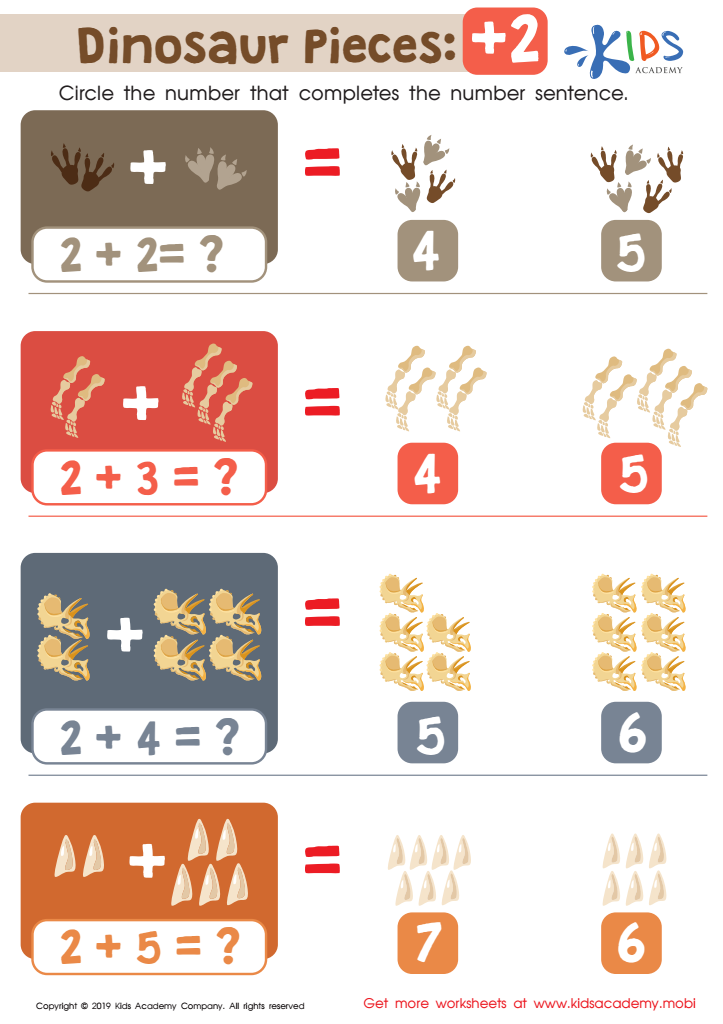
Dinosaur Pieces: +2 Worksheet
Kids love dinosaurs! See if your kids can solve these three equations featuring the mysterious creatures. Download the PDF and have them circle the number that completes each equation. Dinosaurs are extinct, not seen for thousands of years, but they can still help kids work on their math skills!
Dinosaur Pieces: +2 Worksheet
Worksheet
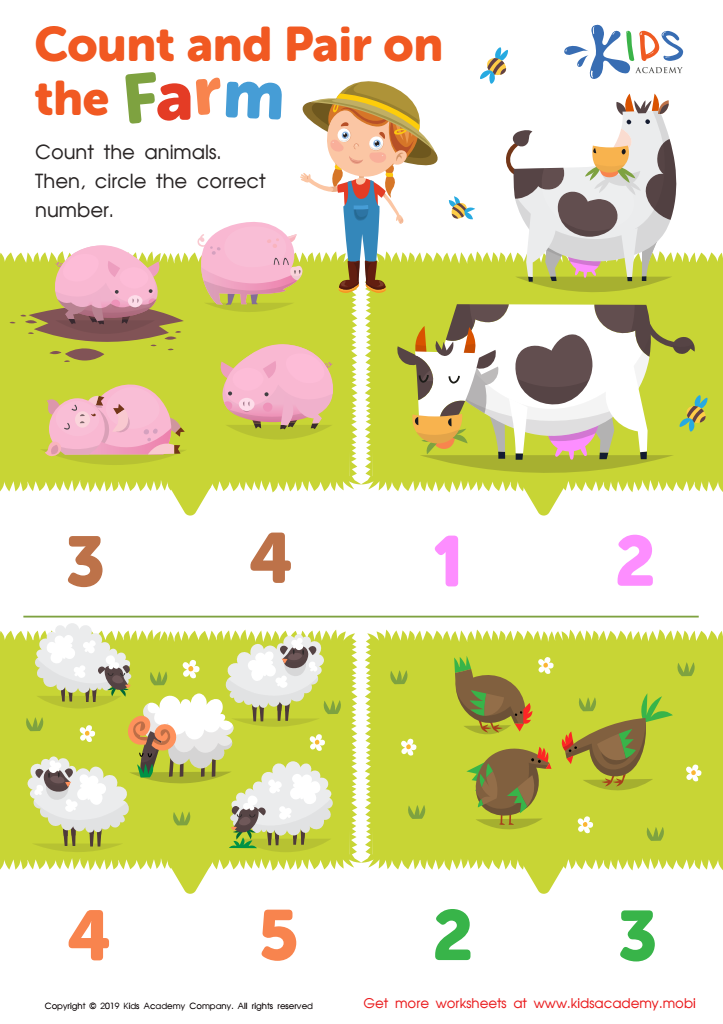
Count and Pair on the Farm Worksheet
Farms are essential to our society: they grow food and crops, and raise animals for us to use. Kids can have a great time at a farm, engaging in activities like identifying animals, counting them, and circling the correct number. On this worksheet, ask your kids to try all three!
Count and Pair on the Farm Worksheet
Worksheet
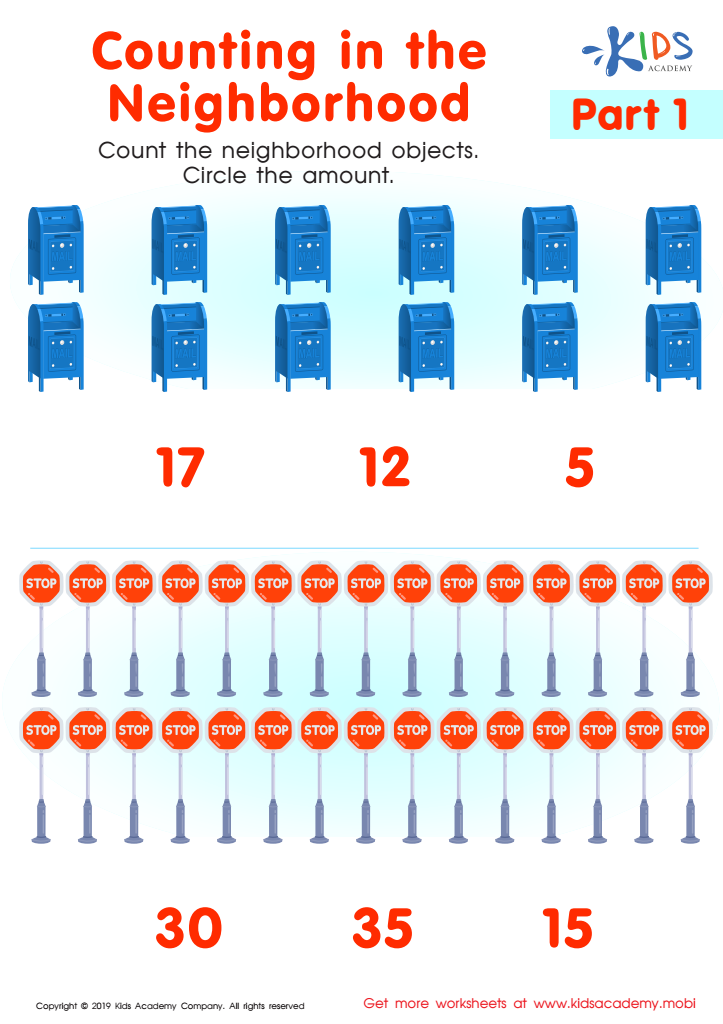
Counting in the Neighborhood Part1 Worksheet
Counting using one-to-one representation is a great way to develop a child's number sense. Use objects, pictures and images to help counting beyond the fingers. This worksheet uses everyday objects to practice counting. It encourages children to find the correct number and count forward. Give it a try!
Counting in the Neighborhood Part1 Worksheet
Worksheet
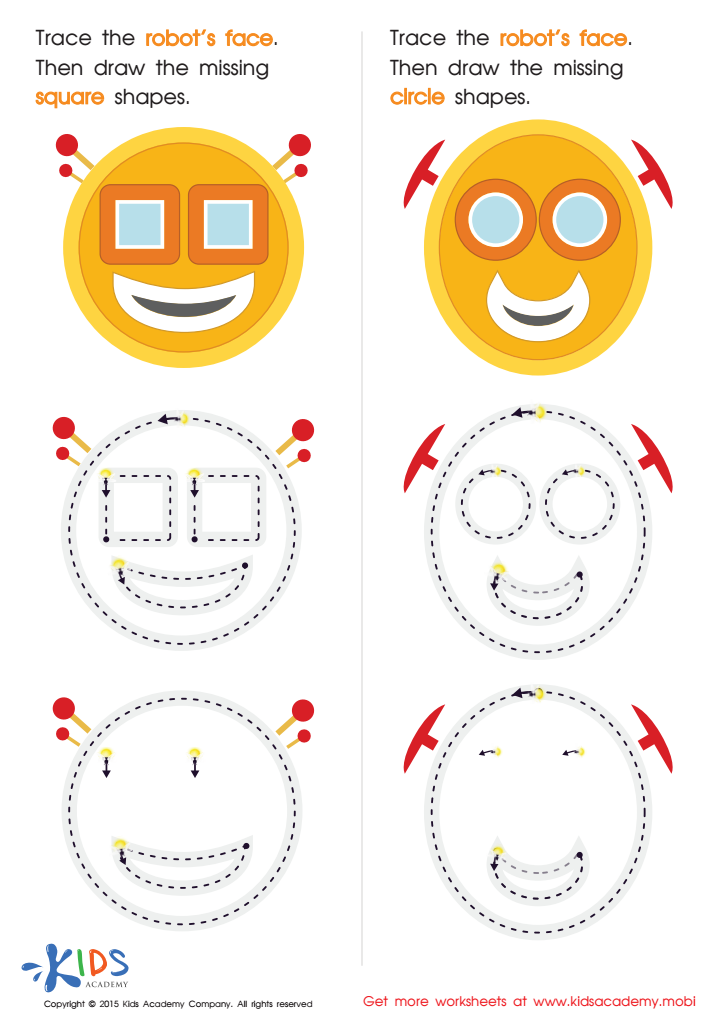
Practicing to Draw Circles And Squares Printable
Download our free printable geometry worksheets to learn shapes with your preschoolers. Trace Robot's face, draw the square parts and round shapes, remember the names for each one. Get more materials for kids at Kids Academy and make learning fun with our free printable geometry worksheets.
Practicing to Draw Circles And Squares Printable
Worksheet
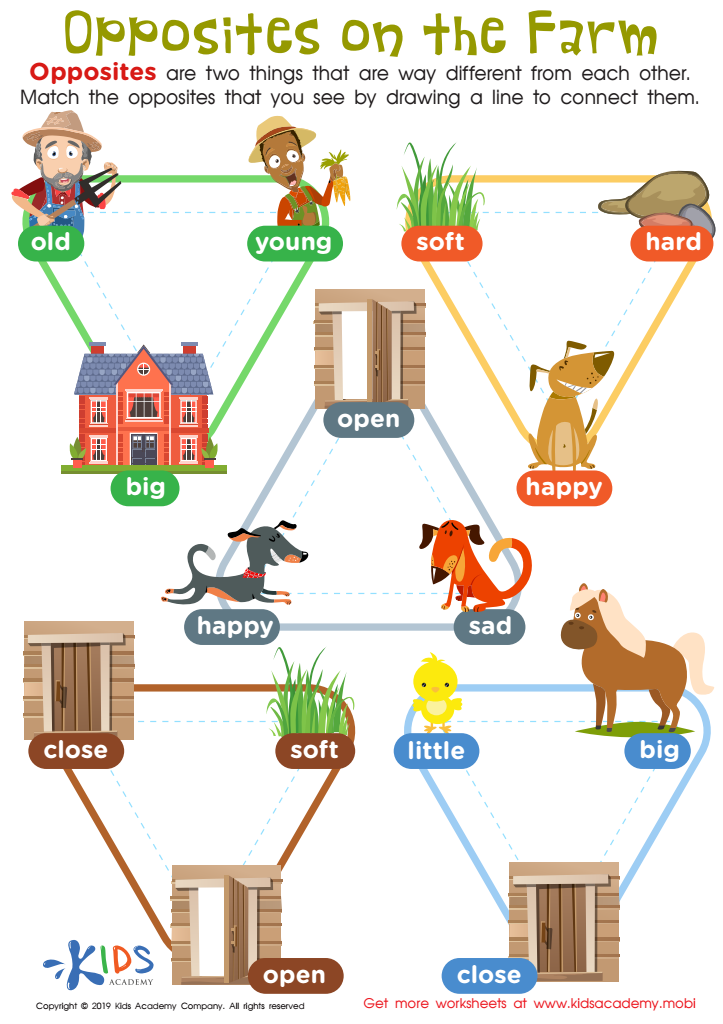
Opposites on the Farm Worksheet
Teaching children the concept of opposites is important for their development. This worksheet offers a fun way to practice. Kids can use traceable lines to match farm imagery with pairs of opposites. It's a great way to help them compare and contrast, a key skill for reading, math, writing and more.
Opposites on the Farm Worksheet
Worksheet
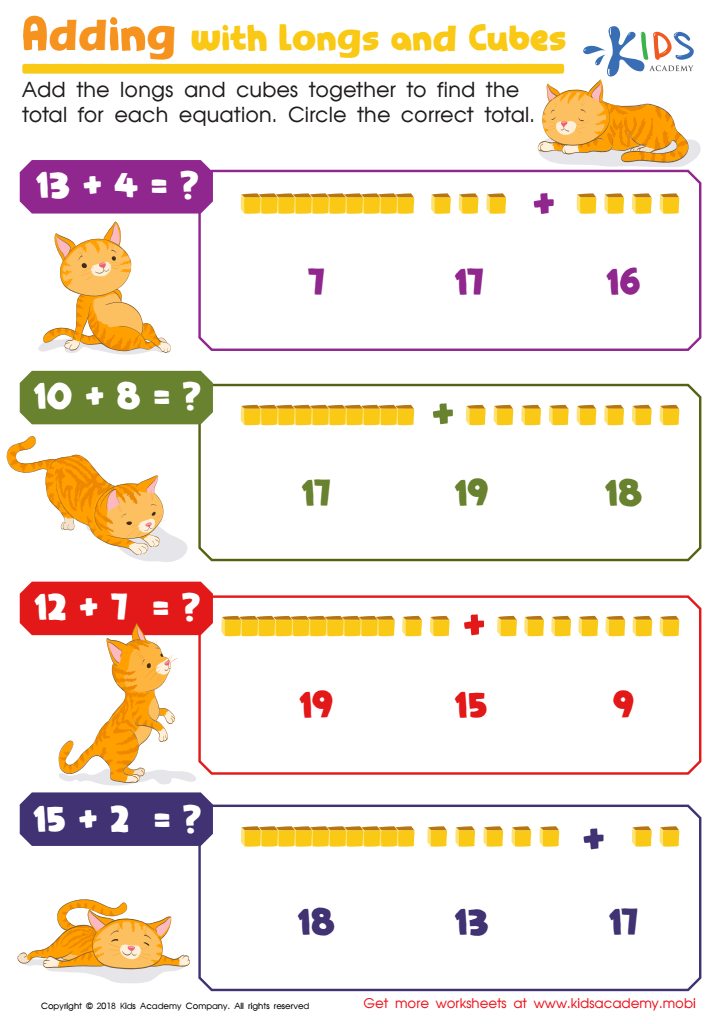
Adding With Longs and Cubes Worksheet
Math might not be your child's favorite, but they must master it to advance. If they're having difficulties or don't like it, use this worksheet to make it easier. Have them add longs and cubes together to find the total for each question, then circle the correct answer. This exercise can help make math experiences better.
Adding With Longs and Cubes Worksheet
Worksheet
Join Kids Academy for Free
Who is primarily going to use this learning content?







Cognitive development in math for 6-year-olds is essential for fostering a child’s intellectual growth, problem-solving skills, and future academic success. At this developmental stage, children are transitioning from concrete to more abstract forms of thinking, which is critical for understanding basic math concepts. Engaging in math activities helps to enhance their number sense, spatial awareness, and logical reasoning.
Parents and teachers play a pivotal role in creating a nurturing and stimulating environment that promotes curiosity and a positive attitude toward math. By integrating math into everyday activities and play, children can experience hands-on learning which solidifies foundational concepts. Simple activities like counting objects, recognizing shapes, and solving basic puzzles can make math relatable and fun.
Moreover, early exposure to math sets the stage for future academic achievement. Research shows that early math skills are strong predictors of later success not only in math but also in reading and other subjects. Establishing a solid mathematical foundation helps children develop a sense of competence and confidence in their abilities, which can enhance overall learning enthusiasm.
Encouraging cognitive development in math helps children become comfortable with numbers from a young age, creating lasting benefits that bridge the gap between early childhood education and more advanced mathematical concepts they will encounter in the future.








