Observational skills Math Worksheets for 6-Year-Olds
5 filtered results
-
From - To
Observational skills are pivotal for young learners, aiding in their overall cognitive development. Our "Observational Skills Math Worksheets for 6-Year-Olds" offer an engaging array of activities designed to boost a child's attention to detail, enhance pattern recognition, and improve critical thinking and problem-solving abilities. These worksheets encompass fun, interactive exercises tailored to capture a child's interest, from identifying numerical patterns to comparing shapes and sizes. By integrating these observational skills worksheets into your child’s learning routine, you'll help foster a solid math foundation, making intricate math concepts enjoyable and accessible at an early age. Explore our collection today!
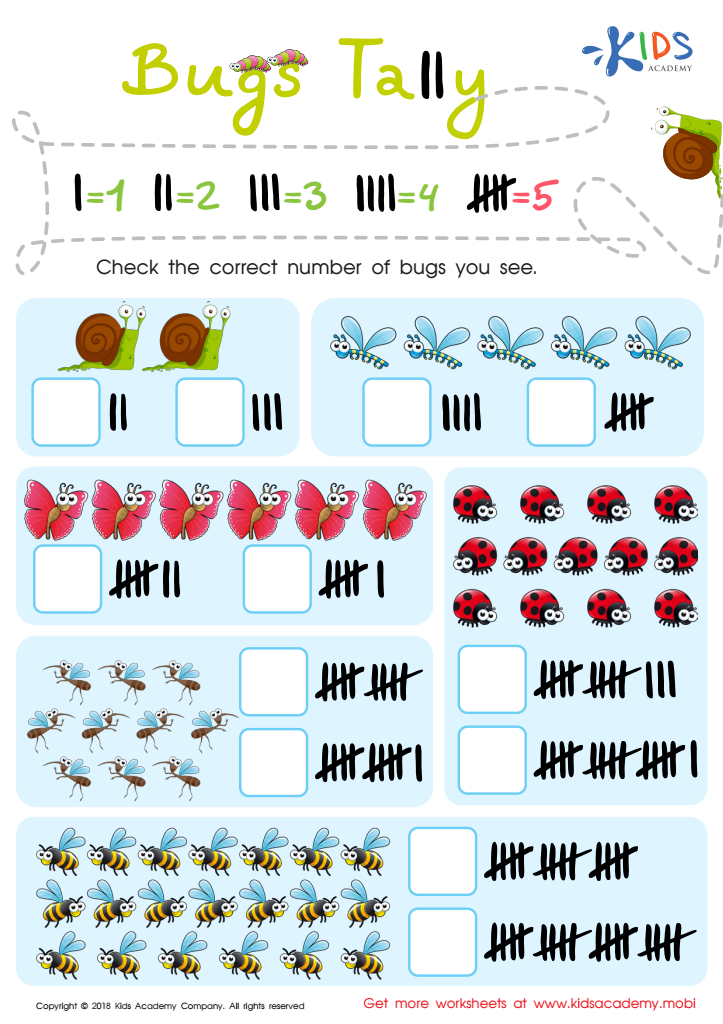
Bugs Tally Worksheet
 Assign to My Students
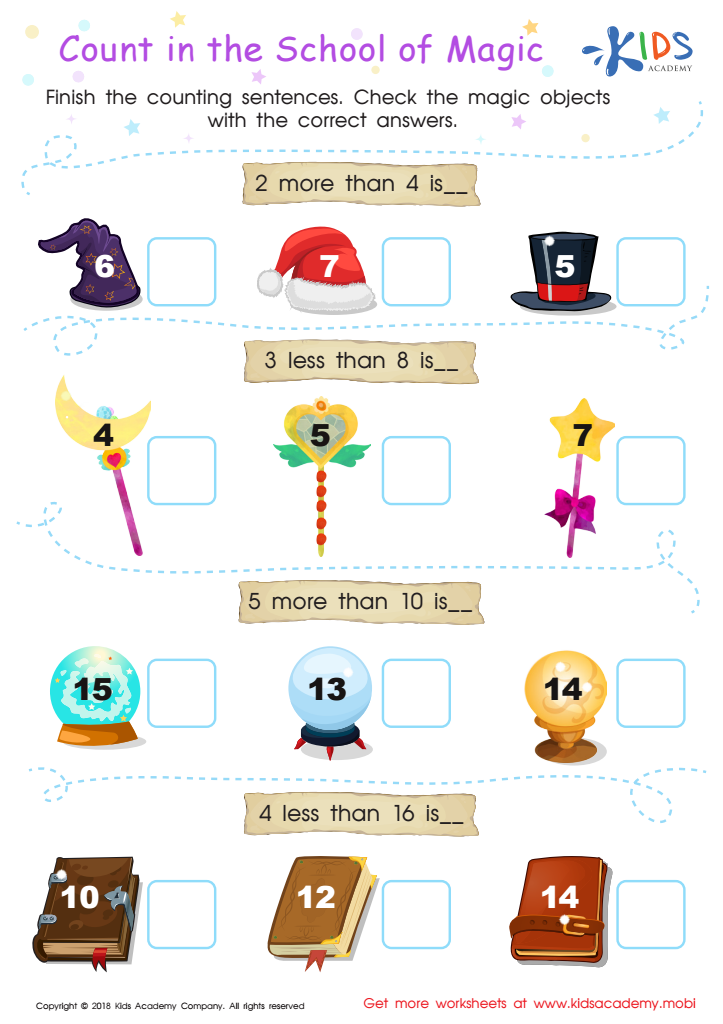
Count in the School of Magic Worksheet
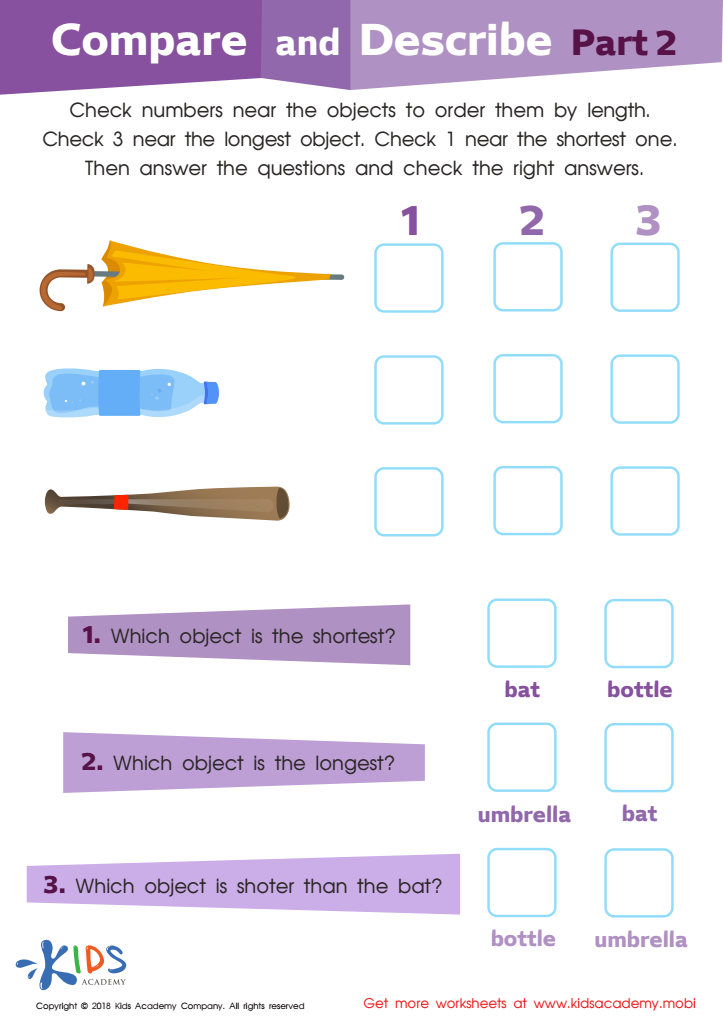
Compare and Describe: Part 2 Worksheet
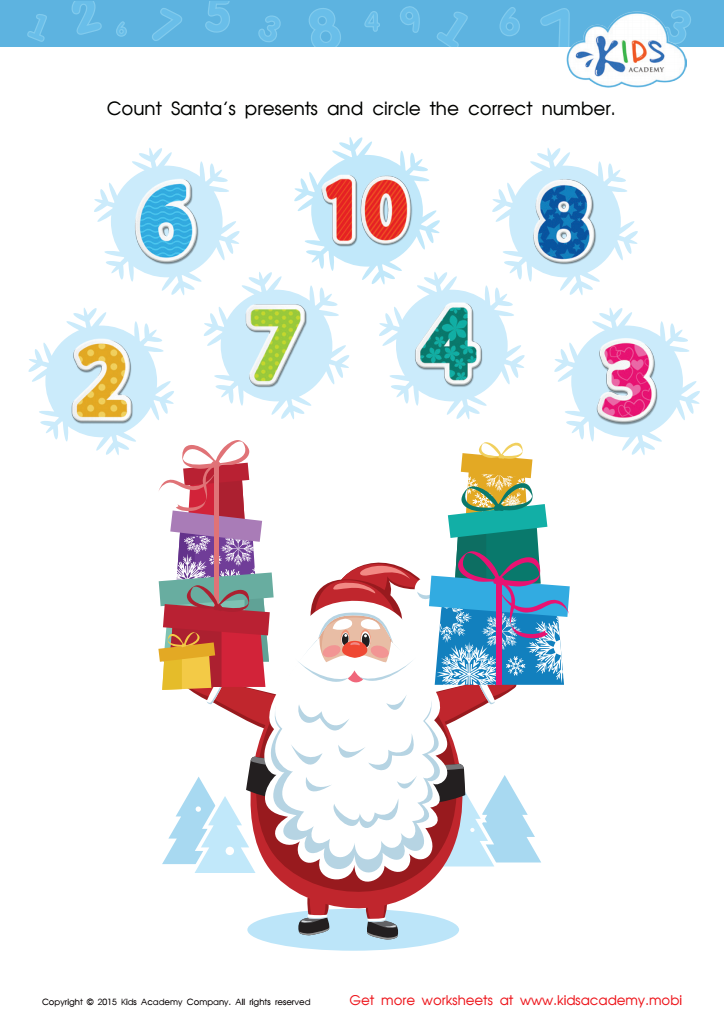
Count Santa's Presents Worksheet
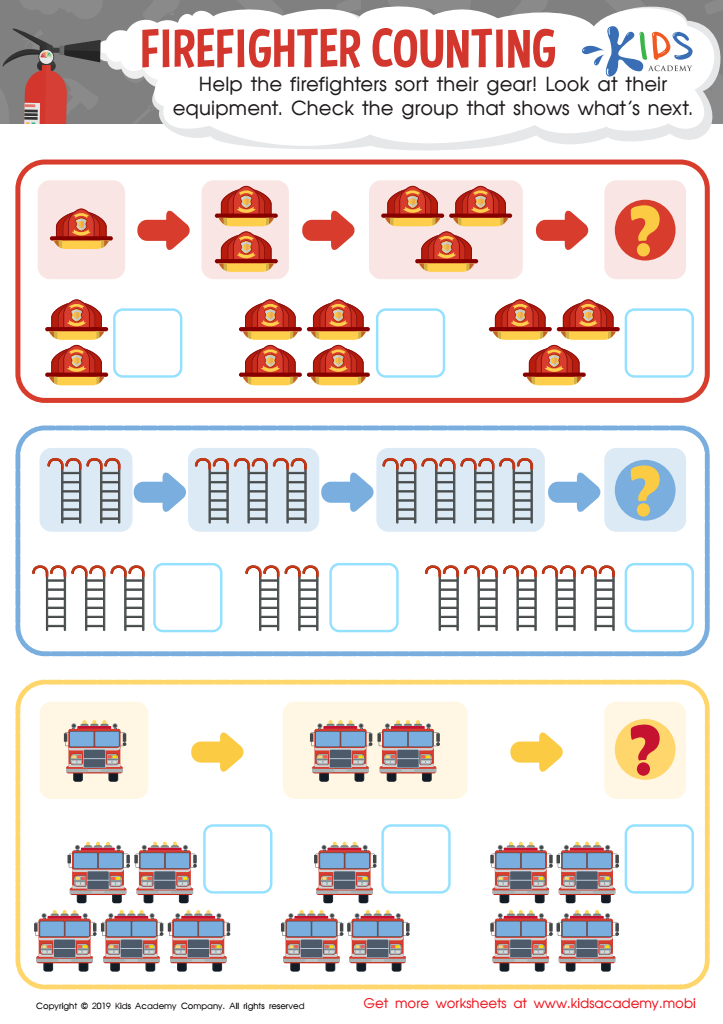
Firefighter Counting Worksheet


.jpg)



Observational skills lay the groundwork for mathematical understanding in young children, forming an essential element of early education. For 6-year-olds, developing these skills can significantly impact their ability to grasp more complex mathematical concepts later on. Parents and teachers should value these skills as they enhance a child's ability to notice patterns, categorizations, and spatial relationships—all pivotal in math learning.
Observational skills help children make sense of the world around them by discerning differences and similarities in objects, recognizing patterns, and understanding concepts of quantity and sequence. These skills foster critical thinking and analytical skills, enabling young learners to approach mathematical problems with confidence and curiosity. When children are encouraged to observe their surroundings carefully, they become more apt at identifying numbers, shapes, and patterns, which are foundational to various mathematical operations such as addition, subtraction, and geometry.
Encouraging observational skills doesn’t need sophisticated tools or lessons; it can be developed through simple, everyday activities. Parents and teachers can incorporate games, storytelling, and interactive play that involves counting, grouping, and comparing objects. This approach can make learning math enjoyable and intuitive for kids.
Overall, nurturing observational skills in 6-year-olds builds a strong base for their future academic success, particularly in mathematics, by instilling in them a keen eye for detail and systematic thinking.








